Snorkels for Alabama Creek Crossings
A creek crossing can look harmless from the bank and still put water close to your ATV or UTV’s air intake, belt housing, or electrical connections. A snorkel can help protect certain openings, but it does not make a machine waterproof or turn an unsafe crossing into a safe one. This guide explains what snorkels do, how to prepare, and when to turn around.
What a snorkel does and does not protect
How a snorkel helps during a creek crossing
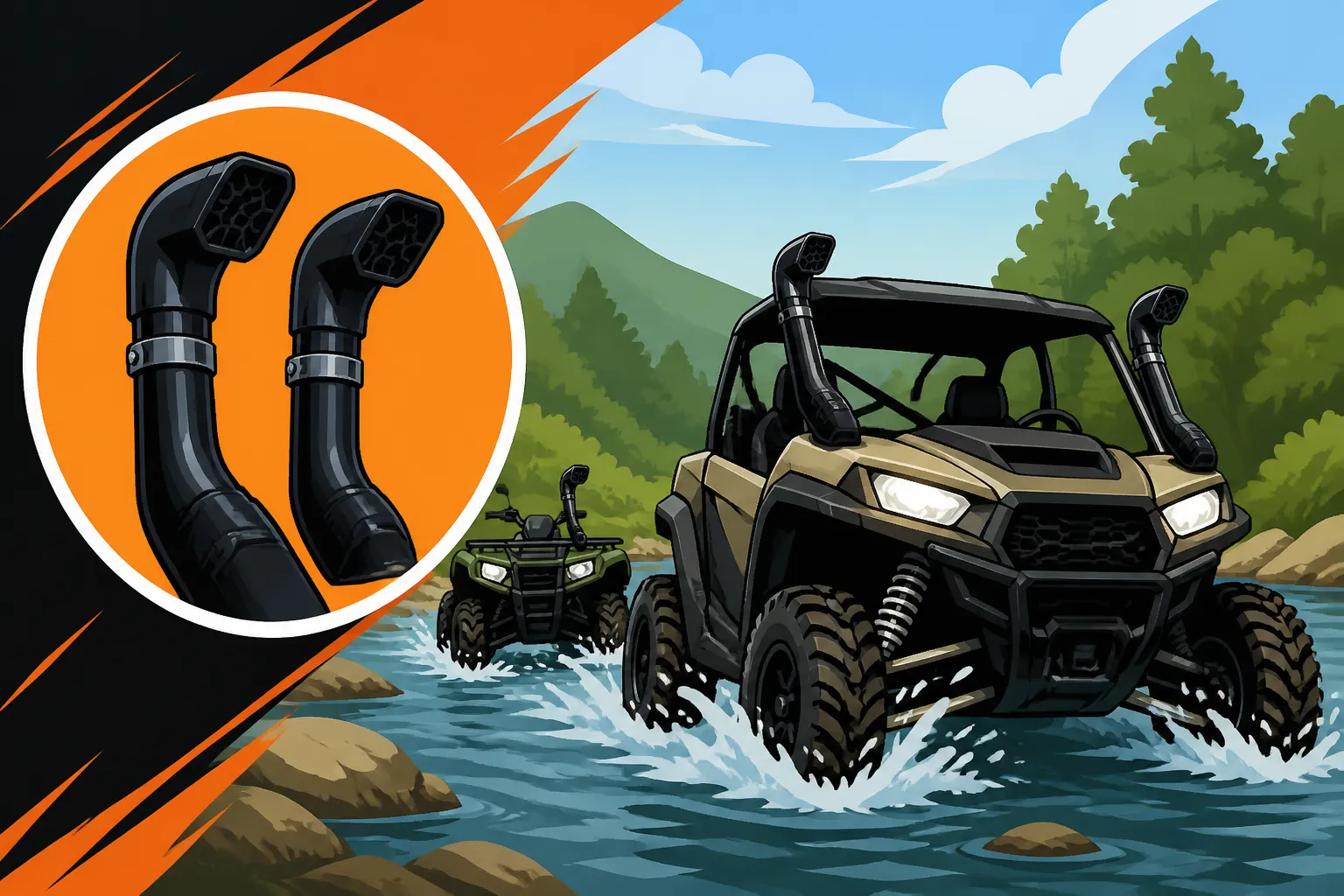
An ATV or UTV snorkel relocates an intake opening higher on the machine, where it is less likely to draw in water during a shallow crossing or in wet, muddy conditions. Depending on the machine and the installation, the system may also raise the intake and outlet points for the continuously variable transmission, often called the CVT. That can help reduce the chance of water entering the belt housing and affecting belt performance.
The exact setup varies by make, model, and kit. Some systems move only the engine intake; others address the CVT intake and exhaust or provide extensions for differential and transmission breathers. Those components do different jobs, so it is worth understanding what your particular kit actually includes before relying on it. A tall pipe near the handlebars does not necessarily mean every vulnerable opening has been relocated.
A snorkel is best understood as one part of a water-preparation plan—not as a promise that a machine can travel through deep water without harm. The engine still needs a clean supply of air, the machine still has electrical connections and seals that can be affected by water, and a crossing can hide holes, rocks, debris, or a soft bottom. For a broader look at how rain changes riding conditions, read Alabama Trail Conditions Before You Tow and Alabama Trail Closures After Rain.
What a snorkel cannot make waterproof
Water can enter through places a snorkel does not protect. If a vent line is low, a connector is damaged, or a seal is worn, water may still reach a drivetrain component or electrical part. A poorly sealed intake connection can also let water in even if the snorkel itself rises well above the splash zone. That is why installation quality and routine inspection matter just as much as the height of the snorkel pipes.
A snorkel also does not raise the machine’s safe water limit by itself. The maximum water depth depends on the vehicle’s design, condition, equipment, and manufacturer guidance. Even a properly snorkeled machine may lose traction, float or shift unexpectedly, take on water through another opening, or become difficult to control. Never use the top of the snorkel as a target depth. If water is near the seat, controls, or another point where you cannot confidently assess the machine’s exposure, choose another route.
Most importantly, a snorkel does not protect the rider from a fast current or an unstable creek bed. Water can push against the machine, and submerged ruts or drop-offs can turn a slow crossing into a recovery situation. Do not enter moving water when you cannot judge its depth, force, bottom, and exit. If you are unsure, wait, find a safer crossing, or turn back.
Preparing your ATV or UTV before riding wet trails
Check the whole setup, not just the snorkel
Before a trip, consult the owner’s manual for water-crossing guidance and inspect the machine’s intake, airbox, and snorkel connections. Look for loose clamps, cracked tubing, gaps in seals, and damaged airbox latches. A snorkel that has been bumped by brush or shifted during transport may look mostly intact but still have a weak connection where water can enter.
Check which components your setup protects. If the snorkel kit includes CVT ducting or raised vent lines, confirm that those parts are securely routed and not pinched, split, or rubbing against hot or moving components. Vent lines need to remain open and routed as intended; an improvised extension or blocked hose can create a new problem rather than solve one. If you are not comfortable tracing the system, ask a qualified mechanic to inspect it before relying on it in wet conditions.
Also check the air filter and airbox. A wet, dirty, or poorly seated filter can create trouble even if the snorkel is installed correctly. Pay attention to routine maintenance items and any warning signs from previous rides, such as unusual engine behavior, a slipping belt, or water found in a housing. The way you prepare tires and underbody protection for Alabama terrain matters too; Choosing Tires for Alabama Red Clay covers another part of setting up for local riding conditions.
Plan the ride around the conditions
A familiar route can change after heavy rain. Water may rise, a bank may wash out, or a crossing that was easy on the way in may be harder to manage on the return trip. Check the weather and trail information before loading up, and be ready to change plans rather than treating a planned crossing as something you must complete. Alabama Trail Closures After Rain is a useful companion when conditions have been wet.
Use a map to understand the route and identify possible alternatives, but do not assume a map can tell you whether a creek is passable today. onX Offroad can help you review a riding area and think through route options before leaving home. It cannot confirm current water depth, a safe bottom, or permission to cross a particular property, so use it as one planning tool rather than a substitute for on-the-ground judgment.
When riding with others, agree on a simple rule before you reach the water: no one enters until the group has assessed the crossing, and anyone can call it off. That prevents pressure from building when one rider has already crossed and the rest feel they need to follow. If the route includes public land, private property, or a riding park, check the applicable access rules before the trip. For background on permitted routes in national forest areas, see Can You Ride an ATV in Alabama’s National Forests?.
Choosing and using a crossing carefully
Assess the bank, water, and exit
Stop well before the water and look for an alternate route. From a safe spot, assess whether you can see the entry point, the likely line through the creek, and a firm exit. Look for signs of a strong current, rising water, slippery banks, submerged branches, deep holes, and a bottom that may be soft or uneven. If the water is cloudy and you cannot determine what lies below, treat that uncertainty as a reason to avoid the crossing.
Do not judge depth only from the edge. The creek may drop off quickly, and water can be deeper in the center or along a washed-out bank. If it is safe and permitted to do so, check the bottom and depth without putting yourself in a position where you could be swept or pulled under. Never use a person standing in the water as a depth marker in moving or uncertain conditions.
Think about the way back, too. A crossing can become more difficult if rain continues, water rises, or your machine develops a problem on the far bank. If you cannot see a safe exit or have no reasonable way to retreat, the crossing is not a good choice. The practical answer may be to turn around, even if that means missing part of the ride.
Cross only when conditions are clearly manageable
If you decide a crossing is safe for your machine and skill level, follow the manufacturer’s guidance and move deliberately. Avoid sudden acceleration, sharp steering, or stopping in the water unless you have to. A smooth, controlled approach helps reduce the chance of losing traction or sending a wave toward openings that are not designed to be submerged. Keep enough distance between machines so one rider’s wake or a recovery attempt does not put another rider in a worse position.
Do not follow another rider blindly. Their machine, snorkel setup, tires, ground clearance, and experience may differ from yours, and the water may shift between crossings. If a rider ahead has trouble, pause and reassess rather than entering the same line automatically. A winch or tow strap can assist with some recoveries, but trying to recover a machine from moving water can put people at serious risk. Prioritize getting everyone to a safe place.
After a crossing, watch for changes in how the machine runs. If the engine stumbles, the belt slips, a warning light appears, or the airbox looks wet, stop in a safe area and inspect the machine. Do not keep riding in the hope that the problem will clear itself. Water-related issues can become more expensive when ignored, and a machine that is behaving abnormally may not be safe to ride back to the trailer.
After the ride and common snorkel mistakes
Inspect, clean, and maintain the system
After a wet ride, inspect the airbox and filter according to the owner’s manual. If you find water where it should not be, follow the manufacturer’s directions before starting or running the engine. Starting an engine that has taken in water can cause severe damage. If you are uncertain whether water reached the intake or another component, have the machine checked rather than guessing.
Look over snorkel tubing, clamps, seals, and routed vent lines for mud, debris, loose fittings, or damage from branches. Clean the machine in a way that does not force water into bearings, connectors, vents, or the air intake. Red clay can be especially stubborn once it dries, so inspect the places where mud can collect instead of focusing only on visible body panels. Treading Lightly on Erodible Alabama Clay offers useful context for riding responsibly on vulnerable ground.
Keep a record of maintenance and any water-related symptoms. If a shop installed the kit, ask what parts were moved, what needs regular checking, and what the installer recommends after a crossing. If the machine is still under warranty, review the warranty terms and ask the dealer how modifications may affect coverage before making changes. A snorkel is a modification to a working system, so installation details matter.
Avoid these common mistakes
The most common mistake is treating snorkel height as a water-depth rating. A raised intake may reduce one risk, but it says nothing definitive about current, footing, drivetrain vents, electrical connections, or whether the machine can climb out safely. Another mistake is assuming every snorkel kit protects every system. Read the product and installation information for your machine, and have unclear details checked by a mechanic.
Riders can also underestimate how much conditions change during the day. A crossing that looked manageable in the morning may be deeper or faster after a storm. A map app, including onX Offroad, can help with planning where to ride and considering route alternatives, but it cannot verify real-time creek conditions or replace local access rules. Check conditions again when you arrive, and be willing to abandon the route.
Finally, do not let the snorkel encourage riding through places that are fragile, restricted, or unsafe. Stay on routes where you have permission to ride, avoid damaging creek banks, and follow park or land-manager rules. For more on responsible behavior around shared riding areas, see Alabama Trail Etiquette Locals Expect and Alabama ATV Trails: Where to Ride. The best creek crossing is sometimes the one you decide not to make.
Disclaimer
This article is for general informational purposes only and does not constitute professional advice. Laws, prices and regulations vary by location and change over time. Consult a qualified professional for guidance on your specific situation.