Passengers a Park Allows
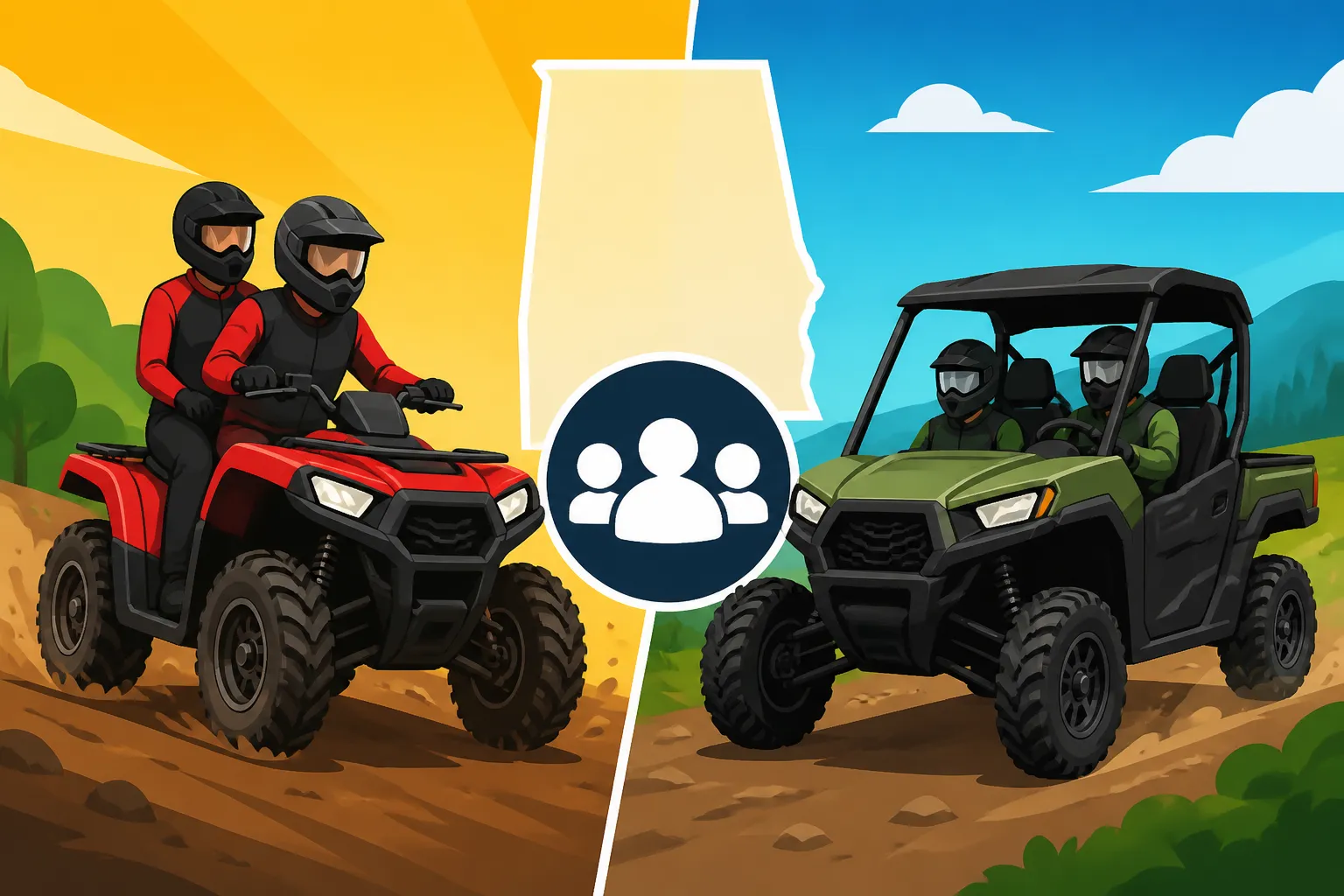
A passenger policy can vary from one Alabama riding park to another, and a machine that looks roomy may not be approved for an extra rider. Before loading up, check the park’s rules, the vehicle’s designed seating capacity, and any age or equipment requirements. That simple check helps prevent a denied entry, an unsafe ride, or a disagreement at the gate.
Start With the Machine’s Designed Seating Capacity
A park’s permission is only one part of the answer. The ATV or UTV also needs to be designed to carry the number of people who will ride in it. A passenger seat, footrests and handholds are meaningful clues, but check the owner’s manual or manufacturer’s specifications rather than relying on appearance.
For a UTV, confirm the number of approved seating positions. A bench that looks wide enough for three does not automatically make the vehicle a three-person machine. For a quad, do not assume a second person can safely ride behind the operator just because there is space on the seat. The manufacturer’s instructions are the best starting point for determining intended capacity.
That matters for more than comfort. Passengers affect balance, handling, braking and the room available to move safely. An extra rider can make it harder for the operator to control a machine over ruts, slopes or uneven ground. A passenger who has no proper place for their feet or hands may also be less stable when the vehicle turns or hits an obstacle.
Use this order when you are unsure:
- Check the manual or manufacturer’s specifications for the number of occupants and any passenger restrictions.
- Inspect the machine for the seating and passenger equipment intended for those occupants.
- Ask the park whether its rules allow that machine and passenger arrangement.
- Follow the more restrictive instruction if the manufacturer and park set different limits.
A park may allow passengers only on certain vehicle types or may impose its own maximum occupancy rule. It can also reject a setup that appears unsafe, even if a rider believes the machine has enough room. The park’s admission policy and the machine’s designed capacity are separate checks, so satisfying one does not replace the other.
For more on this distinction, see Carrying Only the Passengers the Factory Intended and Alabama Rules for Passengers on a Quad. If your question is specifically about a child riding with an adult, Alabama Rules for a Child Passenger can help you focus on the age and supervision issues.
| Before you ride | What to confirm | Why it matters |
|---|---|---|
| Vehicle capacity | Manufacturer’s approved occupant count | Prevents overloading or using an unintended seat |
| Park policy | Which machines may carry passengers | Rules can differ by park and vehicle type |
| Passenger position | Seat, foot placement and handholds | Helps the passenger stay secure during movement |
| Age and supervision | Park’s minimum age and adult requirements | A child may face additional park rules |
| Required equipment | Helmets and other protective gear | Entry and riding requirements may differ |
| Waiver | Who must sign and whether minors need an adult | A waiver does not guarantee permission to ride |
Check the Park’s Passenger Rules Before You Travel
Private parks set operating rules for their property. Passenger rules may appear on a park’s website, waiver, admission information or posted rules at the entrance. If the wording is unclear, contact the park before you leave home. Do not rely on a rule you heard from another rider; policies can differ, and they may change.
Ask a specific question that describes your setup. “Can I bring a passenger?” may not be enough, because the answer could depend on whether you have an ATV or UTV, the vehicle’s seating capacity, the passenger’s age, and whether the passenger is riding with an adult operator. Give the park the make and model if you know it, and explain how many people will be in the vehicle.
Useful questions include:
- Are passengers allowed on this type of vehicle?
- Does the park require the vehicle to have factory-designed passenger seating?
- Is there a minimum passenger age?
- Must a minor ride with a parent, guardian or other adult?
- Does each passenger need a separate waiver or wristband?
- Are helmets required for passengers, and does the park have any other gear rules?
- Can the park refuse a passenger or machine at check-in?
Keep the answer with your trip details, especially if you are organizing a group. A phone call or written message can help you avoid confusion at the gate, but the park may still require riders to follow its posted rules when they arrive.
It also helps to check the rules for each person, not only the vehicle. A child may be allowed at the park but not permitted to ride as a passenger on a particular machine. An adult passenger may be subject to a different waiver or equipment requirement from a child. If the park requires every rider to meet a minimum age or wear particular gear, the operator’s permission alone does not override that rule.
For park-specific age and equipment issues, review Alabama Park Rules for Passengers, Alabama Park Rules for Minors and Alabama Private Park Helmet Rules. A park can set its own conditions for use of its property, so do not assume that a rule at one riding area applies at another.
Plan for Helmets, Waivers and Passenger Readiness
Confirm protective equipment before the trip. A park may require helmets for operators and passengers, and it may specify other rules riders must follow. Do not assume that a passenger is exempt because they are not driving. Check the park’s current requirements and make sure each person has equipment that fits and is in usable condition.
If you need to buy or replace a helmet, choose one intended for the kind of riding you will do and make sure it fits the rider. Amazon is one possible place to compare available options, but a product listing alone does not establish that a helmet meets a park’s requirements or fits safely. Check the park’s stated rules and the manufacturer’s fit guidance before relying on any purchase.
A waiver is another separate step. A park may require each rider to complete paperwork, and a parent or guardian may need to handle forms for a minor. A signed waiver is not permission to exceed the machine’s seating capacity or to ignore age, helmet or passenger rules. Confirm the paperwork process before arrival; some parks handle forms online, while others may require completion at check-in.
A passenger should also know what to expect before the machine moves. Explain where to sit, where to place their feet and hands, and how to follow the operator’s instructions. The operator should be comfortable carrying a passenger and should not ride with someone who cannot remain in the intended seating position or follow basic directions. If a rider is too small to reach the passenger footrests, or cannot hold on securely, the machine may not be appropriate for them.
Use a simple readiness check:
- The machine is designed for the number of occupants.
- The passenger has a proper seating position and can use the intended footrests and handholds.
- The park allows that passenger arrangement.
- Any age, supervision, helmet and waiver requirements are met.
- The passenger understands how to sit securely and follow instructions.
- The operator is prepared to carry a passenger and adjust their riding accordingly.
For related park requirements, see [Alabama Park Rules for Helmets] and Alabama Private Park Waiver Forms. A park may also have its own rules about passenger conduct, including whether riders must remain seated while the vehicle is moving.
Avoid Common Passenger Assumptions
Some misunderstandings are easy to prevent with a quick call to the park and a check of the owner’s manual.
“The seat is wide enough, so it can carry two.” Space alone does not establish that a vehicle is designed for two occupants. Check the manufacturer’s information and the machine’s passenger equipment.
“A park lets passengers ride, so any passenger setup is allowed.” A general passenger policy does not necessarily approve every machine or seating arrangement. Ask about your specific vehicle and follow its designed capacity.
“The child is allowed inside the park, so the child can ride with me.” Admission and permission to ride as a passenger are different questions. Confirm the park’s age and supervision rules, as well as whether the child can safely use the passenger position.
“We can sort out the waiver at the gate.” You might be able to, but forms, adult signatures or check-in procedures can take time and may affect whether the group can ride right away. Ask what each passenger needs to bring or complete.
“The rules are the same everywhere in Alabama.” Private riding areas can establish different conditions for their property. Check the specific park you plan to visit rather than assuming a policy carries over from another destination.
Before leaving, make sure every rider knows who is driving, which machine they will use and what rules apply. If the park says a passenger is not allowed on your particular setup, do not try to work around the rule by shifting seats or carrying someone in an unintended position. Use a properly designed vehicle, make another arrangement, or leave that passenger out of the ride.
A few minutes of checking can prevent a long drive ending at the entrance. The safest plan is straightforward: match the number of riders to the machine’s designed capacity, confirm the park’s passenger policy, and meet all age, equipment and paperwork requirements before riding.
Disclaimer
This article is for general informational purposes only and does not constitute professional advice. Laws, prices and regulations vary by location and change over time. Consult a qualified professional for guidance on your specific situation.