Riding Out of Jemison
If you’re towing an ATV or UTV to Jemison, the hardest part may be knowing where you can actually ride once you arrive. A park address or a nearby dirt road does not mean every route is open to off-road vehicles. This guide explains how to plan a ride from Jemison, check access before you tow, and avoid confusing public roads with designated riding areas.
Plan a ride from Jemison around confirmed access
Start with the riding area, not the map pin
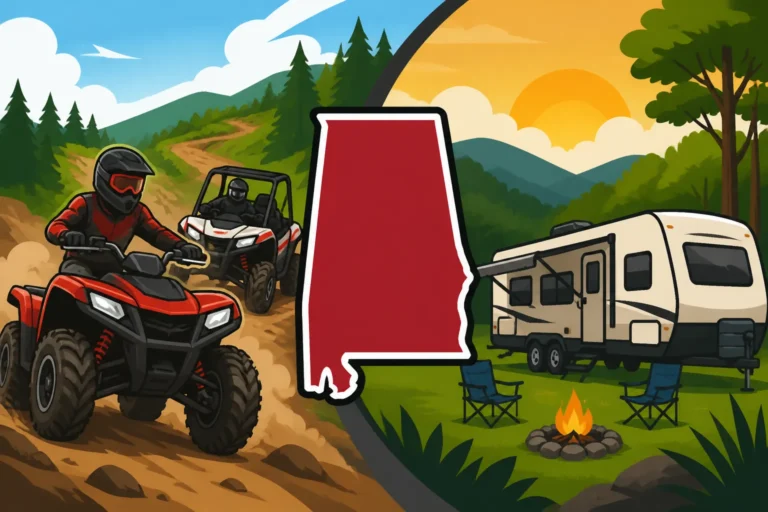
Jemison is in Chilton County, between Birmingham and Montgomery, and can work as a convenient starting point for a central Alabama riding trip. A park listed near Jemison on County Road 146 may appear on maps or in riding conversations, but a location pin alone does not confirm that the facility is operating, open to your machine, or accepting riders on the day you plan to visit.
Before loading up, identify the exact property you intend to ride and check its current access details through the park’s own contact channels. Confirm its entrance, open days, admission process, machine restrictions, and whether reservations or signed waivers are required. If you find different addresses or operating details in separate listings, ask the park which information to follow rather than choosing whichever result looks most convenient.
This small check can prevent a frustrating drive with a trailer, especially if you are bringing a group or traveling from outside Chilton County. It also helps you avoid accidentally treating a county road, timber track, or private access road as an OHV trail. For a broader starting point, see Alabama ATV Trails: Where to Ride.
Don’t assume nearby roads or woods are riding trails
A rural road can look like an easy connection between a campground, a trailhead, and a riding area. But a road’s surface does not determine whether an ATV or UTV may use it. Public-road rules, local ordinances, landowner permission, and posted restrictions all matter. A machine that is welcome on a private off-road park’s trails may not be legal on the nearby pavement or on an unmarked track through the woods.
The same caution applies to public land. National forest roads, wildlife management areas, timber company property, and hunting leases can each have different access rules. A road shown on a general map is not necessarily an open OHV route. If your plan involves riding beyond a private park, check the specific property’s rules and the relevant agency’s current maps or notices. Which Forest Roads in Alabama Are Open to ATVs is a useful place to start when federal forest access is part of your plan.
| Riding option near your base | What to confirm before you go | Common mistake to avoid |
|---|---|---|
| Private OHV park | Operating status, entrance, admission process, machine limits, waiver, and trail rules | Assuming a map listing means the park is open |
| Public road | State and local rules, road classification, and any posted restrictions | Treating a dirt or gravel road as an ATV trail |
| National forest route | Current route map, vehicle designation, seasonal closures, and permit conditions | Assuming every forest road allows ATVs |
| Wildlife management area | Area-specific access rules, permits, open dates, and vehicle limits | Assuming a hunting or riding permission covers every tract |
| Private timber or farm land | Direct permission from the landowner or manager, plus any written conditions | Riding through an open gate or along a familiar track without asking |
Check the details before you load the trailer
Confirm the park’s location and operating information
For a ride centered on Jemison, verify the address with the riding area before setting off. Search results can show a mailing address, an old entrance, a nearby road, or a location pin that is not the place where riders should check in. Ask for a clear arrival point and whether there are any signs or turnoffs that are easy to miss.
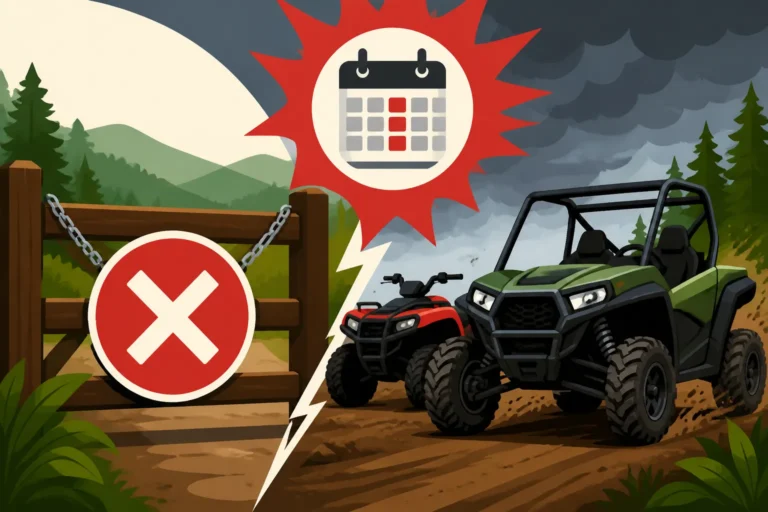
Also ask whether the park’s operating schedule changes by season, weather, maintenance, or special events. A place that was open during a previous visit may have different access arrangements later. If you are planning a weekend trip, confirm that the park is accepting day riders and ask whether the facility has a check-in cutoff. Do not assume that arriving at the property means you can ride immediately.
If the park’s website or online booking system is not working, try its listed phone number or another official contact method before leaving home. That is more reliable than making a long tow based on an old directory entry. For additional planning help, see Alabama Trail Conditions Before You Tow and Checking Whether a Park Still Operates.
Match your machine to the riding area
Not every park accepts every type of off-road vehicle. A trail system may have limits for width, vehicle type, passenger capacity, or equipment. A side-by-side that fits one park’s trails may be too wide for another’s, while a youth machine may be subject to separate supervision or age rules. Ask about your specific machine rather than relying on a broad statement such as “ATVs welcome.”
Have the machine’s make, model, approximate width, and passenger configuration ready when you call. If you are bringing a trailer, ask about parking and unloading space too. It is much easier to find out that a trailer will not fit comfortably before arriving than after you have turned onto a narrow approach road with limited room to maneuver.
A mapping app such as onX Offroad can help you organize saved locations and review possible routes, but a displayed track is not proof that riding is permitted there. Use it as a planning aid, then verify access with the park or land manager. For machine-specific comparisons, Alabama Trails That Allow Side-by-Sides can help you focus your questions.
Build a safer, smoother day around Jemison
Plan the route and arrival with room for changes
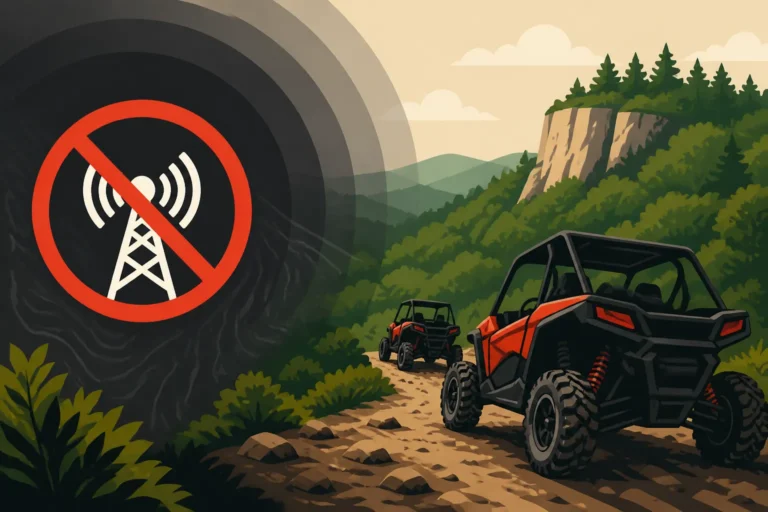
Before you leave, save the park’s confirmed address and a backup contact method. If you use onX Offroad or another navigation tool, download the map area you need while you have a reliable connection. Rural areas can have patchy service, and a route that loads perfectly at home may be harder to access once you are on the road.
Map the towing route separately from the riding plan. A route that looks short on a phone can involve narrow roads, tight turns, or an awkward approach for a trailer. Leave time for fuel, unloading, check-in, and any required safety briefing. If someone in your group is meeting you at the park, send them the confirmed entrance rather than a general pin near Jemison.
Weather deserves a place in the plan, too. Rain can change traction and trail conditions quickly, particularly on clay. A track that was manageable during a dry visit may be slick, rutted, or closed after a wet spell. Check directly with the facility if heavy rain is forecast or has recently passed through. For more practical preparation, see Treading Lightly on Erodible Alabama Clay and Alabama Trail Closures After Rain.
Pack for the ride, not just the drive
It is tempting to focus on the machine and trailer and leave the smaller things until the morning. A basic checklist can save time at check-in and help you handle a longer day away from town:
- Confirm the park address, access status, and check-in instructions.
- Bring any identification, waiver information, permits, or proof of ownership the facility requires.
- Check fuel, tires, lights, brakes, fluids, and tie-downs before towing.
- Pack helmets and other protective gear for everyone riding, even when a specific rule does not require a particular item.
- Bring drinking water, snacks, basic first-aid supplies, and a phone charging option.
- Save the route or map for offline use and share the meeting location with your group.
- Follow the park’s posted rules for speed, passengers, pets, alcohol, and trail direction.
onX Offroad can be handy for keeping route notes and saved locations together, especially when several people are coordinating arrivals. Still, use the park’s directions and posted signage as the authority for where to ride. If your group is considering public land or a hunting area after visiting a park, check the specific access rules rather than assuming park admission covers land elsewhere. [Alabama WMA Riding Rules for Quads] explains why area rules need to be checked individually.
Avoid the access mistakes that derail a Jemison ride
Don’t treat private property as an informal trail network
Rural Chilton County has farms, timberland, hunting properties, and private roads. Their appearance can be misleading: a track may look well used, a gate may be open, or tire marks may suggest regular traffic. None of those things automatically grants permission to ride.
Get permission from the owner or property manager before entering private land, and ask what routes are allowed, whether passengers are permitted, and whether the access is limited to certain dates or purposes. Keep any written permission or instructions accessible during the trip. If you are riding with a hunting club or on leased land, ask the lease contact directly; a hunting relationship does not necessarily include permission to ride recreationally.
A navigation app may show a road or trail that crosses private property. onX Offroad can help you notice route boundaries and organize a plan, but it cannot grant access. When the property line or route status is unclear, stop and verify rather than continuing because the trail appears open. For more on land access, see Alabama Landowner Permission Letters.
Keep the road ride separate from the trail ride
A common planning mistake is assuming that riding at a park makes it legal to ride an ATV or UTV on the public road leading to it. Trail access and road use are different questions. A machine may be allowed inside a designated riding area while still being restricted from ordinary streets and highways.
Do not plan to ride between a lodging spot, fuel stop, and park on public roads unless you have confirmed that the machine and route meet the applicable legal requirements. A plate, registration document, or road kit should not be treated as automatic permission to use any road. Check the rules for the exact road and machine, and call the relevant local office if the situation is uncertain. Are ATVs Street Legal in Alabama and Alabama Local Ordinances on ATV Riding offer more context.
If you are new to the area, make the ride itself the destination: tow the machine to a confirmed riding location, check in, and keep the ATV or UTV on routes the property allows. That approach may take a little more preparation, but it avoids the much worse surprise of being turned around at a gate or discovering that a supposed connector is not open to OHVs.
A practical pre-trip checklist for riding from Jemison
A dependable plan does not have to be complicated. Confirm the riding area’s status and entrance, check that your machine is allowed, review the rules for any land beyond the park, and prepare for limited cell service. If an address, route, or permission is unclear, ask before you tow.
Use onX Offroad or another map tool to save locations and keep your group organized, but confirm access with the people who manage the property. With that distinction clear, Jemison can serve as a useful base for a planned central Alabama riding day without turning nearby roads and woods into assumed trails.
Disclaimer
This article is for general informational purposes only and does not constitute professional advice. Laws, prices and regulations vary by location and change over time. Consult a qualified professional for guidance on your specific situation.