Alabama Parks Closed Midweek
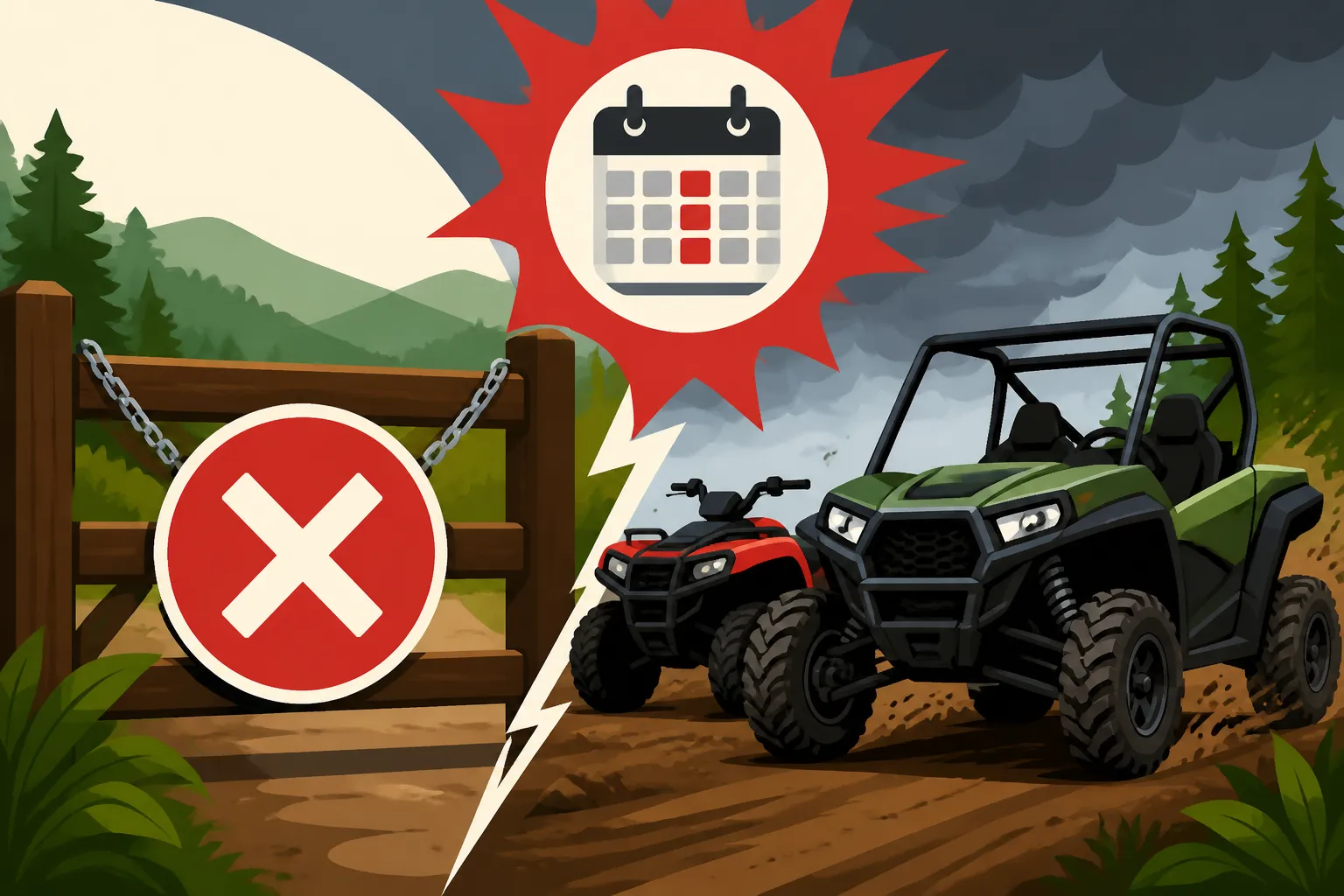
Arriving at an Alabama OHV park with a trailer full of machines only to find the gate shut can turn a riding day into a long, frustrating drive home. Midweek closures are not always permanent, and schedules can change with weather, staffing, events, or season. This guide explains how to check access, choose a backup, and plan a weekday ride with fewer surprises.
Why an Alabama OHV Park May Be Closed Midweek
Regular operating schedules can leave weekdays unavailable
Some riding areas are set up primarily for weekend traffic. A park may open on selected days rather than every day, which can make a Tuesday or Wednesday trip difficult even when the weather is perfect. A schedule that looks simple at first glance can also have exceptions for holidays, private events, or a seasonal operating pattern.
That is why “the park is open” is not quite enough information. You need to know whether it is open on your specific date, whether the riding trails are available, and whether the gate hours suit your travel plans. A park office, official website, or current social media notice is a better source for those details than an old review or a search result that only shows general business hours.
This matters especially when you are traveling from outside the immediate area. Someone driving from Huntsville toward a riding area near Cullman, or hauling from Birmingham toward a park in Chilton County, may have several hours invested before reaching the entrance. Confirming the exact date and day of operation before loading the trailer is a small step that can save a lot of fuel, time, and disappointment.
A closed gate can have more than one explanation
A scheduled weekday closure is only one possibility. Heavy rain may make clay trails unsafe or especially vulnerable to rutting, and a park may close temporarily to protect the land or carry out repairs. Other interruptions can include maintenance, staffing shortages, a private event, a seasonal hunting conflict, or a safety issue on a particular trail.
The wording of a notice matters. A park might be closed entirely, open only for camping, or open to visitors while certain routes remain blocked. If you see a general post that says “closed,” ask whether it applies to the whole property and whether the closure covers your planned riding hours. If the notice is unclear, do not assume that a gate will be open just because the park’s usual schedule includes that weekday.
Weather is a particularly easy detail to underestimate. A trail that looked rideable in a forecast can become slick or damaged after a storm, and conditions can vary between north and central Alabama. Check [Alabama Trail Closures After Rain] and [Alabama Trail Conditions Before You Tow] before committing to a long haul. A quick check can help you decide whether to ride, reschedule, or choose a destination with better conditions.
How to Confirm a Park Is Open Before You Leave
Check the official schedule for the exact date
Start with the park’s own website or official social media account. Look for a current operating calendar, an announcement about temporary closures, and any notes about holiday or seasonal changes. If the page only lists general hours, check for a separate notice about trail access. Park office hours and riding hours may not be the same thing.
When a schedule is presented in a graphic or calendar, check the month and year as well as the weekday. An old screenshot can continue circulating after a schedule changes. If the official page has not been updated recently, that does not automatically mean the park is closed, but it does mean you should verify directly before setting off.
For an unfamiliar destination, use a two-step check: first, confirm the normal operating pattern; second, confirm that nothing unusual affects the date you plan to ride. This is especially useful for places such as [Stony Lonesome OHV Park in Alabama] or [Minooka Park Riding in Alabama], where riders may be comparing destinations from different parts of the state. Treat any specific schedule you find as something to verify for your own trip.
Call or message when the posted information is unclear
If the website is missing details, call the park office or send a direct message through its official contact channel. Ask plainly: “Are the trails open to ATVs and UTVs on this date, and what time can riders enter?” You can also ask whether the whole park is operating, whether any routes are closed, and whether the park expects a weather-related change.
A short call can answer questions a calendar cannot. For example, the park may be open but have a trail section closed for maintenance, or it may be operating with limited access after rain. Ask about vehicle restrictions if you ride a larger side-by-side, and confirm whether any special event affects parking or trail availability. If a park uses reservations, ask whether your visit needs to be booked before you arrive.
Keep the answer tied to your actual date rather than relying on a general “we’re usually open” response. If you are driving a long distance, it is reasonable to confirm again the day before—particularly when the forecast is wet or the park has posted a recent update. For more ideas on getting a response when online information is stale, see [Calling a Park When the Website Is Dead].
Check more than one channel, but trust the park’s own notice
Maps and trail apps can be useful for planning routes, distances, and nearby alternatives. Tools such as onX Offroad can help you prepare a route and understand the surrounding area, especially when cell service may be unreliable once you leave town. But a mapped trail or saved route does not prove that a private park is open on a particular day.
Use navigation tools as planning aids, not as permission or an operating calendar. The same caution applies to old posts, user reviews, and third-party listings. A rider may have visited on a Saturday and accurately described that day, while your planned Wednesday visit falls outside the park’s normal schedule. If sources disagree, contact the park directly and follow its current instructions.
It also helps to save the park’s phone number, address, and a nearby fuel stop before leaving home. If you lose service on the way, you will still have the essential details. For broader destination ideas and planning basics, start with [Alabama ATV Trails: Where to Ride] and compare the access rules for each place you are considering.
Choosing a Weekday Riding Alternative
Compare public, county, and private riding areas carefully
If your first-choice park is closed, look for another area that is actually open to your machine and riding purpose. Alabama has a mix of private OHV parks, county-managed facilities, and public-land opportunities. They do not all follow the same schedule, and they may have different rules about permits, machine types, trail access, or seasonal use.
Private parks commonly control access through their own posted hours and rules. County facilities may have their own calendars, maintenance closures, or restrictions on which vehicles are allowed. Public land is not automatically open for off-road riding just because it appears on a map. On a forest road or wildlife management area, riders may be limited to designated routes and specific seasons or permit conditions.
Use [Alabama County Parks Open to OHVs] and [Alabama Private Off-Road Parks] to build a shortlist, then check each destination’s current rules. Do not assume that a park near your original destination will have the same hours or allow the same kind of machine. A place that accepts a sport quad may not permit every side-by-side, and a route that is open to one vehicle class may not be open to another.
| Alternative | What to confirm before leaving | Common planning risk |
|---|---|---|
| Private OHV park | Operating date, riding hours, admission process, machine restrictions, and trail closures | A regular weekday closure or private event |
| County riding area | Current public access, allowed vehicle types, local rules, and maintenance notices | Assuming county property is open every day |
| National forest route | Designated roads, vehicle restrictions, closures, and map boundaries | Treating a forest map as permission to ride anywhere |
| Wildlife management area | Required permits, open seasons, route rules, and area-specific conditions | Confusing hunting access with ATV access |
| Private land with permission | Clear permission from the landowner and any conditions on where to ride | Assuming a gate or informal invitation grants broad access |
Build a backup plan before you load the trailer
A useful backup is not just another park name saved on your phone. Confirm that the alternative is open on the same date, accepts your vehicle, and is reachable with your trailer. Check the route and estimated driving time, and make sure you have the right address for the entrance rather than a general mailing address or campground office.
Think through the practical details too. Is fuel available nearby? Is there room to turn around with a trailer? Will your group have the permits or proof of permission required? If your original destination is closed because of rain, will the alternative have similar soil and weather conditions? A second location in the same storm area may have the same problem.
Keep a simple decision point in your plan. For example, if your first park confirms a closure the evening before, switch to the verified backup; if both areas are affected by rain, postpone rather than trying to find an unofficial place to ride. A route-planning app such as onX Offroad may help you keep navigation information organized, but the access decision still needs to come from the land manager or property owner.
Planning Around Weather, Seasons, and Access Rules
Rain and Alabama red clay can change the ride quickly
Alabama’s clay soils can become slick after rain and hold ruts when machines travel over them while the ground is soft. That can make a trail uncomfortable or unsafe, but it can also cause damage that takes time to repair. A park may close specific sections or the entire property after a storm, even if the sky clears before your scheduled ride.
Check the forecast for the riding area, not just your home. A dry morning in Mobile does not tell you what conditions are like near a destination farther north, and a storm that passed overnight can leave low spots and climbs muddy well into the next day. Ask the park whether it has current trail information rather than relying on a broad regional forecast.
If your group is flexible, consider moving the trip to a drier date instead of treating closure notices as an inconvenience to work around. For a deeper look at how conditions affect riding plans, see [Alabama Trail Conditions Before You Tow]. It is also worth reviewing [Alabama Trail Etiquette Locals Expect], since staying off vulnerable trails when they are closed helps protect access for future visits.
Public-land access is not a substitute for a closed park
When a private park is shut, it may be tempting to look for the nearest forest road, timber road, or WMA trail. These places can be excellent for the right kind of trip, but access rules are different from those at an OHV park. A road visible on a map may be closed to motorized use, reserved for particular vehicles, or subject to seasonal restrictions.
Before riding public land, identify the managing agency and check its rules for the exact area. Confirm which routes are open to your machine, whether a permit is required, and whether seasonal use is allowed on your planned date. Wildlife management areas can have special rules that vary by tract, and hunting activity can affect access. Do not treat a hunting license or a general land-access permit as blanket permission to ride any route.
Mapping tools, including onX Offroad, can help with orientation and route planning, but they do not replace official maps or current notices from the land manager. Download or save information before entering a low-service area, then carry a backup way to navigate. For a broader explanation of riding options and restrictions, see [Can You Ride an ATV in Alabama's National Forests?] and [Alabama WMA Riding Rules].
A Practical Weekday Trip Checklist
Confirm the details that can derail the day
Before loading your machines, verify the park’s operating status for your date, entry hours, and whether the trails are open to your vehicle type. Ask about weather-related closures, events, maintenance work, and any special requirements such as permits, waivers, or reservations. If you are bringing a group, make sure everyone understands the same plan so you are not sorting out different assumptions at the gate.
Check your route to the correct entrance and consider whether a trailer can safely navigate the final approach. Look for nearby fuel and food options, but avoid assuming that businesses near a rural park will be open when you need them. Save the park’s contact information, a backup destination, and key navigation details somewhere you can access without a reliable signal.
If the ride depends on public-land access, add a separate rules check rather than treating it as a park visit. Verify the specific route, permit, season, and land manager. A little extra preparation can feel tedious when you are eager to ride, but it is far less frustrating than arriving at a gate that is closed or discovering that the route you planned is not legal for your machine.
Keep expectations flexible on the day of the ride
Even a well-planned trip can change. A sudden storm, maintenance issue, or safety notice may affect access after you have checked the schedule. Make room in your plans to turn around, wait for updated instructions, or reschedule. Do not bypass a locked gate or ride around a closure sign; it can create safety risks and threaten future access for everyone.
If the park is open but some trails are closed, follow the posted boundaries and ask staff where riders should go instead. Leave enough time to check in, complete any required paperwork, and prepare your machines before riding. At a busy facility, arriving close to the posted closing time may leave little time on the trails, so confirm entry cutoffs as well as gate hours.
Finally, share accurate information with your group. If a park confirms a weekday closure, tell the others before they leave home, and avoid repeating an old schedule as if it were guaranteed. The best weekday riding plan is one built around verified access, current conditions, and a backup that is just as legitimate as the first choice.
Disclaimer
This article is for general informational purposes only and does not constitute professional advice. Laws, prices and regulations vary by location and change over time. Consult a qualified professional for guidance on your specific situation.