Walking the 1-Mile Trail Beside the Riding Park
The one-mile walking trail beside an Alabama riding park can be an easy way to stretch your legs while a group rides, but it is worth sorting out access, trail separation, and conditions before you arrive. This guide explains how to plan a visit around Minooka Park near Jemison, what to bring, and how to keep a short walk comfortable and safe.
Finding and planning the walk
What to expect from a one-mile trail beside a riding park
A one-mile walking trail sounds simple—and often is a manageable outing for families, casual walkers, and people who want a break from the riding area. Still, “one mile” does not tell you everything. It may describe a loop or an out-and-back route, and the surface could be packed dirt, grass, gravel, or a mix. Check the park’s current map and posted signs so you know what the route involves before setting off.
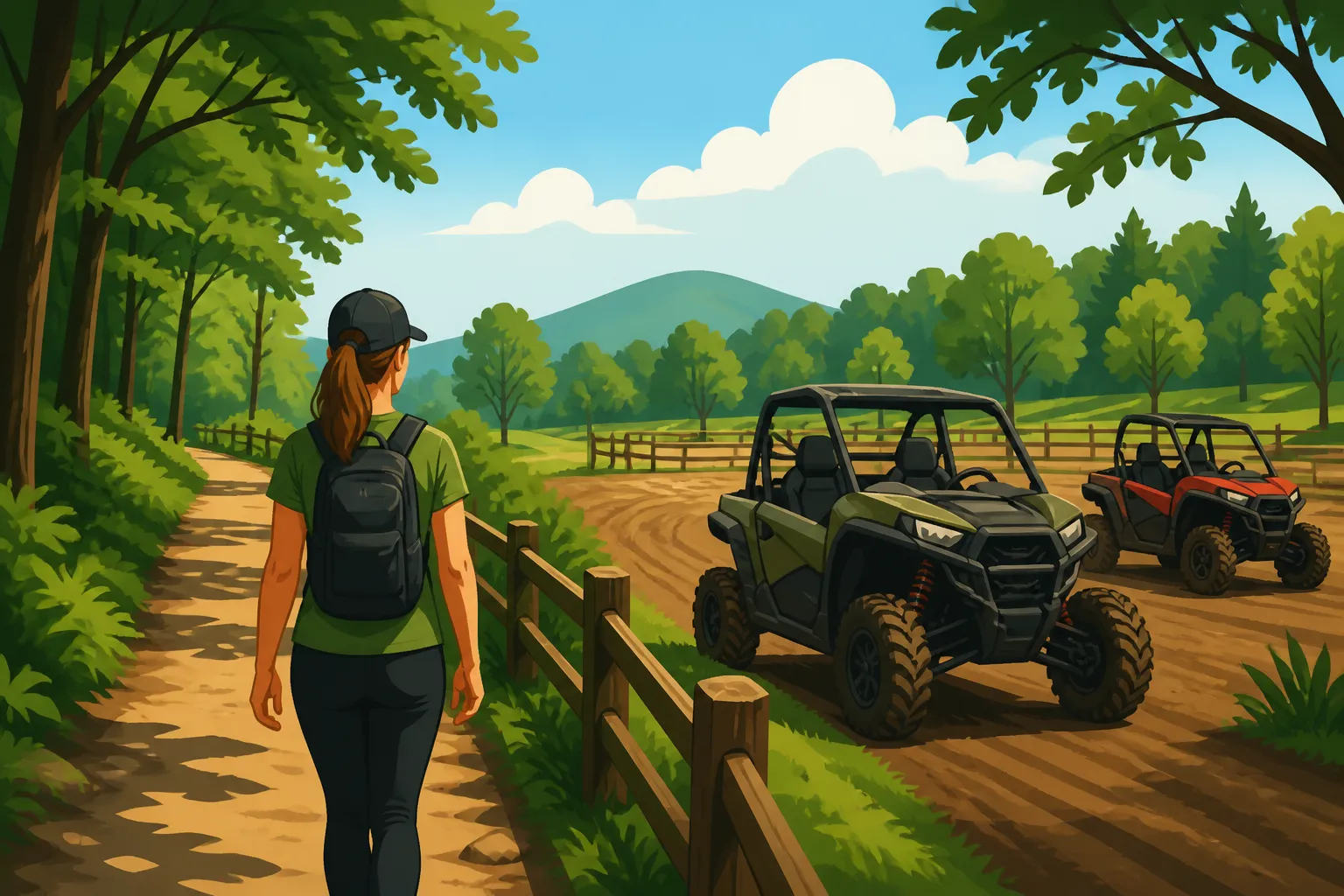
Minooka Park is in the Jemison area of Chilton County and is known as an off-highway riding destination. The walking trail is a separate reason to visit, but do not assume that every path near the riding area is intended for pedestrians. Follow signs for the walking route, stay out of vehicle-only trails, and ask park staff where the walking access begins if the entrance or trailhead is not obvious. For a broader look at the site, see Minooka Park’s 420 Acres in Alabama.
If you are meeting friends who plan to ride, agree on a rendezvous point before anyone heads off. A simple plan—“we’ll meet back by the parking area after the loop”—is more dependable than trying to find each other by phone once people are spread around the property. If the group is deciding whether to ride or walk, Alabama Parks With Walking Trails can help you compare other places that offer a pedestrian option.
It also helps to decide what kind of outing you want. If the walk is simply a leg-stretcher while other people ride, you may want to keep your plans flexible and avoid setting a tight schedule. If walking is the main reason for your visit, ask specifically about the trailhead, route, and parking arrangements so you do not arrive expecting a separate hiking destination when the trail is one feature within a larger OHV park.
Check access, hours, and park notices before leaving
Park access and operating arrangements can change with the season, weather, maintenance, or special events. Before loading the car, check the park’s own current information for opening days, entry procedures, walking-trail access, and any closures. A trail being visible on an older map does not necessarily mean it is open during every visit or reachable from the same entrance.
It is especially useful to verify whether walkers enter through the same gate or parking area as riders. If the walking route is near vehicle traffic, ask where pedestrians should park and which route they should use to reach the trailhead. You can also review Minooka Park’s Seasonal Hours in Alabama as part of your planning, then confirm the latest details directly with the park.
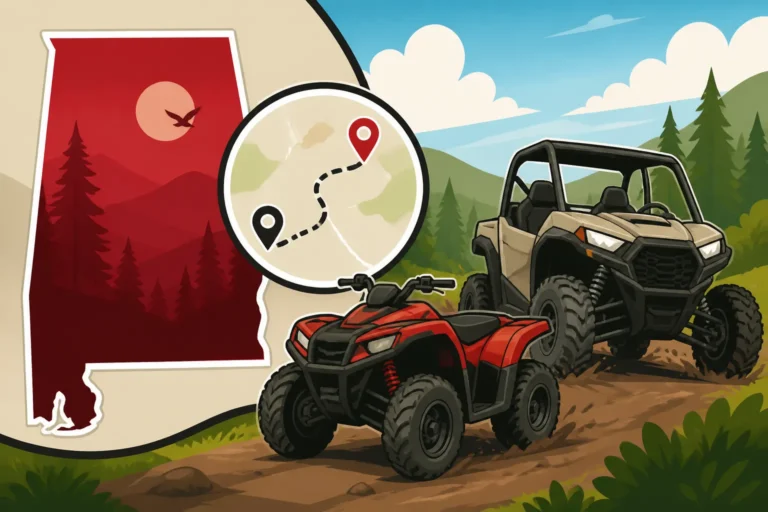
For navigation, a mapping app such as onX Offroad can help you understand the surrounding roads and plan the drive, but it should not replace park directions or on-site signs. Don’t assume that a line shown in a mapping app is an authorized pedestrian route. Use the park’s posted trail information to identify the walking path, and treat any unmarked spur as off-limits until staff or signage confirms otherwise.
| Planning question | What to confirm before you go |
|---|---|
| Is the walking trail open? | Check current park notices or contact the park |
| Where does the walk begin? | Confirm the pedestrian trailhead and parking area |
| Is it a loop or out-and-back route? | Check the trail map or ask staff |
| Are riding trails nearby? | Follow pedestrian signs and stay on the designated route |
| What should you bring? | Water, suitable shoes, weather protection, and a charged phone |
If you are driving from outside the immediate area, build in a little time to locate the correct entrance and get oriented. A riding park may have a busy arrival area, trailers, and people unloading machines, so it can take a few minutes to find the pedestrian route. Confirm the park’s directions before you leave rather than relying on an old pin or a route someone shared in a group chat.
Getting ready for a comfortable walk
Choose shoes and supplies for the actual conditions
For a short walk, you probably do not need specialized hiking equipment, but ordinary sneakers may not be enough if the ground is wet, uneven, or slick. Wear closed-toe shoes with a sole that grips dirt. If rain has passed through, expect muddy patches and avoid shoes you would be upset to ruin. A small daypack keeps your hands free, which is helpful if you are walking with a child or carrying a leash where permitted.
Bring water even if you expect the loop to take only a short time. Heat and humidity can make a modest walk feel harder, particularly if you have spent the day outdoors or have just finished riding. A hat, sunscreen, and insect repellent can also make the outing more pleasant. Pack a light layer when the forecast suggests a cooler morning or a temperature change later in the day.
If you are using onX Offroad to help orient yourself around the park, save the relevant area before you lose reception and keep the app available as a backup—not as permission to leave the signed walking path. A paper or downloaded park map is also useful. The goal is to make the walk low-stress, not to spend the outing staring at a phone while trying to match every turn to a screen.
Think about what you will do with your belongings while you walk. If some members of your party are riding, keep wallets, keys, and essential medication with the person who needs them rather than leaving everything in an unattended vehicle. Avoid carrying more than you need, but take a phone and any personal items that would be difficult to replace or go without.
Match the walk to your group
A one-mile trail can suit children and newer walkers, but the distance alone does not determine whether it is a good fit. Consider the route’s surface, shade, elevation, and weather, along with how comfortable the youngest or least mobile person in your group will be. Tell everyone the plan before starting: stay together, follow trail markers, and stop at a safe spot if someone needs a break.
For children, make the walk feel like a small exploration rather than a timed exercise. Let them notice leaves, birds, and changes in the trail, while keeping them close enough to respond to instructions. If the group includes someone who uses a cane, has limited mobility, or is recovering from an injury, ask the park about the surface and any uneven sections before committing to the route. A short walk should be enjoyable, not an unwanted challenge.
If the walking outing is part of a family riding day, set separate expectations for riders and walkers. Choose a meeting point and a return time, and make sure no one assumes pedestrians can safely cut across riding routes. For additional family planning ideas, Alabama Trails for Kids offers useful context on choosing outdoor routes with younger visitors in mind.
For a multigenerational group, it may be easiest to keep the walk optional. One person can walk at a comfortable pace with anyone who wants to join, while others stay near the parking area or continue with their plans. That way, nobody feels pressured to keep up, and the group can still meet again afterward without turning a relaxed visit into a race against the clock.
Walking safely beside an OHV area
Keep pedestrians and machines on their designated routes
The most important safety rule is simple: walk only where the park indicates pedestrians may go. Do not cross an active riding trail just because it seems like the shortest route to the walking loop. A rider may be approaching from behind a bend, and engine noise can make it difficult for either person to hear the other. If the walking route intersects a vehicle path, use the designated crossing and follow any posted instructions.
Stay aware of your surroundings, particularly near shared parking and access areas. Keep children close, avoid stopping in a vehicle lane, and move fully off the path if you need to adjust a shoe or check a map. If you hear an approaching machine, step to a safe place only where the park allows, and do not assume the rider has seen you. Bright or light-colored clothing can help you stand out, especially in shaded woods or at dusk.
Good trail manners help everyone use the property more comfortably. Yield where signs direct, take litter back with you, and leave gates, barriers, and markers as you find them. The practical points in Alabama Trail Etiquette Locals Expect apply to shared outdoor spaces too, even when you are walking rather than riding. If you are uncertain whether a narrow path is pedestrian-only, stop and ask rather than guessing.
Do not wear headphones that block out nearby sounds. Hearing an engine, a warning, or someone calling from ahead may help you respond in time. Keep conversations and phone use for places where you can step fully aside, and do not let a child run ahead around a bend or out of sight.
Pay attention to weather, mud, and changing trail conditions
Rain can turn a short walk into a slippery one. Red clay and compacted soil may become slick underfoot, while leaves can hide roots and small holes. If the trail is muddy enough that staying on the marked route would damage the ground or put you at risk of slipping, consider postponing the walk. Avoid walking around muddy spots by widening the trail, since that can gradually damage vegetation and make the path harder to maintain.
Conditions can differ from the parking area to the shaded trail. A dry entrance does not guarantee a firm surface beneath the trees, and water may collect in low spots after a storm. Check Alabama Trail Conditions Before You Tow for broader trip-planning considerations and Alabama Trail Closures After Rain for why it is sensible to confirm access after wet weather. The park’s own closure notices should guide your decision.
Use onX Offroad or another map to help you orient yourself if you are unfamiliar with the area, but rely on on-site signs for closures and route rules. If the marked trail is blocked, washed out, or appears to enter a riding route, turn back and ask staff for guidance. A one-mile walk is not worth taking an uncertain shortcut, especially when a safer route or another visit is an option.
In warm, humid weather, take breaks before you feel exhausted, and pay attention to signs that someone is becoming overheated, such as unusual fatigue, dizziness, or nausea. Turn back if conditions are making the route uncomfortable. A short distance can still feel demanding when the sun is strong, the air is humid, or the trail is exposed.
Making the most of a short visit
Combine the walk with other park activities thoughtfully
The walking trail can be a useful option for a mixed group: some visitors may want to ride while others prefer to stretch their legs or take a quieter break. Agree on a schedule before splitting up, and choose a clear meeting place. If riders are heading to a different part of the property, avoid relying on cell service as the only way to coordinate. A set time and location are often simpler.
If you are considering other activities, check what is open and available for your visit rather than assuming every amenity is accessible. For example, Alabama Parks With Fishing Ponds may help you find other park settings where a walk can fit into a broader day outdoors. At Minooka, confirm the current rules for each activity and whether visitors need to use a particular entrance or parking area.
Walking and riding have different equipment and safety needs. Keep riding gear, fuel, tools, and muddy equipment organized away from pedestrian areas, and do not leave items where they could obstruct access. If you plan to wash a machine after riding, confirm the facility and rules before depending on it; Alabama Riding Areas With Wash Stations is useful when comparing destinations for that specific need.
A useful plan is to choose a meeting point that everyone can describe without relying on a map pin. Tell the group what to do if a phone loses service or someone arrives late. If you are visiting with a larger group, make sure one person knows who is walking and who is riding so nobody leaves assuming the others are already back at the vehicles.
A simple checklist for your visit
Before leaving, confirm that the park is open and that the walking trail is accessible. Check the route length and whether it is a loop, find out where pedestrians should park, and look for any notices about rain or maintenance. Save the park’s directions, tell your group where you plan to meet, and make sure your phone has enough battery for navigation or an emergency call.
For the walk itself, bring water, closed-toe shoes, sun and insect protection suited to the weather, and a small bag for anything you bring in. Keep children within reach, follow the marked pedestrian route, and take litter with you. If the trail is slippery or signs are unclear, turn around or ask staff rather than improvising a new route.
If you are bringing a dog, check the park’s rules before you travel. Where dogs are allowed, keep the leash short enough to prevent an unexpected encounter with people or machines, and bring bags to pack out waste. Do not assume that a dog can safely accompany you on every route simply because the walk is outdoors.
A short trail can be a welcome pause in a busy riding day, but its convenience depends on arriving prepared and respecting the separation between walking and vehicle areas. Use onX Offroad only as a navigation aid, confirm access with the park, and let posted instructions determine where you can walk.
Disclaimer
This article is for general informational purposes only and does not constitute professional advice. Laws, prices and regulations vary by location and change over time. Consult a qualified professional for guidance on your specific situation.