Two Cabins at a County Park
A riding weekend can get complicated when your group wants trail access but not everyone wants to sleep in a tent. Minooka Park in Jemison is known for having two cabins alongside its off-highway riding area, which makes it worth considering for a Chilton County trip. Here’s how to plan around the cabins, check what you’ll need, and avoid arriving with the wrong expectations.
Planning a cabin stay at Minooka Park
Why the two cabins may suit a riding weekend
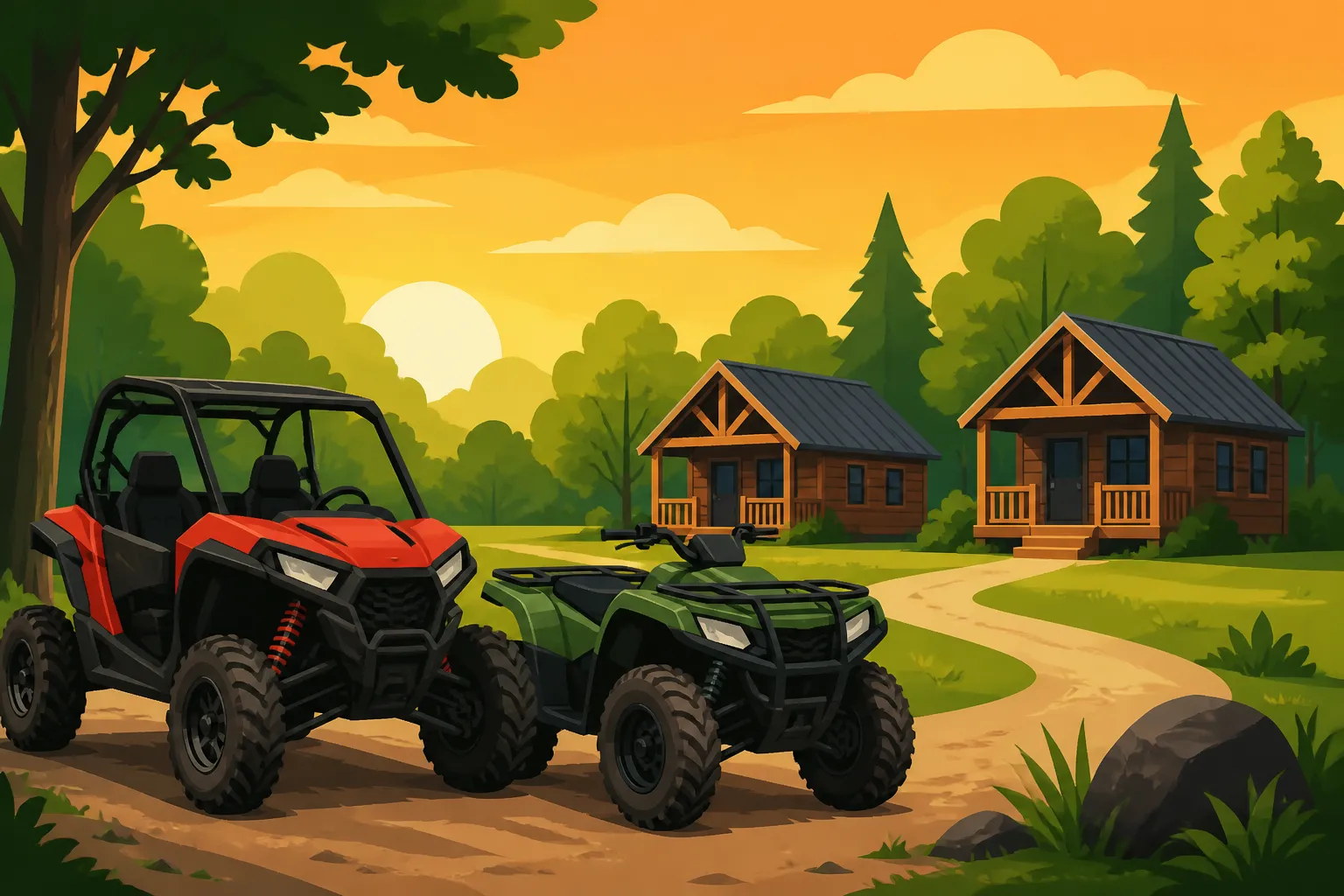
Minooka Park combines off-highway vehicle riding with a county-park setting, giving visitors an option between camping and finding lodging farther away. Its two cabins can be especially useful for a family, a couple, or a small riding group that wants a roof over its head after spending the day on the trails. With only two cabins, though, availability can be limited, so it’s wise to make lodging the first thing you confirm rather than assuming you can book it after arranging the rest of your trip.
A cabin also changes what you need to pack. You may not need a tent and sleeping pads, but that does not necessarily mean you can leave bedding, towels, cookware, or other basics at home. Cabin facilities vary, and the word “cabin” alone does not tell you whether a unit has a kitchen, bathroom, heating or cooling, or a place to store riding gear. Ask the park what is included in the specific cabin and what you should bring.
This arrangement can make a mixed group trip easier. One person may be excited to ride all day while another would rather have a comfortable place to rest or enjoy the park setting. Before booking, make sure everyone understands the accommodation and the riding plan. A cabin stay does not automatically include trail access, admission, or permission to ride every machine on every route.
For broader trip planning, Alabama Parks With Cabins and Alabama Riding Areas With RV Sites can help you compare the kinds of overnight options available at riding destinations. If Minooka’s cabins are unavailable, Alabama Private Off-Road Parks may help you think through alternatives, but confirm that any other park offers the type of lodging your group needs.
Confirm the details before you reserve
Because there are only two cabins, check availability directly with the park before committing to travel dates or inviting a larger group. Ask how reservations are handled, whether a deposit is required, what cancellation rules apply, and whether the cabin reservation is separate from riding admission. Policies can differ from one park to another, so don’t assume a cabin booking covers every part of the visit.
It also helps to ask about practical details that can be easy to overlook:
- How many people may stay in the cabin?
- Are linens, pillows, towels, or cookware supplied?
- Is there a bathroom in the unit, or do guests use shared facilities?
- Is there a refrigerator, microwave, stove, or other cooking equipment?
- Are pets allowed, and are there restrictions?
- Where can a trailer and riding machine be parked?
- Are there quiet hours or rules for outdoor cooking?
- Does the cabin have heating or cooling, and what should guests bring?
- What time can guests arrive, and when must they leave?
Write down the answers or save the park’s confirmation. That is particularly helpful when one person is arranging the cabin while another is organizing machine transport and trail plans. A quick call can prevent the unpleasant discovery that you brought the wrong bedding, have more guests than the cabin allows, or need to make separate arrangements for a trailer.
Also verify whether the park is open on your intended dates and whether the riding area is operating as expected. Park schedules, reservation procedures, and access conditions can change. Calling Ahead for a Reservation and Checking Whether a Park Still Operates are useful reminders that a trip should be based on confirmed details, not just an old listing or a social media post.
Matching your lodging plans with the riding day
Sort out machine access and trail rules
A cabin is only one piece of the trip. Before loading the trailer, check which machines the park allows, what riding rules apply, and whether your vehicle fits the trails you plan to use. A quad and a side-by-side can have different dimensions and handling needs, and some routes or features may not suit every machine. Do not rely on a general description of the park to answer a specific question about your vehicle.
If your group has a side-by-side, ask whether its width is permitted on the trails you intend to ride. If you are bringing a larger machine, ask about trailer parking and maneuvering space as well. Those details matter when cabins, campsites, and trail access share a busy park area. Alabama Trails That Allow Side-by-Sides and Alabama Trail Difficulty Ratings can help you identify questions to raise with the park before you arrive.
Mapping tools such as onX Offroad can be useful for reviewing route information and keeping track of your planned ride, but do not treat a map app as permission to ride. Confirm park boundaries, open routes, closures, and posted rules with the park itself. A route that appears on a map may not be open to your machine or available during your visit.
Pack for the conditions you may actually encounter, not just the forecast at home. Alabama’s red clay can become slick after rain, while dust and heat can make a dry ride tiring. Bring water, suitable riding gear, basic tools, and a way to secure loose items. Alabama Trail Conditions Before You Tow and Alabama Trail Closures After Rain offer useful planning context, but the park remains the best place to confirm conditions for a particular day.
Make the cabin and trailer work together
Think through the whole arrival, not just the drive to the park entrance. A pickup and trailer may need more room to turn around than a car, and you will want to know where the machine can be unloaded, parked, and secured. Ask whether cabin guests have a designated parking area and whether trailers can stay near the lodging. If not, find out where they should be left and whether overnight storage is allowed.
Plan how muddy or dusty equipment will be handled. A small tarp or gear tote can keep dirty boots and riding clothes separate from bedding and personal items. If the cabin has limited storage, avoid bringing a pile of loose riding gear inside. Keep helmets, gloves, tools, and wet clothing organized so the sleeping area stays comfortable for everyone.
For a group, make a simple arrival plan. One vehicle can check in and confirm the cabin details while another parks the trailer, if the park allows that arrangement. Agree on a meeting point before anyone starts unloading. Cell service can be unreliable in some rural or wooded areas, so consider sharing the address and directions in advance and carrying a paper backup.
If you use onX Offroad to keep your route notes or location details handy, save what you need before leaving home. That way, you are not depending on a strong signal at the trailhead. Still, follow signs and the park’s instructions over a digital route suggestion if they differ.
| Trip detail | What to confirm with the park | Why it matters |
|---|---|---|
| Cabin reservation | Availability, check-in process, guest limit, and cancellation rules | The park has only two cabins, so lodging may be limited |
| Cabin supplies | Bedding, towels, kitchen items, bathroom access, heating, and cooling | “Cabin” does not define which amenities are included |
| Riding access | Admission, riding hours, machine types, and trail restrictions | A cabin reservation may not include riding access |
| Trailer parking | Location, overnight rules, and room to maneuver | A trailer can require more space than standard parking |
| Current conditions | Open days, closures, weather impacts, and posted notices | Routes and operations may change |
| Park requirements | Waivers, safety rules, age limits, and equipment requirements | Each park can set its own visitor rules |
Making the stay comfortable for different kinds of visitors
Plan for riders and non-riders alike
A cabin can make a riding trip more appealing to someone who is not planning to spend the whole day on a machine. But be realistic about what the park offers beyond riding. Ask whether there are walking areas, places to sit, fishing opportunities, or other activities available during your visit. Do not assume a feature is open or accessible simply because it appears in an older description.
For families, set expectations before the drive. Decide who is riding, who is supervising younger visitors, and where everyone will meet if the group separates. Review park rules for minors and passengers, and make sure each rider is on a machine suited to their size and experience. A cabin can provide a comfortable base, but it does not replace supervision or the park’s safety requirements.
For friends sharing a small unit, agree on sleeping arrangements and quiet hours ahead of time. Two cabins do not mean every group will fit comfortably; the permitted occupancy and layout matter. If your party is larger than the cabin allows, look into an additional campsite or another approved lodging option rather than squeezing in extra guests.
A little planning can also make the day more relaxed for non-riders. Let them know how long the riding group expects to be out, whether they can reach the cabin independently, and how you will communicate if plans change. If the group may split up, set a return time and a meeting location before anyone heads out.
Pack for comfort without overpacking
Start with the park’s cabin checklist, then add a separate riding checklist. Bring only the household items the park confirms are not provided. For riding, remember helmets and other protective gear, water, weather-appropriate clothing, and any tools or supplies you normally use for your machine. If rain is possible, pack a dry change of clothes and a bag for wet gear.
Keep essentials easy to reach during the drive. Reservation details, directions, medication, snacks, and a phone charger should not be buried under riding equipment. For a trailer trip, check tie-downs and the machine before departure, and give yourself time to stop safely if something needs attention.
A practical packing approach is to divide items by use:
- Cabin basics: Bring only what is missing from the park’s confirmed amenities.
- Riding gear: Pack protective equipment, gloves, boots, and weather layers.
- Machine supplies: Include basic tools, recovery items, and any maintenance supplies appropriate for your machine.
- Food and water: Confirm cooking and refrigeration options before planning meals.
- Navigation and contact: Save directions, reservation details, and route notes for offline use.
Tools such as onX Offroad may help you organize route information, but use park-issued maps and directions to confirm where riding is allowed. Alabama Trail Etiquette Locals Expect is also worth reviewing before a group ride, especially if your party includes first-time visitors.
A simple checklist before you leave home
Confirm, pack, and communicate
A smooth cabin weekend usually comes down to a few confirmations made before departure. Recheck the reservation, arrival instructions, park hours, riding access, and the rules that apply to your machines. If the park has posted changes or weather-related restrictions, adjust your plans before the trailer is already on the road.
Share the practical details with everyone in the group. Make sure each person knows the cabin’s occupancy limit, what to bring, where to meet, and what the riding plan is. If one person is handling the reservation, send the confirmation and directions to the rest of the group rather than assuming they can find them later.
Use this final checklist:
- Confirm that the cabin is reserved for the correct dates and party size.
- Ask what the cabin includes and pack the missing essentials.
- Verify riding admission, allowed machines, trail access, and operating hours.
- Confirm trailer parking and unloading arrangements.
- Check weather and ask about trail conditions or closures.
- Save directions and important contact details before leaving.
- Review park rules, waivers, and safety requirements with the group.
- Secure the machine and trailer, and separate muddy gear from cabin items.
For a broader look at the park setting, Minooka Park’s 420 Acres in Alabama and Minooka Park’s Seasonal Hours in Alabama can help frame your planning. Treat any online information as a starting point, then confirm details directly with the park before you travel.
Two cabins can make Minooka Park a convenient base for a riding weekend, especially if your group prefers lodging to tent camping. The key is to confirm what the cabins provide, how reservations connect to riding access, and what rules apply to your machine. Once those details are settled, you can pack with confidence and spend less of the trip sorting out avoidable surprises.
Disclaimer
This article is for general informational purposes only and does not constitute professional advice. Laws, prices and regulations vary by location and change over time. Consult a qualified professional for guidance on your specific situation.