Alabama Hunting Season and Trail Access
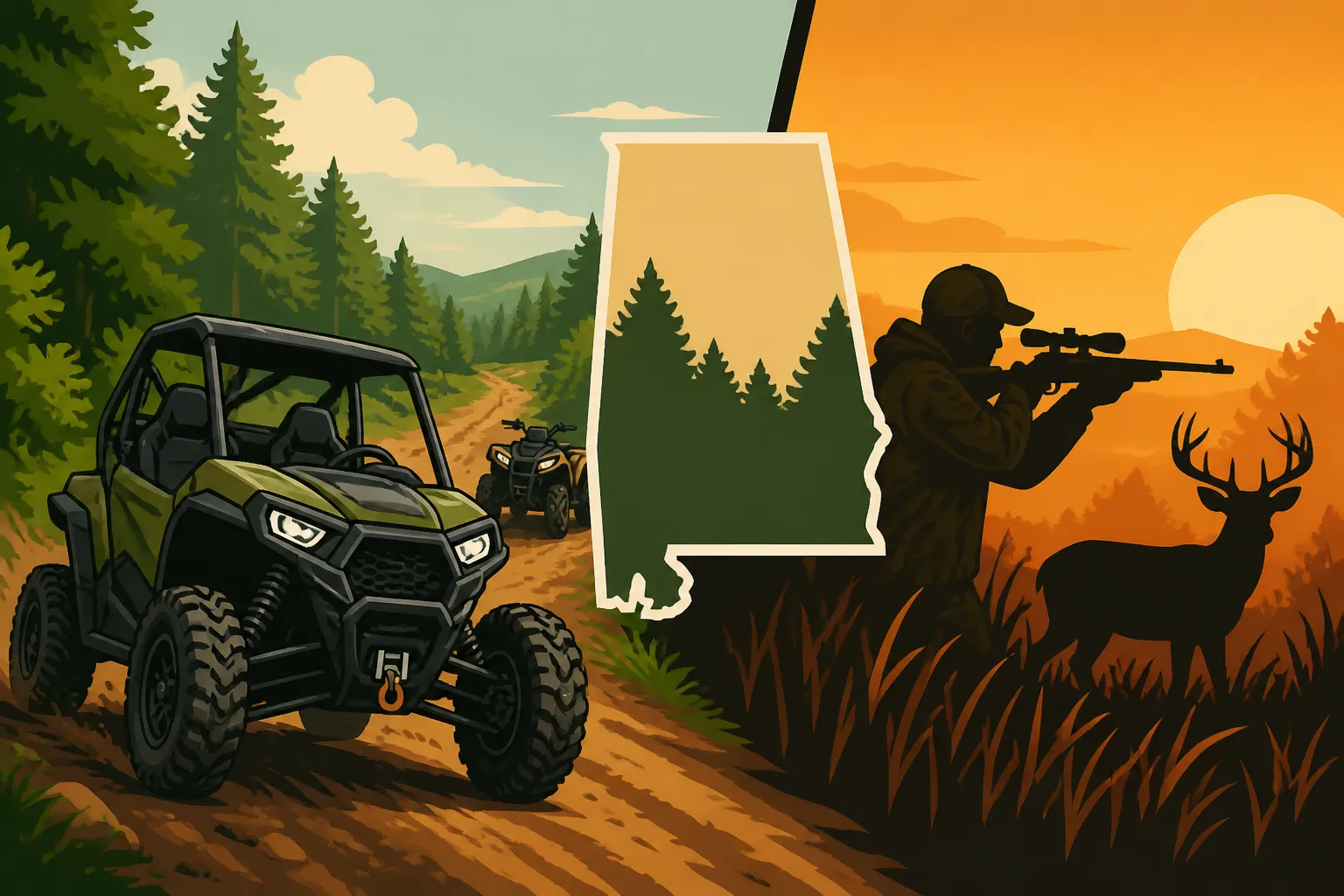
A trail that was open last month may have a gate closed, a seasonal restriction, or active hunting nearby when you arrive. In Alabama, hunting-season access depends on who owns or manages the land and what rules apply to that specific area. This guide explains how to check access, plan a ride, and avoid mistaking hunting permission for permission to drive.
Why hunting season changes trail access in Alabama
There is no single statewide access rule
Hunting season does not automatically close every Alabama ATV trail, and an open hunting season does not automatically close every public riding area. Access depends on the land manager: a state wildlife area, national forest, private riding park, hunting club, or timber company may each set different rules. Even within a large tract, only certain roads or routes may be open to off-highway vehicles.
That is why a route that appears on a map is not enough to establish that you can ride it. A road may be shown for navigation but closed to motorized use, limited to particular vehicles, or available only during certain seasons. Start with the rules for the specific property and the dates you plan to visit.
On public hunting land, the rules may also distinguish between riding on an open road and riding off-road. A route that is open for travel does not necessarily give riders permission to cut through woods, cross a field, or follow a track to a hunting spot. Check [Alabama WMA Riding Rules for Quads] before assuming a particular route is allowed.
Hunting activity and riding access can overlap
On a tract where riding is allowed, hunters may be walking in from a parking area, setting up before daylight, or moving game along a road. A machine’s noise and movement can disrupt a hunt, while a rider who does not know where people are stationed can create a safety risk. A busy hunting day is a good reason to slow down, avoid unfamiliar side routes, and be prepared to turn around.
Some areas restrict access during particular hunts, while others leave designated routes open under specific conditions. The timing and details can vary by tract. Do not assume that last season’s access pattern, a friend’s recollection, or a general hunting calendar applies to the property you are visiting now.
If you hear gunfire, see parked vehicles or hunting activity, or encounter a posted notice, stop and reassess rather than pressing ahead. Give people space and keep to clearly permitted routes. A ride can wait; sorting out a confusing access situation in the woods is a poor way to spend the day.
Permission to hunt is not permission to ride
A hunting license, an invitation to hunt, or a lease membership may not include permission to operate an ATV or UTV. Landowners, lease managers, and timber companies can set separate rules for vehicles. Some may allow access for retrieving game or doing specific work but prohibit recreational riding; others may permit riding only on designated roads.
This distinction matters especially on private land, where an open gate or visible tire tracks can be misleading. Ask the landowner or lease manager directly whether recreational riding is allowed, which routes are open, and whether seasonal limits apply. If permission is verbal, write down the details or ask for a message you can refer to later.
For more on this distinction, see [Alabama Hunting Club Lease Riding Rules] and [Alabama Timber Land Access Rules]. A clear answer about the property and route is more useful than guessing based on what other vehicles have done.
How to check access before you ride
Confirm the land manager and the exact route
First identify who manages the land. A trailhead name or nearby town may not tell you whether the route is on a wildlife management area, national forest, county property, private land, or a privately operated OHV park. Check the official property or park information and look for the rules that apply to motorized vehicles, not just general visitor access.
Then confirm the exact road or trail you intend to ride. Ask whether it is open to ATVs or UTVs, whether both vehicle types are allowed, and whether access is limited during a hunt or other seasonal period. If the answer is unclear, ask the land manager or area contact a specific question: “Is this route open to my type of machine on the day I plan to visit?”
A map can help you understand where you are, but it cannot always confirm legal access. If you use an app such as onX Offroad for navigation, compare what you see there with the land manager’s current rules and posted signs. Treat the map as a planning aid, not as permission to ride.
Check permits, licenses, and area-specific notices
Some public lands have permit or check-in requirements that apply to visitors using the area. Do not assume that a hunting license alone covers ATV access, or that a permit for one tract applies to another. Before leaving home, confirm which documents are required for your activity and whether you need to check in or out.
Where a wildlife management area is involved, area-specific requirements are particularly important. Rules can vary from one area to another and may change with the activity or season. [Alabama WMA Area Permits] and [How an Area Permit Differs From a Daily Permit] can help you understand what to investigate, but verify the requirements for your destination and riding date.
Pay attention to notices at the entrance, kiosk, or map board when you arrive. A posted closure or restriction may be more specific than the information you saw while planning. If the sign is hard to interpret, do not assume the most permissive reading. Contact the managing office or area representative if you can.
Use maps as a backup, not your only source
Offline navigation is useful when cell service drops, which can happen in wooded or hilly parts of Alabama. Before you travel, download the map area you need, save the trailhead location, and make sure you can identify your planned route without a signal. Apps such as onX Offroad can be helpful for keeping a route visible while riding, but your access decision should still come from the land manager’s rules and on-the-ground signs.
Carry a second way to orient yourself, such as a paper map or a written route plan. Mark likely turnarounds, trail exits, and the location where you left your truck or trailer. If a route is closed, being able to retrace your path matters more than having a perfect digital track.
A practical check before departure might look like this:
- Identify who manages the property.
- Confirm that the specific route allows your ATV or UTV.
- Check hunting-season restrictions and any temporary notices.
- Verify permits, check-in steps, and other access requirements.
- Download or carry a map, then review posted rules at the entrance.
Comparing common Alabama riding areas during hunting season
| Land type | What to verify before riding | Common access concern |
|---|---|---|
| Wildlife management area | Area-specific vehicle rules, permits, open routes, and seasonal notices | Hunting activity or route restrictions may vary by tract and date |
| National forest | Current motorized route information, vehicle limits, and any closures | A forest road or map track may not be open to off-highway vehicles |
| Private OHV park | Park calendar, trail status, admission rules, and hunting-related notices | Park operations and allowed routes are set by the operator |
| Hunting lease or private property | Direct permission from the owner or lease manager | Permission to hunt may not include recreational riding |
| Timber company land | Written access policy, designated roads, and temporary closures | Work activity, gates, and company rules may affect access |
Wildlife management areas
Wildlife management areas are managed for wildlife and public use, so riding rules can depend on the particular area and the activity underway. Confirm whether ATVs or UTVs are allowed at all, which roads are open, and whether access requires a permit or check-in. Do not rely on a rule you heard about a different WMA.
During hunting season, consider whether your visit could conflict with a scheduled hunt or increase the chance of encountering hunters. Even where a route remains open, riding quietly and predictably is important. Stay on permitted roads, yield when appropriate, and do not assume you can leave the route to bypass mud or a blockage.
If your trip involves a WMA, review [Alabama WMA Rules Vary by Area] and [Three Things You Need Before Riding a WMA]. The key is to check the specific tract rather than treating every WMA as though it has one shared set of rules.
National forests and forest roads
A national forest can contain a mix of roads, trails, closed routes, and areas where motorized use is restricted. The fact that a road is visible on a navigation app does not mean it is open to an ATV or UTV. Check the forest’s motorized-use information and any current closure notices, then confirm that your machine is permitted on the route.
Hunting activity can add another reason to be cautious. A road may be used by hunters or land managers, and a route’s condition can change after storms or maintenance. Turn around when a gate or sign indicates closure. Do not move a barrier or create a new track to get around it.
For route planning, [Which Forest Roads in Alabama Are Open to ATVs] and [Checking a Forest Map Before You Go] are useful topics to review. When a route is uncertain, contact the appropriate district office before you tow out.
Private parks, hunting leases, and timber land
Private OHV parks usually set their own operating days, trail rules, and admission requirements. Hunting season does not necessarily determine whether a park is open, but park operations can change, and a portion of the property may have restrictions. Check the operator’s notices before loading the machines, and review the rules for vehicle size, passengers, helmets, and any required waiver.
A hunting lease or timber property is different from a public riding park. Access may be granted only to members, workers, hunters, or people with express permission. A gate left open is not a reliable signal that recreational riding is allowed. Ask which roads you may use, whether the permission covers passengers, and whether it applies during hunting dates.
If you are looking for public or managed riding options instead, [Alabama ATV Trails: Where to Ride] offers a useful starting point. For a particular park, check its own rules and operating information before the trip.
Planning a safer ride around hunting activity
Choose a low-conflict route and time
If your schedule is flexible, avoid the busiest hunting periods for the area you are visiting. Early mornings and weekends can be especially active on some properties, but patterns differ, so ask the land manager rather than relying on a general assumption. A quieter day can make it easier to ride without disturbing hunters or unexpectedly meeting people on a narrow road.
Plan a route that stays on clearly permitted roads and gives you room to turn around. Tell someone where you are riding and when you expect to return. If you are traveling with a group, agree on a pace and regrouping points before entering areas where riders may become spread out.
A navigation app such as onX Offroad can help a group follow the same route and see where turns are planned, especially if riders are unfamiliar with the area. Use it to stay oriented, not to justify entering a road that is posted closed or outside the permitted riding area.
Be visible and keep noise and speed under control
Make your machine and group easy to notice without assuming that visibility gear makes a route legal. Wear suitable protective gear, use the machine’s lights when conditions call for them, and ride at a speed that lets you stop safely. On a blind curve, narrow forest road, or rise in the trail, slow down enough to respond to a person, truck, or equipment ahead.
Keep exhaust noise and unnecessary revving down, particularly near hunting areas, homes, or shared-use roads. Do not use a horn or loud engine noise to announce your presence in a way that could startle someone. If you meet a hunter, stop at a safe distance, communicate calmly, and give them time and room to move.
Hunters may be wearing required clothing for their activity, but you should not assume you can identify every person by clothing color or equipment. Focus on careful speed, attention to the trail, and following property-specific rules. If you are unsure whether a route is shared or restricted, stop and check before continuing.
Have a plan for a closure or unexpected encounter
A responsible trip plan includes a route back to the trailer and a decision about what to do if the main trail is closed. Never treat a locked gate, temporary barrier, or “no motorized vehicles” sign as an invitation to find a way around it. Retrace your route or use an alternate route you have confirmed is open.
If you encounter active hunting or a group of hunters, avoid riding through the activity. Stop somewhere safe, keep the group together, and leave the area by a permitted route if appropriate. If there is immediate danger or a serious disagreement about access, move away from the situation and contact the land manager or local authorities rather than escalating it on the trail.
After heavy rain, a route can also become difficult or unsafe, even if it remains open. Alabama clay can turn slick quickly, and forcing a machine through a damaged section may worsen the trail or leave you stranded. Check conditions before driving a long distance, and be willing to choose a different riding area when the route is not suitable.
A practical pre-ride checklist
Before you leave home
Confirm the land manager, the route, and the rules for your exact machine. Check whether hunting-season dates, special hunts, temporary closures, or permit requirements affect the trip. If you are riding on private land, get direct permission that clearly covers recreational ATV or UTV use.
Download navigation maps for offline use and carry a backup route plan. Share your destination and expected return time with someone who is not riding. Pack enough water, basic first aid supplies, communication equipment, and recovery gear for the route and conditions.
At the entrance
Read every sign and notice, including information posted at kiosks or trailheads. Verify that your planned road is open to your machine, and complete any required check-in or permit steps. If the signs conflict with an online map, follow the posted restriction until you can confirm otherwise with the land manager.
Take a moment to discuss group spacing, hand signals, stopping points, and what to do if a rider gets separated. Ask whether there are known hunting areas or active operations nearby. A brief conversation at the start can prevent a confused group from splitting at a junction.
During and after the ride
Stay on authorized routes, maintain a controlled speed, and respect gates, barriers, private property, and other trail users. If access becomes uncertain, stop and verify instead of pushing ahead. Do not rely on someone else’s tracks as proof that a route is open.
When you finish, check that everyone is accounted for and that your group has left the property as required. Report a damaged sign, blocked route, or confusing access point to the appropriate manager. That small step can help prevent the next rider from facing the same uncertainty.
Disclaimer
This article is for general informational purposes only and does not constitute professional advice. Laws, prices and regulations vary by location and change over time. Consult a qualified professional for guidance on your specific situation.