Alabama Riding Season Month by Month
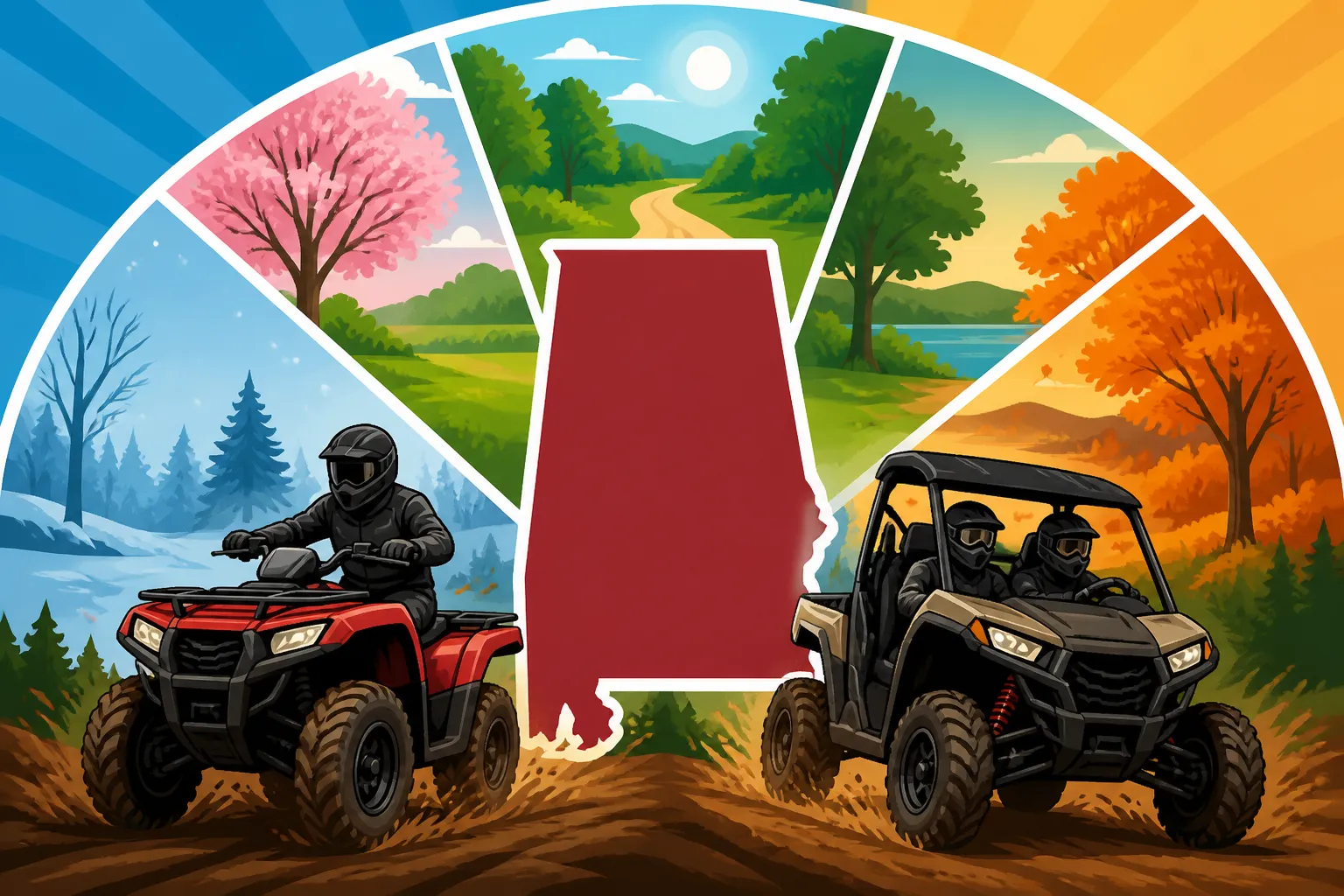
Alabama riding conditions can change from firm red clay to slick mud, heavy humidity, or dry, dusty trails within a few weeks. That makes it hard to choose when to ride and what to bring. This month-by-month guide explains what to expect across Alabama, how conditions differ by region, and what to check before towing your ATV or UTV to a trail.
Winter riding in Alabama from December through February
Winter can offer comfortable riding temperatures, fewer bugs, and clearer views through the woods. It can also bring cold rain, short daylight hours, and muddy trails that become difficult to navigate. Conditions vary between the cooler northern counties and the milder Gulf Coast, so check the forecast for the riding area rather than relying on conditions at home.
December
December often brings a mix of crisp, rideable days and wet stretches. In north Alabama, a cold morning around Cullman or near the Bankhead area can feel much sharper than an afternoon closer to Montgomery or Mobile. Dress in layers: a warm base layer, gloves that allow you to operate controls, and a wind-resistant outer layer are more useful than one bulky coat.
Rain is the main trail concern. Clay may look manageable at the trailhead but turn slick in shaded hollows or on slopes. Avoid assuming that a dry driveway means the trails are ready. Check the park or land manager’s notices before leaving, and use [Alabama Trail Conditions Before You Tow] as a reminder to check the destination itself. If recent rain has softened the ground, postponing can prevent a frustrating trip and reduce rutting.
January
January is often among the coldest months, particularly in the northern part of the state. Wind chill can be noticeable on an open UTV even when the temperature seems reasonable while you are standing beside it. Bring dry gloves and an extra layer in a sealed bag; once your hands get wet or chilled, even a familiar ride can become uncomfortable.
Plan for a shorter day than you might choose in summer. Start with enough daylight to reach the trailhead, unload, ride, and secure your machines before dark. Winter weather can change quickly, and shaded trail sections may stay wet after exposed areas dry. A paper map or offline navigation option is useful if poor reception or an unexpected detour makes it difficult to follow your planned route. If you use onX Offroad, save the area you plan to ride before you lose service, and still check the riding area’s own map and rules.
February
February can be a transition month: some days feel like winter, while others offer a preview of spring. That variation makes flexible clothing especially useful. A cool start can turn into a mild afternoon, so choose layers you can remove and stow without leaving gear loose in the cargo area.
Rainfall and thawing ground matter more than the calendar. A trail that was firm during a cold spell may soften after several damp days. Before setting out, look for official trail notices and recent local updates. Keep an eye on [Alabama Trail Closures After Rain] when planning a trip, and do not treat a closed or saturated trail as an invitation to find an unofficial detour. Trail closures protect both riders and the land.
Spring riding from March through May
Spring is a popular time to ride because temperatures are often more comfortable than midsummer, and the woods are lively and green. It is also a season of changeable weather. A pleasant morning can give way to rain, and a few wet days can affect clay trails long after the clouds clear.
March
March may deliver some of Alabama’s most inviting riding days, but it is not reliably dry. Expect occasional cool mornings, warmer afternoons, and quick weather shifts. Bring a light rain layer even when the forecast looks promising, and secure loose items before heading out: spring showers can soak open cargo areas in minutes.
Trail conditions can differ sharply across a single route. Open ridges may dry first, while shaded low spots, creek approaches, and wooded slopes stay soft. In a group, make sure everyone understands the planned route and knows what to do if the group gets separated. For a seasonal overview, [Alabama Riding in Spring] can help you think through the combination of changing weather, damp ground, and longer daylight.
April
April often provides a comfortable balance of daylight and riding temperatures, but thunderstorms and saturated soil can still disrupt plans. Check the forecast for the trail area and the hours you expect to be riding, not just the morning forecast for your town. If storms are possible, identify a safe place to stop and avoid exposed ridges or creek crossings when conditions deteriorate.
Spring growth can also make familiar trails feel different. Brush may narrow sight lines, and water levels can change after rain. Ride at a speed that leaves room to respond to other machines, hikers, horses, or unexpected obstacles. Before trying a new route, review [Alabama Trail Difficulty Ratings] and choose a level that fits the least experienced rider in the group, not just the most confident one.
May
May can still be pleasant, but warm, humid afternoons begin to feel more demanding, especially in an enclosed cab or during slow technical riding. Carry water where it is easy to reach, take breaks before riders feel worn down, and pay attention to anyone who seems unusually tired, dizzy, or confused. Children and passengers may need more frequent stops than the driver.
Conditions can shift from firm in the morning to dusty in exposed areas later in a dry spell, while shaded or low sections remain damp. Pack for both rather than assuming the whole trail will feel the same. This is also a good time to check equipment before summer trips: inspect tires, belts, lights, and recovery gear, and make sure helmets and eye protection fit comfortably. On longer rides, offline mapping through a tool such as onX Offroad can be a helpful backup, but it does not replace posted trail signs or landowner permission.
Summer riding from June through August
Summer brings long daylight hours, but heat and humidity can make a full day on the trail exhausting. The challenge is not only the air temperature. Slow travel, protective gear, direct sun, and physical effort can all add to heat stress. Plan a shorter ride than you would in cooler weather and build in regular breaks.
| Month | Typical riding consideration | Practical planning choice |
|---|---|---|
| June | Humidity rises; afternoon storms are possible | Start earlier and check the forecast during the day |
| July | Heat can be intense, especially on slow trails | Shorten the route and schedule frequent water breaks |
| August | Hot conditions may continue, with local rain variation | Check trail status and avoid pushing through fatigue |
| September | Heat may ease gradually, but conditions remain variable | Keep summer hydration habits and watch for storms |
June
June can feel hot and humid even before the peak of summer. Riding early can reduce exposure to afternoon heat, but it does not eliminate the need for water, breaks, and a realistic route. Choose clothing that provides protection while allowing airflow, and avoid leaving food, electronics, or safety supplies where they can become damaged by heat.
Thunderstorms can develop, so keep checking weather conditions rather than relying on a forecast you saw the night before. Wet trail sections may become slippery, and creek crossings can change after heavy rain. If your destination is a managed park, confirm its operating status and trail rules before traveling. The operating schedule, admission requirements, and closures can vary by site, so use [Alabama ATV Trails: Where to Ride] as a starting point for comparing riding options, then confirm details with the park or land manager directly.
July
July can be one of the hardest months for a long ride because heat and humidity add up over time. A rider who feels fine while unloading may be uncomfortable after hours in riding gear, and passengers may have less control over when the group stops. Decide on a turnaround time before starting, and make stopping for water part of the plan rather than waiting until someone feels unwell.
A shaded route can feel more comfortable than an exposed one, but shade does not make a demanding ride risk-free. Keep communication simple: agree on a signal for stopping, carry a first-aid kit, and let the group know where water and basic supplies are stored. If a rider becomes confused, unusually weak, nauseated, or faint, stop the ride and treat the situation seriously rather than trying to finish the loop.
August
August often continues the summer pattern of hot, humid days, though local rainfall can make conditions very different from one area to another. A dry spell may mean dust on open sections; recent rain may leave mud and standing water in low areas. Ask the riding area about conditions if you are traveling a long distance, especially when a group or overnight stay depends on the trip.
Keep rides flexible. A shorter route near the trailhead may be a better choice than a long loop that is difficult to leave early. Before riding, review [Alabama Trail Etiquette Locals Expect] and follow posted direction, speed, and access rules. Be courteous around other trail users, and avoid creating a new route around a muddy or closed section. An app such as onX Offroad may help with orientation when reception is limited, but always defer to local signs, official maps, and current access rules.
Fall riding from September through November
Fall is often a favorite riding season because daytime conditions can become more comfortable and the landscape changes across the state. Early fall may still feel like summer, while late fall can bring cool mornings and shorter days. Hunting activity and land-access rules may also affect where and when you can ride.
September
September is a transition rather than a guaranteed cool-down. Warm afternoons remain common, so keep water and heat precautions in your plan. A cooler morning can make it tempting to ride farther than intended, but check the afternoon forecast and allow time to return before dark.
If you ride on public hunting land or near a wildlife management area, check the specific area’s access rules before going. Rules can differ by tract and season, and riding access may be restricted at certain times. [Alabama Hunting Season and Trail Access] is useful background, but the area’s own notices and maps should guide your decision. Do not assume that a route you used earlier in the year remains open.
October
October often brings comfortable riding weather, but a string of rain can still leave trails slick. Fall color and cooler air may encourage longer outings; keep enough daylight in reserve for a mechanical problem, a slower-than-expected group, or a wrong turn. Before the trip, tell someone where you are going and when you expect to return.
This is also a sensible month to review your navigation plan. Mark the trailhead, planned route, and a way back to the vehicle before riding. If you rely on onX Offroad or another navigation app, download maps for offline use where available and carry a backup plan. A phone screen is not a substitute for following posted boundaries, staying on authorized routes, or checking with the land manager about access.
November
November can bring cool, dry riding days, especially earlier in the month, along with colder mornings as winter approaches. Pack layers and check that lights work before a late-afternoon departure. Sunset comes earlier than in summer, and the last part of a ride can feel much colder once you are moving through open areas.
Hunting activity becomes an important part of trip planning in some locations. Wear visible clothing where appropriate, respect closures and posted notices, and avoid riding where access is restricted. If you are unsure whether a trail or road is open to recreational riding, contact the managing agency or landowner rather than guessing. For an overview of seasonal access issues, [Alabama Trail Conditions Before You Tow] is a useful reminder to confirm conditions before making the drive.
Plan around conditions, not just the calendar
Alabama’s riding season does not have one statewide start or end date. The north, central, and southern parts of the state can experience different temperatures and ground conditions at the same time. Even within one riding area, a sunny ridge, shaded hollow, and low creek crossing may call for different decisions.
Before every trip, check the local forecast, trail status, access rules, and daylight. Ask whether recent rain has affected the route, and be willing to change plans if the ground is too soft or a closure is in effect. On public land, confirm permits and seasonal restrictions; on private property, make sure you have permission. If a park offers wash facilities, confirm that they are available before relying on them, and clean mud from your machine before traveling to avoid carrying it onto roads or another property.
A simple pre-ride check can prevent common frustrations:
- Confirm the riding area is open and that your machine is allowed.
- Check the local forecast and recent rainfall, not just the conditions at home.
- Match route length and difficulty to the least experienced rider.
- Carry water, protective gear, basic tools, and a first-aid kit.
- Save a map or route for offline reference and follow posted signs.
- Set a return time that leaves a daylight and weather buffer.
The best month to ride is the one when the trail is open, conditions suit your machine and group, and everyone can finish safely. A little checking before you tow is usually easier than arriving to find a closure, facing a muddy route your group is not prepared for, or heading home after an uncomfortable day in the heat.
Disclaimer
This article is for general informational purposes only and does not constitute professional advice. Laws, prices and regulations vary by location and change over time. Consult a qualified professional for guidance on your specific situation.