1,500 Pounds Dry for an ATV
It can be incredibly frustrating when you're trying to understand the rules for your off-road machine in Alabama, only to find that seemingly minor details like weight can completely change how your vehicle is classified and regulated. This guide is here to untangle the complexities around the 1,500-pound dry weight limit for ATVs in Alabama, helping you understand what it means for your machine, how to ensure you're compliant, and what to look for when buying or selling.
Understanding Alabama's Definition of an ATV
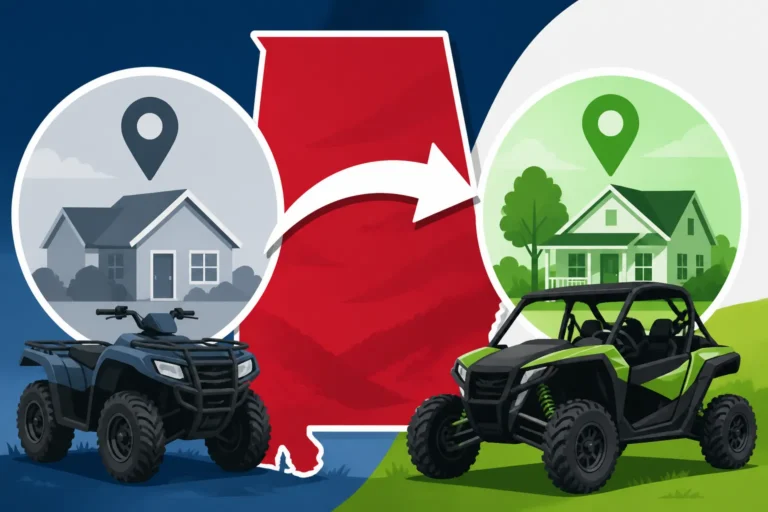
One of the biggest hurdles many off-road enthusiasts face in Alabama is simply figuring out what kind of machine they actually own, at least in the eyes of the law. Is it an ATV? A UTV? An ROV? These aren't just semantic differences; they carry real legal implications for everything from where you can ride to how you register and, soon, how you'll title your machine. The definition often hinges on a few key characteristics, and dry weight is absolutely paramount for distinguishing a true All-Terrain Vehicle (ATV) from its bigger cousins.
The Critical 1,500-Pound Dry Weight Limit
Let's cut right to the chase: in Alabama, a recreational off-highway vehicle (ROV) — a category that encompasses both ATVs and side-by-sides — is defined with specific parameters. For an ATV, one of the most defining characteristics is its dry weight. The law clearly states that an ATV must not exceed 1,500 pounds dry weight. When we talk about "dry weight," we're referring to the weight of the vehicle without any fluids (fuel, oil, coolant), cargo, or occupants. It's essentially how much the machine weighs straight from the factory, stripped down to its essentials.
This number isn't just a suggestion; it's a hard legal line. Manufacturers typically provide this dry weight specification in the owner's manual, on the vehicle's specification sheet, or even on the Manufacturer's Statement of Origin (MSO) that comes with a new machine. It's crucial to understand that modifications you make later – adding a winch, a heavy bumper, or a cargo box – don't change the original dry weight that defines the vehicle type. The initial factory specification is what Alabama's law is concerned with.
How Weight Differentiates ATVs from Other Off-Road Vehicles
So, if an ATV is capped at 1,500 pounds dry weight, what about those larger, multi-passenger machines we see everywhere? That's where the "ROV" or "side-by-side" classification comes in. While an ATV is typically designed for a single rider, or sometimes a rider and a very specific passenger on a dedicated two-up model, side-by-sides are built for multiple occupants sitting side-by-side (hence the name!) with a steering wheel and foot pedals, much like a car. These machines, often referred to as Utility Terrain Vehicles (UTVs) or Recreational Off-Highway Vehicles (ROVs), almost invariably exceed the 1,500-pound dry weight limit.
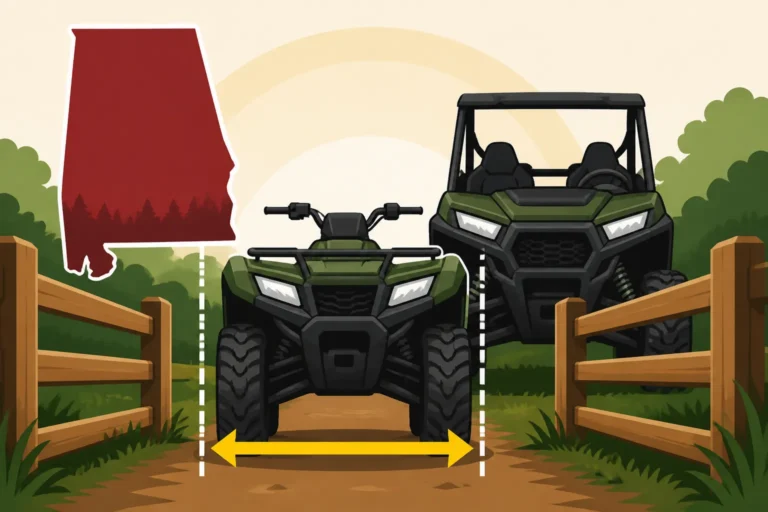
Alongside weight, width is another critical factor. ATVs generally have a maximum width of 60 inches. Side-by-sides, on the other hand, can be significantly wider, sometimes up to 80 inches. You can dive deeper into these specifics in [Alabama ATV Width and Weight Limits]. These combined factors of weight and width are what the state uses to categorize your machine, which then dictates how it's treated under various regulations. It's not uncommon for people to mistakenly call their side-by-side an ATV, but legally speaking, these are distinct categories with different rules applying to each.
Why the Definition Matters for Owners
You might be thinking, "What's the big deal? It's just a name." But the legal definition of your machine type has tangible consequences for you as an owner in Alabama. For starters, it directly influences the voluntary [Alabama Public Use Versus Private Use] registration tiers. While most off-road machines can be registered, the specific type, as defined by its characteristics like weight, informs how it fits into the regulatory framework. Misclassifying your vehicle, even unintentionally, could lead to issues down the road, particularly if you're ever questioned by law enforcement about where you're riding or if you need to demonstrate ownership.
Beyond registration, understanding the precise definitions is crucial for legal discussions around [Alabama's ATV and ROV Legal Definitions] and future titling requirements. If you ever need to sell your machine, or if you purchase one, having clear documentation that correctly identifies the vehicle type according to its factory specifications can prevent significant headaches. It ensures everyone involved is on the same page and helps avoid disputes about the vehicle's true nature and legal status.
Practical Implications of the 1,500-Pound Rule
The 1,500-pound dry weight rule isn't just an abstract legal detail; it has very real, day-to-day consequences for how you own and operate your ATV in Alabama. From how you register it to what you need to confirm when buying, this weight limit is a cornerstone of the state's off-road vehicle regulations. Ignoring it or misunderstanding it can lead to frustrating delays, legal complications, or even financial penalties.
Registration Tiers and Your Machine's Classification
Alabama offers a voluntary registration system for off-road vehicles through the Alabama Law Enforcement Agency (ALEA). When you go to register your machine, whether it's for [Alabama Public Use ATV Registration Explained] or strictly private land riding, the type of machine you have matters. An ATV, by definition, falls under that 1,500-pound dry weight limit. This classification helps ALEA ensure that the correct vehicle type is associated with your registration, which is important for statistical tracking and potentially for enforcement if rules governing different vehicle types diverge.
If your machine exceeds 1,500 pounds dry weight, it's typically going to be classified as an ROV or side-by-side, which might involve slightly different internal classifications for the state. While the voluntary registration broadly applies to "off-road vehicles," the underlying definitional differences are crucial for consistent application of any future regulations or specific riding area rules that might differentiate between ATVs and ROVs. Making sure your machine is correctly identified at the point of registration helps prevent any future issues down the line regarding its legal status.
Buying a Machine: What to Look For
When you're in the market for a new-to-you ATV in Alabama, especially through a private sale, the 1,500-pound dry weight limit should be at the forefront of your mind. It’s easy to get caught up in the excitement of a new machine, but taking a moment to confirm its official dry weight can save you a lot of trouble. Always ask to see the Manufacturer's Statement of Origin (MSO) for a new machine, or the owner's manual and original sales paperwork for a used one. These documents should clearly list the dry weight.
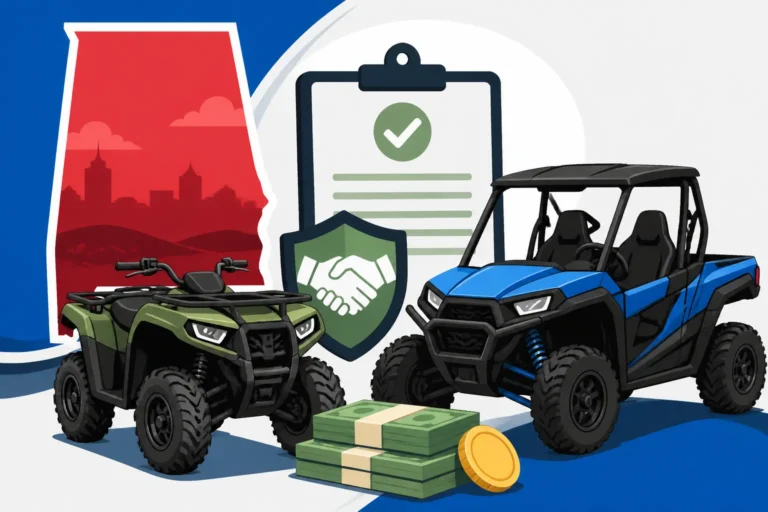
If you're buying from a private seller, having a comprehensive [Alabama Bill of Sale Requirements] is absolutely essential. This document should explicitly state the machine's make, model, VIN/serial number, and its classification (e.g., "ATV, dry weight under 1,500 lbs"). Using a reputable service like LawDepot can help you generate a detailed, legally sound bill of sale that includes all the necessary information, protecting both you and the seller. Don't just rely on a verbal agreement or a hastily scribbled note; proper documentation confirms the vehicle's type and helps establish clear ownership.
Accidental Misclassification and Its Consequences
Imagine you buy a larger, two-seater machine, mistakenly believing it’s an ATV because it looks like one, only to find out it actually weighs 1,800 pounds dry. If you then try to register it as an ATV, or if you encounter a situation where its classification is challenged, you could face complications. While Alabama's registration is voluntary, misrepresenting your vehicle type, even unknowingly, can cause issues with your records. This is especially true as more stringent titling laws come into effect for newer machines.
While specific penalties for misclassifying your machine type during voluntary registration might not be widely publicized, the general principle is that accurate record-keeping is vital. If a machine's true nature (e.g., its weight and width) is materially different from what's on record, it could complicate things during a sale, insurance claim, or if the vehicle is ever recovered after theft. In scenarios where machines are not titled, proving ownership relies heavily on accurate documentation, and discrepancies can be a major hurdle. [Alabama Penalties for a Missing Title] mostly pertain to the new titling law, but it underscores the state's increasing emphasis on proper vehicle identification.
Navigating Machine Specs and Documentation
Understanding the 1,500-pound dry weight limit is one thing, but actually verifying it for your specific machine, or for one you plan to buy, is another. This process involves a bit of detective work with your paperwork and a clear understanding of what official documents carry the most weight. Accurate documentation is your best friend in the off-road world, serving as proof of your machine's identity and helping you avoid potential legal snags down the trail.
Finding Your ATV's Dry Weight
So, you've got your ATV, and you want to confirm its dry weight. Where do you start looking? The most reliable place to find this information is almost always the manufacturer's official documentation.
- Owner's Manual: This is your first stop. Most owner's manuals include a specifications section that lists the vehicle's dry weight, dimensions, engine size, and other critical data.
- Manufacturer's Website: Many manufacturers list detailed specifications for current and past models on their websites. A quick search using your make, model, and year can often yield the exact dry weight.
- Manufacturer's Statement of Origin (MSO): For a new machine, the MSO (sometimes called a Manufacturer's Certificate of Origin or MCO) is essentially its birth certificate. It contains all the factory-provided information, including dry weight, and is crucial for initial registration and, soon, titling.
- VIN Decoder: While not always giving dry weight directly, decoding your Vehicle Identification Number (VIN) can confirm the exact model and year, helping you cross-reference with manufacturer specs.
Remember, the dry weight is what you're looking for, not the curb weight (which includes fluids) or gross vehicle weight (which includes occupants and cargo). It’s about the machine's inherent design, not how you load it up for a weekend ride.
The Role of the Bill of Sale and Other Paperwork
For off-road vehicles, especially those not yet subject to titling requirements in Alabama, the [Alabama Registration Paperwork Explained] and a solid bill of sale are your primary proofs of ownership and identification. When you're buying or selling an ATV, the bill of sale should be comprehensive and clearly describe the machine, including its type (ATV), make, model, year, and crucially, its serial number (VIN). Including the dry weight, if confirmed, can add an extra layer of clarity.
For private sales, where there isn't a dealer preparing all the documents, it's easy to overlook crucial details. This is where services like LawDepot can be incredibly helpful. You can use their templates to create a legally robust bill of sale that captures all the necessary information, including the dry weight, to ensure there's no ambiguity about the machine's classification. A well-crafted bill of sale protects both parties and serves as a vital piece of your ownership history, proving [Proving You Own an Untitled Machine].
When Your Machine Doesn't Fit the Mold
What happens if your machine is a bit of an outlier? Maybe it's an older "quad" that somehow pushes over the 1,500-pound dry weight limit due to an unusual design, or perhaps it's a very narrow side-by-side that still weighs more than 1,500 pounds. These scenarios can cause confusion. Alabama's statute does offer specific definitions for ROVs that include width and weight parameters, sometimes creating overlap or requiring careful interpretation. In fact, you might even encounter [Alabama's Conflicting ROV Weight Figures] depending on which part of the statute you're reading.
If you find yourself in such a gray area, the best course of action is to err on the side of caution. If your machine is clearly designed as a multi-passenger, car-like vehicle, it's safer to consider it an ROV even if it's narrower than some. If its dry weight is over 1,500 pounds, it's not an ATV by Alabama's definition. When in doubt, consulting with your county registration office or even a legal professional familiar with off-road vehicle laws can provide clarity, ensuring you don't inadvertently misclassify your beloved machine.
Looking Ahead: Titling and the 1,500-Pound Rule (Post-2026)
The landscape for off-road vehicle ownership in Alabama is evolving, with significant changes regarding titling set to take effect. While the 1,500-pound dry weight rule for ATVs has always been part of the definitional framework, it will take on even greater importance once titling becomes mandatory for certain machines. Understanding how this weight limit interacts with the new titling law will be crucial for all owners, especially those looking to buy or sell in the coming years.
Titling for New ATVs Starting 2026
Beginning January 1, 2026, [Alabama ATV Titling Starts With Model Year 2026] for new off-road vehicles. This means that if you purchase a new ATV that is model year 2026 or newer, and it meets the state's definition – including the critical 1,500-pound dry weight limit – it will require a certificate of title. This title will be issued by the Department of Revenue through county licensing offices. This is a huge shift from the previous system where only voluntary registration through ALEA was available.
The dry weight limit is fundamental here because it helps determine which machines actually qualify as ATVs under the new titling law. If your machine, regardless of what the manufacturer calls it, exceeds 1,500 pounds dry weight, it will likely fall into the broader ROV category for titling purposes, which also requires a title for 2026 model year machines and newer. So, that seemingly small number carries immense weight (pun intended!) in determining how your machine is officially recognized and documented by the state moving forward.
Impact on Older, Untitled Machines
For those of us who already own an ATV or ROV that is model year 2025 or older, the good news is that these machines are generally exempt from the new mandatory titling requirements. This means [Why Older Alabama ATVs Cannot Be Titled] is a common scenario, and you won't be required to go out and get a title for your existing machine. However, the existing voluntary registration system through ALEA will still be available and highly recommended, especially if you plan to ride on public lands or want an official record of ownership.
Even without a mandatory title, the 1,500-pound dry weight definition for ATVs still applies to your older machine. It clarifies what type of vehicle you possess, which is relevant for the voluntary registration process and for understanding any riding rules that differentiate between ATVs and ROVs. So, while you might not be rushing to the county office for a title, knowing your machine's classification is still good practice for maintaining accurate records and preparing for any future transactions.
Preparing for a Sale or Transfer
As titling becomes standard for newer off-road vehicles, the process of selling or transferring ownership will become more formal and transparent. For new machines (2026 model year and newer) that are titled, transferring ownership will involve signing over the title, much like with a car. The specific fees for this transfer are typically quite low, such as [Alabama Duplicate and Transfer at $5].
For older, untitled machines, the importance of a meticulously prepared bill of sale becomes even greater. A detailed bill of sale, stating the machine's make, model, VIN, and its classification (e.g., "ATV, dry weight under 1,500 lbs") is the primary proof of ownership transfer. For both titled and untitled machines, having clear, accurate documentation that reflects the vehicle's true specifications, including its dry weight classification, will make the process smoother for both the buyer and the seller. This proactive approach ensures fewer questions, reduces potential disputes, and solidifies your machine's legal identity in Alabama.
| Feature | ATV (All-Terrain Vehicle) | ROV/UTV (Recreational Off-Highway Vehicle/Utility Terrain Vehicle) |
|---|---|---|
| Dry Weight | Typically 1,500 pounds or less | Typically over 1,500 pounds |
| Width | Typically 60 inches or less | Can be up to 80 inches wide |
| Seating | Designed for single operator, some two-up models | Designed for multiple occupants, side-by-side seating |
| Steering | Handlebars | Steering wheel |
| Controls | Handlebar-mounted throttles, hand/foot brakes | Foot pedals for throttle and brake |
| Titling (2026+) | Mandatory for model year 2026 and newer | Mandatory for model year 2026 and newer |
| Registration | Voluntary through ALEA (Public or Private Use tiers) | Voluntary through ALEA (Public or Private Use tiers) |
Disclaimer
This article is for general informational purposes only and does not constitute professional advice. Laws, prices and regulations vary by location and change over time. Consult a qualified professional for guidance on your specific situation.