Financing a Titled Machine
Buying an ATV or side-by-side in Alabama is an exciting prospect, promising countless adventures on red clay trails or efficient help around the farm. For many, financing is the key to getting that dream machine, but navigating the loan process for an off-road vehicle, especially with Alabama's evolving titling laws, can feel a little complicated. This guide aims to clear up all the confusion around financing a titled ATV or UTV in Alabama, empowering you to approach the purchase with confidence and understanding.
The Game Changer: Why a Title Matters for Financing Your Machine
Before Alabama's new titling law, which began with model year 2026 machines, financing an off-road vehicle was often a different ballgame. Lenders were wary because there wasn't a formal, state-issued document proving ownership and, more importantly, establishing clear collateral. Now, with titles, the financing landscape has shifted significantly, making the process much smoother and more secure for both buyers and lenders.
How a Title Establishes Clear Ownership and Collateral
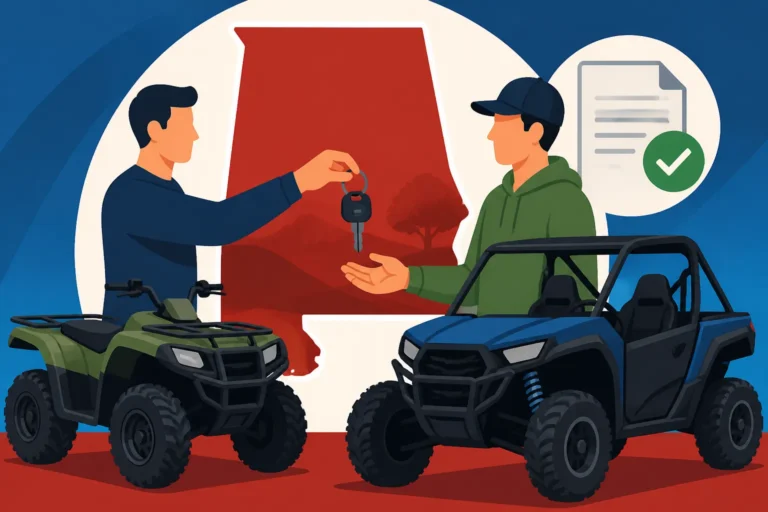
Think of an ATV or UTV title like the title for your car. It's an official document issued by the state that legally establishes who owns the machine. For a lender, this isn't just a formality; it's a fundamental piece of security. When you take out a loan, the lender essentially buys the machine on your behalf, and you agree to pay them back over time. If, for some unforeseen reason, you can't make your payments, the lender needs a clear legal path to recover their investment. A title provides that path. It allows the lender to record a lien on the machine, indicating their financial interest until the loan is fully repaid. This clarity makes the machine a more tangible asset and, therefore, more attractive as collateral. Without a title, proving absolute ownership can be much harder, relying on bills of sale or other less formal documents, which introduces a lot of uncertainty for financial institutions. For anyone looking to understand the core process, knowing [How to Title an ATV in Alabama] is a great start.
The Lender's Perspective: Reduced Risk and Better Terms
From a bank or credit union's point of view, a titled ATV or UTV is a much less risky proposition than an untitled one. When a machine has a title, the lender can easily verify its legal status, ensuring it hasn't been reported stolen and that there are no existing hidden liens. This reduction in risk often translates directly into better financing terms for you, the borrower. You're more likely to qualify for lower interest rates, longer repayment periods, and larger loan amounts because the collateral is secure and verifiable. It's the same principle that applies to vehicle loans for cars or trucks; the title provides a transparent system for managing ownership and debt. This added layer of official documentation builds trust between you and the financial institution, paving the way for a smoother, more favorable lending experience. They appreciate the clear legal framework provided by the new title system, especially for machines that fall under [Alabama Title Applications From January 2026].
What If My Machine Isn't Titled?
While this guide focuses on financing titled machines, it's worth briefly touching on the alternative. If you're looking at a machine that doesn't qualify for an Alabama title – typically older models from before 2026 – financing becomes a different challenge. Lenders might view these purchases as unsecured loans, much like a personal loan, because there's no state-issued title for them to record a lien against. This usually means higher interest rates and stricter eligibility requirements. Sometimes, lenders might be willing to finance an untitled machine through a personal loan, where your creditworthiness is the primary factor, rather than the machine itself serving as collateral. This is why understanding the nuances of [Financing an Untitled Machine] is crucial if you're considering an older model. In short, having a title significantly simplifies the financing process and generally leads to more advantageous loan terms.
Navigating Your Financing Options in Alabama
Once you've decided on a titled ATV or UTV, the next step is to explore where you can secure the funding. You have several avenues available, each with its own benefits and considerations. Shopping around and understanding these options is key to finding the best fit for your financial situation.
Dealer Financing: Convenience and Manufacturer Incentives
Many people find the ease of dealer financing incredibly appealing. When you're at the dealership, you can often handle the purchase, trade-in, and financing all in one place. Dealers frequently work with a network of lenders, including manufacturer-backed finance companies, which can sometimes offer attractive promotional rates or special incentives, especially on new models. These might include zero-percent financing for a limited time, or cash-back offers that can be quite enticing. However, it's important to read the fine print. While convenient, dealer financing isn't always the cheapest option. Dealers might also include various fees, sometimes called "doc fees" or "freight charges," which can add to the overall cost. Always ask for the "out-the-door" price, including all fees, taxes, and interest, before you sign. Understanding things like [Alabama Dealer Doc Fees] can help you feel more prepared when discussing the total cost.
Banks and Credit Unions: Your Local Lending Partners
For many Alabamians, local banks and credit unions are a tried-and-true option for financing large purchases. If you already have an established relationship with a financial institution, they might offer you competitive rates and personalized service. Credit unions, in particular, are known for their member-focused approach and can often provide some of the best interest rates on vehicle loans, including for ATVs and UTVs. It's always a good idea to get pre-approved for a loan before you even set foot in a dealership. This not only gives you a clear budget to work with but also provides leverage in negotiations, as you'll already have an offer in hand. You can compare their rates and terms to what the dealer offers, ensuring you get the most favorable deal. Researching [Alabama Credit Union Loan Rates] can give you an idea of what to expect.
Personal Loans and Alternative Lenders: When Other Avenues Don't Fit
Sometimes, for various reasons, traditional dealer or bank financing might not be the right fit. Perhaps your credit score isn't where you want it to be, or you're looking to finance an older machine that still happens to be titled (though less common for a titled machine, it's possible). In these situations, personal loans or alternative lenders could be an option. Personal loans are typically unsecured, meaning they don't use the ATV itself as collateral, which can lead to higher interest rates compared to a secured loan. However, they offer flexibility. Alternative lenders, often found online, specialize in different types of loans and might have more lenient requirements, but again, this usually comes at the cost of higher interest rates and potentially different fee structures. Always exercise caution with alternative lenders; thoroughly research their reputation and read all terms and conditions before committing. Understanding basic loan contracts, which you can review through resources like LawDepot, can give you valuable insight into the language you'll encounter with any lender.
The Application Process: What Lenders Look For
Regardless of where you decide to apply for financing, the process generally involves providing a good amount of personal and financial information. Lenders want to assess your ability to repay the loan, and they use specific criteria and documents to make that determination. Being prepared with the right information can make the application process much smoother.
Essential Documentation: Proving You're a Responsible Borrower
When you apply for a loan, expect to provide several key pieces of documentation. Lenders need to verify your identity, your income, and your financial stability. This typically includes:
- Proof of Identity: A valid government-issued ID, like your Alabama driver's license.
- Proof of Income: Recent pay stubs, tax returns (especially if you're self-employed), or bank statements. This helps the lender see that you have a steady income stream capable of covering monthly payments.
- Proof of Residence: Utility bills, a lease agreement, or mortgage statements to confirm your address.
- Social Security Number: For a credit check.
- Machine Details: For a titled machine, you'll need its Vehicle Identification Number (VIN) and details about the make, model, and year. This is crucial for the lender to identify the collateral and eventually record their lien on the title.
Having these documents organized and ready can significantly speed up your application process, showing the lender you're serious and prepared. Even if you're not going through a dealer, it's smart to have a clear [Alabama Bill of Sale Requirements] in mind for the purchase itself, as it complements the financing documentation.
The Role of Your Credit Score and Debt-to-Income Ratio
Your credit score is arguably the most significant factor lenders consider. It's a numerical representation of your creditworthiness, based on your payment history, how much debt you carry, the length of your credit history, and other factors. A higher credit score generally means you're seen as a lower risk, which can unlock lower interest rates and more favorable loan terms. If your credit score is on the lower side, you might still get approved, but often with a higher interest rate to compensate the lender for the increased risk.
Another crucial metric is your debt-to-income (DTI) ratio. This compares your total monthly debt payments to your gross monthly income. Lenders use this to determine if you have enough disposable income to comfortably make your new ATV or UTV payments. A lower DTI ratio indicates you're not overextended financially, making you a more attractive borrower. Before applying, it's a good idea to get a copy of your credit report and understand your DTI ratio. If you're looking to gain a better understanding of how these factors play into loan agreements, legal template providers like LawDepot offer resources that can help demystify financial terminology and documentation, though always consult with your chosen lender for specific advice.
Understanding Loan Terms: Rates, Fees, and Payment Schedules
When you're offered a loan, it's essential to understand all the terms before you sign. The Annual Percentage Rate (APR) is perhaps the most important figure, as it represents the total cost of borrowing over a year, including interest and certain fees. Don't just look at the interest rate; the APR gives you a more complete picture.
Other aspects to consider include:
- Loan Length: This refers to the repayment period (e.g., 36, 48, 60 months). Longer terms often mean lower monthly payments but result in paying more interest over the life of the loan.
- Fees: Beyond interest, loans can come with various fees, such as origination fees, processing fees, or early payoff penalties. Always ask for a full breakdown of all associated costs.
- Payment Schedule: Understand exactly when your payments are due and what happens if you miss one.
- Prepayment Penalties: Some loans charge a penalty if you pay off the loan early. If you anticipate paying off your machine ahead of schedule, look for loans without this clause.
Take your time to review the loan agreement thoroughly. Don't be afraid to ask questions until you understand every detail. A little extra time spent upfront can save you a lot of money and headaches down the road.
| Loan Term / Feature | Description | Why It Matters for Your ATV/UTV Loan |
|---|---|---|
| APR | Annual Percentage Rate – Total yearly cost of borrowing, including interest & fees. | The true cost of your loan; compare APRs, not just interest rates. |
| Loan Length | The duration over which you will repay the loan (e.g., 36, 60 months). | Longer terms mean lower monthly payments but more total interest paid. |
| Monthly Payment | The fixed amount you pay each month. | Must fit comfortably within your budget; directly impacted by APR & length. |
| Origination Fee | A charge for processing the loan. | Adds to the upfront cost; some lenders waive it. |
| Prepayment Penalty | A fee charged if you pay off your loan earlier than scheduled. | Avoid if you plan to pay off the machine quickly to save on interest. |
| Collateral | The asset securing the loan (your titled ATV/UTV). | Gives the lender security, which can lead to better rates for you. |
Protecting Your Investment: Beyond the Loan Paperwork
Getting the financing squared away is a huge step, but the journey of owning a titled, financed ATV or UTV doesn't end there. There are crucial considerations to keep in mind once the ink is dry, primarily focusing on protecting your investment and understanding the legal aspects of your lien. These steps ensure your machine is safeguarded and that you fully understand the implications of your loan.
Insurance Requirements for Titled and Financed Machines
Just like with a car, if you finance a titled ATV or UTV, your lender will almost certainly require you to carry specific types of insurance coverage. This isn't just a suggestion; it's a contractual obligation designed to protect their financial interest in the machine. Typically, they will mandate:
- Comprehensive Coverage: This protects against damage to your ATV or UTV from events other than collisions, such as theft, vandalism, fire, natural disasters (like a fallen tree in a storm), or hitting an animal. Given the value of these machines and how they're often stored, this coverage is vital.
- Collision Coverage: This covers damage to your ATV or UTV if it collides with another vehicle, an object, or rolls over. Accidents happen, especially off-road, and this coverage can save you from a massive repair bill or the cost of a replacement.
You'll need to maintain this coverage for the entire loan term, and the lender will often be listed as an "additional insured" or "loss payee" on your policy, meaning they get paid directly if the machine is a total loss. Choosing the right deductibles and understanding your policy is crucial. You can learn more about this by looking into [Insuring a Machine With a Title].
How a Lender's Lien Shows on Your New Title
One of the primary reasons lenders prefer to finance titled machines is the ability to record a lien. When your loan is finalized, the lender will notify the titling agency – likely your county probate office – that they have a financial interest in your ATV or UTV. This lien will then be officially recorded on the machine's title.
What does this mean for you?
- Proof of Debt: The lien serves as public notice that there's an outstanding loan against the machine.
- Restriction on Sale: You generally cannot sell or transfer ownership of the ATV or UTV without satisfying the lien first. If you were to sell it, the buyer would technically inherit the lien, which is why legitimate buyers and dealers will always check for liens.
- Lender's Priority: In the event of a total loss or if the machine needs to be repossessed due to non-payment, the lien ensures the lender has the first claim to any proceeds or the machine itself.
Once you pay off your loan in full, the lender will send you a lien release. You'll then take this document to your local titling agency, and they will issue you a new, clear title that shows no outstanding liens. This process is essential for understanding your ownership rights and responsibilities throughout the loan term. You can delve deeper into this topic with [How a Lender's Lien Shows on a New Title].
Post-Purchase Considerations: Maintenance and Resale Value
While not directly tied to financing, maintaining your titled ATV or UTV is crucial for protecting your investment, especially when you have an outstanding loan. Regular maintenance not only keeps your machine running safely and efficiently but also helps preserve its resale value. Think about oil changes, air filter cleaning (especially in dusty Alabama conditions), tire rotations, and general inspections. Neglecting these can lead to costly repairs down the line, adding unexpected expenses on top of your loan payments.
Should you decide to sell your machine before the loan is paid off, the better its condition, the more you'll get for it. A well-maintained machine will fetch a higher price, making it easier to pay off the remaining loan balance and potentially even put some cash in your pocket. Always keep good service records; they're invaluable when it comes time to sell. Understanding factors like [Alabama Maintenance Costs Per Year] and [Alabama Resale Value by Brand] can help you budget and plan accordingly. Ultimately, treating your titled, financed machine with care is an investment in its longevity and your financial well-being.
Disclaimer
This article is for general informational purposes only and does not constitute professional advice. Laws, prices and regulations vary by location and change over time. Consult a qualified professional for guidance on your specific situation.