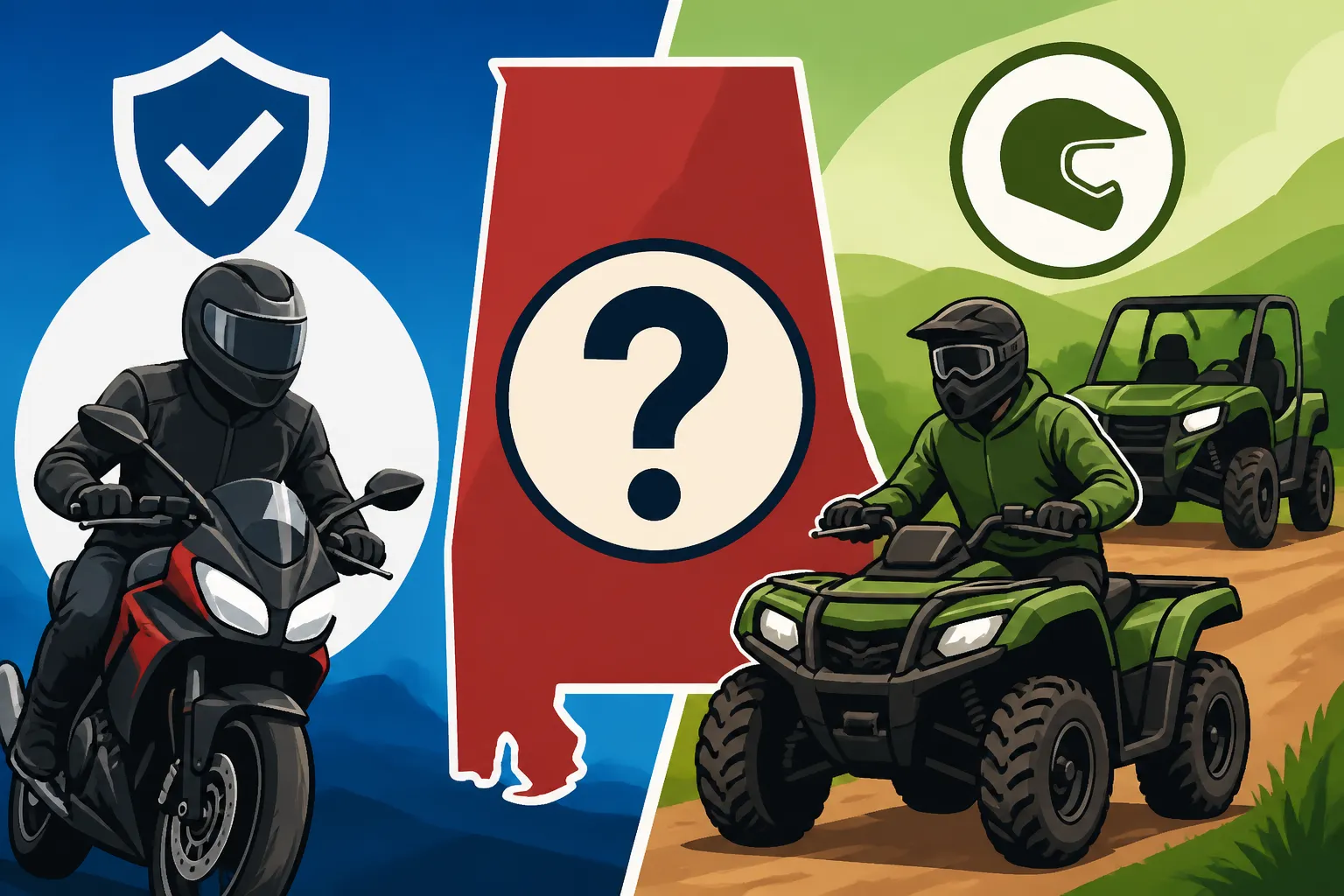
Does Alabama’s Motorcycle Helmet Law Cover ATV Riders?
There’s a common misconception among off-road enthusiasts in Alabama, a genuine head-scratcher that often comes up in conversations at the trailhead or around the campfire: "Do I actually need to wear a helmet on my ATV, or does that only apply to motorcycles?" It’s a completely valid question, especially when you consider how many different rules and regulations there are for various vehicles. This guide aims to clear up that confusion once and for all, helping you understand Alabama's specific legal landscape for ATVs and helmets, while also strongly emphasizing safety.
The Clear Distinction: Motorcycle Versus ATV Laws in Alabama
When it comes to the letter of the law, Alabama makes a pretty significant distinction between a motorcycle and an ATV. This distinction is crucial because it dictates which specific statutes apply to your ride. It’s not just semantics; it’s about how the state views and regulates these very different machines.
What Alabama's Motorcycle Helmet Law Actually Says
Let's start with what most riders are familiar with: Alabama's motorcycle helmet law. Generally speaking, Alabama law requires all operators and passengers of motorcycles to wear approved safety helmets. This isn't just a suggestion; it's a mandatory requirement designed to protect riders from serious head injuries in the event of an accident. The law is quite specific about what constitutes a motorcycle and applies universally across public roads and highways throughout the state. It's meant to ensure that anyone on two wheels, exposed to the elements and other traffic, has a basic layer of protection for their head.
This law was written with a very particular type of vehicle in mind – one that is inherently less stable than a four-wheeled machine and often operates at higher speeds on paved surfaces. Understanding that context is key to seeing why it doesn't automatically extend to every other type of recreational vehicle out there. [Does Alabama's Motorcycle Helmet Law Cover ATV Riders?] is a question many ask precisely because the motorcycle law is so well-known.
How ATVs Are Legally Defined Differently
Now, here's where the rubber meets the red clay for ATV riders. Alabama's legal definitions clearly separate ATVs from motorcycles. An All-Terrain Vehicle (ATV) is typically defined as a motorized, off-highway vehicle designed to travel on four low-pressure tires, having a seat designed to be straddled by the operator, and handlebars for steering control. This definition often includes specific width and weight limits, such as [60 Inches and 1,500 Pounds] for most ATVs. This is a very different description from a motorcycle, which is generally defined by having two wheels.
Because of these distinct definitions, the specific statute that mandates helmet use for motorcycles does not, by default, apply to ATVs. This is a common point of misunderstanding because both are "open-air" vehicles, and both carry inherent risks. However, from a legislative standpoint, they are categorized differently, leading to different regulatory frameworks. This means that if you're riding your quad on private land, for example, the statewide motorcycle helmet law doesn't legally compel you to wear a helmet. You can delve deeper into these differences by reading [Alabama's ATV and ROV Legal Definitions]. The nuances of these definitions are why [When Two Official Pages Define an ATV Differently] can sometimes add to the confusion.
Where Helmet Rules Do Come Into Play for Your ATV Ride
Just because Alabama’s statewide motorcycle helmet law doesn't directly apply to ATVs doesn't mean you're always off the hook for wearing one. In fact, there are several crucial scenarios where helmets are either legally required or are so strongly recommended that it's practically a requirement for your own well-being and continued access to riding areas. Ignoring these can lead to fines, denied entry, or, most importantly, serious injury.
On Public Lands and Designated OHV Parks
This is perhaps the most common place where ATV riders encounter mandatory helmet rules. While the general state law on helmets might not cover ATVs, individual public lands and designated Off-Highway Vehicle (OHV) parks in Alabama frequently have their own specific rules and regulations. These rules are put in place by the managing authority, whether it’s a county park, a state-run facility, or even a privately owned OHV park that opens its trails to the public.
For example, popular riding destinations like Stony Lonesome OHV Park or Minooka Park almost invariably require helmets for all ATV and UTV riders. These parks are concerned with rider safety and liability, and a blanket helmet rule helps them manage risk and ensure a safer experience for everyone. If you show up without a helmet, you’ll likely be turned away at the gate. These rules often apply regardless of age. Always check the specific park’s website or call ahead before you load up and drive. You can find more information about these areas in [Alabama Public Use Designated Areas] and [Alabama Private Park Helmet Rules]. These park-specific rules are often more stringent than state law, and for good reason – they’re designed for the specific challenges and risks of off-road riding.
Private Property Rules and Club Regulations
Beyond public parks, the rules of the land can also dictate helmet use on private property. If you’re riding on land owned by someone else – perhaps a friend’s farm, a timber company’s lease, or a dedicated hunting club property – the owner or organization can (and often does) set their own rules. These might be part of a written agreement, a verbal understanding, or simply posted signs.
Many hunting clubs, recognizing the inherent dangers of riding ATVs, especially in unfamiliar terrain or during hunting season, will require members and guests to wear helmets. Similarly, if you're riding on land through a [Alabama Hunting Club Lease Riding] or [Alabama Landowner Permission Forms], those agreements might stipulate helmet use as a condition of access. This isn't about state law; it's about the landowner protecting themselves from liability and ensuring the safety of those on their property. It’s always best practice to ask about any specific rules before you start riding, as ignoring them could lead to losing your riding privileges or worse.
Age-Related Safety and Insurance Considerations
While Alabama doesn't have a statewide helmet law specifically for minors on ATVs, many of the aforementioned parks and private lands will have age-specific requirements. For instance, it's very common for OHV parks to mandate helmets for all riders under a certain age, say 16 or 18, even if adult riders might have more lenient rules. This reflects a general understanding that younger, less experienced riders are at a higher risk of injury. You can learn more about specific rules for younger riders in [Alabama Rules for Young Riders] and [Alabama ATV Age Rules].
Beyond specific rules, there's a practical and often overlooked aspect: insurance. While not a "law" per se, your decision to wear or not wear a helmet could significantly impact an insurance claim if you're involved in an accident. If you're seriously injured and weren't wearing a helmet (even if one wasn't legally required by the state), an insurance company might argue comparative negligence, potentially reducing the payout for your medical expenses or other damages. It’s a sobering thought, but one worth considering as part of your overall safety plan. Always talk to your insurance provider about your coverage, especially when it comes to off-road machines, as mentioned in [Insuring a Machine With No Title] or even a titled one.
Here’s a quick overview of where helmet rules typically apply:
| Factor | Motorcycle Helmet Law Applies to ATVs? | Common Scenarios Where Helmets ARE Required/Strongly Advised for ATVs |
|---|---|---|
| Statewide Law | No, generally not | – |
| OHV Parks | No | Yes, almost universally (e.g., Stony Lonesome, Minooka) |
| Public Lands | No | Yes, by managing agency rules (e.g., specific WMA zones) |
| Private Land | No | Yes, by landowner/club rules |
| Age of Rider | No | Yes, for minors in many parks/private areas |
| Insurance Claim | No | Strongly advised to avoid claim complications and mitigate risk |
Making the Smart Choice: Why You Should Always Wear a Helmet
So, the definitive answer to "Does Alabama's motorcycle helmet law cover ATV riders?" is generally no, not directly. However, that answer is only one piece of a much larger, and far more important, puzzle: your personal safety. While the law might not mandate it in every single riding scenario, common sense and a strong desire to ride another day absolutely should.
Beyond the Law: Prioritizing Your Personal Safety
Let's be realistic: ATVs and UTVs are incredibly fun and versatile machines, but they come with inherent risks. Rollovers, collisions with trees or other riders, unexpected terrain changes, and thrown debris are all possibilities every time you hit the trail. Your head is arguably the most vulnerable and critical part of your body. A severe head injury can be life-altering, or worse.
Wearing a helmet, even when not legally required, is the single most effective way to protect yourself from traumatic brain injury. It doesn't matter if you're just putting around your property at 5 mph or tackling a challenging trail at a higher speed; accidents can happen in an instant. The momentary discomfort of a helmet pales in comparison to the consequences of a serious head injury. Think about the peace of mind it gives you and your loved ones. This goes for all riders, from seasoned veterans to those just starting out. While you might consider aftermarket enhancements like heavy-duty axles or a lift kit from companies like SuperATV to improve your machine's performance and durability, remember that nothing protects you more directly than a quality helmet.
Choosing the Right Gear for Alabama Riding
Not all helmets are created equal, and choosing the right one for ATV riding is important. You want a helmet specifically designed for off-road use, often referred to as an "MX" or "dirt bike" helmet. These helmets typically feature a prominent visor, an extended chin bar for face protection, and excellent ventilation to keep you cool, which is especially appreciated during Alabama's humid summers. Look for helmets that meet recognized safety standards (like DOT, Snell, or ECE certifications). A well-fitting helmet is paramount; it shouldn't wobble or be too tight.
Beyond the helmet, think about other protective gear. Eye protection is critical for keeping dust, mud, branches, and insects out of your eyes; [Eye Protection Worth Wearing on Red Clay] is a topic worth exploring. Gloves protect your hands, riding boots shield your feet and ankles, and long sleeves and pants can prevent scrapes and reduce sun exposure. Even with a sturdy roll cage and add-ons like a windshield from SuperATV, a helmet is still your best bet for head protection. Remember, your gear is an investment in your ability to keep enjoying the trails for years to come.
Ultimately, while Alabama's motorcycle helmet law doesn't directly cover ATV riders, the decision to wear a helmet should be a no-brainer. Safety first, always.
Disclaimer
This article is for general informational purposes only and does not constitute professional advice. Laws, prices and regulations vary by location and change over time. Consult a qualified professional for guidance on your specific situation.