Alabama Rules Riders Get Wrong
Riding an ATV or UTV in Alabama offers incredible freedom and access to our state's beautiful outdoors, but too often, riders make assumptions about where and how they can operate their machines, especially on public roads. The confusion can lead to hefty fines, impoundment, or even dangerous accidents. This guide is here to untangle some of the most common misconceptions about Alabama's off-road vehicle laws, clarifying exactly what's allowed and what isn't when it comes to riding on roads and public land.
The Myth of "Street Legal" Kits and Conversions
One of the most persistent myths I hear from fellow riders is the idea that you can simply add a few accessories to your ATV or UTV and magically make it "street legal" in Alabama. I get it, the desire to connect trails or run to the store without trailering is strong, but unfortunately, it's almost never that simple. This misconception can land you in serious trouble.
Understanding Alabama's Federal Standard Barrier
The core issue here is a federal standard, not just a state one. Alabama's off-road vehicle statute, like many others, defers to federal motor vehicle safety standards (FMVSS) when it comes to operating on paved public roads. Specifically, we're talking about [Alabama's 49 CFR 571.500 Standard], which your average ATV or UTV is simply not designed to meet. This standard dictates things like crashworthiness, emissions, lighting, braking, and occupant protection in ways that go far beyond just adding a horn and turn signals. Think about it: an ATV lacks airbags, crumple zones, and the robust frame of a passenger car, because it wasn't built for that kind of impact or use.
The state isn't just being difficult; they're upholding a safety standard meant to protect everyone on the road. When your quad or side-by-side rolls off the factory floor, it's classified as an off-road vehicle because it doesn't meet these federal highway standards. That classification is incredibly hard, if not impossible, to change with aftermarket parts. You might see some creative modifications available from companies like SuperATV, which are fantastic for off-road performance and safety, but they don't re-classify your vehicle in the eyes of the law.
Why a "Street Legal Kit" Doesn't Work on a Standard ATV/UTV
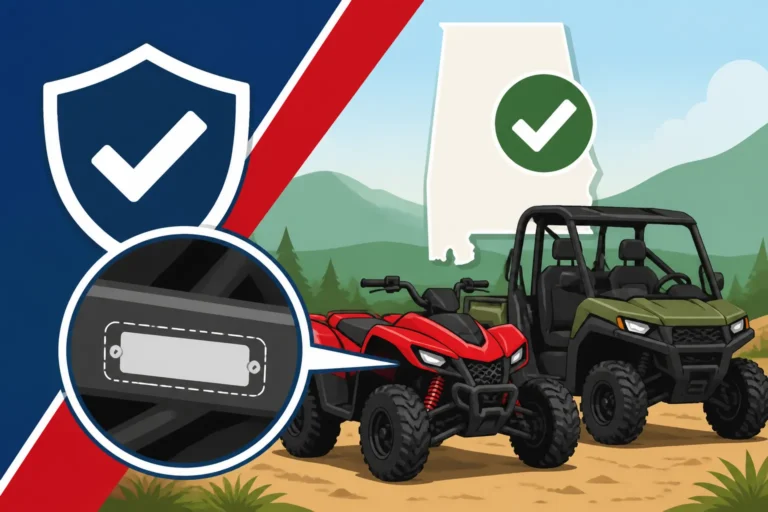
So, you've seen those "street legal kits" advertised online, promising to equip your machine with turn signals, mirrors, a horn, and even a license plate bracket. You might even know someone who's installed one. While these components are absolutely essential for on-road vehicles, simply bolting them onto an ATV or UTV doesn't magically transform its fundamental design or its federal classification. It's like putting racing stripes on a family sedan and expecting it to win the Daytona 500 – it just doesn't change what the vehicle fundamentally is.
The problem is that the federal standard mentioned earlier requires the vehicle to be manufactured to those specifications from the ground up. This isn't about adding parts; it's about the entire engineering and safety certification process. An aftermarket kit, no matter how comprehensive, cannot undo the fact that your machine was originally built and sold as an off-road vehicle. Many riders are genuinely surprised when they get pulled over, showing the officer their "street legal" kit, only to find out they're still in violation. The officer isn't looking for a kit; they're looking for a vehicle that was made to be road legal. This is why [Why a Street Legal Kit Will Not Make It Legal] is such an important concept to understand.
The Difference: Factory-Built Low-Speed Vehicles (LSVs)
Now, here's where some of the confusion might come from: there are vehicles that look a lot like UTVs but are street legal. These are typically factory-built Low-Speed Vehicles, or LSVs. These machines are specifically manufactured to meet a different set of federal standards, often limited to a top speed of 25 mph, and come from the factory with the necessary safety features and certifications for street use. They're designed from the outset to be road-ready, sometimes even sporting a proper Vehicle Identification Number (VIN) that designates them for on-road use.
An LSV might look similar to your typical side-by-side, but internally and legally, it's a completely different animal. They often have features like automotive-grade seat belts, specific lighting configurations, and sometimes even windshield wipers. If you're considering buying a machine with the intent of driving it on public roads, you absolutely need to verify that it's a true LSV, designed and certified by the manufacturer for that purpose. Otherwise, you're likely dealing with an off-road vehicle that cannot legally be operated on most public roads in Alabama. Understanding [What a Low-Speed Vehicle Standard Requires] is key to making an informed purchase.
Confusing Off-Road with On-Road Registration
Another common pitfall for Alabama riders is misunderstanding the purpose of registration. Many assume that if they register their ATV or UTV with the state, it automatically grants them permission to ride on public roads. This is a critical misunderstanding of Alabama's voluntary off-road vehicle registration system.
What Alabama's Voluntary Registration Actually Does
Alabama offers a voluntary registration system through the Alabama Law Enforcement Agency (ALEA). This registration, as detailed in posts like [Alabama Public Use ATV Registration Explained] and [Alabama Private Use ATV Registration Explained], is primarily for identification and to facilitate tracking, especially in cases of theft. It provides an official record of ownership and a decal for your machine, which can be incredibly helpful for things like proving you own an untitled machine or aiding law enforcement if your quad is stolen. It can also be a requirement for riding on some designated public lands or OHV parks.
However, this voluntary registration is explicitly not a license to operate your machine on public roads. It's a system designed for off-road use, not for turning your trail machine into a street-legal vehicle. Many states have a similar system, and it's easy to conflate it with traditional vehicle registration for cars or motorcycles, which does grant road privileges. For an ATV or UTV in Alabama, registration means "registered for off-road use," and that distinction is paramount.
When Registration Doesn't Grant Road Access
This is where riders often get confused. They'll go through the process, pay the fee, get their decal, and then believe they've done everything necessary to legally ride on a county road or cross a highway. Unfortunately, this isn't the case. Your ALEA registration decal simply identifies your machine as registered within the state's off-road system; it doesn't change its fundamental classification as an off-road vehicle. [Alabama ATV Road Rules Explained] makes it clear that unless a specific local ordinance or very narrow state exemption applies, ATVs and UTVs are generally prohibited from public roads.
Even with your registration, riding your ATV or UTV on a paved public road, a highway, or even many dirt county roads could still result in a citation. The registration validates your ownership for off-road purposes, not for street access. This is particularly important for residents who want to use their machines to ride from their property directly to trails or neighbors' houses without trailering. Unless you are riding exclusively on private land or within a designated public off-road area, that registration won't protect you from road use penalties.
Misinterpreting Farm Use Exemptions
Another area of frequent misunderstanding involves the "farm use" exemption. Alabama law does provide some allowances for agricultural equipment on public roads. This leads many ATV and UTV owners who use their machines for farm work to assume they can freely operate them on roads for farm-related tasks. While there are legitimate farm use exemptions, they are often narrower than people realize and don't create a blanket permit for all ATVs and UTVs.
Typically, these exemptions apply when the machine is actively engaged in farming operations, such as moving between fields on a very short stretch of road, or transporting specific agricultural items. It's not a free pass to drive your UTV to the hardware store for supplies or to a neighbor's farm for a casual visit. The intent and primary function of the travel must be directly related to agricultural work. Furthermore, even with a legitimate farm use, there are often restrictions on time of day, lighting requirements, and distance. It's crucial to consult [Alabama Farm Use and Road Riding] for the specifics, and if in doubt, check with your local sheriff's department. Simply slapping a "farm use" sticker on your machine, or even genuinely using it for farm tasks, doesn't automatically grant unrestricted road access.
Helmet Laws and Age Restrictions
Safety is paramount when riding ATVs and UTVs, and Alabama has specific rules regarding helmets and rider ages that are often misinterpreted. Many riders assume that because ATVs aren't motorcycles, helmet laws don't apply, or that kids can ride any machine as long as a parent is present. These assumptions can be dangerous and costly.
Alabama's Motorcycle Helmet Statute and ATVs
Let's clear this up right away: [Alabama's Motorcycle Helmet Statute] primarily applies to motorcycles, which are defined as vehicles with seats for no more than two riders, and operating on public roads. Because ATVs and UTVs are generally not permitted on public roads, the motorcycle helmet statute often doesn't directly apply to them in the same way it does to a Harley-Davidson. This is a source of confusion, as people assume a blanket "no helmet law" for ATVs.
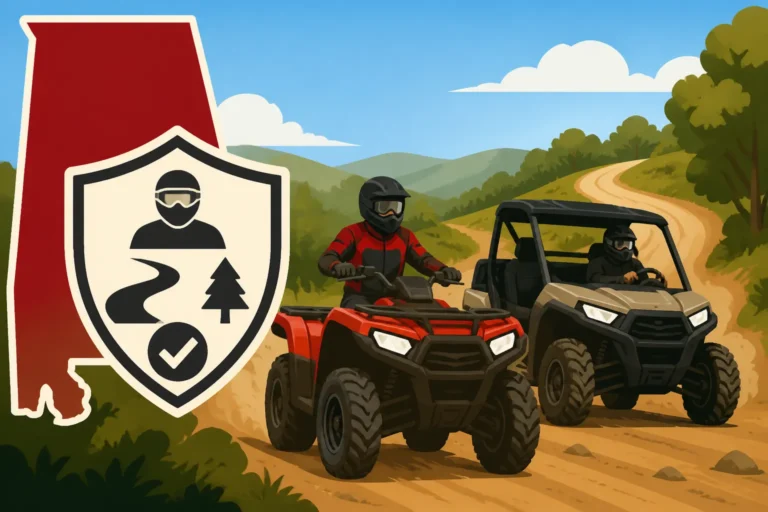
However, this doesn't mean helmets aren't crucial or that they're never required. While state law doesn't broadly mandate helmets for ATVs on private land for adults, many OHV parks and riding areas do have their own rules. Furthermore, for minor riders, the situation is different. It's always best practice to wear a helmet, regardless of the law, especially when riding on rugged terrain. Safety gear, including helmets, goggles, gloves, and sturdy boots, is your best defense against serious injury.
Helmets on Public vs. Private Land
The distinction between public and private land is critical when discussing helmet laws for ATVs and UTVs.
On private land, for adult riders, Alabama's state law generally does not mandate helmet use for ATVs or UTVs. This gives individual landowners or hunting clubs the freedom to set their own rules. However, many private riding parks, even though they are on private property, will enforce their own helmet requirements as a condition of entry. They do this for insurance purposes and rider safety. Before you head out, always check the specific rules of the park or property you plan to ride on.
For riding on designated public lands like certain OHV parks or specific forest service trails, the rules can vary. While the state motorcycle helmet law might not apply, the managing authority (e.g., park management, Forest Service) can impose its own helmet regulations. This is why it's so important to know the rules of your specific riding spot. Even if a helmet isn't legally required by state statute on some public lands, wearing one is still the smartest choice. [Are Helmets Required for ATV Riders in Alabama?] goes into more detail about these varying requirements.
Age and Supervision Rules for Riders
This is another area where many parents inadvertently put their children at risk due to misunderstandings. Alabama has specific rules regarding the age of ATV riders and whether they need supervision. You cannot simply put a young child on any ATV or UTV and assume it's okay because you're watching them.
Alabama law, under Section 32-21-2 of the Code of Alabama, specifies that no person under the age of 16 years may operate an ATV on public lands unless they are supervised by an adult at least 21 years of age. Furthermore, the law states that no one under the age of 14 may operate an ATV on public lands without an adult present. These rules are in place to protect young riders who may not have the judgment, strength, or experience to handle these powerful machines safely.
Beyond state law, responsible riding involves ensuring the machine is the appropriate size and power for the child's age and experience level. Many manufacturers provide age guidelines for their machines, and these should be strictly followed. For example, a 90cc quad is typically recommended for younger, smaller riders, while a full-size 450cc sport quad is absolutely not appropriate for a pre-teen. Riding parks often have their own minimum age requirements for entry or for operating certain machines. When considering [Alabama ATV Age Rules], always err on the side of caution and prioritize safety over perceived freedom. Proper training and supervision are non-negotiable for young riders.
Here's a quick reference table for common misunderstandings:
| Rule Category | Common Misconception | Alabama Law / Reality |
|---|---|---|
| Street Legality | Adding turn signals/horn makes my ATV street legal. | Requires factory compliance with FMVSS (like LSVs). |
| Registration | State registration allows me to ride on roads. | Voluntary for off-road use; does not grant road access. |
| Farm Use | My ATV is for farm use, so I can ride it on any road. | Exemptions are narrow and for active farming operations. |
| Helmets (Adults) | No helmet law for ATVs in Alabama. | State law mainly for motorcycles; parks may require. |
| Helmets (Minors) | Kids don't need helmets on private land. | Many parks and responsible parents require helmets. |
| Age Restrictions | My child can ride any ATV with my supervision. | State law has age/supervision limits on public land. |
| Local Roads | I can ride on dirt county roads. | Generally prohibited unless specifically designated by county. |
Before you head out, always check your local ordinances, the rules of any private park or property, and familiarize yourself with the full scope of [Alabama ATV Road Rules Explained]. Ignorance of the law is never a valid defense, and staying informed is the best way to enjoy your ride safely and legally. Remember, [Alabama Registration Is Voluntary] for a reason – it's for off-road tracking, not on-road permission. Also, don't forget to review [Alabama Rules for Riding a County Road] before assuming free access.
Disclaimer
This article is for general informational purposes only and does not constitute professional advice. Laws, prices and regulations vary by location and change over time. Consult a qualified professional for guidance on your specific situation.