Alabama Private Park Helmet Rules
A helmet rule at an Alabama off-road park is usually a condition of riding at that particular park, not a single rule you can assume applies everywhere. The tricky part is that policies can differ by machine, rider age, passenger seat, and trail area. This guide explains what to check before you unload, how to choose gear that fits the rule, and what to do when the posted policy is unclear.
Start With the Park’s Rule, Not an Assumption About State Law
Alabama does not have one universal helmet policy for every private ATV and UTV park. A privately operated park can set its own admission and riding conditions, and those conditions may be stricter than what a rider expects from state law. A park may require helmets for everyone, set extra rules for children, or define different requirements for different machines or riding areas.
That means two ideas need to stay separate:
- What the law requires in a particular situation
- What a private park requires before it lets you ride there
A rider may be uncertain whether a state motorcycle helmet law applies to a particular off-road machine or location. Even if a legal requirement does not apply to that ride, a park can still make a helmet mandatory as a condition of entry. Conversely, another park might use a different policy. Do not treat a friend’s experience at one property as the rule at every Alabama riding park.
If you want to understand the legal distinction, see Alabama’s Motorcycle Helmet Statute and Why the Helmet Rule May Not Apply to You. For the practical park-side question, the safest approach is to check the facility’s current rules directly before your trip. A park’s waiver, posted signage, admission materials, or staff instructions may all contribute to the conditions you agree to follow.
Why parks may set their own helmet conditions
A park manages its own trails, facilities, and admission process. It can establish safety requirements for guests and can restrict riding if someone does not comply. The exact policy is up to the park, so do not assume that “private land” means “no helmet rule.” Private ownership does not make a park’s posted conditions irrelevant to riders who choose to use the property.
A helmet rule can also be only one part of a larger safety policy. A park may separately address eye protection, passenger capacity, rider age, alcohol, speed, or machine equipment. A helmet by itself does not mean the rest of the policy is satisfied.
For example, a rider might arrive wearing a helmet but still be turned away from a particular route because the machine is too wide, a passenger is not allowed, or the rider does not meet an age restriction. Check Alabama Private Park Age Minimums and Alabama Park Rules for Passengers if those issues apply to your group.
Don’t rely on a general statement like “helmets recommended”
Words matter. “Required,” “must wear,” and “mandatory” indicate a condition riders need to follow. “Recommended” may be advisory, but it does not tell you whether another rule applies to minors, passengers, or certain areas. If a website says helmets are recommended but a waiver says they are required, ask the park which policy controls before you ride.
A vague statement can also leave unanswered questions. Does the rule apply to every person on an ATV? Does it include a passenger in a side-by-side? Does it apply while driving around the campground or only on trails? Does the park accept any helmet, or does it specify a type? Those are reasonable questions to ask before traveling.
What to Confirm Before You Leave Home
A short call or message to the park can prevent a frustrating arrival. Ask about the helmet policy for the exact machines and riders in your group, and ask what the park means by “helmet.” If you are taking children, carrying passengers, or using an enclosed-cab UTV, say so directly rather than relying on a broad answer.
Use this checklist:
- Ask whether helmets are mandatory or recommended. Get a clear answer for the riding areas you plan to use.
- Ask who must wear one. Confirm whether the rule covers drivers, passengers, adults, and children.
- Ask whether there is a specific helmet type or safety label. Do not assume a bicycle, construction, or novelty helmet will be accepted for motorized riding.
- Ask about eye protection. Some parks may require goggles or other protection in addition to a helmet.
- Ask whether the rule changes by machine or area. A side-by-side, ATV, youth track, campground road, and trail system may not all be treated the same.
- Ask how the policy is enforced. Find out whether the park checks gear at the gate, at a staging area, or during patrols.
- Ask what happens if someone arrives without compliant gear. The park may have loaners or rentals, or it may require the rider to leave the riding area.
- Check the waiver and signs when you arrive. If the written condition differs from what you were told, clarify it before starting the ride.
A useful question is: “For our group, including the kids and the UTV passengers, what exact helmet and eye-protection rules apply on the trails?” That invites a specific answer instead of a general one.
| What to check | Why it matters | A useful question |
|---|---|---|
| Rider and passenger coverage | A passenger may be covered by the rule even if the driver has a helmet | “Does every occupant need a helmet?” |
| Age-based requirements | Children may be subject to stricter park conditions | “Are there separate requirements for minors?” |
| Helmet type | A park may not accept every helmet marketed for recreation | “Is there a required certification or label?” |
| Eye protection | Goggles may be required separately from a helmet | “Do you require goggles or a face shield?” |
| UTV or cab policy | An enclosed cab does not necessarily cancel a park rule | “Must occupants wear helmets in an enclosed UTV?” |
| Riding area | Requirements may differ between trails, tracks, and non-riding areas | “Where on the property does the rule apply?” |
| Loaner gear | Availability may be limited or unavailable | “Can guests rent or borrow compliant helmets?” |
| Written terms | Waivers and signs may state conditions not obvious online | “Where can I read the current helmet policy?” |
If you cannot get a clear answer, plan to bring suitable helmets for everyone. That does not guarantee a park will accept every helmet, but it is more practical than arriving with no gear and hoping the staff will make an exception.
Choosing Helmets That Are Likely to Work for the Ride
The park’s stated rule comes first. If it names a type of helmet or a recognized safety certification, follow that requirement rather than choosing based on appearance or a product description alone. If the park does not specify a standard, ask what it accepts. A helmet that looks rugged or is advertised for powersports is not automatically approved by every facility.
Fit and retention matter
A helmet should fit the person who will wear it. It should sit level, feel secure, and stay in place when the rider moves their head. A loose helmet can shift during a ride; one that is excessively tight can become painful and distract the rider. Fasten the retention system as directed by the manufacturer. If the chin strap is left undone, a helmet may not stay where it needs to be in a fall.
Try a helmet with the eyewear the rider plans to use. Goggles should sit comfortably without forcing the helmet out of position. Check that the rider can see clearly to the sides and can hear enough to communicate with the group and notice nearby machines.
For a child, do not solve a fit problem by buying an adult helmet and tightening the strap as far as it goes. Look for a size that fits the child’s head and is appropriate for the intended activity. Recheck fit as the child grows, and inspect the helmet before each ride for damage or missing parts.
Open-face and full-face choices
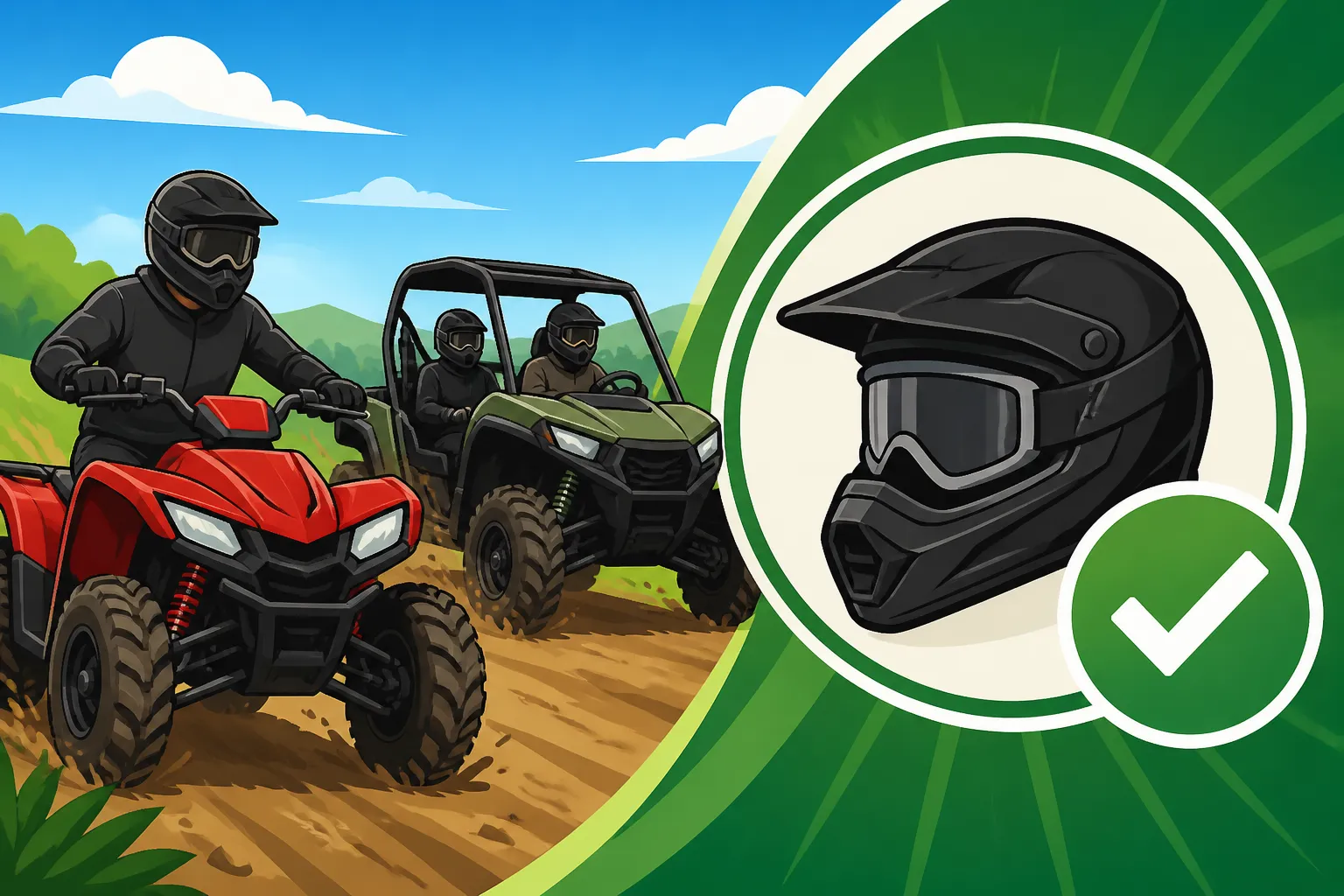
A park may specify a helmet style, or it may leave the style to the rider. An open-face helmet offers less coverage around the face than a full-face design. A full-face helmet covers more of the head and face, but can feel warmer, especially in Alabama’s heat and humidity. Ventilation, comfort, visibility, and compatibility with goggles all affect whether a rider will keep it on correctly.
A helmet with a face shield may help block dust and debris, but the shield should not be treated as a substitute for a park-required helmet or eye-protection rule. If the park calls for goggles, ask whether a face shield is accepted instead. The answer may depend on the park’s wording.
Buying gear for a family or group
Before buying several helmets, make a list of each rider’s head measurement, likely helmet style, and the park’s requirements. Check sizing instructions from the helmet manufacturer, since fit labels can vary. Have each person try the helmet on when possible. A helmet that fits one family member should not be assumed to fit another, even if their head measurements seem similar.
If you shop through Amazon, compare the actual manufacturer’s safety and sizing information, not only the product title or customer photos. Confirm that the item is intended for the kind of motorized riding you plan to do and that the park accepts it. Keep packaging and purchase details until you have verified fit and policy compliance.
A second mention of Amazon is useful when planning group gear: it can help you compare available sizes and styles, but an online listing cannot confirm a particular Alabama park’s admission rule. Contact the park if the requirement is specific or unclear. Avoid buying a helmet solely because a listing uses broad phrases such as “off-road,” “racing style,” or “adult youth.” Those descriptions do not necessarily establish that it meets the park’s policy.
Inspect gear before loading it
Check helmets before every trip. Look for cracks, deep dents, damaged straps, worn fasteners, missing padding, or signs of impact. Follow the manufacturer’s care and replacement guidance. Do not assume a helmet is safe just because damage is not obvious from the outside.
Bring the right number of helmets, including for every passenger who might ride. If people may switch between machines, make sure there is a correctly fitting helmet for each person, rather than assuming riders can share one size. Pack goggles or other eye protection if required, and carry a way to keep gear clean and dry between rides.
Common Questions About Helmet Rules at Private Parks
Does a private park have to follow the same helmet rule as a public road?
Do not treat road rules and park admission rules as interchangeable. A private park can impose conditions on guests using its property. Whether a separate state law applies depends on the facts, including the vehicle and where it is being operated. For the park visit, follow the park’s current policy even when you are unsure how a road-related law applies.
For related road questions, see Are ATVs Street Legal in Alabama?. That topic is separate from whether a private off-road facility requires a helmet.
If Alabama law does not require a helmet for my ride, can the park still require one?
A park can set conditions for its own property. A rider should not assume that a possible legal exemption overrides a posted park rule or a condition in the admission process. If the park says a helmet is required, ask the park for clarification before riding without one.
This distinction is important for riders who have heard that Alabama’s motorcycle helmet law may not cover every ATV situation. The scope of state law is not the same question as the rule imposed by the facility. Does the Motorcycle Helmet Law Cover a Quad? discusses the legal question, while the park should answer questions about its own terms.
Does an enclosed UTV cab mean occupants do not need helmets?
Not necessarily. A cab may change the protection and comfort riders experience, but it does not automatically cancel a private park’s helmet policy. Some parks may set a rule that applies to all occupants regardless of the cab. Others may use different language. Ask specifically about the UTV model, whether it has an enclosed cab, and whether the rule covers each seat.
Also check passenger requirements independently. A park’s helmet policy does not authorize carrying more people than the machine is designed for or the park allows. Review Alabama Park Rules for Passengers and the facility’s own passenger terms before loading up.
Can I wear a helmet only when riding trails?
Only if the park’s rule allows that distinction. Some properties may distinguish between active riding areas and places such as parking or camping areas; others may require helmets whenever a machine is being operated. Do not create your own boundary based on what seems reasonable. Ask where the requirement applies, including on access roads, practice areas, and routes between staging and trails.
What if the park’s website and waiver disagree?
Pause and ask the staff to explain the current policy before riding. Save or note the information you relied on when planning the trip, but do not assume an older web page overrides a rule presented at check-in. The waiver or posted terms may have been updated, or the website may not describe an exception clearly. If the difference affects whether your group can ride, resolve it at the gate rather than after unloading on the trail.
Can the park refuse entry if someone does not have the right helmet?
A private park may enforce its admission and safety conditions, which can include denying access to a rider who does not comply. Whether a particular refund or rescheduling option is available depends on the park’s policy. Check Alabama Park Refund Policies before booking if your plans depend on loaner gear, a reservation, or weather-related flexibility.
At the Park: A Simple Routine for Staying Compliant
Make helmet checks part of your arrival routine instead of something to sort out at the trail entrance.
- Read the posted rules before unloading. Look for helmet, eye-protection, age, passenger, and vehicle restrictions.
- Compare the signs with what you were told. Ask staff about any difference before paying or entering a riding area.
- Fit each helmet to its rider. Confirm that it sits correctly and that the strap is fastened.
- Check passengers, not just drivers. Each occupant should have the required gear and a seat the machine is designed to carry.
- Keep helmets accessible between rides. Do not leave them where they can be damaged, lost, or mixed up.
- Follow staff directions. If an employee says a helmet is not acceptable, stop and clarify the reason rather than continuing onto the trail.
- Recheck after a long break or a rider swap. A helmet can be passed to the wrong person, come loose in transport, or be damaged during the day.
A helmet rule is not a substitute for good riding judgment. Ride at a speed that suits your ability and the trail, keep enough distance from other machines, and stop if dust, fatigue, or poor visibility makes it hard to ride safely. A helmet is most useful when it fits, is fastened, and is paired with the rest of the protective gear required for the conditions.
If you are choosing gear online, Amazon may offer a broad range of helmet sizes and styles to compare. Use the manufacturer’s measurements and instructions, and verify the park’s requirements before relying on a specific item. The park, not the retailer, decides what it accepts at its gate.
For a broader look at facility conditions beyond helmets, review [Alabama Private Park Insurance Rules] and Alabama Private Park Waiver Forms. Those policies can affect whether a ride is allowed and what you agree to when you check in. A little preparation is easier than discovering at the gate that one member of your group cannot ride.
Disclaimer
This article is for general informational purposes only and does not constitute professional advice. Laws, prices and regulations vary by location and change over time. Consult a qualified professional for guidance on your specific situation.