Dust on a Red Clay County Road
There's a distinct charm to Alabama's rural landscapes, particularly those winding red clay county roads that cut through dense pine forests and open fields. For many ATV and UTV owners, the thought of cruising down one of these picturesque paths on their machine is incredibly appealing, a natural extension of their off-road passion. However, this dream often collides with a thick cloud of confusion – not just from the literal dust kicked up, but from the complex tangle of laws, safety concerns, and practical challenges that come with even thinking about taking an off-road vehicle onto a public road in Alabama. This guide aims to clear the air, addressing the frustrations and giving you a realistic look at what it means to encounter dust on a red clay county road with your ATV or UTV.
The Allure and The Legal Maze of Alabama's County Roads
There’s something truly iconic about a red clay road in Alabama. It speaks of simpler times, of backwoods adventures, and a deep connection to the land. But for off-road enthusiasts, this allure often leads to a tricky legal tightrope.
Why Those Red Clay Roads Call to Us
Let's be honest, those unpaved county roads are part of the very fabric of Alabama's rural charm. They meander past old farmhouses, connect small communities, and often lead directly to hunting leases, fishing spots, or a friend's property just "down the road." For an ATV or UTV owner, the idea of skipping the truck and trailer for a short hop down a red clay lane is incredibly tempting. It feels like a natural fit – these machines are built for rough terrain, and a dirt road seems like a perfectly reasonable extension of that. You see others doing it, or at least you think you do, and the convenience factor alone is a huge draw. It's not just about the destination; it's about the experience of feeling the wind, smelling the pine, and seeing the dust plume trail behind you, a testament to freedom. You just want to connect the dots, maybe get to your deer stand without muddying up your pickup, or cruise over to a neighbor's place for an afternoon visit. That desire is completely understandable, but it's where the rubber meets the road, or more accurately, where the knobby tire meets the public right-of-way.
Alabama's Complex Stance on Off-Road Vehicles on Public Roads
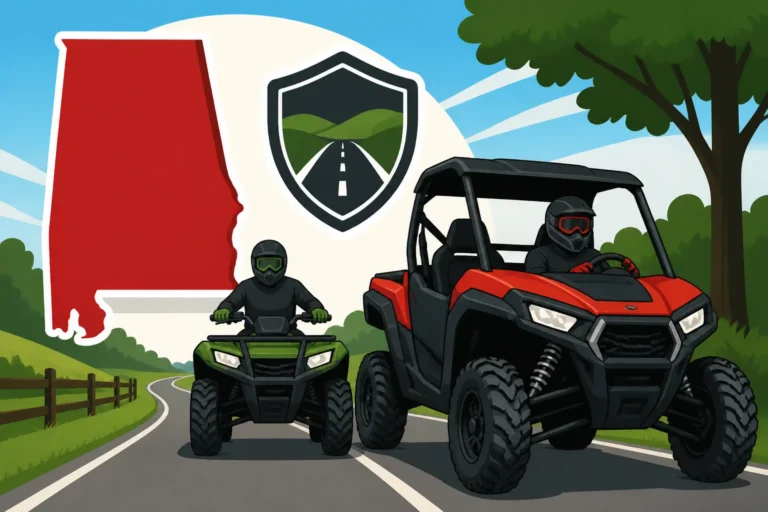
Here's where things get complicated, and it's a common source of frustration for riders across the state. In Alabama, the general rule is pretty straightforward: ATVs and UTVs are not designed or legally permitted for use on public roads, streets, or highways. This includes those idyllic red clay county roads, even if they're unpaved and feel like a natural extension of a trail system. The law views them as public rights-of-way, just like a paved interstate, albeit with different speed limits and conditions. This can be a tough pill to swallow when you're looking at a stretch of dirt road that feels completely separate from major traffic.
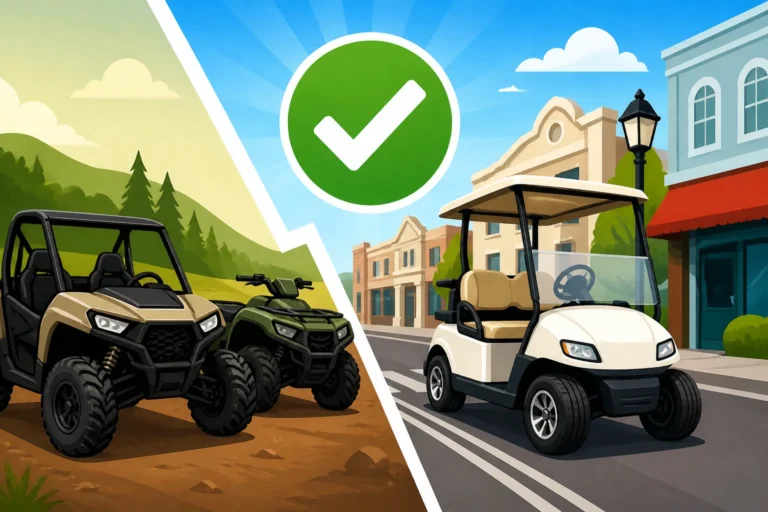
There are some very limited exceptions, which often lead to more confusion than clarity. For instance, ATVs and UTVs can typically cross a public road if done safely and directly, after coming to a complete stop, and only when necessary to get from one off-road area to another. This isn't permission to ride down the road, but merely to cross it. Another common exception applies to machines used for bona fide agricultural purposes. A farmer might use their ATV to check fences or herd cattle along a county road adjacent to their property, but this "farm use" is strictly defined and doesn't extend to recreational riding. Additionally, local ordinances can sometimes carve out specific rules for certain low-speed vehicles, but this usually pertains to golf carts in particular communities and rarely extends to full-sized ATVs or UTVs, unless explicitly stated. It's a patchwork of regulations that makes it hard to get a clear answer, and the default answer for an ATV or UTV is almost always "no" for road use. For a deeper dive into these rules, you might want to read [Can You Drive an ATV on the Road in Alabama?] and [Alabama ATV Road Rules Explained].
The Federal Standard Barrier: Why Most ATVs Aren't Road-Legal
The core reason your typical ATV or UTV isn't allowed on Alabama's public roads, beyond specific state statutes, boils down to a federal regulation: Federal Motor Vehicle Safety Standard (FMVSS) 500. This is the standard that governs low-speed vehicles (LSVs) and dictates what kind of machine can be registered and driven on public roads (usually those with speed limits 35 mph or less). Regular ATVs and UTVs, as they come from the factory, are simply not built to meet these stringent requirements. They lack essential safety features like proper headlights (not just off-road lights), taillights, brake lights, turn signals, reflective devices, rearview mirrors, windshields, seatbelts that meet federal standards, and often, a vehicle identification number (VIN) that designates it as an on-road vehicle.
This isn't about whether your machine can physically drive on the road; it's about whether it meets specific safety and manufacturing standards designed for on-road use. A standard quad, for example, is not equipped with a VIN that designates it as an FMVSS 500 compliant vehicle. Even if you install a "street legal kit" with all the necessary lights and mirrors, that doesn't magically change its underlying federal classification or make it compliant with [Alabama's 49 CFR 571.500 Standard]. The state's position, derived from this federal standard, is that these machines simply aren't safe enough for shared public roadways, even unpaved ones. This critical distinction is a major hurdle, and understanding [Alabama's Federal Standard Barrier to Road Use] is key to grasping why road use is so limited. It's a fundamental design and certification issue, not just a matter of bolting on a few accessories. If you're curious about what does meet the standard, check out [What a Low-Speed Vehicle Standard Requires].
Navigating the Practicalities: Dust, Visibility, and Safety on Unpaved Routes
Even if the legal hurdles weren't so significant, riding an ATV or UTV on a red clay county road presents a host of practical challenges, with dust being chief among them. It's not just an annoyance; it's a genuine safety hazard that needs serious consideration.
Battling the Red Clay Dust: Visibility for You and Others
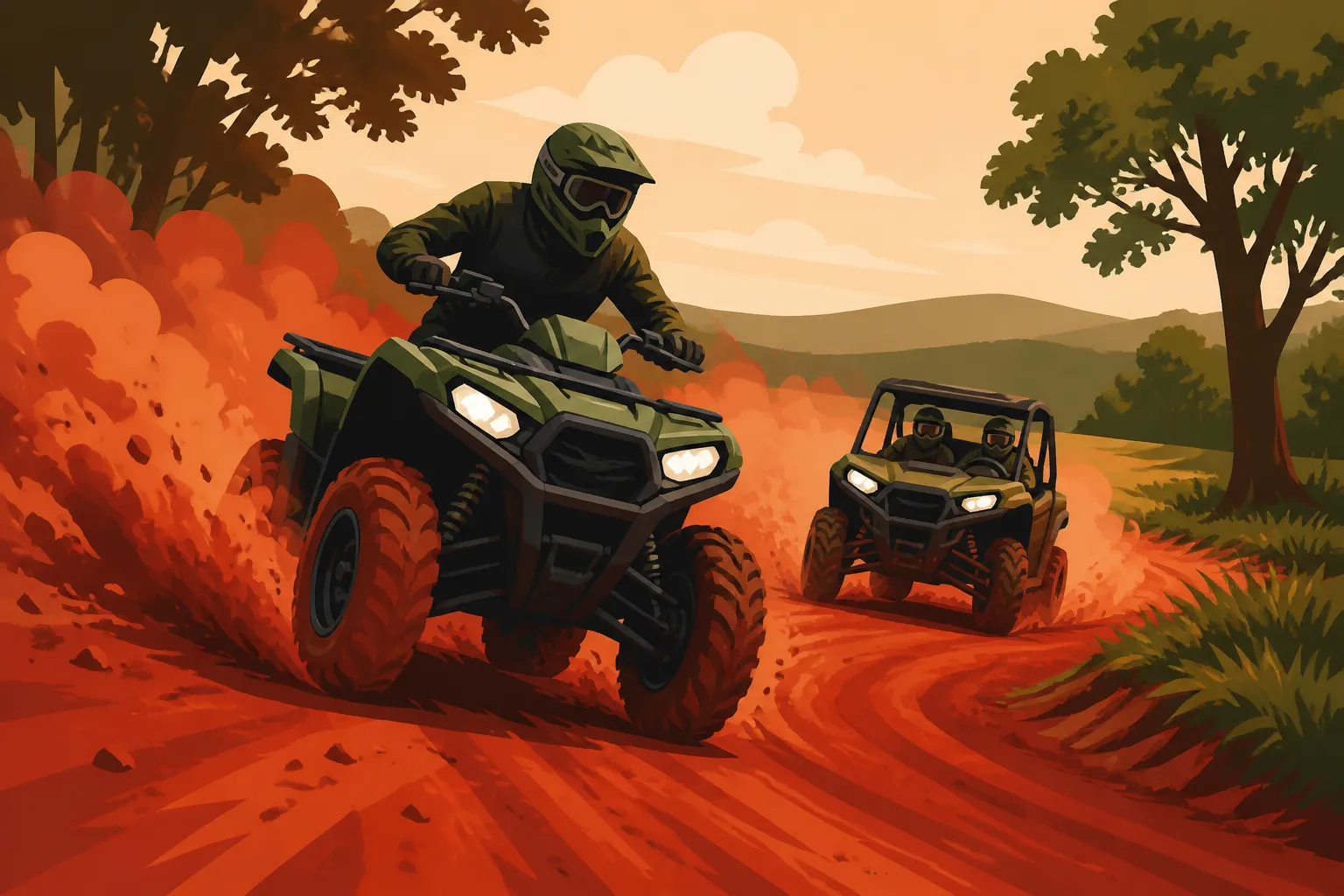
That beautiful red clay, especially in dry weather, turns into a fine, pervasive dust that can quickly become a nightmare. For the rider, visibility plummets dramatically, often within seconds of hitting a dry stretch. Your goggles or helmet visor will accumulate a fine film, making it hard to see obstacles, upcoming turns, or any other traffic. Breathing can also become an issue, as you're constantly inhaling fine particulate matter, which isn't just uncomfortable but potentially unhealthy over time. Many riders opt for dust masks or neck gaiters to help filter the air they breathe, especially if riding in a group where the dust can be relentless.
But it's not just about your own visibility. The massive dust plume your machine kicks up is a significant hazard for anyone else on the road, whether they're behind you, approaching from the opposite direction, or pulling out of a driveway. This dense cloud can completely obscure your machine, making it impossible for other drivers to see you, or for you to see them. Imagine a log truck coming around a blind curve into your dust cloud – it's a recipe for disaster. This lack of visibility dramatically increases the risk of a collision, not just with other vehicles but with pedestrians, cyclists, or even stray animals. It forces you to slow down considerably and constantly scan, but even then, the danger remains high. Riding single file, leaving significant gaps, and communicating with your group are essential strategies, but they don't eliminate the fundamental problem of the dust itself. For machines that are intended for road use, products from companies like SuperATV offer windshields that, while not legal on an off-road vehicle for road use, illustrate how crucial vision is for safety.
Sharing the Road: Large Vehicles and Narrow Paths
Alabama's red clay county roads are often narrow, winding, and sometimes have blind curves or hills that severely limit sightlines. These aren't multi-lane highways; they're often barely wide enough for two vehicles to pass comfortably. Now, introduce logging trucks, agricultural equipment, school buses, and pickups driven by locals who are used to having the road mostly to themselves. These larger vehicles often travel at speed, and their drivers may not expect to encounter an ATV or UTV on their route. The sheer size and weight difference between your off-road machine and, say, a loaded timber truck is a terrifying thought.
When you're riding your ATV or UTV, you're smaller, less visible, and offer far less protection in a collision. Even a minor fender bender with a pickup can be catastrophic for an ATV rider. These roads also often lack shoulders, meaning there's nowhere to pull off quickly if you encounter oncoming traffic or need to yield to a larger, faster vehicle. Defensive riding is paramount, assuming every blind curve hides an oncoming vehicle. It requires constant vigilance, anticipating what might be around the next bend, and being prepared to react instantly. Understanding the dangers of [Sharing a County Road With Alabama Log Trucks] is not just theoretical; it's a life-or-death consideration.
Essential Gear for Unpaved Road Riding
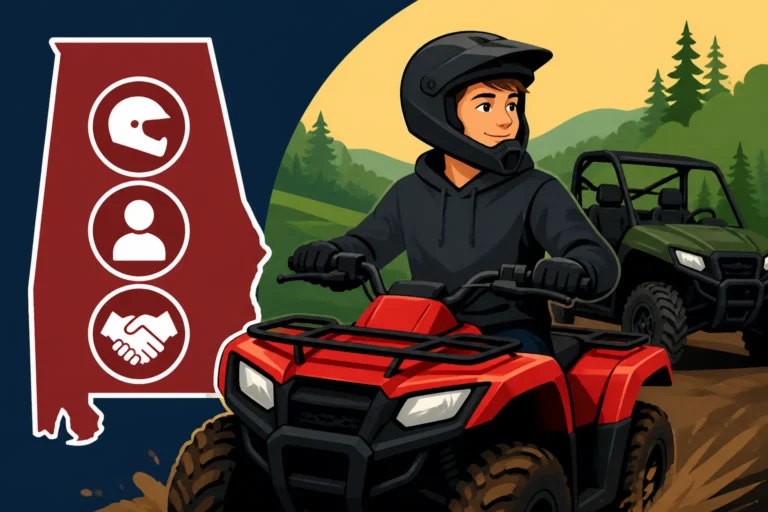
Beyond the legalities, equipping yourself and your machine properly for any riding scenario, especially those involving public interaction, is non-negotiable. First and foremost, a well-fitting, DOT-approved helmet is critical, providing vital head protection whether Alabama legally requires it on that specific stretch of road or not. Eye protection, such as goggles or a full-face helmet visor, is equally important, not just for dust but for flying debris, insects, and sun glare. Clear visibility is paramount, and even though you might not be allowed on the road, if you're ever forced to be on one, you need to see.
Beyond personal safety gear, your machine needs to be as visible as possible, particularly if you're in a situation where you might briefly encounter public roads (like crossing, or farm use). While not making it "street legal," having bright, functioning headlights, taillights, and brake lights is a must. Many off-road lights are incredibly powerful for trail riding but might not be correctly aimed or configured for interacting with other traffic. Consider adding reflective tape to your machine, especially if riding near dusk or dawn. Companies like SuperATV offer a range of accessories, from mirrors that can help you monitor traffic behind you to improved lighting systems, all designed to enhance safety and awareness in varying conditions, even if the primary intent is off-road. While these accessories alone don't change the legal status of your machine for public road use, they significantly contribute to your personal safety and awareness if you're ever in a scenario where you're on or near public thoroughfares. For more on this, you can check out [Alabama Lighting on a Machine at Night].
| Safety Aspect | Best Practice | Why It Matters |
|---|---|---|
| Visibility (Rider) | DOT Helmet & Goggles/Visor, Dust Mask | Protects eyes from dust/debris, improves breathing, head protection in a crash. |
| Visibility (Machine) | Bright Headlights/Taillights, Reflective Tape | Makes your machine visible to others, especially in dust or low light conditions. |
| Road Sharing | Ride Defensively, Anticipate, Yield to Larger Vehicles | Prevents collisions with faster, larger vehicles on narrow roads. |
| Communication | Hand Signals, Two-Way Radios (for groups) | Alerts group members to hazards, dust, or oncoming traffic. |
| Machine Maintenance | Check Brakes, Tires, Lights Before Every Ride | Ensures your machine is in optimal operating condition, reducing unexpected failures. |
Local Rules and Responsible Riding on Alabama's Dirt Roads
The notion that "it's just a dirt road" often leads riders down a path of misunderstandings regarding legal and responsible behavior. It's crucial to distinguish between what feels right and what the law actually permits.
Checking Local Ordinances: County and City Variations
One of the most confusing aspects of off-road vehicle use in Alabama is the potential for local ordinances to supersede or add to state law. While state law generally prohibits ATVs and UTVs on public roads, some individual counties or cities might have specific rules for certain types of low-speed vehicles or, in very rare cases, even for ATVs/UTVs on specific, designated low-traffic roads. However, it's absolutely critical to understand that these are exceptions, not the rule, and they are usually very narrowly defined. Most commonly, these local ordinances apply to golf carts in master-planned communities or small towns, allowing them on streets with low-speed limits. It is highly uncommon for a local ordinance to grant blanket permission for recreational ATVs or UTVs on county roads.
Before you ever consider riding on a public road, even an unpaved one, you must verify the specific rules with the local sheriff's department or city police department for that exact jurisdiction. Do not rely on hearsay or what "everyone else does." A simple phone call can save you a significant headache and a hefty fine. Without clear, written confirmation of a local exception, assume the state law applies, which prohibits your ATV or UTV from public road use. Trying to navigate this labyrinth? You might find [Alabama Do County Roads Have Their Own ATV Rules?] helpful, and if you're in a town, definitely consult [Alabama City Ordinance Lookups].
Farm Use and Crossing: Limited Legal Exceptions
As mentioned earlier, there are specific, limited circumstances where an ATV or UTV might legally operate on a public road in Alabama. The most common is for legitimate agricultural purposes. If you are a farmer, actively engaged in farming operations, you might be allowed to operate your machine on a county road for tasks directly related to your agricultural work. This could include checking crops, moving equipment between fields, or tending to livestock. However, this "farm use" exception is not a loophole for recreational riding. It’s for bona fide agricultural work only. Riding to your hunting camp or just cruising around is not considered farm use, even if your property is zoned agricultural.
Another exception is the direct crossing of a public road. If your off-road trail or private property is bisected by a public road, you can typically cross that road directly and safely, after stopping and yielding to all traffic. This is a quick transit from one side to the other, not riding along the road. The emphasis here is on "direct" and "safe." You can't cross, then ride a quarter-mile down the road, and then cross again. These are very narrow allowances, and misunderstanding their scope can lead to legal trouble. For more details on these specific allowances, refer to [Alabama Farm Use and Road Riding] and [Crossing a Road on an ATV in Alabama]. The key is understanding that these are exceptions to the rule, not an invitation to treat public roads as trails.
The Consequences of Illegal Road Riding
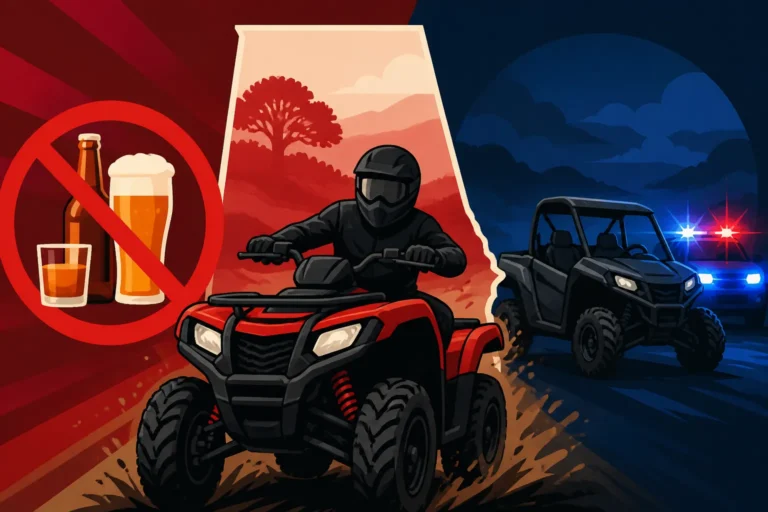
Ignoring the laws regarding ATV and UTV use on public roads in Alabama can lead to a host of unpleasant, and expensive, consequences. The most immediate risk is receiving a citation from law enforcement. Penalties can vary but often include significant fines, court costs, and potentially even impoundment of your machine. An officer has the discretion to ticket you for various offenses, not just the primary one of illegal road use, which can quickly add up.
Beyond the legal ramifications, there are severe safety risks. As discussed, ATVs and UTVs are not designed for road conditions, and their lack of visibility, stability at higher speeds, and protection make them incredibly vulnerable to collisions with other vehicles. If you're involved in an accident while illegally operating your machine on a public road, your insurance coverage might be jeopardized, leaving you personally liable for damages, medical bills, and legal fees. This can quickly amount to hundreds of thousands of dollars. Furthermore, you could face civil lawsuits from other parties involved in an accident. The financial and personal costs far outweigh the fleeting convenience or thrill of riding on an unpaved county road. It simply isn't worth the risk. To understand the potential legal repercussions, it's wise to look into [Alabama Penalties for Illegal Road Riding]. Playing by the rules isn't just about avoiding a ticket; it's about protecting yourself and others.
Riding those inviting red clay county roads on your ATV or UTV in Alabama might seem like a natural fit, a way to connect with the landscape and your machine. However, the reality is that the legal framework in Alabama generally prohibits such use, primarily due to federal safety standards that off-road vehicles simply do not meet. Even if an occasional, limited exception applies (like direct crossing or bona fide farm use), the default rule is clear: public roads are for street-legal vehicles. Beyond the law, the practical dangers of dust, limited visibility, and sharing narrow roads with larger vehicles present significant safety hazards that cannot be overlooked.
Always prioritize safety and legal compliance. Before even contemplating public road use, thoroughly check local ordinances and understand the strict limitations of state law. Equip yourself and your machine for maximum visibility and protection, even if you're only riding on private land. Embrace the vast network of designated off-road trails and parks across Alabama where you can truly enjoy your machine without the constant worry of legal repercussions or dangerous encounters on public roads. It’s about choosing the right place to ride your machine, ensuring everyone's safety, and preserving the future of off-road recreation in our beautiful state.
Disclaimer
This article is for general informational purposes only and does not constitute professional advice. Laws, prices and regulations vary by location and change over time. Consult a qualified professional for guidance on your specific situation.