Does the Motorcycle Helmet Law Cover a Quad?
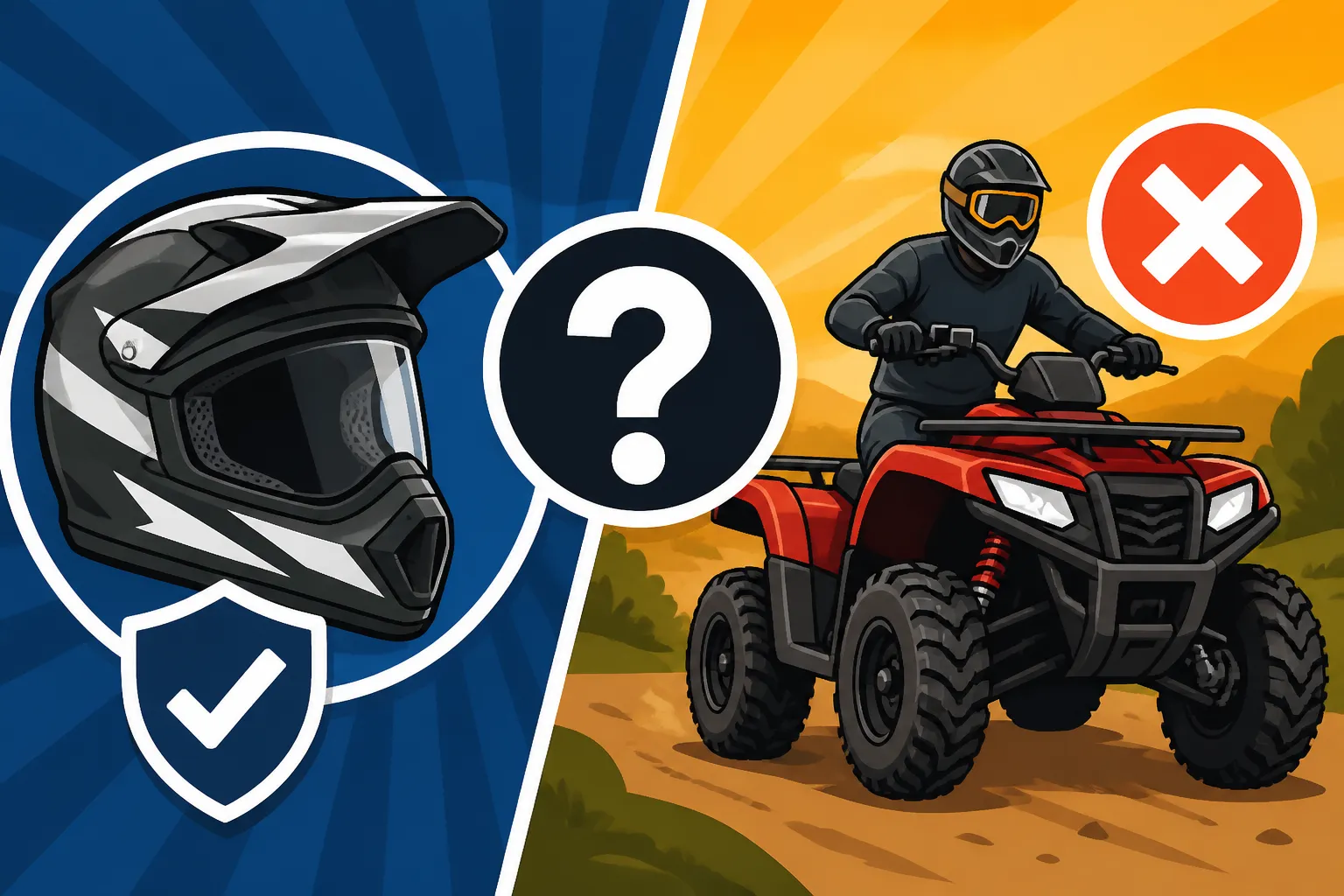
It’s a common point of confusion and frustration for many off-road enthusiasts in Alabama: you’re geared up for a ride, maybe heading to a favorite trail or just cruising your property, and you start to wonder if that shiny motorcycle helmet you have is actually required by law for your quad or side-by-side. You've heard whispers, seen different rules, and frankly, it can be a headache to sort out. This guide is here to untangle the nuances of Alabama’s helmet laws, specifically addressing whether the state’s motorcycle helmet statute extends its reach to cover your ATV or UTV, and what that means for your next adventure.
Understanding Alabama's Core Helmet Law
When we talk about helmet laws, most people immediately think of motorcycles, and for good reason. Alabama, like many states, has specific statutes dictating helmet use for motorcyclists. The key to understanding how this applies, or doesn't apply, to your ATV or UTV lies in the precise definitions used within the law.
The Motorcycle Helmet Statute
Alabama's motorcycle helmet law is quite clear. It generally states that anyone operating or riding as a passenger on a motorcycle or motor-driven cycle on a public highway must wear a protective helmet. The language of this statute is very particular, often defining what constitutes a "motorcycle" based on things like engine displacement, the number of wheels, and its primary design for highway use. These are vehicles built and intended for the open road, capable of achieving highway speeds, and designed with safety standards specific to that environment. For example, a Harley-Davidson or a Honda Gold Wing clearly falls under this definition, and there's no question that a helmet is required on public roads.
The statute aims to protect riders of these specific vehicles from head injuries during accidents, which, given the speeds and exposure on highways, can be severe. This law is about public safety on public roads and applies to vehicles designed to operate within that traffic system. It's not a blanket rule for every single motorized vehicle under the sun, and that distinction is paramount when considering your off-road machine.
Why ATVs Are Different By Definition
Here's where the crucial distinction comes in. Alabama law has very specific definitions for different types of vehicles, and an all-terrain vehicle (ATV) or a recreational off-highway vehicle (ROV, often called a side-by-side or UTV) is legally distinct from a motorcycle. The state's off-road vehicle statute defines an ATV as a motorized, off-highway vehicle designed to travel on four or more low-pressure tires, having a seat designed to be straddled by the operator, and handlebars for steering. A side-by-side or UTV, while similar in off-road intent, often has a steering wheel, foot pedals, and bucket seats. You can find more details on these classifications in [Alabama's ATV and ROV Legal Definitions].
These definitions are critical because they dictate which set of laws applies. When the motorcycle helmet statute refers specifically to "motorcycles," it's generally not extending that requirement to vehicles that are legally classified as ATVs or ROVs, especially when they are used off public roads. The intent and design of an ATV or UTV are for rough terrain, not the highway. They have different handling characteristics, different weight distributions, and crucially, are subject to a different chapter of the state code. This legal separation means that simply owning a quad doesn't automatically mean you fall under the motorcycle helmet requirement when you're riding it off-road.
When Alabama Law Requires a Helmet for Off-Road Vehicles
While the state's general motorcycle helmet law doesn't typically apply to ATVs and UTVs, that doesn't mean you're entirely off the hook for helmet use. There are specific circumstances and locations where wearing a helmet on your off-road machine is either legally mandated or strongly recommended by the property owner.
Riding on Public Land and Designated Areas
Even if the state's general helmet law for motorcycles doesn't cover your quad, specific public lands and designated off-highway vehicle (OHV) parks in Alabama often have their own rules. For instance, many state-managed riding areas or even specific wildlife management areas (WMAs) may require helmets for all riders, regardless of vehicle type. These rules are put in place for safety within those specific recreational environments, which often feature challenging trails, varying skill levels among riders, and potential for collisions or rollovers. Before you haul your machine out to a place like Stony Lonesome OHV Park or Minooka Park, it’s always wise to check their specific regulations. They often post these rules clearly at the entrance or on their websites. These park-specific requirements are about protecting riders on their property, and they can enforce them through various means, including denying entry or issuing warnings. These rules are part of [Alabama Public Use Designated Areas] and are important to heed.
Think of it like this: the state might not tell you to wear a helmet while you're mowing your lawn, but your local race track definitely requires one if you're hitting the oval. The context of where you're riding matters immensely. Many riders also invest in aftermarket safety gear from companies like SuperATV, which produce high-quality helmets, harnesses, and protective cages. While not mandated by state law for off-road use, these additions are often seen as essential by serious riders for their own well-being on challenging terrain.
Private Property and Personal Responsibility
If you're riding exclusively on private land in Alabama—whether it's your own sprawling acreage, a friend's timber tract, or a hunting club lease—state law generally gives you more leeway regarding helmet use. There isn't a statewide mandate requiring helmets for ATVs or UTVs on private property. However, this freedom comes with a significant responsibility. Even though the law might not require it, safety professionals and experienced riders will almost universally tell you to wear a helmet anyway. The risks of head injury are just as real, if not more so, on private trails or rough terrain as they are on a designated public park trail. A small bump or a rollover can have devastating consequences.
Furthermore, if you're riding on someone else's private property, they might have their own rules. A hunting club, for example, might require helmets for all ATV riders as a condition of their lease agreement, or a landowner might insist on it to minimize liability and promote safety among guests. Always clarify these expectations before you ride. Ultimately, on private land, the decision often comes down to personal judgment and what you deem an acceptable level of risk. While the law might be silent, common sense and a desire to come home safe should speak volumes. For more information on private land rules, check out [Riding Exclusively on Private Property in Alabama].
The Enclosed Cab Exemption: What It Really Means
One common misconception that crops up in discussions about helmets, especially with the rising popularity of side-by-sides with various cab options, is the "enclosed cab exemption." People sometimes assume that if their UTV has a roof, a windshield, and maybe even doors, they're automatically exempt from any helmet requirement, much like being inside a car. However, this interpretation is usually incorrect, especially for typical off-road vehicles.
Who the Exemption Covers (and Doesn't)
The "enclosed cab exemption," where it exists in law, is almost exclusively designed for vehicles that are already highway-legal and provide significant structural protection. Think of a car, a truck, or even some low-speed vehicles (LSVs) that meet stringent federal motor vehicle safety standards (FMVSS). These vehicles are built with crumple zones, airbags, seatbelts, and a rigid safety cell designed to protect occupants in a crash. The enclosure is part of a comprehensive safety system.
Your typical off-road UTV, even one with an aftermarket roof, windshield, and soft doors, does not meet these federal highway safety standards. While a roll cage offers some protection, it's not the same as the fully engineered safety cell of a car. Therefore, if a helmet law were to apply to an off-road UTV (for instance, if you're trying to make it street legal in a jurisdiction that allows it, which is rare in Alabama for standard UTVs), simply having a "cab" would not automatically exempt you. The exemption is about the type of vehicle and its inherent safety features, not just whether you're out in the open air. This is why attempting [Alabama UTV Street Legal Conversion] is often a complex, and ultimately futile, endeavor for most off-road machines.
Safety Considerations Beyond the Law
Even if an enclosed cab on your UTV somehow did legally exempt you from a helmet requirement in some obscure scenario, the question remains: is it truly safer to ride without one? Most off-road enthusiasts, particularly those who push their machines in challenging terrain, would argue strongly against it. A UTV, even with a factory-installed roll cage, can still roll over, leading to head impacts against the cage itself, the ground, or debris. Flying rocks, branches, or mud can also be significant hazards, regardless of a windshield.
Therefore, for off-road riding, a helmet is always a smart choice. It protects against impacts, provides a crucial barrier against debris, and can significantly reduce the severity of injuries in an accident. Beyond helmets, consider other essential protective gear: eye protection (even with a windshield, dust and glare can be an issue), gloves for grip and hand protection, long pants and sleeves to prevent scrapes, and sturdy boots that protect your ankles. Companies like SuperATV don't just sell performance parts; they offer a wide range of accessories, including windshields and hardtops, that complement your safety gear, but they are rarely a substitute for head protection. Your personal safety is far more important than any legal loophole.
Navigating Local Ordinances and Park Rules
While the state of Alabama's primary helmet law for motorcycles doesn't typically extend to off-road vehicles, the legal landscape isn't entirely uniform. You might find that local jurisdictions or private entities have their own specific regulations regarding helmets for ATVs and UTVs. This patchwork of rules can be confusing, but it's essential to be aware of them to ensure you're riding legally and safely.
City and County Helmet Requirements
It's crucial to understand that cities and counties in Alabama often have the authority to enact their own ordinances that supplement or even differ from state law, especially when it comes to regulating vehicle use within their specific boundaries. While statewide law might not mandate a helmet for an ATV on private property, a local city council or county commission could pass an ordinance requiring helmets if you're riding on certain designated county roads, or even within specific areas of the municipality. This is particularly relevant if your local town has decided to allow some limited ATV use on certain roads, often with strict conditions. Before you ride your quad or side-by-side in a new area, especially near or within a town, it's always a good idea to check with the local sheriff's office or city hall to inquire about any specific [Alabama City Ordinance Lookups] that might apply to off-road vehicles, including helmet mandates. What's perfectly fine on your farm in rural Chilton County might be a ticketable offense on a back road in a more populated area.
These local ordinances are often driven by public safety concerns, noise complaints, or a desire to manage recreational activities within their jurisdiction. Ignoring them, even if you're confident about state law, could lead to unexpected citations or problems with local law enforcement.
Private Park Waivers and Helmet Policies
Beyond government regulations, private off-road riding parks are another significant area where helmet rules are almost always in effect. If you plan to visit popular spots like Stony Lonesome OHV Park or Minooka Park, or any other private riding area in Alabama, you can almost certainly expect a mandatory helmet rule. These parks operate under their own terms and conditions, and requiring helmets for all riders, regardless of age or vehicle type, is a standard safety measure.
When you enter these parks, you'll typically be required to sign a waiver acknowledging the risks of off-road riding and agreeing to abide by the park's rules. This waiver is a legally binding document. Failing to wear a helmet, even if you think state law doesn't require it, will likely result in you being asked to leave the park, or even being banned from future entry. These park rules are designed to protect both the riders and the park operators, mitigating the risk of serious injury on their property. Many parks also mandate other safety gear, like eye protection, and might even have age restrictions or supervision requirements for younger riders. Some riders opt for comprehensive safety setups, including harnesses and strengthened roll cages from companies like SuperATV, to meet or exceed park safety expectations and enhance their own protection. Always check the park's website or call ahead to confirm their specific helmet policy and other safety gear requirements before you load up and head out.
Here's a quick reference to help clarify the common helmet requirement scenarios for off-road vehicles in Alabama:
| Vehicle Type | Riding Location | Alabama State Law (General) | Common Park/Local Rules | Safety Recommendation |
|---|---|---|---|---|
| Motorcycle | Public Highway | REQUIRED | N/A | Always |
| ATV/UTV | Public Highway | Generally NOT street legal, so not applicable to helmet law | N/A | Not applicable, as usually prohibited |
| ATV/UTV | Designated OHV Park/Public Land | No specific state law, but park rules may require | VERY LIKELY REQUIRED | Always |
| ATV/UTV | Private Property (your own) | No state requirement | Landowner may require | Always |
| ATV/UTV | Private Property (others') | No state requirement | Landowner/club may require | Always |
| ATV/UTV | Local Road (if permitted by ordinance) | No specific state law, but local ordinance may require | POSSIBLY REQUIRED | Always |
In conclusion, while Alabama's core motorcycle helmet law doesn't generally apply to your ATV or UTV for off-road use, it's far too simplistic to assume you're never required to wear one. The landscape of helmet requirements for off-road vehicles in Alabama is shaped by specific legal definitions, individual park rules, and potentially local ordinances. The smartest, safest approach is to always wear a properly fitted, DOT-approved helmet whenever you're riding your ATV or UTV, regardless of whether the law explicitly demands it. Your brain is worth protecting, and investing in good quality gear from reputable sources, like the offerings from SuperATV, is a small price to pay for peace of mind and safety. Always confirm the rules for your specific riding destination, and make safety your top priority.
Disclaimer
This article is for general informational purposes only and does not constitute professional advice. Laws, prices and regulations vary by location and change over time. Consult a qualified professional for guidance on your specific situation.