When Field Work Takes a Quad Out of the Rules
Navigating the world of ATVs and UTVs in Alabama can feel like trying to solve a riddle wrapped in red tape, especially when you use these machines for practical purposes. Many folks out there depend on their quads and side-by-sides not just for fun on the trails, but as essential tools for running their farms, managing timberland, or taking care of other agricultural tasks. The big question that often comes up is: does all the usual registration and road-use fuss still apply when you're just trying to get some field work done? This guide is here to untangle Alabama's rules, focusing specifically on how the "farm equipment" exemption can shift what's expected of you and your machine.
Understanding Alabama's Off-Road Vehicle Definitions
Before we dive into the nitty-gritty of farm exemptions, it's crucial to understand how Alabama law actually defines an ATV or a UTV. This foundational knowledge will help clarify why certain rules apply, or don't apply, to your machine. It’s not always as straightforward as you might think, and a lot hinges on these official distinctions.
What Constitutes an ATV or UTV in Alabama Law
In Alabama, an All-Terrain Vehicle (ATV) and a Recreational Off-Highway Vehicle (ROV), often called a UTV or side-by-side, have specific legal definitions. These aren't just arbitrary terms; they dictate how your machine is treated under state statutes. Generally, an ATV is a motorized, off-highway vehicle designed to travel on four or more low-pressure tires, intended by the manufacturer for use by a single operator, and having a width of 50 inches or less and a dry weight of 1,500 pounds or less. A UTV, or ROV, typically allows for more passengers, can be wider, and has a higher weight limit – often up to 80 inches wide and 3,500 pounds dry weight, although some parts of the law can be a bit tricky on the exact weight figures. The key takeaway here is "non-highway tires" and the manufacturer's intent for off-road use. These machines are not built to meet federal highway safety standards, which is a major reason why they generally aren't street legal. You can find more details in [Alabama's ATV and ROV Legal Definitions].
The specific dimensions and weight limits are important because they determine whether your machine even falls under the "off-road vehicle" chapter of the law to begin with. If your machine falls outside these definitions, it might be classified differently, which would then subject it to an entirely different set of rules. This can be especially confusing for owners of larger utility vehicles or custom builds. Always double-check where your specific model lands in the legal definitions, as it forms the basis for everything else.
The Core Distinction: Public Use Versus Private Use
Alabama law often draws a significant line in the sand between "public use" and "private use" when it comes to ATVs and UTVs. This distinction is paramount because it dictates whether you need to register your machine with the Alabama Law Enforcement Agency (ALEA) at all. If you're using your ATV or UTV exclusively on your own private property, or on land where you have explicit permission to ride and that land is not open to the general public, then Alabama’s voluntary registration system typically doesn't apply to you. This is the "private use" tier. However, if you venture onto designated public lands, such as state-managed trails or parks, then you generally need to opt for a "public use" registration. This system is outlined further in [Alabama Public Use Versus Private Use].
For many farmers, their day-to-day operations keep their machines strictly on private property, which simplifies things considerably regarding registration. The moment a wheel touches public land, even a short stretch of a county road between two fields, the rules can change. It's this nuanced boundary that the farm equipment exemption aims to address, providing a specific carve-out for agricultural activities that might necessitate brief forays onto public rights-of-way. Understanding this core distinction is the first step to knowing when you're truly exempt and when you're not.
The Farm Equipment Exemption: A Closer Look
Here's where it gets interesting for those of you who rely on your ATV or UTV as a workhorse rather than a toy. Alabama law makes provisions for machines used specifically for agricultural purposes, recognizing their essential role in farming operations. This isn't a blanket exemption for all things off-road, but rather a targeted relief for legitimate farm work.
Defining "Field Work" and "Agricultural Purposes"
The key to unlocking the farm equipment exemption lies in what Alabama considers "field work" or "agricultural purposes." Generally, this refers to activities directly related to farming, ranching, timber production, or similar agricultural endeavors. Think about using your UTV to haul feed to livestock across a pasture, checking fence lines on a large property, spraying herbicide on crops, or transporting tools and supplies from one field to another. If your side-by-side is equipped with a SuperATV cargo bed extender to carry more hay bales, or you've mounted a sprayer attachment to your quad, you're likely engaging in agricultural use. These are legitimate, day-to-day tasks that are integral to operating a farm.
However, this definition doesn't typically extend to using your ATV for recreational riding on the farm, even if it's your own land. It's about the purpose of the operation. If you're just out for a joyride or running into town for groceries, that's not considered "field work." The intent must be genuinely tied to the agricultural operation. This distinction is critical because merely owning a farm doesn't automatically exempt all your ATV use from standard regulations. You're trying to prove that the machine is functioning as a piece of farm equipment, essential to the productivity of your land.
How the Exemption Changes Rules for Registration and Road Use
When your ATV or UTV is being used for agricultural purposes, it can significantly alter what's expected of you. The most notable change is often regarding registration. As stated in [Alabama Excludes Farm Equipment], machines used exclusively as farm equipment are often exempt from the usual registration requirements that apply to recreational off-road vehicles. This means that if your side-by-side is solely used for chores like tilling food plots, moving irrigation pipes, or scouting timber, you may not need to go through the process of registering it with ALEA.
Furthermore, this exemption can impact your ability to briefly operate these machines on public roads. Ordinarily, ATVs and UTVs are not street legal in Alabama due to not meeting federal highway safety standards. However, for legitimate agricultural purposes, Alabama law often provides a narrow window for farm equipment to cross or briefly travel on public roads between different sections of a farm or to access fields. This isn't a free pass to drive your quad down Main Street, but rather a practical allowance for farmers to conduct their essential work. This crucial allowance is further detailed in [Alabama Registration for a Farm Machine], specifically addressing the needs of agricultural operators.
What the Exemption Doesn't Cover
It’s just as important to understand what the farm equipment exemption doesn’t cover, because this is where many misunderstandings occur. The exemption is not a loophole for general road use or recreational riding. If you're using your ATV for purposes outside of "field work" or "agricultural operations," even if you own a farm, then you are typically subject to the standard rules. This means if you decide to take your UTV off the farm to visit a neighbor for a non-farm related reason, or if you're out purely for recreation on a public trail, you'd likely need to adhere to the regular registration and usage laws.
Moreover, the exemption doesn't negate basic safety principles. Even if you're legally operating your machine for farm work, you still have a responsibility to operate it safely, follow common sense rules of the road (even for brief crossings), and not endanger others. It also doesn't necessarily exempt you from liability if an accident occurs, so insurance remains a wise consideration regardless of the use. Think of the exemption as a specific permission slip for specific tasks, not a universal get-out-of-jail-free card for all ATV use on a farm. The rules around When Field Work Takes a Quad Out of the Rules are quite specific and depend heavily on the intent of your ride.
Navigating Road Use for Farm-Related Tasks
Even with the farm equipment exemption, operating your ATV or UTV on public roads, even briefly, requires a careful understanding of the specific conditions and necessary precautions. It’s a delicate balance between getting your work done efficiently and ensuring public safety.
Conditions for Crossing or Briefly Using Public Roads
If you’re a farmer needing to move your quad or side-by-side from one part of your property to another, and a public road stands in the way, Alabama law often allows for this, provided it’s for legitimate agricultural purposes. However, there are typically conditions. The most important condition is that the road use must be incidental and necessary for your farming operation. This means you're not cruising for miles, but rather making a direct and unavoidable transit from one field to another, or from a barn to a distant pasture. You must exercise extreme caution, yield to regular traffic, and make your presence known. This isn't about making your ATV a street-legal vehicle; it's about making a brief, essential crossing. For specific guidance on this, consult [Alabama Rules for Farm Machines on Roads].
Additionally, the specific type of road can sometimes matter. Crossing a low-traffic county road in a rural area might be viewed differently than attempting to drive down a busy state highway, even if technically covered by the exemption. Always use good judgment and prioritize safety, minimizing your time on the public roadway. If there's an alternative route, even if longer, it might be the safer and more legally sound option.
Equipment Requirements for Road Travel (Even for Farm Use)
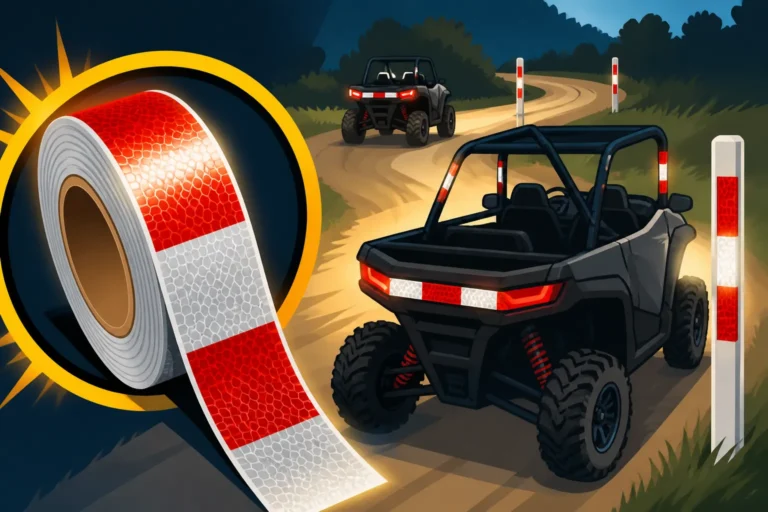
While the farm exemption might free you from registration, it doesn't necessarily free you from all safety equipment requirements, especially when you venture onto a public road. Even for brief transits, it's paramount to ensure your machine is visible to other motorists. This often means having functional headlights and taillights, especially if operating near dawn, dusk, or in adverse weather. Reflective tape can also significantly increase your visibility. Many farmers will also use an orange safety flag, often mounted on a tall pole, to make their presence known, particularly if they are moving slowly or making wide turns.
Consider upgrading your machine with durable parts from a company like SuperATV that could include brighter LED lights or more robust tires, which while not making it "street legal," could enhance safety during essential crossings. Although not explicitly mandated for farm equipment on roads, common sense dictates that you should also have working brakes and steer clear of any modifications that would make your vehicle unsafe. The spirit of the law, even with exemptions, is always about safety.
Local Ordinances and the Farm Exemption
This is a point where things can get a bit muddy. While Alabama state law provides a general framework for farm equipment exemptions, local ordinances can sometimes add another layer of complexity. Cities and counties in Alabama have the authority to enact their own rules regarding vehicle operation within their jurisdictions. While these local rules usually cannot supersede state law, they might impose additional restrictions or clarify interpretations, especially concerning speed limits, hours of operation, or specific roadways.
For instance, a rural county might have a more lenient view of farm equipment on its roads than a municipality with denser traffic. It's always a good practice to check with your local sheriff's department or city hall if you frequently need to use your ATV for farm work on public roads within a specific town or county. Don't assume that the state exemption automatically nullifies all local rules. A quick phone call can save you a lot of headache and potential citations. Understanding that [Farm Equipment Under the Definition] might still be subject to local interpretations is key.
| Type of Use | Registration Required (ALEA) | Road Use Allowed | Key Considerations |
|---|---|---|---|
| Recreational Private | No (Voluntary) | No | On private land only, with permission. |
| Recreational Public | Yes (Public Use Tier) | No | On designated public trails only. |
| Farm Equipment | No (Generally Exempt) | Yes (Limited) | For bona fide agricultural tasks, brief crossings/travel. |
| Non-Farm Work | Yes (Public Use Tier) | No | If on public land/roads, subject to full regulations. |
Practical Considerations and Best Practices for Alabama Farmers
Even with the legal exemptions for farm equipment, being proactive and employing best practices can save you a lot of trouble and ensure your operations run smoothly and safely. It's about blending legal understanding with common sense.
Documenting Your Farm Use
One of the best things you can do as a farmer using an ATV or UTV for agricultural purposes is to keep clear documentation. While it might seem like overkill, having proof that your machine is genuinely used for farm work can be invaluable if you ever face questions from law enforcement. This could include:
- Photos of your machine actively being used for farming tasks (e.g., hauling feed, pulling a sprayer).
- Records of your agricultural operation, such as crop plans, livestock inventories, or timber harvest schedules, demonstrating the necessity of the machine.
- A written statement from you, the landowner, detailing the machine’s specific agricultural uses and where it operates.
This documentation isn't just about avoiding a ticket; it's about clearly establishing the intent behind your machine's use. If an officer pulls you over while you're moving between fields, being able to quickly articulate and potentially demonstrate that your use falls under the farm equipment exemption can make a huge difference in the outcome.
Safety Gear and Common Sense
Even when legally exempt from certain regulations, safety should always be your top priority. While Alabama's helmet law primarily applies to motorcycles and doesn't explicitly mandate helmets for ATV riders on private land or for farm use, wearing a helmet is simply smart. A farming environment, with uneven terrain, heavy loads, and potential obstacles, presents its own set of hazards. A good, properly fitted helmet can prevent serious injury in a rollover or collision. Likewise, sturdy boots, long pants, and gloves offer protection against scrapes, impacts, and the elements.
Beyond personal protective equipment, operating your machine with common sense is crucial. Don't overload your ATV or UTV beyond its manufacturer-rated capacity. Drive at appropriate speeds for the terrain and conditions. Be extra vigilant when crossing public roads, watching for traffic and making eye contact with drivers if possible. Teach any employees or family members who operate the machine the same safety principles. Using robust aftermarket parts, such as heavy-duty axles or enhanced suspension from SuperATV, can improve your machine's durability and handling when carrying heavy loads, contributing to overall safety.
Insurance Considerations
It's a common misconception that if a machine is exempt from registration, it's also exempt from the need for insurance. This is absolutely not the case. While Alabama doesn't mandate insurance for off-road vehicles (unless they are registered for public use, and even then, often only liability), it is a vital layer of protection for any owner. Accidents happen, and if your ATV or UTV is involved in an incident, especially one involving property damage or injury to another person, you could be held financially responsible.
Even if you're only operating on your own private land, comprehensive liability coverage is a smart investment. It can protect you from the costs associated with an accident, whether it's damage to your own machine, damage to someone else's property, or medical bills from an injury. If your machine is financed, your lender will almost certainly require you to carry full coverage insurance. Speak with your insurance agent about specific policies for farm equipment and off-road vehicles, ensuring you have adequate coverage for both your agricultural operations and any other occasional use. It’s better to be safe than sorry, and a good policy offers peace of mind.
Disclaimer
This article is for general informational purposes only and does not constitute professional advice. Laws, prices and regulations vary by location and change over time. Consult a qualified professional for guidance on your specific situation.