What Makes a VIN Meet the Federal Standard
It's incredibly frustrating when you invest in a powerful ATV or UTV, dreaming of using it for more than just trail riding or farm work, only to run into a brick wall when it comes to riding it on Alabama's public roads. Many owners wonder if simply adding a horn, turn signals, or a license plate bracket can somehow transform their off-road machine into a street-legal vehicle. This guide is here to cut through the confusion and explain exactly why the vast majority of off-road vehicles don't meet federal standards for road use and what those standards actually mean.
Understanding the Federal Motor Vehicle Safety Standards (FMVSS)
When we talk about "street legal," we're really talking about a set of rules and regulations that every vehicle designed for public road use must meet. These aren't just suggestions; they are the bedrock of vehicle safety and design in the United States.
What Exactly is FMVSS?
The Federal Motor Vehicle Safety Standards, or FMVSS, are regulations issued by the National Highway Traffic Safety Administration (NHTSA) under the authority of the U.S. Department of Transportation. Their entire purpose is to prevent accidents and reduce injuries and deaths in the event of an accident. Think of it this way: when you see a car on the road, you inherently trust that it has been built with certain safety features—airbags, crumple zones, specific lighting, braking systems that meet minimum performance standards, and even particular types of tires. All of these assurances stem from the FMVSS.
These standards cover everything from the structural integrity of the vehicle to its lighting, braking, occupant protection, and even the materials used in its construction. A manufacturer designs a car or truck from the ground up to comply with hundreds of specific tests and requirements. They can't just slap a windshield on a golf cart and call it a car; the entire vehicle must demonstrate compliance with these rigorous safety benchmarks before it ever leaves the factory and receives a manufacturer's certification of compliance. This certification is crucial because it's the manufacturer taking legal responsibility that their vehicle meets federal safety regulations.
The Key Standard for Road Use: 49 CFR 571.500
While there are many different FMVSS standards, when discussing off-road vehicles and their potential for road use, one particular regulation frequently comes up: 49 CFR 571.500. This isn't a standalone rule that applies to all vehicles; rather, it’s often referenced within discussions about what doesn't qualify as a low-speed vehicle (LSV) or a conventional motor vehicle. Essentially, it helps define the baseline for what a vehicle needs to be considered roadworthy.
For a vehicle to be considered street legal, it generally needs to meet comprehensive FMVSS standards, which include, but are not limited to, requirements for:
- Brakes: The ability to stop effectively under various conditions.
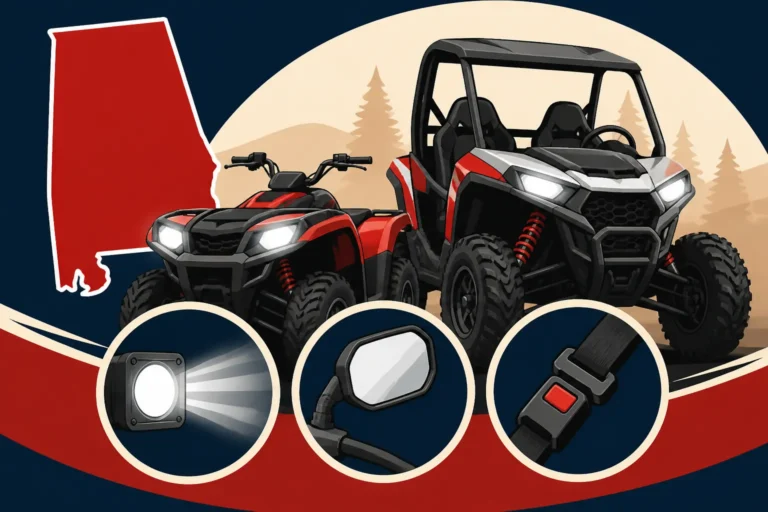
- Lights: Headlights, taillights, brake lights, turn signals, and sometimes even side marker lights that meet specific brightness and visibility criteria.
- Tires: Tires designed for highway speeds and conditions, not just off-road traction.
- Windshields and Wipers: Safety glass that won't shatter dangerously and wipers to maintain visibility.
- Seatbelts: Occupant restraint systems designed for crash protection.
- Mirrors: Side and rearview mirrors for full visibility around the vehicle.
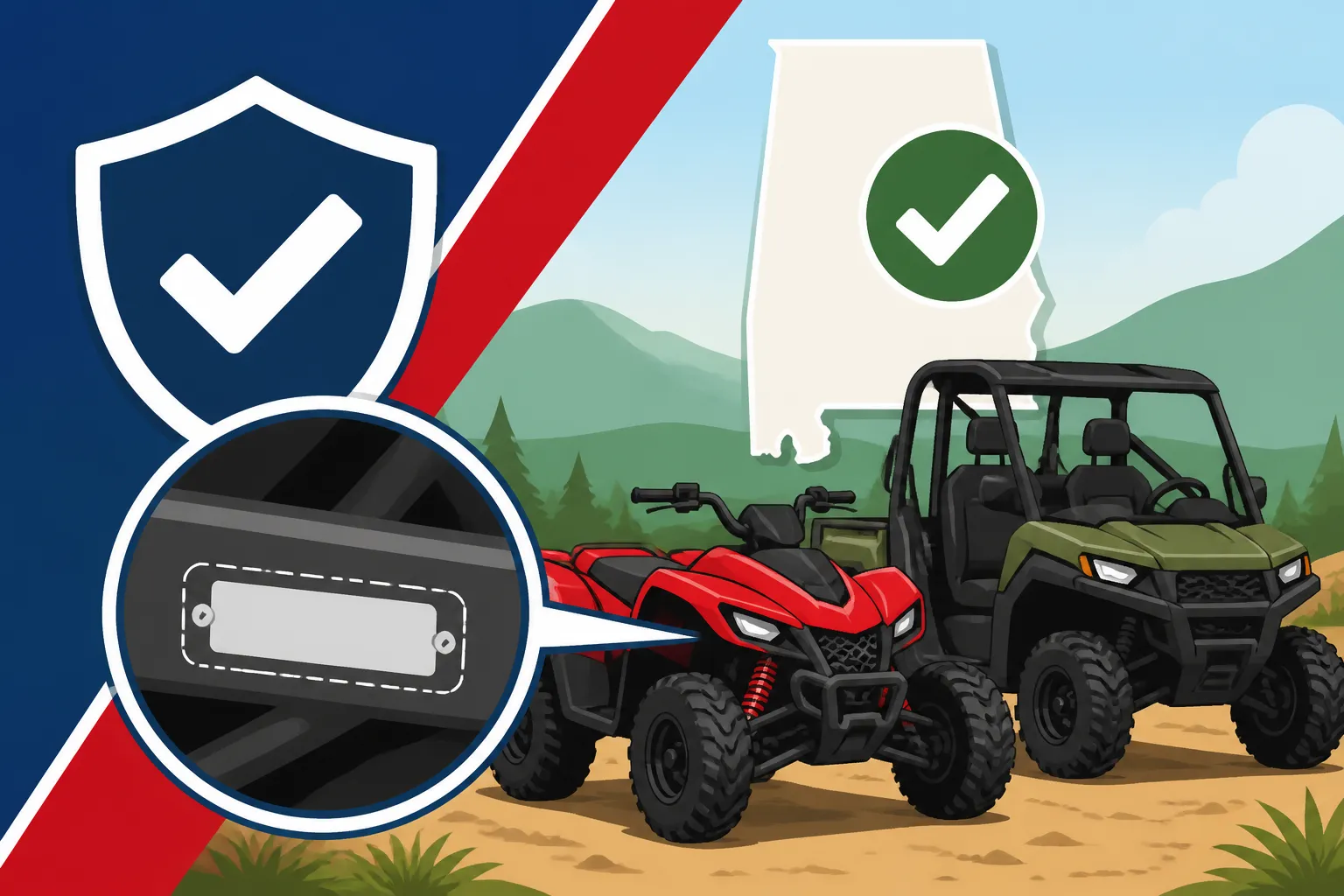
- Vehicle Identification Number (VIN): A VIN structure that identifies it as a federally compliant road vehicle.
The absence of any of these, or the failure to meet the specific performance criteria for each, means a vehicle isn't federally compliant for road use. It's not just about having the parts, but about those parts (and the vehicle as a whole) performing to a mandated standard under testing.
Why Most ATVs and UTVs Don't Meet the Standard
This is where the rubber meets the dirt, so to speak. Your average ATV or UTV is an incredible machine, built for a specific purpose, but that purpose is fundamentally different from driving on a highway.
Designed for Off-Road, Not On-Road
Think about the core design philosophy of an ATV or UTV. They are built tough, with knobby tires for gripping mud and loose terrain, high ground clearance to navigate obstacles, and suspensions designed to absorb massive bumps and impacts at slower speeds. Their engines are often tuned for low-end torque rather than sustained high-speed cruising. The frames are exposed, roll cages are present (on UTVs), but these are designed to protect occupants in an off-road rollover, not necessarily a high-speed collision with another vehicle.
Many standard ATVs, for instance, are designed for a single rider and might have limited braking capacity compared to a car. Their handling characteristics, especially at higher speeds or on paved surfaces, can be quite different and potentially unstable. There's often no crumple zone, no airbags, and basic lighting systems that are adequate for a trail but insufficient for highway visibility, especially from a distance or in adverse weather. The tires, while excellent for off-road adventures, wear quickly and offer poor traction on pavement, particularly in wet conditions. Simply put, the entire engineering and safety envelope for an off-road vehicle is drastically different from a highway vehicle.
The "Kit" Conundrum: Why Add-Ons Aren't Enough
This is a common pitfall for hopeful ATV and UTV owners. You see "street legal kits" advertised online or at accessory shops, promising to equip your machine with turn signals, a horn, a rearview mirror, and maybe even a license plate bracket. It's easy to think that if you just add these components, your vehicle magically becomes street legal. However, this is a dangerous misconception.
While these kits provide some of the necessary components, they do not, and cannot, make your off-road vehicle compliant with the full battery of FMVSS. A manufacturer designs and certifies a vehicle for road use from the ground up, factoring in structural integrity, crashworthiness, emission controls, specific braking performance, and more. Merely bolting on a set of turn signals, even high-quality ones from a reputable brand like SuperATV, doesn't change the fact that the underlying vehicle was never designed, tested, or certified to meet federal highway safety standards.
For example, a car's braking system isn't just about having brake pads; it's about the entire hydraulic system, the rotor size, the ABS, and its ability to stop a vehicle of that weight and speed within a certain distance, repeatedly. Your ATV's brake system, while perfectly fine for off-road use, likely hasn't been tested or certified to those exacting standards. The same goes for the frame, the suspension, the lighting system's intensity and beam pattern, and even things like crash protection. The "kit" addresses superficial elements but leaves the fundamental design and certification untouched.
What Machines Can Be Street Legal in Alabama?
So, if your typical quad or side-by-side isn't going to cut it, what kinds of vehicles are actually designed for limited road use and can be legally driven in Alabama?
Low-Speed Vehicles (LSVs) as an Option
This is where the concept of a Low-Speed Vehicle, or LSV, comes into play. An LSV is a specific class of vehicle that is designed and manufactured to meet a different, less stringent set of federal safety standards than regular passenger cars. These standards are outlined in 49 CFR 571.500, specifically for low-speed vehicles. The key distinguishing feature of an LSV is its top speed, which is typically capped at a maximum of 25 miles per hour (40 kilometers per hour) and a minimum of 20 mph.
To be considered an LSV and legally driven on certain public roads (usually those with speed limits of 35 mph or less, depending on local ordinances), the manufacturer must certify that the vehicle includes:
- Headlamps
- Stop lamps
- Turn signal lamps
- Taillamps
- Reflex reflectors (one red on each side as far to the rear as practicable, and one red on the rear)
- A parking brake
- A rearview mirror (or mirrors, like a driver's side and passenger's side external mirror)
- A windshield (that meets specific safety glazing requirements)
- Seat belts at each designated seating position
- A VIN that identifies it as a compliant LSV
These vehicles are built this way from the factory. They are specifically designed for neighborhood driving, community shuttles, or short-distance errands, not for highway travel. They have a VIN that identifies them as an LSV, which is crucial for titling and registration. [Alabama Low-Speed Vehicle Rules] further detail how these vehicles can be used.
Manufacturer Certification is Paramount
The absolute linchpin in determining if a vehicle meets a federal standard for road use, whether it's a full FMVSS passenger car or an LSV, is the manufacturer's certification. This isn't something you can do yourself in your garage. When a new vehicle rolls off the assembly line, it comes with a Manufacturer's Certificate of Origin (MCO) or a Certificate of Title, which includes information about the vehicle and its compliance. This document is the legal declaration by the manufacturer that the vehicle, as built, meets all applicable federal safety standards for its intended use.
For a standard car, the MCO states it complies with all FMVSS. For an LSV, it states compliance with 49 CFR 571.500 for low-speed vehicles. If your ATV or UTV's MCO or existing title (if it has one) does not explicitly state compliance with either the full FMVSS or the LSV standard (49 CFR 571.500), then it's not a federally compliant road vehicle. It’s that simple. Without that official manufacturer certification, no amount of aftermarket parts—even the best ones you can find from SuperATV or any other vendor—will legally transform your off-road machine into a road-legal one. [Why a Street Legal Kit Will Not Make It Legal] explains this in more detail.
Alabama's Stance on Off-Road Vehicles on Public Roads
Alabama law, like that of many other states, takes a clear position regarding off-highway vehicles (OHVs) and public road use. It often defers to federal standards, creating a significant hurdle for ATV and UTV owners.
Alabama's Federal Standard Barrier to Road Use
Alabama's statutes are quite specific. They generally define an ATV as a motor vehicle that is not designed for highway use. This inherent definition, coupled with language that often refers to federally compliant vehicles for public road use, creates a very strong barrier. Essentially, if a vehicle hasn't been manufactured and certified to meet the FMVSS (Federal Motor Vehicle Safety Standards) for highway use, or the specific LSV standards, it cannot be legally operated on public roads in Alabama. [Alabama's Federal Standard Barrier to Road Use] is a critical piece of the puzzle here.
This means that even if you're riding a powerful UTV that feels very stable, or a smaller ATV for a quick hop down the road, if its manufacturer hasn't built it to these federal standards and provided the necessary certification, it's considered illegal for road use. An Alabama deputy at a roadside stop will look for this fundamental compliance, not just a blinker and a horn. The law makes a clear distinction between vehicles designed and certified for the road and those designed exclusively for off-road environments.
Local Exceptions and Designated Areas
While the general rule in Alabama is a firm "no" for ATVs and UTVs on public roads, there can be very limited, hyper-local exceptions. Some small towns or communities might have specific ordinances that allow certain golf carts or similarly low-speed vehicles (that are certified as LSVs by their manufacturer) on their local streets, usually with speed limits of 25 or 35 mph. These are often in specific, designated zones, like a beach town or a planned community. [Alabama Golf Cart Rules Compared to ATVs] offers a comparison of how different vehicle types are treated.
However, these local ordinances almost never extend to modifying a standard off-road ATV or UTV for street use. The legal framework usually dictates that a vehicle must meet federal manufacturing standards first, and then local jurisdictions can create rules for where and how those compliant vehicles (like LSVs) can be operated within their boundaries. It's vital to remember that these exceptions are rare, highly localized, and apply to specific types of vehicles that were manufactured for at least limited road use, not converted off-road machines. Always check with your local city or county government offices, as well as the Alabama Law Enforcement Agency (ALEA), before assuming any local exception applies to your particular machine.
Key Differences: Off-Road vs. Federally Compliant Vehicles
To help clarify the differences, here's a quick comparison of a typical off-road ATV/UTV versus a vehicle that meets federal standards for road use, such as a Low-Speed Vehicle (LSV).
| Feature / Standard | Typical Off-Road ATV/UTV | Federally Compliant LSV (or standard vehicle) |
|---|---|---|
| Primary Design Intent | Recreation, farm work, trails | Limited road use (neighborhoods, golf courses) |
| Maximum Speed | Varies widely, often 40+ mph | Capped at 25 mph |
| Manufacturer Cert. | Not certified to FMVSS for road use | Certified to 49 CFR 571.500 (LSV standard) |
| Tires | Aggressive, knobby, low-pressure off-road tires | DOT-approved highway tires |
| Brakes | Designed for off-road stopping, not highway performance | Meets specific stopping distances and performance |
| Lighting | Basic headlights/taillights, often non-DOT approved | DOT-approved headlights, taillights, brake lights, turn signals, reflectors |
| Windshield | Often none, or non-safety glass | Safety glass windshield, often with wipers |
| Seatbelts | May have (UTV), but not necessarily crash-tested for road | Required, tested for occupant protection |
| Mirrors | Limited or none | Required (rearview, side mirrors) |
| VIN Status | Identifies as off-road vehicle | Identifies as LSV, showing compliance |
| Emissions | Often less stringent | Meets specific road vehicle emission standards |
| Crash Protection | Roll bars for off-road rollover, no crumple zones | Designed with some level of passive safety, less than cars |
It's clear from this table that the gap between an off-road machine and a road-legal vehicle is substantial, extending far beyond superficial accessories. The fundamental design, testing, and manufacturer certification are what truly differentiate them. Understanding [What Alabama's Off-Road Vehicle Statute Covers] can further help clarify these distinctions.
Ultimately, the confusion stems from the desire to maximize the utility of these fantastic machines. However, until manufacturers start building and certifying ATVs and UTVs to meet stringent federal highway safety standards, or specific LSV standards, they will remain just that: off-road vehicles. For those looking to enjoy riding on Alabama's roads, exploring options like purpose-built Low-Speed Vehicles or traditional street-legal vehicles is the safest and most legally sound approach. Always prioritize safety and legality; it can save you from fines, accidents, and immense frustration. [Can You Drive an ATV on the Road in Alabama?] provides additional context on this topic.
Disclaimer
This article is for general informational purposes only and does not constitute professional advice. Laws, prices and regulations vary by location and change over time. Consult a qualified professional for guidance on your specific situation.