Do You Need a License for an ATV in Alabama?
Navigating the rules and regulations for ATVs and UTVs in Alabama can feel like trying to untangle a ball of fishing line after a strong current has hit it. Many riders, especially those new to the sport or moving from out of state, wonder if they need a driver's license to hop on their quad or side-by-side. It’s a completely fair question, filled with potential pitfalls if you get it wrong. This guide aims to clear up that confusion, explaining when and where a license might (or might not) come into play, so you can ride with confidence and stay on the right side of the law.
No Driver's License Required for Off-Road ATV Use
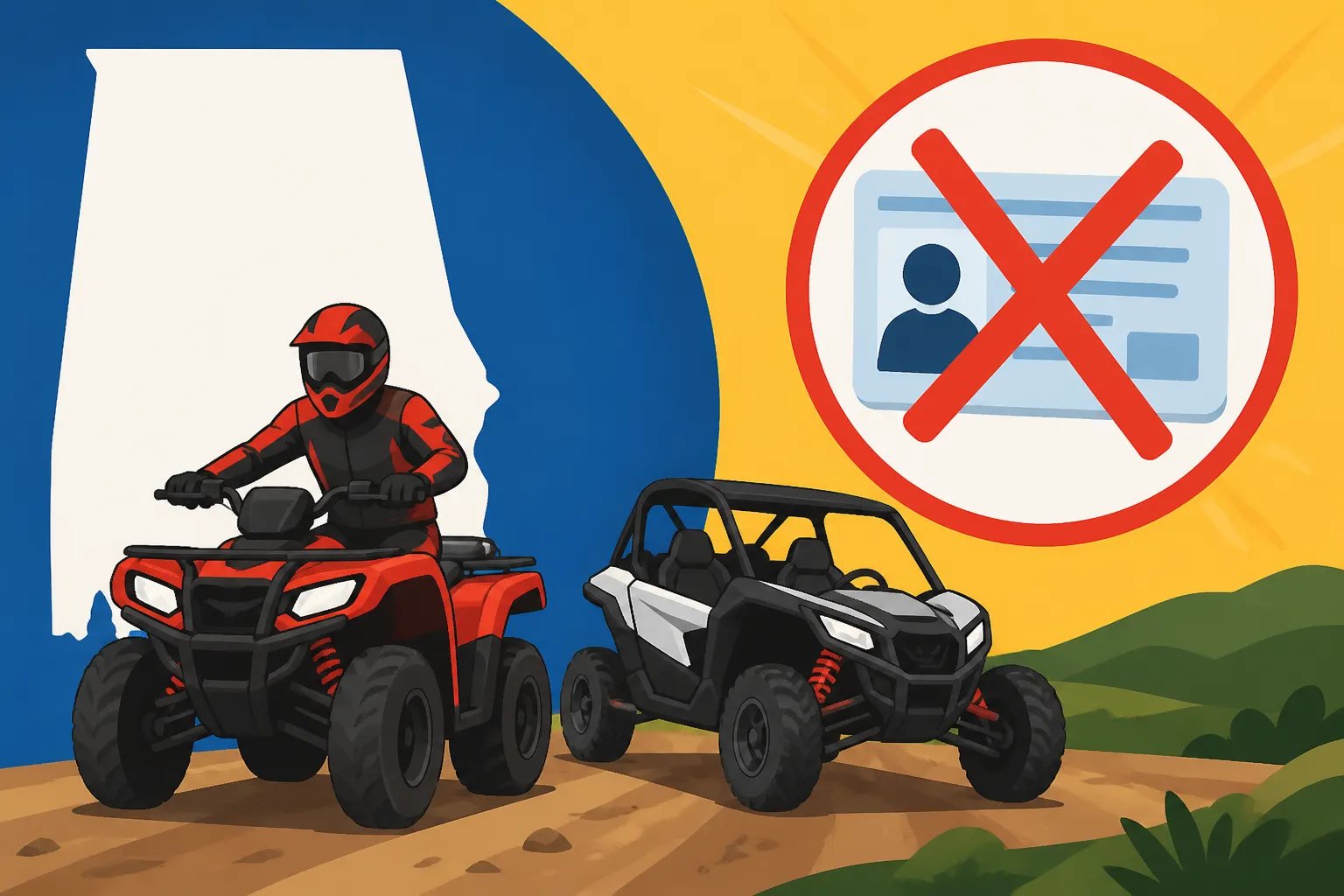
Let's cut right to the chase for most Alabama riders: if you're riding your ATV or UTV exclusively off-road, whether it's on your own sprawling property, a friend's hunting lease, or a dedicated OHV park, you generally do not need a standard driver's license issued by the state of Alabama. This is where the core appeal of off-road riding lies for many – the freedom to explore without needing a driver's permit.
Riding on Private Property
For many of us in Alabama, our ATVs and UTVs are tools for farm work, hunting, or just plain fun in the woods right outside our back door. When you're operating your machine on private land that you own or have explicit permission to use, the state's driver's license requirements for public roads simply don't apply. You're not interacting with public traffic or infrastructure in the same way. This means that folks who might not even be old enough to get their learner's permit can often enjoy riding under proper supervision on private acreage. This is a huge relief for parents who want to introduce their kids to the joys of off-road adventures safely and legally.
However, even on private property, common sense and safety protocols are paramount. While a license isn't mandated, responsible riding means wearing appropriate safety gear, understanding your machine's capabilities, and ensuring minors are supervised. Just because the state isn't asking for a license doesn't mean you should throw caution to the wind.
Riding in Designated Public Areas
Alabama is home to some fantastic riding spots, like Stony Lonesome OHV Park or Minooka Park, which offer miles of trails for ATVs and UTVs. When you visit these designated public riding areas, the good news continues: you still don't typically need a driver's license to operate your off-road vehicle. These parks are specifically set up for off-highway vehicles and are managed differently than public roads.
However, these parks often have their own sets of rules that might include age restrictions, helmet requirements (even if the state doesn't universally mandate them for ATVs), and sometimes even proof of ownership or registration. For instance, while [Alabama's Voluntary ATV Registration Through ALEA] is an option, it's not always a park requirement to have it, but it's always wise to check with the specific park you plan to visit. The key here is that these are designated off-road environments, distinct from the public roadways where a driver's license typically applies. It's crucial to understand [What Registering Gets You Before Riding Public Land] if you plan to venture beyond private property.
The Tricky Territory of Public Roads and Street Legality
This is where the waters get a bit murky for many ATV and UTV owners. The question of needing a driver's license often arises because people think about driving their machine on public streets. And this is precisely where the core issue isn't about licensing an ATV, but about whether an ATV is legal to be on the road in the first place.
Why Standard ATVs Are Not Street Legal
The fundamental truth is that most ATVs and UTVs are simply not manufactured to meet the federal safety standards required for operation on public roads in Alabama. These standards, often referred to as Federal Motor Vehicle Safety Standards (FMVSS), dictate everything from lighting and braking systems to crashworthiness and emissions. A typical ATV, designed for rugged off-road terrain, just doesn't measure up. This is a critical point that many riders misunderstand. It's not about adding a turn signal kit or a horn; it's about the fundamental design and certification of the vehicle. You can read more about [Alabama's Federal Standard Barrier to Road Use].
So, if your machine isn't street legal, the question of needing a driver's license to operate it on the road becomes almost irrelevant. You can't legally drive it there, regardless of whether you have a license or not. Trying to modify your ATV with aftermarket parts from companies like SuperATV to make it "street legal" might give it the appearance of road-readiness, but without meeting those foundational federal safety standards, it simply won't be considered a street-legal vehicle in Alabama. [Why a Street Legal Kit Will Not Make It Legal] is a common point of confusion for riders.
Low-Speed Vehicles (LSVs) and Driver's Licenses
There's an important distinction to be made here: Low-Speed Vehicles (LSVs). These are vehicles, often resembling golf carts but designed to a specific federal standard, that are street legal on certain public roads, typically with speed limits of 35 mph or less. And yes, to operate an LSV on public roads in Alabama, you absolutely do need a valid driver's license.
LSVs are manufactured to meet a different set of federal safety standards than regular automobiles, but they do meet federal standards for road use, unlike most ATVs. This means they have specific lighting, seat belts, windshields, and other features required for limited road operation. If you happen to purchase a vehicle that is certified as an LSV from the factory, then yes, a driver's license is required. However, it's crucial to understand that an ATV or UTV is rarely, if ever, an LSV. Many people confuse the two, thinking if they can make their side-by-side go slow enough or add some lights, it becomes an LSV. This is a dangerous misunderstanding. [What a Low-Speed Vehicle Standard Requires] is very specific.
Here’s a quick comparison to help clarify the difference:
| Feature | Standard ATV/UTV (Off-Road) | Low-Speed Vehicle (LSV) |
|---|---|---|
| Primary Use | Off-road recreation, work, hunting | Limited public road use (35 mph limit) |
| Federal Standards | Not designed for FMVSS road compliance | Designed and certified to specific FMVSS |
| Driver's License | Generally NOT REQUIRED for off-road use | REQUIRED for public road use |
| Road Legality | Generally NOT STREET LEGAL | STREET LEGAL on designated roads |
| Registration/Titling | Voluntary registration (ALEA), [Alabama ATV Titling Starts With Model Year 2026] | Mandatory vehicle registration & titling |
| Typical Appearance | Quads, sport UTVs, utility side-by-sides | Golf cart-like, small electric cars |
Crossing Roads Legally
So, what about crossing a paved road to get from one section of private property to another, or to access a trail? Alabama law does allow for crossing public roads in certain circumstances, but this is a very narrow exception, not a blanket permission to ride down the street. When crossing, you must yield to all traffic, cross at a 90-degree angle, and do so as quickly and directly as possible. You are generally not allowed to travel along the road.
Even in these limited crossing scenarios, the law doesn't explicitly state a driver's license is needed for the operator of the ATV. However, if a local ordinance or law enforcement officer deems your crossing to be unsafe or an attempt to use the road as a thoroughfare, you could still face a citation. It's always best practice to know [Alabama Rules for Crossing a Highway] and to avoid public roads whenever possible, or to trailer your machine if the distance is more than a quick, direct crossing.
Age Restrictions and Supervision: Separate from Licensing
It’s easy to confuse driver’s license requirements with age restrictions for ATV operation. While not directly tied to needing a license, age plays a significant role in who can operate an ATV in Alabama, especially for younger riders. These rules are in place for safety, not for managing road traffic.
Youth Rider Rules
Alabama does have specific guidelines regarding the age of ATV operators, particularly concerning the size and type of machine a minor can ride, and the necessity of supervision. Generally, children under certain ages are restricted from operating ATVs, or must do so under the direct supervision of an adult. For example, a child passenger might also be restricted based on the machine's design and seating. These rules are put in place to ensure that young riders have the physical strength, coordination, and judgment necessary to safely control an ATV, which can be quite powerful and unforgiving.
For instance, the state’s off-road vehicle statute has provisions about youth operation, often encouraging or sometimes even requiring adult supervision for those under a certain age. While there isn't a mandatory ATV safety course requirement in Alabama, it's highly recommended, especially for young riders. A course can teach crucial skills and awareness that contribute to safe riding. Always check the specific statute for the latest age restrictions and supervision requirements, as these can be updated. Understanding [Alabama Rules for a Teen Rider] is vital for any family with young enthusiasts.
Adult Supervision and Responsibility
Even when a driver's license isn't required for an adult to ride off-road, the responsibility for safe operation and adherence to local rules always falls on the operator. If you're supervising a minor, you also bear a significant responsibility for their safety and compliance. This means ensuring they're on an appropriate-sized machine, wearing helmets and other protective gear, and riding within their skill level.
Parents or guardians allowing minors to ride should be acutely aware of their legal and moral obligations. While the state doesn't require a driver's license for your child to ride on private land, they still have a duty to protect that child. Ignoring safety guidelines can lead to serious injury or legal repercussions. This often means providing hands-on instruction, setting clear boundaries, and being present during their rides.
Penalties and Legal Consequences
Misunderstanding the rules regarding ATVs and public roads can lead to more than just a stern talking-to from a local deputy. The penalties can range from fines to impoundment of your machine, and possibly even more severe consequences if an accident occurs. This is why it’s so critical to get this information right.
Citations for Illegal Road Riding
If you're caught operating a standard ATV or UTV on a public road where it's not legally permitted, you could face a citation. This isn't just a slap on the wrist. Fines can vary depending on the county or municipality, and repeat offenses can escalate the penalties. Law enforcement officers have the authority to pull you over for operating an unregistered or non-street-legal vehicle on public roadways. This could fall under various traffic offenses, even though the core issue is the machine's legality, not a missing driver's license for the ATV itself. [Alabama Penalties for Illegal Road Riding] can be a harsh lesson.
Beyond fines, there's the inconvenience and potential cost of having your machine towed and impounded. Getting your ATV back can involve storage fees, towing charges, and proving ownership, all on top of the initial citation. It's a costly headache that can be easily avoided by understanding where you can and cannot legally ride.
The Dangers of Impaired Operation (with or without a license)
While a driver's license isn't generally required for off-road ATV use, the rules around impaired operation absolutely still apply. Just like operating a car, boat, or any other vehicle, riding an ATV while under the influence of alcohol or drugs is illegal and incredibly dangerous. Even if you're on private property, if law enforcement has reason to be there and observes impaired operation, you could face DUI charges.
Alabama's DUI laws are broad enough to cover the operation of vehicles off-road as well as on, especially if the private land is accessible to the public or if an accident involving injury occurs. So, while you might not need a license to ride your ATV in the woods, the state still expects you to operate it responsibly and soberly. Mixing ATVs and alcohol is a recipe for disaster, regardless of the licensing rules.
Remember, the goal is always to ride safely and legally. While the question of needing a driver's license for an ATV in Alabama generally results in a "no" for off-road use, the exceptions and nuances, particularly around public roads, are crucial to understand. Staying informed helps protect both you and your fellow riders.
Disclaimer
This article is for general informational purposes only and does not constitute professional advice. Laws, prices and regulations vary by location and change over time. Consult a qualified professional for guidance on your specific situation.