Why a Standard Quad Can Never Pass the Standard
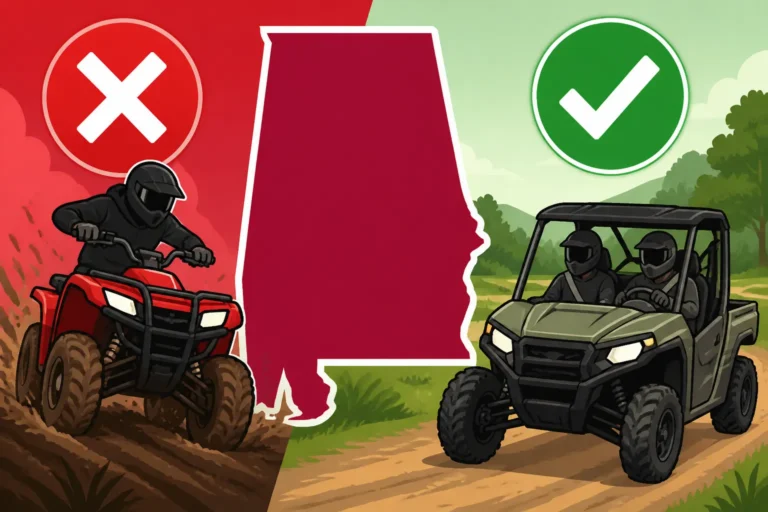
It's a familiar dream for many of us here in Alabama: hopping on our trusty ATV or side-by-side right from the driveway and cruising down a scenic county road to meet friends, hit the store, or just enjoy the breeze. We see UTVs in advertisements looking like road-ready vehicles, and aftermarket companies offer "street legal kits" promising to transform our machines. The frustration hits hard when you learn that for the vast majority of standard off-road vehicles, driving them on public roads in Alabama just isn't legal, no matter how many mirrors or turn signals you bolt on. This guide will dive deep into why your standard quad or side-by-side, straight from the factory, simply cannot meet the specific federal standards required for road use in Alabama, and what your realistic options truly are.
Understanding Alabama's Stance on Off-Road Vehicles on Public Roads
Alabama's approach to off-road vehicles (ORVs) like ATVs and UTVs on public roads can feel like a tangled mess of rules, and it often leads to a lot of confusion for owners. You want to enjoy your machine, and it feels natural to assume that if you add a few safety features, you should be good to go. However, the state's legal framework, heavily influenced by federal guidelines, draws a very clear line between a vehicle designed for the trail and one intended for the highway. It’s not just about what accessories you have; it’s about the fundamental design and certification of the machine itself.
The "Non-Highway Vehicle" Distinction in Alabama Law
In Alabama, the core issue preventing most ATVs and UTVs from being street legal boils down to their classification as "non-highway vehicles." This isn't a casual term; it's a legal designation that carries significant weight. A "non-highway vehicle" is precisely what it sounds like: a vehicle not built or certified for highway use. These machines are engineered for off-road terrains, for navigating fields, forests, and trails, not for sharing asphalt with cars and trucks at typical road speeds.
This distinction is crucial because it means that even if your quad or side-by-side looks capable of handling the road, and even if it's equipped with lights and horns, its fundamental design was never intended to meet the rigorous safety and performance standards mandated for road-going vehicles. Think about it: the suspension, braking systems, tire types, and even the structural integrity of an ATV are optimized for rough, low-speed, off-pavement conditions, not for high-speed impacts or sustained highway travel. The law recognizes this inherent design difference, which is why your local deputy will, unfortunately, still write you a ticket if you're caught riding your standard ORV on a public street. You can read more about these rules in [Alabama ATV Road Rules Explained].
How Federal Standards Shape Alabama's Road Rules
While Alabama sets its own traffic laws, the state's ability to allow or deny certain vehicles on public roads is significantly tethered to federal regulations, specifically the Federal Motor Vehicle Safety Standards (FMVSS). For any vehicle to be legally driven on a public highway, it must be manufactured to meet these stringent federal safety requirements. This isn't something a state can simply opt out of. It’s a foundational aspect of vehicle manufacturing and certification in the United States.
For ATVs and UTVs, the problem is that they are generally manufactured under different federal guidelines – often recreational vehicle standards – that do not include the requirements for highway safety. They are not subjected to crash testing, emission standards, or lighting configurations mandated for vehicles that share the road with everyday cars. Because these machines lack the necessary federal certification for highway use, Alabama, like most states, cannot simply declare them "street legal" by passing a state law. Doing so would effectively circumvent federal mandates and create a significant public safety hazard. This federal barrier is explored in detail in [Alabama's Federal Standard Barrier to Road Use].
Decoding Federal Motor Vehicle Safety Standard (FMVSS) 571.500
The specific federal standard that stands as the biggest hurdle for getting your standard ATV or UTV on Alabama's public roads is FMVSS 571.500. This regulation, often simply referred to as "Federal Standard 500" or the "Low-Speed Vehicle (LSV) Standard," defines what constitutes a legitimate Low-Speed Vehicle in the eyes of the federal government. It's an incredibly detailed set of rules that goes far beyond just slapping on some blinkers and a rearview mirror. For your machine to be considered street legal, it must be built from the ground up to meet these specifications.
The Core Requirements of FMVSS 571.500
FMVSS 571.500 outlines a comprehensive list of safety and performance criteria that a vehicle must meet to be classified as an LSV. These are not suggestions; they are mandatory design and manufacturing specifications. First and foremost, an LSV must be capable of a top speed of no less than 20 miles per hour (mph) and no more than 25 mph. This specific speed range is critical; too slow and it impedes traffic, too fast and it steps into the realm of regular automobile safety requirements.
Beyond speed, the standard mandates a whole suite of safety equipment, much like a traditional car. This includes headlamps, tail lamps, stop lamps, turn signal lamps, and reflective devices. It also requires an exterior mirror mounted on the driver's side and either an interior rearview mirror or a mirror mounted on the passenger's side. Furthermore, parking brakes, a VIN (Vehicle Identification Number), a glazing windshield (shatter-resistant glass), seat belts, and an advanced braking system are all non-negotiable. These aren't just bolt-on accessories; they refer to the type and performance of these components as part of the vehicle's original design. Understanding [What a Low-Speed Vehicle Standard Requires] helps illustrate this complexity.
Why Your Standard ATV or UTV Doesn't Qualify
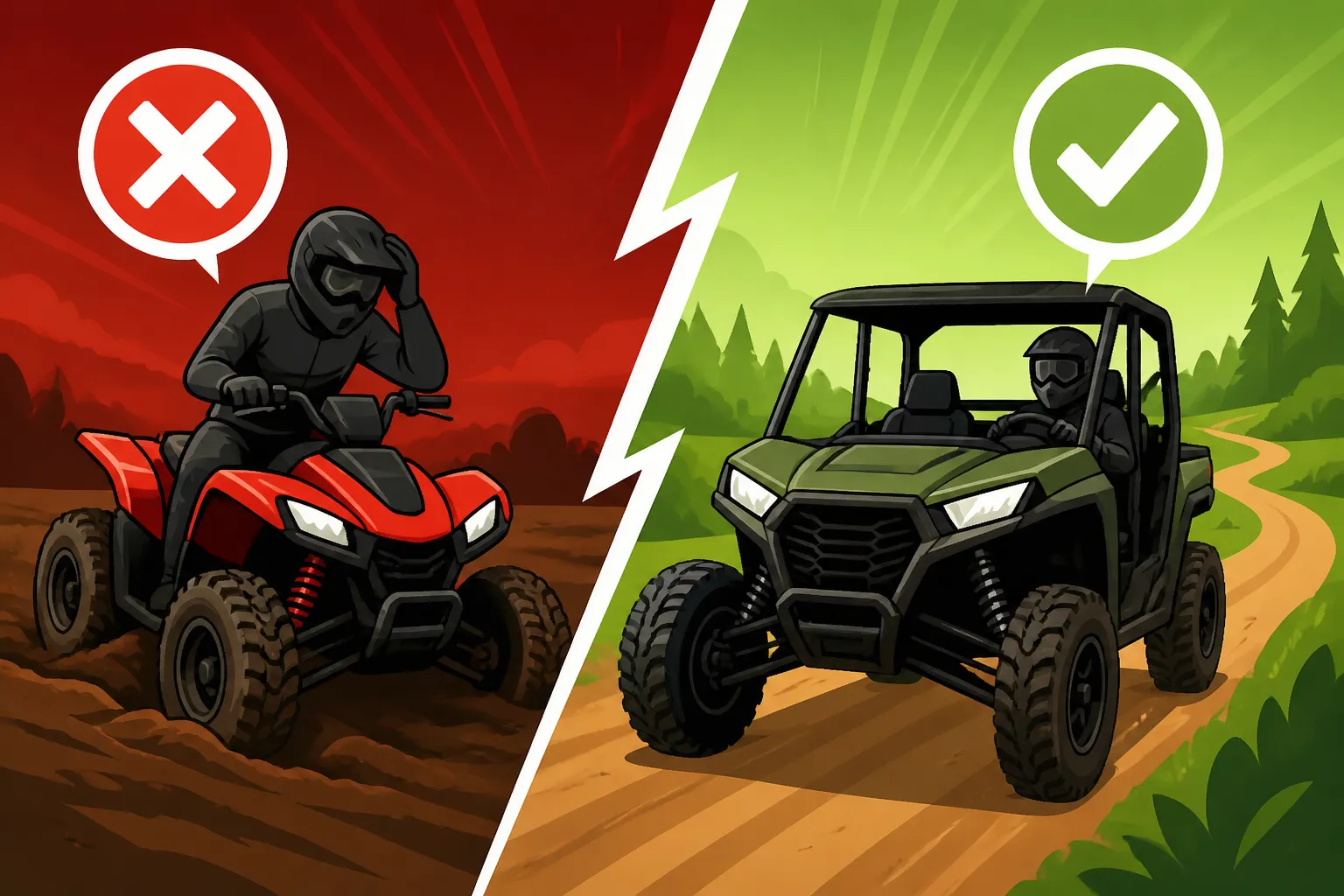
The reason why your typical ATV or UTV, whether it's a utility quad or a sport side-by-side, cannot pass FMVSS 571.500 is fundamentally about its design purpose and manufacturing process. These machines are not engineered to operate safely within the 20-25 mph speed parameters required for an LSV. Many ATVs are designed to go much faster, and their suspension and steering systems are built for off-road articulation, not for stable, predictable handling on pavement at consistent speeds. Their tires, often knobby and aggressive, are fantastic for grip in mud and dirt but perform poorly, wear quickly, and can be unstable on asphalt.
More critically, standard ATVs and UTVs do not come with the required DOT-approved glazing windshields, advanced braking systems (they're often simple hydraulic discs or drums, not systems designed for highway speeds), or certified seat belts and restraint systems that meet crash standards. The entire chassis and frame are not built to withstand the types of impacts anticipated for a road-going vehicle. In essence, these are purpose-built off-road machines, and retrofitting them with aftermarket parts doesn't magically change their core engineering or their federal certification status. [Why a Standard Quad Can Never Pass the Standard] is precisely because it was never designed to.
The Crucial Role of the Manufacturer in Certification
Another often-overlooked aspect of FMVSS compliance is the manufacturer's role. For a vehicle to be legally considered an LSV, it must be certified by the original manufacturer as meeting FMVSS 571.500. This certification isn't just a stamp; it involves extensive testing, documentation, and a commitment that every vehicle produced under that designation adheres to the standard. This is why you'll see a Manufacturer's Statement of Origin (MSO) or Certificate of Origin (COO) explicitly stating if a vehicle is an LSV.
When you buy a standard ATV or UTV, its MSO will clearly state that it is not intended for highway use. There's no magical aftermarket kit or local modification shop that can change that original manufacturer certification. It’s an inherent part of the vehicle’s identity from the moment it rolls off the assembly line. This distinction is critical because without that manufacturer's certification, even if you managed to equip your off-road vehicle with every single component listed in FMVSS 571.500, it would still not be a federally compliant LSV. This is why you need to understand [Which Machines Actually Meet the Federal Safety Standard] – it's about the factory build.
The Allure and Limitations of Aftermarket "Street Legal" Kits
The market is flooded with aftermarket "street legal" kits for ATVs and UTVs, and it's easy to understand their appeal. The idea of taking your rugged off-road machine and making it highway-ready with a few added components is incredibly tempting. Companies like SuperATV offer a wide range of accessories that can enhance your machine's safety and utility for off-road use, including mirrors, turn signals, and horns. However, the promise implied by "street legal" in the context of these kits often leads to a major misunderstanding about what true road legality entails in Alabama.
What These Kits Typically Include
Aftermarket "street legal" kits usually provide the bare minimum components that seem to align with basic road rules. This often includes things like an easily installable turn signal kit with amber lights, a horn, rearview mirrors (often universal clamp-on types), and sometimes a license plate bracket with a light. You might also find kits that offer a windshield, though it's rarely made of DOT-approved safety glass (glazing) like what's required for highway vehicles.
These components are certainly valuable for enhancing visibility and safety when riding off-road or when momentarily crossing private roads. Having turn signals, for example, makes it much clearer to others what your intentions are on a trail or when navigating a camp property. However, it’s crucial to recognize that these kits are designed to add accessories, not to fundamentally re-engineer and certify your vehicle to a federal standard. While they make your machine more visible, they don't change its underlying classification as a non-highway vehicle.
Why a Kit Alone Doesn't Grant Road Legality
The core problem with relying on a "street legal kit" to make your ATV or UTV road-legal in Alabama is that it addresses symptoms, not the cause. As we've discussed, road legality isn't just about having specific parts; it's about the vehicle being designed, tested, and certified by the manufacturer to meet FMVSS, especially FMVSS 571.500 for LSVs. An aftermarket kit cannot provide this manufacturer certification because it doesn't change the vehicle's original identity or its foundational engineering.
Think of it this way: putting a red siren and flashing lights on your pickup truck doesn't make it an emergency vehicle. It might look like one, but it lacks the official designation, training, and operational protocols. Similarly, a street legal kit makes your ATV look like it has some road-going features, but it doesn't transform it into a federally compliant LSV. Law enforcement in Alabama understands this distinction. They're not looking for accessories alone; they're looking for proper vehicle classification and manufacturer certification. This is why [Why a Street Legal Kit Will Not Make It Legal] is such an important topic for Alabama riders.
The Difference Between Being Equipped and Being Certified
This is perhaps the most critical distinction to grasp: there's a world of difference between being equipped with certain safety features and being certified to operate on public roads. You can equip your standard ATV with the brightest lights, the loudest horn, and the most robust mirrors available from a brand like SuperATV. These additions undoubtedly make your machine safer and more visible in an off-road environment or when crossing a private dirt road.
However, none of these aftermarket additions change the fact that the vehicle itself, as manufactured, was never certified to meet the federal highway safety standards. The frame wasn't crash-tested, the braking system wasn't designed for consistent high-speed stopping on asphalt, and the tires aren't DOT-approved for highway speeds. Without that foundational manufacturer certification, law enforcement sees a non-highway vehicle that has been modified, not a legally road-ready LSV. This distinction often catches riders by surprise and is a common source of fines and confusion.
Vehicles That Can Legally Operate on Alabama Roads (Sometimes)
While your standard ATV or UTV is largely out of luck for road legality, it's important to understand that not all recreational vehicles are banned from Alabama's public roads. There are specific classifications of vehicles, built to different standards, that can be driven on certain public thoroughfares, along with very specific exemptions for off-road machines. Knowing these differences is key to understanding what your actual options are.
True Low-Speed Vehicles (LSVs) and Their Specifications
If you truly want a four-wheeled vehicle that offers open-air motoring and can be driven on public roads in Alabama, you need a bona fide Low-Speed Vehicle (LSV). These are distinct from ATVs and UTVs because they are manufactured specifically to meet FMVSS 571.500, as discussed earlier. LSVs come with all the required safety equipment directly from the factory: DOT-approved windshields, seat belts, advanced braking systems, proper lighting, mirrors, and a VIN that reflects their LSV status.
They are typically smaller, lighter, and designed for local, low-speed travel within communities. Because they meet federal safety standards, they can be titled and registered for road use in Alabama, subject to local ordinances. However, remember their speed limitation: 20-25 mph. They're not for highways or roads with speed limits above 35 mph (though this can vary by local ordinance). If you’re looking to purchase a machine that can legally traverse your subdivision streets, an LSV is what you should be researching. For more information, see [Alabama Low-Speed Vehicle Rules].
Golf Carts Versus ATVs: A Key Distinction
This is another area ripe for confusion, especially because golf carts are often seen driving on public streets in certain towns. Many people assume if a golf cart can do it, so can their ATV. However, Alabama law makes a clear distinction between golf carts and ATVs, and they are regulated differently. Golf carts, while not "highway legal" in the traditional sense, can be allowed on public streets in specific circumstances, almost always due to local city or county ordinances that explicitly permit them on certain roads.
These local rules often come with their own set of requirements, such as lights, turn signals, and mirrors, and are usually restricted to specific roads with low-speed limits (e.g., 25 mph or less) and within defined areas. ATVs, on the other hand, do not typically fall under these golf cart ordinances. Their power, weight, and inherent off-road design keep them in the "non-highway vehicle" category unless they are actual LSVs. It’s crucial not to conflate the rules for golf carts with those for ATVs; they are separate beasts in the eyes of the law. You can delve deeper into [Alabama Golf Cart Rules Compared to ATVs].
Navigating Farm Use Exemptions on Public Roads
Alabama law does provide specific, limited exemptions for ATVs and UTVs used as bona fide farm equipment. If you're actively engaged in farming, ranching, or timber operations, you might be able to operate your off-road machine on a public road for short distances, primarily to move between fields or properties that are part of your farming operation. This exemption is not a blanket "street legal" pass; it's strictly tied to agricultural use.
The key here is "bona fide farm equipment" and "short distances for agricultural purposes." You can't just slap a "farm use" sticker on your quad and expect to ride it to the gas station or local diner. The machine must be primarily used for farm work, and its road use must be directly incidental to that work. This typically means crossing a road from one field to another, or moving between barns on adjacent properties. Recreational riding, even on a farm, does not qualify for this exemption. Always err on the side of caution and consult local law enforcement if you are unsure about the specifics of the farm use exemption in your area. For more details, check out [Alabama Farm Use and Road Riding].
Here's a quick comparison of vehicle types and their road legality:
| Feature/Vehicle Type | Standard ATV/UTV (Off-Road) | Low-Speed Vehicle (LSV) | Golf Cart (Standard) |
|---|---|---|---|
| Federal Standard | Not FMVSS 571.500 Compliant | FMVSS 571.500 Certified | Not Federally Certified as LSV or MV |
| Max Speed | Varies widely, often 40+ mph | 20-25 mph | Typically under 20 mph |
| Title/Registration | Voluntary Registration (ALEA), Title (2026+) | Required for Road Use | Varies by Local Ordinance (often no state title) |
| Road Legal? | No (except limited farm use) | Yes (on roads <35mph, per local rules) | Only if explicitly permitted by local ordinance |
| Manufacturer Cert. | Non-Highway Vehicle | Certified as LSV | Designed for golf courses/private property |
| Common Use | Trails, hunting, farming, recreation | Community transport, gated communities | Golf courses, short distance travel |
Navigating Your Riding Options in Alabama
Given the strict regulations against standard ATVs and UTVs on public roads, it's natural to feel a bit disappointed if your dream was to cruise through town on your quad. However, Alabama offers a fantastic array of options for legal and enjoyable off-road riding. The key is to understand where you can ride and to respect the rules that govern those areas, as well as the limited circumstances where you might intersect with public roads.
Designated Public and Private Riding Areas
Alabama is blessed with some incredible terrain, and thankfully, there are numerous places specifically designated for ATV and UTV riding. These range from large public OHV parks to privately owned recreation areas, each with its own unique trails, amenities, and rules. Parks like Stony Lonesome OHV Park in Cullman County or Minooka Park in Chilton County offer miles of trails designed for off-road enthusiasts of all skill levels. They often have camping, wash stations, and other facilities, making for a full weekend adventure.
Riding in these designated areas ensures you're on legal ground, typically with well-maintained trails and often an active community of fellow riders. You're free to enjoy your machine without worrying about traffic laws or citations for illegal road use. This is where your machine truly shines, tackling mud, hills, and technical terrain. Companies like SuperATV specialize in gear that enhances your experience in these environments, from lift kits for clearance to winches for those sticky situations. To find your next adventure, look up [Alabama ATV Trails: Where to Ride] and explore places like [Stony Lonesome OHV Park in Alabama].
Crossing Roads and Short Distances: What's Allowed
While sustained road riding is a no-go for standard ATVs, there are very specific, limited circumstances where you might legally cross a public road or travel a short distance on one in Alabama. This usually applies when you need to access one section of private property from another, or to cross a paved county road to get to another section of trail. The operative words here are "crossing" and "short distance," and "incidental to off-road use."
Typically, you must cross at a 90-degree angle, stopping fully and yielding to all traffic. The machine should be equipped with basic safety features like headlights and taillights, and often, local ordinances may require turn signals for even these brief crossings. This isn't permission to ride down the shoulder for a mile to get to your favorite fishing spot. It's a very narrow exception, and it's always best to check with local law enforcement or county offices to understand the precise rules in your specific area. Err on the side of caution; a brief, clearly necessary crossing is usually acceptable, but anything more can lead to a ticket. For specific guidance, you can refer to [Crossing a Road on an ATV in Alabama].
The Importance of Checking Local City and County Ordinances
Beyond state and federal laws, individual cities and counties in Alabama have the authority to enact their own ordinances regarding ATV and UTV use within their jurisdictions. This is especially common in smaller towns or rural counties where off-road vehicles are more prevalent. While a city cannot override federal law to make a non-LSV machine street legal statewide, they can create rules about where and when certain vehicles, like golf carts, might be allowed on specific local roads.
It's imperative that you do your homework before riding on any public thoroughfare, no matter how remote it seems. What's allowed in one county or town might be strictly prohibited in the next. A call to the local sheriff's office or city clerk's office can save you a lot of grief and potential fines. They can tell you if any local ordinances exist that permit (or explicitly forbid) any form of ATV or UTV use on public roads, even for short distances or for golf carts. This is especially important for understanding [Alabama City Ordinance Lookups] and ensuring you're compliant wherever you choose to ride.
Disclaimer
This article is for general informational purposes only and does not constitute professional advice. Laws, prices and regulations vary by location and change over time. Consult a qualified professional for guidance on your specific situation.