Alabama Golf Carts Are Not Titled
It’s a common scenario across Alabama: you’ve got a golf cart, maybe for zipping around the neighborhood, heading to the community pool, or just making quick trips on your private property. Then you start wondering, “Does this thing need a title? How does it stack up against my quad or side-by-side?” This can be incredibly confusing because the rules for ATVs, UTVs, and even Low-Speed Vehicles (LSVs) seem to shift and change depending on who you ask or what county you're in. This guide is going to clear up that widespread confusion, specifically addressing why golf carts in Alabama are not titled, how their legal status differs from other off-road machines, and what that means for you as an owner.
The Core Distinction: Golf Carts Versus Off-Road Vehicles
Let’s get right to the heart of the matter. The biggest source of confusion for many Alabamians is blurring the lines between what constitutes a golf cart and what the state defines as an All-Terrain Vehicle (ATV) or a Recreational Off-Highway Vehicle (ROV, often called a UTV or side-by-side). While they might all have four wheels and an engine, the law sees them through very different lenses, and these distinctions are crucial for understanding everything from titling to road use.
What the Law Says About Golf Carts in Alabama
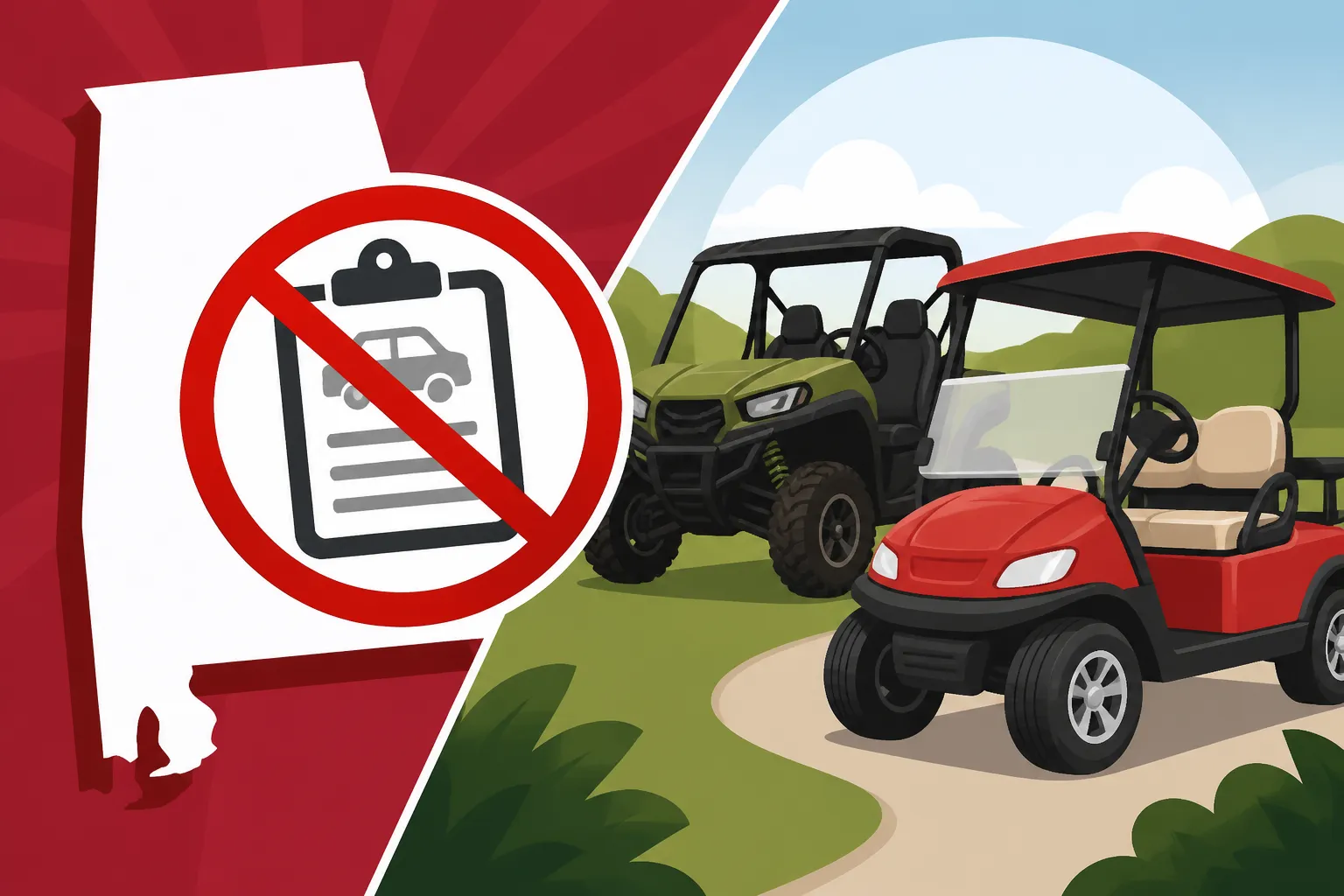
In Alabama, a golf cart generally falls outside the specific legal definitions that govern ATVs and ROVs. The state's off-road vehicle statute actually has a clear exclusion for golf carts. This is a huge point of relief for many owners because it means your golf cart isn't suddenly subject to the same titling and registration requirements that ATVs and UTVs might be. When the legislature penned the rules for off-highway vehicles, they made a conscious decision to keep golf carts in their own category, largely acknowledging their intended purpose for golf courses and specific local community use rather than rugged off-road recreation.
This legal exclusion means that the rigorous process you might go through for a new ATV or side-by-side, such as applying for a title or registering it with the Alabama Law Enforcement Agency (ALEA), simply doesn't apply to your standard golf cart. You won't be dealing with the [Alabama Splits Titling and Registration Between Agencies] scenario for your cart. This makes sense when you think about it; most golf carts aren't designed or marketed as serious off-road machines, even if they can handle a dirt path. They lack many of the safety features and robust construction inherent in true ATVs and UTVs built for more extreme conditions. This distinction helps keep things simpler for golf cart owners, preventing them from having to jump through unnecessary bureaucratic hoops.
How ATVs and UTVs Are Defined Differently
Now, let's look at the flip side. Alabama's legal definitions for ATVs and ROVs are quite specific, and they directly contrast with the exclusion of golf carts. An ATV, for instance, is typically defined as a motor vehicle designed to travel on four low-pressure tires, intended by the manufacturer for use by a single operator on off-highway terrain. It's usually limited in width and weight, around [60 Inches and 1,500 Pounds]. ROVs, or UTVs, are also built for off-highway travel but can often carry passengers side-by-side, hence the name. They generally have a steering wheel, roll-over protection, and might be wider and heavier, like [80 Inches for a Side-by-Side] or [3,500 Pounds Dry for a Side-by-Side].
These machines, unlike golf carts, are built from the ground up for adventure and utility beyond paved roads. They often feature robust suspension systems, powerful engines, and specialized tires designed for gripping dirt, mud, and rocks. They are very much considered "vehicles" in a sense that a golf cart often is not, especially when it comes to state-level oversight. The purpose-built nature of ATVs and UTVs is what triggers the need for things like registration for public land use or, starting with the 2026 model year, titling to establish clear ownership. If you own an ATV or a side-by-side, you'll want to be familiar with [Alabama's ATV and ROV Legal Definitions] because those distinctions directly impact your responsibilities as an owner.
Why Titling Golf Carts Isn't Required in Alabama
It's a question that pops up again and again: "If I have to title my car, and soon my ATV, why not my golf cart?" The answer lies deep in how Alabama's vehicle laws are structured and the specific categories vehicles fall into. While the state is moving towards more comprehensive titling for off-road machines, golf carts remain explicitly exempt from this process.
The Lack of a Title Requirement for Golf Carts
The fundamental reason golf carts aren't titled in Alabama is that they are generally not considered "motor vehicles" in the same vein as cars, trucks, motorcycles, or even the newly titled ATVs and UTVs for the purpose of state registration and titling. The relevant statutes, specifically the one governing off-road vehicles, draw a clear line. They explicitly state that golf carts are [Alabama Excludes Golf Carts From the Chapter] that mandates titling and registration for ATVs and ROVs. This exclusion means that the Alabama Department of Revenue, which oversees vehicle titles, simply doesn't have a mechanism or a mandate to issue titles for golf carts. They are considered more akin to personal property or recreational equipment rather than state-regulated vehicles requiring a certificate of title to prove ownership.
This situation can feel a bit odd, especially if you're used to having a title for every motorized possession. But it's a deliberate choice by the state. The legal framework hasn't been designed to track ownership of golf carts through a state-issued title system. This saves golf cart owners the time and expense of going to the county probate office or other designated agent to apply for a title, something that new ATV and UTV owners will have to do starting with 2026 models. So, while you'll soon be heading to the county office for [Alabama Title Applications From January 2026] for your new side-by-side, your golf cart will remain title-free.
Implications for Ownership and Sales
While the absence of a state-issued title for your golf cart might seem like one less thing to worry about, it does have some important implications, especially when it comes to proving ownership or selling your cart. Without an official title, you won't have that definitive piece of paper from the state that explicitly links you to the machine. This means you'll need to rely on other forms of documentation to establish your ownership.
Typically, when you buy or sell a golf cart, a well-drafted bill of sale is your best friend. This document should clearly state the buyer's and seller's names, the date of sale, the purchase price, and a detailed description of the golf cart, including its Vehicle Identification Number (VIN) if it has one, or any other unique serial number. This bill of sale serves as your primary proof of ownership, and it’s critical to keep it in a safe place. When buying from a private seller, always insist on a bill of sale, and if possible, ensure the seller can show you their original purchase receipt or a previous bill of sale to prove their ownership. This is similar to how you might handle [Proving You Own an Untitled Machine] in other contexts. For instance, if you purchase a golf cart from a local dealer, they will provide you with a sales agreement and receipt, which serve the same purpose. The absence of a title doesn't negate the need for clear proof of who legally owns the machine, particularly in cases of theft or dispute.
| Feature | Alabama Golf Cart | Alabama ATV/UTV (2026+) |
|---|---|---|
| State Title Required | No | Yes, for Model Year 2026 and newer |
| State Registration | No | Yes, if used on public land |
| Primary Proof of Ownership | Bill of Sale, Purchase Receipt | State-issued Title, Bill of Sale |
| Typical Use | Golf courses, private property, local community | Off-road recreation, utility, farm use |
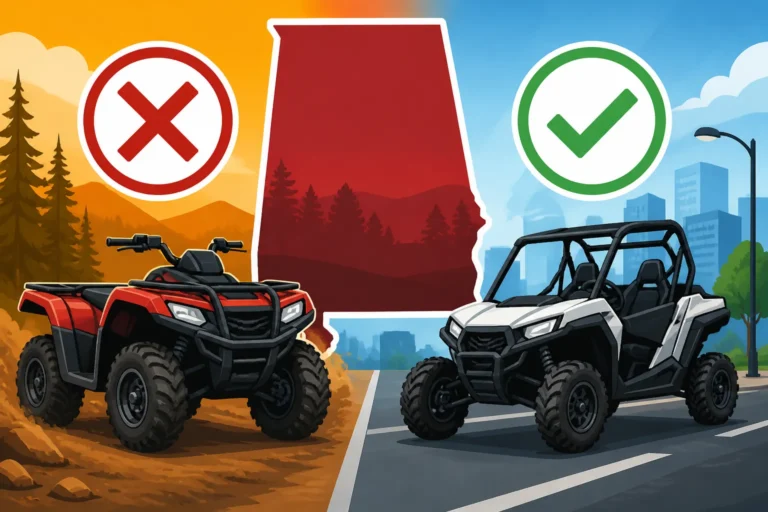
| Road Legal Status | Highly restricted, local ordinances | Generally not road legal, LSV exception |
| Legal Definition | Excluded from OHV statutes | Explicitly defined as OHV |
Navigating Golf Cart Road Use in Alabama
Just because your golf cart doesn't need a title doesn't mean you can freely drive it anywhere. In fact, driving a golf cart on public roads in Alabama is a much trickier proposition than you might think, and it's a frequent source of confusion and frustration for owners. It’s imperative to understand the strict limitations.
Local Ordinances and Designated Areas
Unlike a vehicle that is built to meet federal highway safety standards, golf carts are not designed for general road use. The state of Alabama generally prohibits the operation of golf carts on public streets and highways. However, there's a crucial caveat: local municipalities often have the authority to create their own ordinances that permit golf cart use on certain public roads within their jurisdiction. This is why you might see golf carts cruising around in some towns but not others, or only in specific areas of a town.
These local ordinances are the key. Many small towns, especially those with a strong retirement community or resort feel, have passed rules allowing golf carts on specific, low-speed public streets. These ordinances usually come with strict conditions: they might specify certain hours of operation, require lights, mirrors, and turn signals, and often limit use to streets with a speed limit of 25 mph or less. Before you even think about taking your golf cart onto a public road, you absolutely must check with your local city or county government. You need to know if an ordinance exists, what roads are permitted, and what equipment is required. Failing to do so can lead to a ticket, and frankly, it's just plain unsafe. You can get a sense of this by looking up [Alabama City Ordinance Lookups]. Remember, what's legal in one town like Gulf Shores might be strictly forbidden in another, even a few miles down the road.
Safety Considerations and Equipment
Even where local ordinances permit golf cart use, safety should always be your top priority. Golf carts are open-air vehicles with limited protection in a collision. They aren't built with airbags, crash crumple zones, or robust seat belt systems like cars. This makes them inherently less safe in traffic. If you are permitted to drive your golf cart on public roads, it's highly recommended to equip it with additional safety features beyond the bare minimum required by a local ordinance.
Think about installing bright LED headlights and taillights, turn signals, a horn, and a rearview mirror. While not always legally mandated by every local ordinance, these features significantly improve your visibility to other drivers and your ability to navigate safely. For instance, aftermarket companies like SuperATV offer a huge range of lighting and accessory options, but typically these are designed for ATVs and UTVs to enhance off-road visibility, not specifically to make a golf cart street-legal according to federal standards. You might find similar generic items that fit a golf cart, but they won't magically transform it into a federally compliant vehicle. Always ensure your tires are in good condition, and that your brakes are responsive. And just like any vehicle on the road, operating a golf cart while impaired by alcohol or drugs is illegal and incredibly dangerous, falling under [Alabama Impaired Riding Rules] even for off-road machines.
When a "Street Legal" Golf Cart Isn't Quite "Street Legal" Everywhere
This is another huge point of contention and misunderstanding. Many people invest in "street legal kits" for their golf carts, believing it grants them full road privileges. The reality in Alabama is far more nuanced, and often, what people consider "street legal" for a golf cart is not what the state or federal government considers a legitimate road-worthy vehicle.
The Difference Between LSVs and Modified Golf Carts
Here's where it gets really tricky: there's a difference between a modified golf cart and a genuine Low-Speed Vehicle (LSV). An LSV is a vehicle that has been manufactured to meet specific federal safety standards, defined by the National Highway Traffic Safety Administration (NHTSA) under 49 CFR Part 571.500. These vehicles are built from the ground up to be safe for low-speed public road use. They come with a VIN and are recognized as legitimate motor vehicles, capable of being titled and registered for street use in Alabama, provided they meet all requirements. They have specific requirements for headlights, taillights, turn signals, brake lights, reflectors, rearview mirrors, a parking brake, a windshield, seat belts, and a VIN.
A modified golf cart, on the other hand, is essentially a golf cart that someone has added aftermarket parts to – perhaps a light kit, a horn, or a speedometer. While these additions make it look more like a street vehicle, they don't fundamentally change its classification or grant it the same legal status as an LSV. Adding a SuperATV light bar to your golf cart might make it brighter, but it doesn't mean it magically meets the stringent federal standards for an LSV. The key is how the vehicle was manufactured and whether it bears the proper certifications and VIN as an LSV from the factory. Alabama's laws recognize these distinctions, meaning a golf cart simply doesn't meet the [Alabama's 49 CFR 571.500 Standard] required for a true LSV or other plated vehicles.
What Makes a Machine a Low-Speed Vehicle
For a machine to be truly considered an LSV in Alabama, it has to be more than just a golf cart with some extra lights. It must be explicitly manufactured to meet Federal Motor Vehicle Safety Standard (FMVSS) 500. This is a rigorous standard that covers everything from crash-worthiness to lighting and braking performance. These vehicles are designed to go between 20 mph and 25 mph and are restricted from roads with speed limits above 35 mph. If you're wondering [What a Low-Speed Vehicle Standard Requires], it's a comprehensive list of safety equipment and performance criteria.
When you purchase a true LSV, it will come with manufacturer certifications indicating its compliance with FMVSS 500, and it will have a proper VIN that designates it as an LSV. These are the machines that Alabama allows to be titled and registered for public road use where permitted. Attempting to convert a standard golf cart into an LSV through aftermarket kits generally does not work, because these kits cannot guarantee the cart meets the fundamental structural and safety engineering requirements of FMVSS 500. It's not just about bolting on accessories; it's about the vehicle's core design and manufacturing certification. Many riders often confuse general modifications with legitimate legal conversions, leading to potential fines and safety risks when they operate their "street legal" golf cart on public roads without meeting the proper LSV definitions.
Practical Advice for Alabama Golf Cart Owners
Navigating the world of golf cart ownership in Alabama, especially with the nuances of titling and road use, can feel like walking a tightrope. While they don't require titles like other off-road machines, there are still essential steps you can take to protect your investment and ensure you're riding responsibly.
Best Practices for Proving Ownership
Since your Alabama golf cart doesn't come with a state-issued title, you have to be proactive about establishing and maintaining clear proof of ownership. This is incredibly important for several reasons, including potential theft, resale, or even dealing with insurance claims. If you buy a golf cart, whether new from a dealer or used from a private party, demand and keep a detailed bill of sale. This document should include:
- Seller's Information: Full legal name, address, and contact information.
- Buyer's Information: Your full legal name, address, and contact information.
- Date of Sale: When the transaction occurred.
- Purchase Price: The amount paid for the golf cart.
- Golf Cart Description: Make, model, year, and crucially, the Vehicle Identification Number (VIN) or any other unique serial number found on the cart. If the cart has no visible VIN, note that on the bill of sale and be sure to record any other identifying marks or numbers.
- Signatures: Both the buyer and seller should sign and date the document.
A good bill of sale is your primary document for [Proving Ownership of a Quad Bought at a Farm Sale] or any other untiled machine, so treat it with the same care as you would a title. Take photographs of your golf cart from various angles, including close-ups of any serial numbers or unique features. Keep these photos and your bill of sale in a secure location, perhaps even a digital backup. This documentation will be invaluable if your golf cart is ever stolen, helping law enforcement track it down and proving your claim to insurance.
Insurance and Security for Your Cart
Many people assume that because a golf cart isn't titled or registered, it doesn't need insurance. This is a common misconception and a risky assumption. While Alabama doesn't mandate insurance for golf carts in the same way it does for street-legal cars, carrying adequate coverage is a wise decision for any motorized vehicle, especially one that might be used around people or property. Accidents happen, even at low speeds.
Most homeowner's insurance policies might offer some limited coverage for personal property, but this often doesn't extend to liability if you cause an accident with your golf cart that injures someone or damages their property. You might need a separate rider on your homeowner's policy or even a dedicated golf cart insurance policy. This can cover property damage, bodily injury liability, and even theft. Imagine if your golf cart rolls down a hill and hits a neighbor's parked car, or if someone trips and falls getting on or off your cart. Without liability insurance, you could be personally responsible for significant costs. In terms of security, always lock your golf cart when not in use. Consider adding a GPS tracker or an alarm system, especially if you store it in an easily accessible area. Thieves often target golf carts because they are relatively easy to steal and resell without a title. Protecting your golf cart is just as important as protecting any other valuable asset you own.
Disclaimer
This article is for general informational purposes only and does not constitute professional advice. Laws, prices and regulations vary by location and change over time. Consult a qualified professional for guidance on your specific situation.