Selling a Registered Machine in Alabama
Selling a registered ATV or UTV in Alabama might seem straightforward, especially if you've been diligently keeping up with your voluntary registration through ALEA. However, there are some crucial steps and pieces of paperwork you need to handle correctly to ensure a smooth, legal transfer of ownership for both you and the buyer. This guide will walk you through everything involved in selling your registered off-road machine in the Yellowhammer State, from understanding what your current registration means to the documentation required and what the buyer needs to do next.
What Does "Registered" Really Mean in Alabama?
When you say your ATV or UTV is "registered" in Alabama, it means you've voluntarily completed the process with the Alabama Law Enforcement Agency (ALEA) and received an off-road vehicle (ORV) registration decal and certificate. This isn't the same as titling a vehicle, which is a new requirement for ATVs and UTVs in Alabama starting with model year 2026. Prior to this, Alabama ATVs and UTVs were considered untitled property, making the bill of sale the primary proof of ownership.
Understanding Your Current Registration Status
Your registration in Alabama essentially confirms that your machine has been logged with the state and that you've paid the necessary fees for a three-year period. It doesn't, however, function like a vehicle title where ownership is directly transferred by signing over a document. Instead, it's more akin to a permit that allows you to legally operate your machine, particularly on public lands where [Alabama Public Use ATV Registration Explained] is often a requirement. If you opted for the cheaper [Alabama Private Use ATV Registration Explained] tier, it indicates your machine is primarily for private property use. Regardless of the tier, the registration itself is tied to you, the owner, and your current machine, not a transferable document that changes hands with the vehicle.
The registration certificate and the decal you display on your machine serve as proof that you've fulfilled this voluntary obligation. When you sell the machine, while the physical decal might still be on it, the registration is effectively nullified for the new owner. They will need to apply for their own new registration to legally operate it. For a deeper dive into how this all began, you might want to review [Alabama's Voluntary ATV Registration Through ALEA].
Essential Paperwork for Selling a Registered Machine
Even if your ATV or UTV isn't old enough to require a title, proper paperwork is absolutely critical when selling. This protects both you and the buyer and clarifies ownership. Without the right documents, you could face disputes down the line, or the buyer might struggle to register the machine in their name.
The Importance of a Solid Bill of Sale
The bill of sale is the most crucial document when selling an untitled, registered ATV or UTV in Alabama. It acts as your official record of the transaction and, for the buyer, it is the primary proof they now own the machine. This isn't just a scribble on a napkin; it needs to be comprehensive and legally sound. A well-drafted bill of sale should include:
- Seller's Information: Full legal name, address, and signature.
- Buyer's Information: Full legal name, address, and signature.
- Machine Details: Make, model, year, and most importantly, the Vehicle Identification Number (VIN) or serial number. This unique identifier is key to avoiding confusion and proving exactly which machine changed hands.
- Sale Price: The agreed-upon amount.
- Date of Sale: The exact date the transaction occurred.
- "As Is" Clause: Most private sales are "as is," meaning the buyer accepts the machine in its current condition with no warranty. It's wise to state this clearly.
- Witness Signatures (Optional but Recommended): Having a third party witness the transaction can add an extra layer of protection.
Think of it this way: if your machine is a 2020 Honda Rancher, which isn't subject to Alabama's new titling law, the bill of sale is the definitive document proving you no longer own it and that the buyer does. Without it, how would the new owner prove they purchased it, especially when going to register it? Organizations like LawDepot offer templates for bills of sale that can help ensure you cover all necessary legal points, providing peace of mind for both parties. For more specific details on what Alabama expects, refer to [Alabama Bill of Sale Requirements]. It’s also the critical document if you ever need to prove [Proving Ownership of a Quad Bought at a Farm Sale] for an untitled machine.
Handling the Registration Certificate
Your current registration certificate is for your machine, under your name. It does not transfer to the new owner. When you sell your machine, you should keep a copy of the bill of sale for your records and ideally notify ALEA that you've sold the vehicle. While you can't get a refund on your voluntary registration, informing the state helps to disassociate you from the machine should any issues arise later.
The new owner will need to apply for a brand-new registration in their name. Your old certificate and decal are, from their perspective, irrelevant for their own legal operation. They will present the bill of sale (and a title if applicable) as proof of ownership when they go to register the machine themselves. So, while you technically could leave the old decal on the machine, it's usually best practice to remove it or inform the buyer that they must register it themselves immediately. The three-year registration period, explained in [Three Years Instead of One], means your old registration will eventually expire, but for the new owner, waiting isn't an option if they plan to ride publicly. For specific guidance on what happens when a machine changes hands, check out [Alabama Registration Transfer After a Sale].
When a Title Is Involved Model Year 2026 and Newer
This is where things get a bit more complex due to Alabama's new titling law. If you are selling an ATV or UTV that is a model year 2026 or newer, it will have a title issued by the state. This title acts much like a car title, serving as the official proof of legal ownership.
When selling a titled machine, the process more closely mirrors selling a car or truck:
- Sign Over the Title: You, as the seller, will sign the "Assignment of Title" section on the back of the physical title document. This formally transfers ownership to the buyer. Ensure your signature matches the name(s) printed on the front of the title.
- Provide a Bill of Sale: Even with a title, a comprehensive bill of sale is still highly recommended, especially to document the sale price and condition. It helps solidify the transaction.
- Deliver the Title and Bill of Sale: You will give the signed-over title and the bill of sale to the buyer.
The buyer will then take these documents to their county probate office or other designated title agent to apply for a new title in their name and pay the associated fees. This new titling requirement, detailed in [Alabama ATV Titling Starts With Model Year 2026], means a significant change in how these transactions are handled for newer machines. It's vital to understand [How to Title an ATV in Alabama] if you're the seller of a 2026+ machine, as proper title transfer is key to avoiding legal headaches for both parties. The buyer will then follow the steps outlined in [Alabama Title Applications From January 2026] to complete their part.
Steps for the Seller: Making the Sale Smooth
As the seller, your goal is a quick, fair, and legally sound transaction. Preparing your machine and your paperwork beforehand will make the process much smoother.
Preparing Your Machine for Sale
First impressions matter, even for an off-road vehicle. Before you even list your machine, take some time to get it ready:
- Clean It Thoroughly: Wash off all that mud, clean the plastics, shine up any chrome, and even vacuum out the cab of a UTV. A clean machine suggests it's been well-cared for.
- Perform Basic Maintenance: Check tire pressure, oil levels, and ensure all lights are working. Fix any minor issues like a loose grip or a squeaky brake. You don't need a full overhaul, but a well-running machine inspires confidence.
- Gather All Records: Collect any maintenance records, owner's manuals, and original purchase documents. This shows transparency and can answer many buyer questions upfront.
- Locate and Verify the VIN/Serial Number: The VIN (Vehicle Identification Number) or serial number is crucial for the bill of sale and for the buyer's registration/titling process. Make sure it's legible and matches any documentation you have. You can learn more about finding and [Recording Serial Numbers at Home].
Advertising and Pricing Your Registered Machine
Once your machine is prepped, it's time to find a buyer.
- Highlight Registration Status: In your advertisement, mention that the machine is currently registered in Alabama. This can be a selling point, showing you've been a responsible owner, even though the registration itself won't transfer.
- Be Honest About Condition: Take clear photos from multiple angles, and be upfront about any dings, scratches, or known mechanical quirks. Honesty builds trust.
- Set a Realistic Price: Research similar models, years, and conditions being sold in Alabama. Consider factors like mileage/hours, modifications, and overall wear and tear. You can check resources to get an idea of [Alabama Used Machine Prices by Season].
- Where to List: Online marketplaces, local classifieds, and even specialized ATV/UTV forums are great places to advertise. Be specific about the year, make, model, and any aftermarket accessories.
Meeting the Buyer and Completing the Transaction
When a potential buyer shows interest, arrange a safe meeting.
- Public Place for Meetings: If possible, meet in a public location or bring a friend along if they're coming to your home.
- Allow for Inspection: Let the buyer thoroughly inspect the machine and, if comfortable, take it for a short test ride (ensuring they know how to operate it safely and perhaps signing a waiver if you're concerned about liability).
- Review Paperwork: Go over the bill of sale together, ensuring all details are correct. If it's a 2026+ machine, confirm the title is present and correct.
- Payment: Accept secure forms of payment, such as a cashier's check from a local bank or cash. Be wary of personal checks or digital payments from unknown sources, which can be reversed. Always verify funds before releasing the machine and documents.
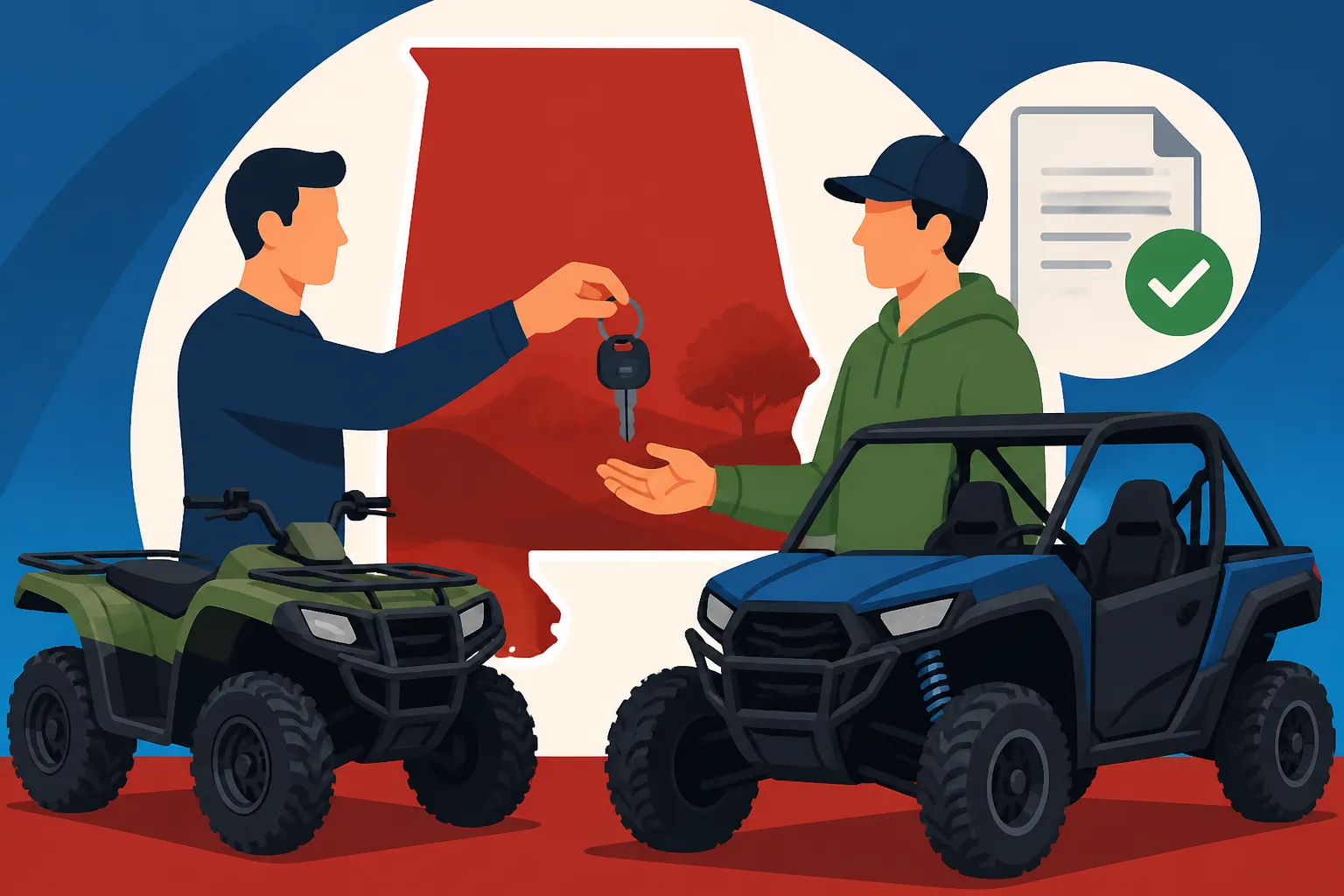
- Sign and Exchange: Both you and the buyer should sign the bill of sale. If applicable, you sign the title. Provide the buyer with their copy of the bill of sale and the signed-over title. You should keep a copy of everything for your records. For helpful templates that ensure you cover all legal bases in this exchange, consider looking at resources like LawDepot. When completing the sale, make sure to follow steps for [Checking a Serial at an Alabama Sale] as a crucial step for both parties. For additional context on private sales, see [Buying From a Private Seller in Alabama].
What the Buyer Needs to Do Next
Your job as the seller ends when the machine and proper documentation are handed over. However, the buyer's journey has just begun, and understanding their next steps can help you answer questions and ensure a smooth transition.
New Registration for the Buyer
Once the buyer has the bill of sale (and title, if applicable), their immediate next step is to register the machine in their name with ALEA. This is not optional if they plan to ride on public land or want official state recognition of their machine.
The buyer will need to visit an ALEA designated agent, often a county probate office or license commissioner's office. They will bring:
- Proof of Ownership: The bill of sale is critical for an untitled machine. For 2026+ machines, the signed-over title is required.
- Photo ID: For verification.
- Payment: For the registration fees.
They will fill out a new application for off-road vehicle registration. ALEA will process this, issue a new registration certificate, and provide a new decal that the buyer must affix to the machine. This ensures they are properly linked to the vehicle for the next three years. Understanding [Alabama Registration Paperwork Explained] is vital for the buyer, and they can even consider [Alabama Registration Applications by Mail] if an in-person visit isn't convenient.
Titling a Model Year 2026 or Newer Machine
For those purchasing a 2026 model year or newer ATV or UTV, the titling process is a separate, but equally important, step from registration. The buyer will need to apply for a new title in their name.
This typically involves:
- Visiting a County Title Agent: Usually the county probate office or a designated title agent.
- Submitting the Signed Title and Bill of Sale: These documents prove their purchase and allow for the transfer of ownership record.
- Paying Title Fees: There will be a state title fee and often a county processing charge.
- Completing an Application: The buyer will fill out the necessary application for a new title.
Once processed, the buyer will receive a new physical title document with their name as the owner. This establishes their legal ownership and is especially important if they ever need to prove ownership for insurance purposes or future resale. The time it takes for a title to arrive can vary, so it's good for the buyer to know [How Long an ATV Title Takes to Arrive]. Details on where to apply are covered in [Alabama Title Applications at a County Office].
Insurance Considerations for the New Owner
While Alabama does not legally mandate insurance for off-road vehicles operated exclusively on private property, it's a strongly recommended consideration for any new owner. Accidents happen, and ATVs/UTVs can be significant investments.
The new owner should consider:
- Liability Coverage: To protect them financially if they cause an accident that injures someone or damages property.
- Comprehensive and Collision Coverage: To protect their own machine from theft, damage, or natural disasters.
- Uninsured/Underinsured Motorist Coverage: If they ride in areas where others might not be insured.
Even for machines without a title, insurance can still be secured. Companies will typically use the VIN/serial number for identification. It’s a good idea for the buyer to reach out to their insurance provider immediately after purchase to discuss options. More information can be found at [Does Alabama Require Insurance on an ATV?] and [Insuring a Machine With No Title].
Seller vs. Buyer Responsibilities in Alabama
To summarize, here’s a quick overview of who handles what when selling a registered ATV/UTV in Alabama:
| Responsibility | Seller | Buyer |
|---|---|---|
| Prepare Machine | Clean, basic maintenance, gather records. | Inspect machine, ask questions. |
| Proof of Ownership | Provide comprehensive Bill of Sale. For 2026+ models, provide signed-over Title. | Accept Bill of Sale (and Title if applicable) as primary proof. |
| Current Registration | Keep copy of original registration certificate, notify ALEA of sale (optional but wise). | Apply for NEW registration in their name. |
| Titling (2026+ only) | Sign over physical title. | Apply for NEW title in their name at county office. |
| Payment & Exchange | Receive payment, give keys, machine, and all paperwork. | Provide agreed-upon payment, receive keys, machine, and all paperwork. |
| Insurance | No obligation, but ensure personal liability ends with sale. | Obtain new insurance policy immediately for protection. |
Selling a registered ATV or UTV in Alabama doesn't have to be a headache. By following these steps and ensuring all the necessary paperwork is correctly handled, you can ensure a smooth, legal, and stress-free transaction for everyone involved.
Disclaimer
This article is for general informational purposes only and does not constitute professional advice. Laws, prices and regulations vary by location and change over time. Consult a qualified professional for guidance on your specific situation.