Buying From a Private Seller in Alabama
Buying an ATV or UTV from a private seller in Alabama can feel like navigating a winding, unpaved trail – full of unknowns and potential pitfalls. It's easy to worry about hidden problems, incomplete paperwork, or even accidentally buying a machine that isn't truly the seller's to sell. This comprehensive guide is here to smooth out that path for you, offering clear, actionable steps to ensure your private purchase is straightforward, secure, and gets you out riding with confidence, not regret.
Why Private Sales Can Feel Like a Minefield (But Don't Have To)
When you're dreaming of hitting the trails or getting serious work done on your property, the thought of saving some money by buying privately is super appealing. But let's be honest, that excitement can quickly turn into anxiety. You're not just buying a machine; you're often stepping into a legal gray area, especially here in Alabama with our evolving rules for off-road vehicles. It’s natural to feel a bit overwhelmed when you're trying to figure out if you're getting a good deal or a pile of problems.
The Allure of a Private Deal vs. Dealer Peace of Mind
There's no denying the appeal of a private sale. You often find better prices, the opportunity to negotiate directly with the owner, and sometimes even machines that are no longer available at dealerships. Maybe you're looking for a specific vintage quad or a custom-built side-by-side that only a private seller would have. However, that dealer peace of mind comes from knowing they handle all the paperwork, often offer warranties, and have a reputation to uphold. With a private seller, you're essentially taking on all that responsibility yourself. This means you need to be your own advocate, your own mechanic, and your own legal expert, at least to a certain degree. It’s a trade-off, and being prepared is your best defense against potential issues.
Understanding Alabama's Unique Off-Road Rules
Alabama has some specific quirks when it comes to ATVs and UTVs, especially regarding ownership records. Historically, many off-road vehicles in Alabama haven't been titled, which can make proving ownership a bit murky compared to buying a car. Then came [Alabama's 2024 Titling Law], which starts requiring titles for machines with a model year 2026 or newer. This creates a big distinction: if you're buying a newer machine, you will need a title. If you're buying an older one, say a 2020 quad, it falls under the "no title required" era, which means your bill of sale becomes absolutely crucial for proving [Proving You Own an Untitled Machine]. Understanding these nuances is key to a smooth transaction and avoiding headaches down the road. Don't assume the rules for a car apply directly to an ATV here.
The Specter of a Stolen Machine or Hidden Liens
One of the biggest fears in a private sale is unknowingly purchasing a stolen machine or one with a lien against it. Imagine getting a great deal, only to find out later that the vehicle was reported stolen, and you have to hand it over to law enforcement. Or, perhaps the seller still owes money on the machine, and the lender has a claim to it. These situations can be financially devastating and incredibly stressful. While Alabama's lack of titling for older machines complicates things, there are still steps you can take to minimize this risk. Knowing what questions to ask, what documents to demand, and how to verify information can save you a world of trouble. This is where your diligence truly pays off.
Before You Even Look: Your Pre-Purchase Checklist
Before you even agree to meet a seller or inspect a machine, there are some crucial homework assignments you need to complete. This proactive approach will save you time, potential frustration, and help you filter out risky deals before you invest too much energy. Think of it as putting on your full riding gear before you even start the engine.
Researching the Machine and Seller
First things first: do your homework on the specific machine you're interested in. Look up the make, model, and year. What are common issues for that particular vehicle? Are there any recalls? What's the fair market value for that model in Alabama? Websites and forums dedicated to ATVs and UTVs can be a treasure trove of information. Next, discreetly research the seller. Are they active in local riding communities? Do they seem legitimate? A quick online search of their name (if provided) or their seller profile on marketplaces can sometimes reveal red flags or, conversely, build confidence. Ask for multiple photos and detailed descriptions before committing to a viewing. The more information you gather upfront, the better prepared you'll be.
Confirming Ownership and History
This is where things get serious. Before you even think about handing over cash, you need to confirm the seller is the rightful owner and the machine isn't stolen or encumbered.
For machines with a model year 2026 and newer, expect a title. The seller should have the physical title in hand, free of any liens. If they don't, or if there's a lien recorded, walk away or insist they clear it before you proceed.
For older machines (pre-2026), where [Why Older Alabama ATVs Cannot Be Titled] is the norm, the bill of sale is your primary proof of ownership. Ask the seller for the original bill of sale from when they purchased it. This chain of custody helps establish legitimate ownership. If they can't produce it, that's a significant red flag. You'll want to ask for the VIN or serial number upfront and use it to perform an [Alabama Stolen Machine Checks]. While Alabama doesn't have a centralized title database for older ATVs, you can often check with local law enforcement to see if the VIN appears on any stolen vehicle reports. This simple step can prevent immense heartache. You can also verify [Alabama Serial Numbers on the Application] when you go to register.
Prepping for the Price Negotiation
Never go into a private sale without a firm understanding of what you're willing to pay. Research the average selling price for the specific make, model, and year of the ATV or UTV you're interested in. Look at local classifieds, online marketplaces, and even auction results. Account for the machine's condition, mileage/hours, any aftermarket accessories, and any known issues. Factor in your budget for potential maintenance, [Alabama Registration Costs Over Three Years], and [Alabama ATV Insurance Costs]. It's always a good idea to have a maximum price in mind and be ready to walk away if the seller isn't willing to meet you there. Remember, there's always another machine out there. Don't be pressured into an impulse buy.
Meeting the Seller: What to Inspect and Ask
This is the moment of truth. You've done your research, you know what to look for, and now it's time to get hands-on with the machine. Approach this meeting with a critical eye and a healthy dose of skepticism. Don't let your excitement overshadow your good judgment. Bring a friend if you can – two sets of eyes are always better than one.
The Visual and Mechanical Inspection
When you arrive, take a deep breath and start with a thorough visual inspection. Look for signs of abuse, neglect, or accidents. Check the frame for bends, cracks, or welds that indicate repairs. Examine the tires for excessive wear or dry rot. Look for leaks around the engine, transmission, and shocks. Test all lights, brakes, and electrical components. Sit on the machine, check the handlebars for straightness, and feel for any excessive play in the steering. Pay close attention to the engine: does it start easily? Does it make any unusual noises? Is there excessive smoke from the exhaust? For a side-by-side, check the condition of the roll cage, seatbelts, and cargo bed. Don't be afraid to get dirty and really look closely.
Consider bringing a small toolkit with you, or at least a flashlight, to help with the inspection. A magnet can sometimes reveal body filler if the plastic has been heavily repaired after a crash. Check fluid levels and the condition of the oil. Does it look clean, or is it milky (indicating water contamination) or thick and sludgy (indicating poor maintenance)? Even small details can tell a big story about how the machine has been cared for. If anything feels off, don't ignore your gut feeling.
Verifying the VIN and Serial Numbers
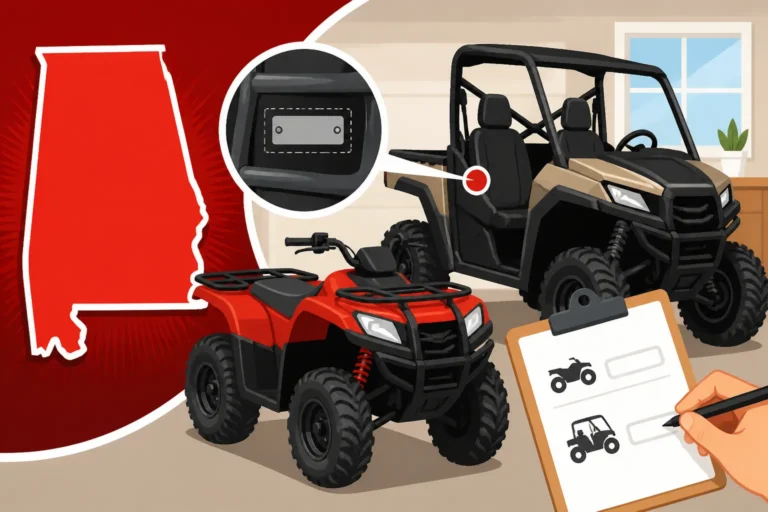
This step is absolutely critical. Locate the Vehicle Identification Number (VIN) on the machine. It's usually stamped into the frame, often near the front wheel, on the steering neck, or under the seat. Compare this VIN exactly to what's listed on the seller's documentation – whether that's a title, a previous bill of sale, or any [Alabama Registration Paperwork Explained] they might have. If the numbers don't match, or if the VIN appears to have been tampered with (scratched, ground down, re-stamped), walk away immediately. This is a massive red flag for a stolen vehicle.
Also, some machines have engine serial numbers. While not as legally significant as the VIN, checking if these match the documentation can further confirm the machine's identity and that the engine hasn't been swapped out without disclosure. Take a clear photo of the VIN and any other serial numbers for your records. This information will be vital when you go to register the machine in your name, or when applying for an [Alabama Title Applications From January 2026] if it's a newer model.
Test Ride Considerations (If Applicable)
If the seller permits, a test ride is invaluable. However, safety first! Wear appropriate gear, including a helmet, even if it's just a short spin. Start slowly and listen to the engine and drivetrain. How does it shift? Does it pull to one side? Do the brakes work effectively? Test it at varying speeds and on different terrains if possible and safe to do so. Pay attention to how the suspension feels and if there are any clunks or rattles.
Before you ride, discuss the boundaries and any specific rules the seller has. Never take a machine off the seller's property without explicit permission. If you're not an experienced rider, or if the seller is hesitant about a test ride, you might ask them to demonstrate its operation. Ultimately, you're looking for confidence in its performance and handling. If the seller flat-out refuses a test ride on a functional machine, that could be another reason to reconsider the purchase.
Sealing the Deal: Paperwork and Payment
You've inspected the machine, asked all the right questions, and you're ready to make it yours. Now comes the crucial final step: handling the paperwork and making the payment securely. This is where you formalize the transfer of ownership and ensure everything is legally binding.
The All-Important Bill of Sale
A comprehensive bill of sale is your absolute best friend in a private sale, especially for older machines that won't have a title in Alabama. This document serves as your proof of purchase and a record of the transaction. A good bill of sale should include:
- The full names, addresses, and contact information for both buyer and seller.
- A detailed description of the ATV or UTV, including make, model, year, color, and most importantly, the full VIN (and engine serial number, if applicable).
- The purchase price agreed upon.
- The date of the sale.
- A clear statement that the seller is transferring ownership of the machine, "as-is," with no warranties, expressed or implied (unless specific warranties are agreed upon in writing).
- Signatures of both the buyer and seller. It's also wise to have a witness sign, if possible.
You can find templates for bills of sale online. Resources like LawDepot offer various templates that you can customize to fit your specific needs, ensuring all critical information is included. Don't settle for a hastily scrawled note on a napkin; a professional, detailed [Alabama Bill of Sale Requirements] document will protect you in the long run. If the machine is currently registered in the seller's name, the bill of sale will also be essential for your [Alabama Registration Transfer After a Sale].
Handling Titles and Registration After the Sale
Once the bill of sale is signed, your next steps depend on the machine's model year.
For model year 2026 and newer ATVs/UTVs: The seller must sign over the physical title to you. Make sure the title is free of any liens. You'll then take this signed title and your bill of sale to your county probate office or other designated agent to apply for a new title in your name and pay the [Alabama Title Fees at the County]. Remember, [Alabama ATV Titling Starts With Model Year 2026], so this process will become standard for new machines.
For pre-2026 model year machines: These machines are generally not titled in Alabama. Your primary proof of ownership will be your detailed bill of sale. You'll use this document to register the machine with the Alabama Law Enforcement Agency (ALEA). Registration is voluntary for private use but mandatory if you plan to ride on designated public lands. The [Alabama Registration Paperwork Explained] usually includes an application form, your bill of sale, and proof of identification. Make sure to complete this process promptly after purchase.
Secure Payment Methods and Taking Possession
When it comes to payment, safety and security are paramount. Avoid carrying large amounts of cash unless you are meeting in a very secure, public location, perhaps even at a bank. Cashier's checks drawn from your bank are a safer alternative, but ensure you verify the seller's identity before handing it over. Never use personal checks. Digital payment methods can be convenient but may not offer the same level of buyer protection for large purchases. Discuss payment methods with the seller beforehand and agree on a secure process.
Once payment is confirmed and all paperwork is signed and exchanged, you can take possession of your new ATV or UTV. Double-check that you have all keys, any owner's manuals, and all original documentation. It's a good idea to take photos of the signed documents and even a picture of you and the seller with the machine as a final record. Congratulations, you're now the proud owner! Now you can start planning your first ride, perhaps after sorting out [Does Alabama Require Insurance on an ATV?] for your new machine.
| Key Document | Purpose | Applicability | Crucial Details to Verify |
|---|---|---|---|
| Bill of Sale | Proof of purchase, transfer of ownership | All private ATV/UTV sales in Alabama | Buyer/Seller info, VIN, price, date, signatures |
| Certificate of Title | Legal document of ownership | Model Year 2026+ ATVs/UTVs; optional for older machines (if issued previously out of state) | Lien status, VIN match, seller's signature on transfer |
| Registration (ALEA) | Allows public land riding; voluntary for private use | All ATVs/UTVs operating in Alabama | Seller's name on current registration (if transferring), VIN match |
| Previous Owner's Bill of Sale | Establishes chain of ownership (for untitled machines) | Older (pre-2026) ATVs/UTVs | Previous owner info, VIN, consistency with seller's claims |
| Lien Release | Confirms outstanding loans are paid off | Any machine with a recorded lien | Lender's official letter or signed title confirming release |
Disclaimer
This article is for general informational purposes only and does not constitute professional advice. Laws, prices and regulations vary by location and change over time. Consult a qualified professional for guidance on your specific situation.