Alabama Registration for a Second Machine
It's an exciting milestone when you decide to add another ATV or UTV to your family's collection, whether it’s for a new rider, a different kind of terrain, or just expanding your options. However, the joy of a new machine can quickly turn to frustration when you realize that Alabama's registration process, which might have seemed straightforward for your first one, needs to be repeated for every single vehicle. This guide is here to walk you through the specifics of registering a second (or third, or fourth!) off-road machine in Alabama, making sure you understand the nuances and can hit the trails or fields with all your vehicles legally squared away.
Understanding Alabama's Off-Road Registration System for Multiple Machines
When you first registered an ATV or UTV in Alabama, you might have assumed the process was largely about you, the owner. But the truth is, Alabama’s system is designed to track each individual machine. This means that every single ATV or UTV you own needs its own separate registration, even if they’re all sitting in the same barn.
Why Each Machine Needs Its Own Registration
Think of it like getting a driver’s license versus registering a car. Your driver’s license is about you, the operator. But each vehicle you own, whether it’s a car, truck, or motorcycle, needs its own distinct license plate and registration. Alabama’s off-road vehicle registration follows this same principle. The system, overseen by the Alabama Law Enforcement Agency (ALEA), is built around the unique identity of each machine, primarily its Vehicle Identification Number (VIN) or serial number.
This machine-specific approach ensures that each vehicle can be properly identified for a variety of reasons, including law enforcement checks, theft recovery, and proof of ownership. It also helps manage the distinct "public use" and "private use" categories, as one of your machines might be primarily used for riding at Stony Lonesome OHV Park, while another is strictly for deer hunting on your own land. You wouldn't want the restrictions or benefits of one category to accidentally apply to a machine used in a completely different way. The decals you receive are specific to that machine, meant to be affixed to a visible location, marking it as compliant for its designated use.
The Three-Year Registration Cycle and Renewal for Each
One of the helpful aspects of Alabama's voluntary registration is that it runs for a full three years, which can feel like a nice long stretch of not having to think about paperwork. However, this three-year cycle applies individually to each machine. So, if you bought your first ATV in January 2023 and registered it then, its registration will expire in January 2026. If you then bought a second UTV in July 2024 and registered it, that machine's registration will expire in July 2027.
This staggered system means you’ll have different renewal dates for each of your machines. It's not like renewing your car tags all at once for every vehicle in your driveway. Keeping track of these individual expiration dates is crucial to avoid any lapse in registration, especially if you plan to ride on public lands where a current registration decal is often required. Many owners find it helpful to mark these dates on a calendar or set digital reminders, perhaps even creating a small spreadsheet if they have several machines. It ensures that when the time comes, you're not scrambling to gather paperwork for multiple vehicles at once, but rather handling them one by one as their three-year cycles complete. [Alabama Registrations Run Three Years] is a good resource to understand this cycle further.
The Application Process for an Additional ATV or UTV
Registering a second machine in Alabama essentially means repeating the process you went through for your first one, but with fresh paperwork and attention to the details of the new vehicle. It’s not a shortcut, but rather a duplicate effort for a new item.
Required Documentation for Each Separate Machine
Just like with your first ATV or UTV, you'll need to provide specific documentation for each subsequent machine you register. This typically includes a bill of sale, which serves as your primary proof of ownership for machines that aren't yet subject to titling (i.e., most machines older than the 2026 model year cutoff). If you're buying privately, ensuring you have a thorough, signed bill of sale is paramount. Sometimes, generating a solid bill of sale can be tricky if you're not sure what details to include. Services like LawDepot can be helpful for creating standardized legal documents, including comprehensive bills of sale that cover all the necessary information, protecting both buyer and seller. This ensures you have clear evidence of the transaction and ownership, which is exactly what ALEA will be looking for.
You’ll also need the machine's serial number, often referred to as the VIN. This unique identifier is critical for ALEA to track and register the specific vehicle. Double-check that the serial number on your bill of sale matches the one stamped on the machine itself. Any discrepancies can cause significant delays in your registration. Additionally, you'll need proof of residency in Alabama, such as an Alabama driver's license or state ID. All these documents will be submitted with a new application form for each individual machine. For machines model year 2026 and newer, you'll also be dealing with titles, so the process will include [Alabama ATV Titling Starts With Model Year 2026] alongside registration. It's always a good idea to keep copies of all your documentation for your records, especially when dealing with multiple machines.
Navigating the ALEA Application for Multiple Registrations
Once you have all your documentation in order for your second machine, the next step is to submit a new application to ALEA. This isn't an amendment to your existing registration; it's an entirely new filing for a distinct vehicle. The application form will require details about the machine, such as make, model, year, engine size, and of course, that all-important serial number. You’ll also need to indicate whether the machine will be used for "public" or "private" purposes. This choice dictates the fee and the type of decal you receive.
You can typically submit your application by mail to ALEA's Off-Road Vehicle Unit, which is a common method for many Alabama residents. Make sure to use certified mail if you're sending original documents or want proof of delivery. Alternatively, if you're purchasing a new machine from a dealer, they often handle the initial registration paperwork for you, saving you a trip to the mailbox and ensuring everything is filled out correctly. This can be a huge convenience, especially when managing multiple purchases. They act as an agent, sending the necessary forms and fees to ALEA on your behalf. Just remember, even if the dealer handles it, it’s still a separate application for that specific machine. You might want to ask your dealer about [Alabama Dealer Paperwork at Delivery] so you know what to expect.
Costs and Practical Considerations for Owning Multiple Registered Machines
Expanding your fleet of ATVs and UTVs definitely brings more enjoyment, but it also means doubling up on the associated administrative tasks and costs. It's not just the purchase price; each machine adds its own layer of ongoing responsibility.
Registration Fees and the Issuance Charge Per Machine
When you register an additional ATV or UTV in Alabama, you will pay the full registration fee and issuance charge for that machine, just as you did for your first one. There isn't a family plan or a bulk discount when it comes to off-road vehicle registrations. The registration fee itself covers the three-year period, and then there's a smaller, separate issuance fee that covers the cost of processing and producing your registration document and decal.
These charges apply to each individual VIN. So, if you have two ATVs, you will essentially pay the registration fee twice, along with the issuance fee twice, but at different times depending on their purchase and registration dates. It’s important to budget for these individual costs. While the fees are generally quite reasonable, they do add up when you start accumulating multiple machines. For example, if you choose the [Choosing the Cheaper Tier] (private use), the cost is lower per machine, but you still pay it for each one. Understanding [Alabama Registration Cost Over Three Years] helps you plan your budget accordingly, knowing that each machine brings its own set of administrative expenses every three years.
Managing Decals, Paperwork, and Renewals for Your Fleet
With multiple registered machines, organization becomes key. Each ATV or UTV will receive its own unique registration decal, which must be affixed to the machine in a visible location as specified by ALEA. It’s easy to get them mixed up if you're not careful, so double-check that the decal matches the machine it's intended for. You'll also receive a paper registration certificate for each vehicle. Keep these certificates in a safe, accessible place, perhaps with your other important vehicle documents.
The biggest challenge for many multi-machine owners is remembering the staggered renewal dates. Unlike car tags that often renew around the same time each year, your ATV/UTV registrations will expire based on their individual registration dates. Setting up a tracking system, whether it’s a physical calendar, digital reminders on your phone, or a simple spreadsheet listing each machine, its VIN, and its expiration date, can be incredibly helpful. This proactive approach prevents you from inadvertently riding an unregistered machine on public land or finding yourself scrambling to renew at the last minute. This system also helps you remember when to update documents, especially if you move and need an [Alabama Registration Address Change] for each of your machines.
Titling Considerations for Multiple Machines (2026 and Beyond)
Looking ahead to January 1, 2026, Alabama's new off-road vehicle titling law will introduce another layer of paperwork for machines model year 2026 and newer. This means that any new ATV or UTV you purchase that falls into this category will not only require registration but also a separate title. Just like registration, titling will be specific to each individual machine. You won't get one title that covers all your future ATVs; each one will have its own unique title document.
For machines that are model year 2025 or older, the current bill of sale and registration system will remain in place. So, if you have a mix of older and newer machines, you'll be juggling both systems. For instance, a 2024 model year quad you bought last year won't ever need a title, but a brand-new 2026 side-by-side bought next year definitely will. The titling process, handled by county licensing officials, will require its own set of application forms and fees for each machine. This means more paperwork to keep track of, more serial numbers to verify, and more fees to budget for. Understanding [Why Pre-2026 Owners Do Nothing] regarding titles for their existing machines is key, but preparing for the future of new purchases is equally important.
Common Questions and Troubleshooting for Second Machine Registration
Even with all the information at hand, registering a second machine can still bring up unique questions. It's perfectly normal to wonder how to manage different uses or what happens if paperwork goes missing.
What if My Second Machine is for a Different Use Public vs. Private?
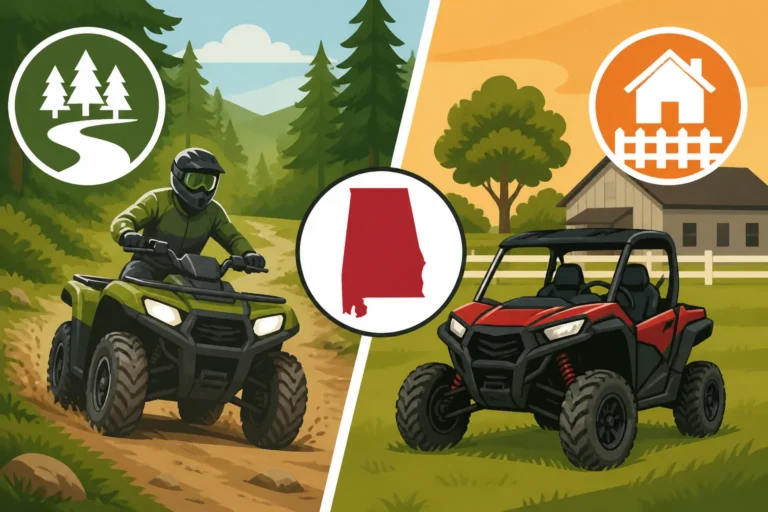
It's very common for multi-machine households to have ATVs or UTVs designated for different purposes. You might have a beefy utility UTV used strictly on your farm or hunting lease, and a smaller, zippier sport quad that you take to state OHV parks. Alabama's registration system accommodates this perfectly. When you register your second machine, you simply select the appropriate use category – "public" or "private" – on its individual application form.
If your primary machine is registered for "private use" (often the [Choosing the Cheaper Tier]), allowing it to be used on private land you own or have permission to use, your second machine can be registered for "public use" if you intend to take it to designated public riding areas. Each registration decision is made independently for each VIN, based on how you intend to use that specific vehicle. Just remember that the decal you receive will reflect that choice, and you should always adhere to the rules of the selected tier for that particular machine. [Alabama Public Use Versus Private Use] further details the differences and implications of these choices.
| Feature | Private Use Registration | Public Use Registration |
|---|---|---|
| Intended Use | Private property, leased land, farms | Designated public trails, OHV parks |
| Cost | Lower fee per three-year cycle | Higher fee per three-year cycle |
| Decal Type | Specific "Private Use" decal | Specific "Public Use" decal |
| Eligibility | Any ATV/UTV meeting state definitions | Any ATV/UTV meeting state definitions |
| Applicability | Machine-specific | Machine-specific |
| Required Forms | Standard ALEA registration form | Standard ALEA registration form |
| Renewal Cycle | Three years from registration date | Three years from registration date |
| Benefit for Owner | Legal use on private land, proof of ownership | Legal use on public trails, proof of ownership |
Handling Lost Paperwork or Transfers for an Additional Machine
Life happens, and sometimes paperwork gets lost. If the registration certificate for one of your machines goes missing, you'll need to apply for a duplicate. This is another instance where each machine is treated individually. You'll submit a request to ALEA for a duplicate for that specific VIN, typically involving a small fee. It’s not a blanket replacement for all your machines; it's a targeted request for one.
Similarly, if you decide to sell one of your registered machines, the registration can be transferred to the new owner. This process again is machine-specific. The current owner (you) and the new owner will typically complete a transfer application, along with providing the bill of sale and other necessary documentation. This ensures that the record of ownership and registration for that specific ATV or UTV is updated in ALEA's system. When selling a machine privately, having a clear and legally sound bill of sale is crucial for the transfer process. LawDepot can assist sellers in drafting professional and compliant bills of sale, making the transfer smooth for both parties and providing the necessary documentation for the new owner to register the machine in their name. Remember that if you transfer ownership, the new owner is responsible for their own [Alabama Registration Processing Time]. You can find more details on [Alabama Duplicate and Transfer at $5].
Disclaimer
This article is for general informational purposes only and does not constitute professional advice. Laws, prices and regulations vary by location and change over time. Consult a qualified professional for guidance on your specific situation.