Alabama Excludes Golf Carts From the Chapter
It's easy to get confused when you own any kind of off-road vehicle in Alabama, especially with the ever-evolving rules and definitions. Many folks assume that every machine with four wheels and a small engine falls under the same blanket of state law, but that's just not the case. One of the biggest areas of misunderstanding revolves around golf carts – are they treated like ATVs and UTVs for things like titling and registration? This comprehensive guide will clear up that confusion, explaining why Alabama law specifically excludes golf carts from the core ATV and ROV chapter, and what that distinction really means for owners like you.
Understanding the Legal Landscape: ATV vs. Golf Cart in Alabama
When we talk about off-road vehicles, the lines can get blurry in conversation, but in the eyes of Alabama law, those lines are often drawn very distinctly. It's not just about what the machine looks like or where you typically ride it; it's about how the legislature has chosen to define it. And when it comes to golf carts, Alabama has made a clear choice to treat them differently from other off-highway vehicles.
The Core Definitions
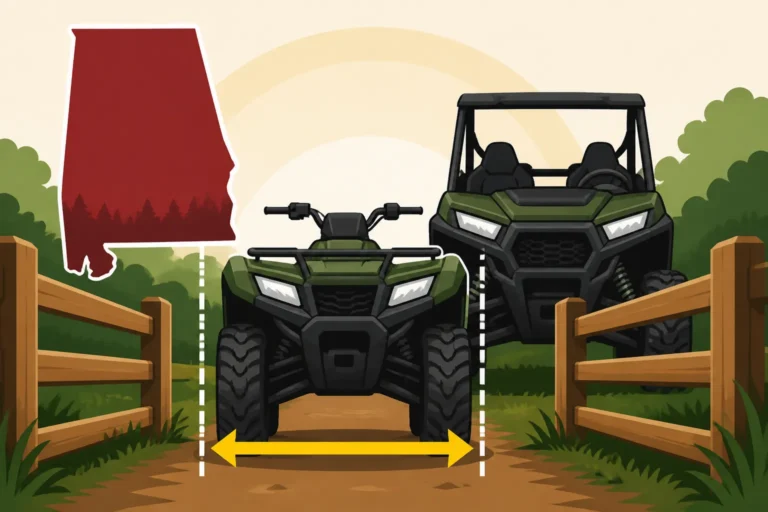
Let's start by clarifying what we're usually talking about when we say "ATV" or "ROV" (Recreational Off-Highway Vehicle, which often includes side-by-sides). Under Alabama law, an ATV is generally defined as a motorized, off-highway vehicle designed to travel on four low-pressure tires, having a seat designed to be straddled by the operator, and handlebars for steering. ROVs, or side-by-sides, are similar but often designed for seated passengers, steering wheels, and sometimes enclosed cabs. These definitions are crucial because they determine which rules apply. You can learn more in [Alabama's ATV and ROV Legal Definitions].
Now, a golf cart, in its traditional sense, is typically a small, motorized vehicle designed for transporting golfers and their equipment around a golf course. They're built for low speeds, often electric, and lack many of the robust features of an ATV or ROV. The key here is that, unlike ATVs and ROVs, golf carts usually don't have a specific, comprehensive definition within the same state statutes that regulate off-road vehicles. This omission is intentional and forms the basis of their distinct legal treatment.
The Legislative Chapter in Question
The core of the matter lies within the specific legislative chapter that governs off-highway vehicles in Alabama. This chapter, which outlines everything from definitions to registration and the upcoming titling requirements, includes precise language about which types of vehicles it applies to. And, crucially, it also includes language about what it doesn't apply to. This is where golf carts enter the picture, not by being included, but by being explicitly excluded.
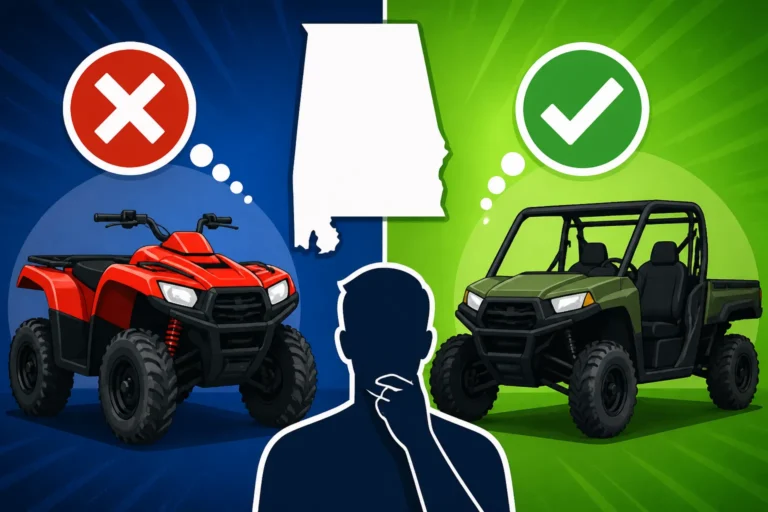
When you dive into the text of the statute, you'll find that it meticulously defines what constitutes an ATV or an ROV, setting the stage for their regulation. However, it then goes on to state that "this chapter shall not apply to… golf carts." This isn't an oversight; it's a deliberate carve-out, meaning that the rules, penalties, and administrative processes laid out in that chapter simply do not pertain to golf carts. This legal separation can be a huge relief for golf cart owners, but it also creates a different set of challenges and questions.
Initial Confusion Points
It's completely understandable why many people get confused about this. After all, you can buy ATVs, UTVs, and golf carts from the same dealerships. They're all small, motorized, and often used off public roads. You might even see someone riding a golf cart on a trail or a dirt road, just like they would an ATV. The visual similarities and the contexts in which these machines are used often lead to the assumption that they must all be regulated in the same way.
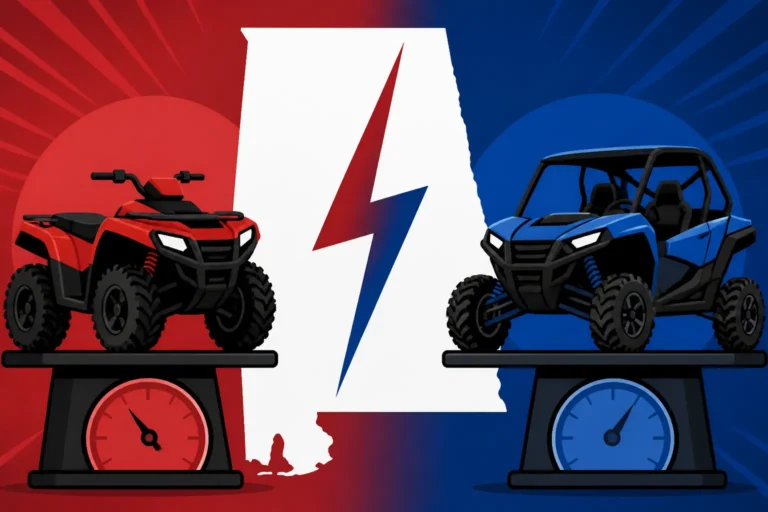
However, the intent behind the design and the primary function of these vehicles often differ significantly. While an ATV is built for rugged terrain and recreational adventure, a golf cart's primary purpose is low-speed transport, usually over manicured courses or within private communities. This fundamental difference, though not always immediately obvious to the casual observer, is a key reason why Alabama law treats them as separate categories. It highlights the importance of not just looking at a vehicle's appearance, but understanding its legal classification.
Why Golf Carts Are Different in Alabama Law
The exclusion of golf carts from Alabama's off-road vehicle chapter isn't arbitrary; it reflects historical usage, design distinctions, and a legislative intent to categorize vehicles based on their primary function and potential impact. This legislative decision shapes how golf carts are owned, operated, and ultimately regulated in the state.
Specific Exclusions in the Statute
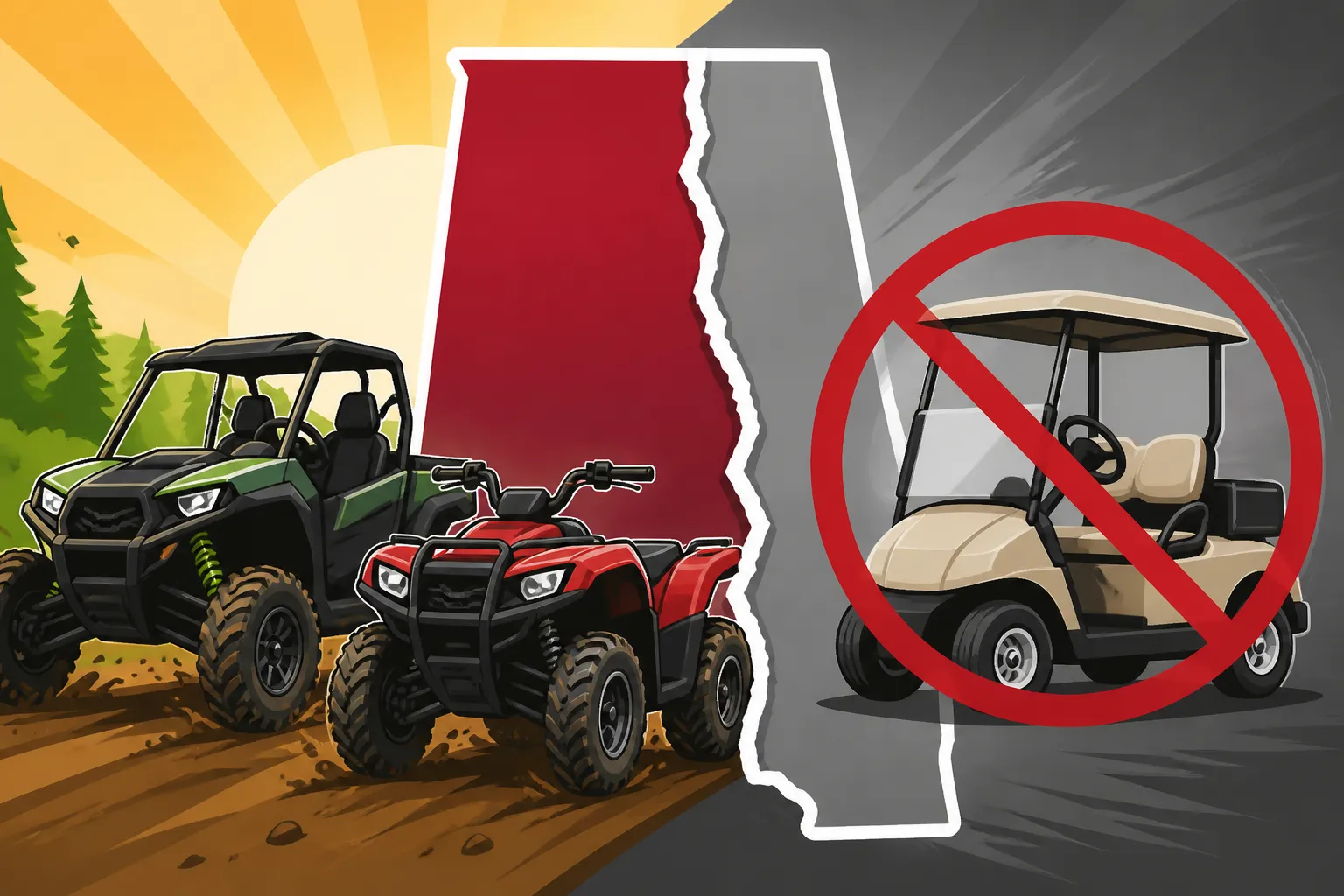
Alabama's off-road vehicle statute explicitly states, and this is important to emphasize, that "this chapter shall not apply to . . . golf carts." This clear statement effectively removes golf carts from the purview of state-level ATV and ROV registration, titling, and many operational regulations. What this means is that if you're looking for information on how to register your golf cart with ALEA or title it through the county probate office, you won't find those answers within the off-road vehicle chapter. You can read more about this specific detail in Alabama Excludes Golf Carts From the Chapter.
This exclusion is a critical piece of information for anyone owning or considering buying a golf cart in Alabama. It means that the new titling requirements starting with model year 2026 for ATVs and ROVs, or the voluntary three-year registration system through ALEA, simply do not apply to your golf cart. This can save you some administrative steps and fees, but it also means you're operating in a slightly different legal environment, where local rules often take precedence over broad state mandates for this type of vehicle.
Design and Intent Differences
Beyond the legal language, the fundamental design and intended use of golf carts set them apart from ATVs and ROVs. ATVs and UTVs are engineered for challenging off-road conditions, featuring robust suspension, powerful engines, and tires designed for traction on varied terrain like mud, rock, and loose dirt. They are built for recreational adventure, hunting, farming, and demanding utility tasks.
Golf carts, on the other hand, are typically designed for light-duty, low-speed transport on relatively smooth surfaces. Their suspension systems are usually less robust, their tires are designed for turf rather than aggressive off-road grip, and their engines (electric or small gas) are geared for efficiency and quiet operation, not high performance or heavy hauling. While some owners modify golf carts for off-road use, their original design intent and capabilities are distinct, justifying their separate legal categorization. This difference in design purpose is a strong driver behind the legislative decision to exclude them.
Historical Context of the Law
The distinction between golf carts and other off-road vehicles also has historical roots. Golf carts have been around for a long time, primarily serving a niche purpose on golf courses and within retirement communities. When state legislatures began to grapple with the rise of recreational ATVs and ROVs – machines capable of higher speeds, more aggressive off-road use, and greater potential for accidents – they often created specific statutes to address these newer, more powerful vehicles.
Golf carts, having a longer and more established history of low-speed, often private-property use, were simply not seen as presenting the same types of regulatory challenges or public safety concerns as the burgeoning ATV market. Therefore, rather than trying to shoehorn them into the same regulatory framework, lawmakers chose to explicitly exclude them, allowing local jurisdictions and private entities (like golf courses or HOAs) to largely govern their use. This historical trajectory explains why they exist in their own unique legal space today.
Practical Implications of the Exclusion
The exclusion of golf carts from Alabama's off-road vehicle chapter isn't just a legal technicality; it has very real, day-to-day consequences for owners. Understanding these implications is key to responsible ownership, especially when it comes to official paperwork, potential liabilities, and proving ownership.
Registration and Titling Implications
For starters, because golf carts are explicitly excluded from Alabama's off-road vehicle chapter, they are generally not subject to the same titling and registration requirements as ATVs and ROVs. This means you won't be heading to your county probate office to apply for a title for your new golf cart, even after the new [Alabama ATV Titling Starts With Model Year 2026]. Similarly, the voluntary three-year registration system administered by the Alabama Law Enforcement Agency (ALEA) for off-road vehicles also does not apply to golf carts.
This might sound like a relief, avoiding extra fees and paperwork. However, it also means there isn't a centralized, statewide system for tracking golf cart ownership. If your golf cart is stolen, for example, there's no state title or registration database to easily trace it or prove ownership to law enforcement. This places a greater burden on the owner to maintain robust personal records, which we'll discuss shortly. While ATV owners of older machines might be interested in [Why Pre-2026 Owners Do Nothing], golf cart owners simply don't have these state-level options at all.
Insurance and Liability Considerations
Since golf carts aren't registered or titled at the state level like ATVs, the requirements for insurance can also differ. For ATVs and ROVs, while Alabama does not mandate liability insurance for off-road use, it's always highly recommended. For golf carts, this recommendation becomes even more critical, especially if you plan to operate it anywhere beyond your private property, such as within a community or on roads where allowed by local ordinance.
Many homeowner's insurance policies might offer some limited coverage for golf carts used on private property, but this often doesn't extend to accidents that occur off your property or if the cart is involved in a collision with a pedestrian or another vehicle. Without a state-mandated insurance requirement, it's entirely up to the owner to secure adequate coverage. It’s important to speak with your insurance agent to ensure you have proper liability and collision coverage, as the consequences of an uninsured accident can be financially devastating. Don't assume your current policies cover your golf cart simply because it's a "vehicle." For more on ATV insurance, you can review [Does Alabama Require Insurance on an ATV?].
Proof of Ownership for Golf Carts
Given the lack of state titling and registration, proving ownership of a golf cart in Alabama relies heavily on traditional methods: a robust bill of sale and original manufacturer's documentation. When you purchase a golf cart, whether new from a dealer or used from a private seller, the bill of sale becomes your primary proof of ownership. This document should clearly list the buyer and seller's information, the purchase date, the golf cart's make, model, year, and crucially, its Vehicle Identification Number (VIN) or serial number.
Without an official state title, a well-drafted bill of sale is indispensable for transferring ownership, recovering a stolen cart, or resolving any disputes. If you're buying privately, insist on a detailed bill of sale. Resources like LawDepot can be incredibly helpful for creating a comprehensive and legally sound bill of sale for private sales, ensuring all necessary details are captured. This is your paper trail, and it's essential for a machine that lacks formal state registration. For comparisons, consider [Proving Ownership of a Quad Bought at a Farm Sale].
When a Golf Cart Might Cross Over: Road Use and LSVs
While golf carts are generally excluded from Alabama's ATV and ROV chapter, there are specific scenarios where they might fall under different regulations, particularly concerning road use. This is where the distinction between a standard golf cart, a modified golf cart, and a Low-Speed Vehicle (LSV) becomes incredibly important.
Low-Speed Vehicle Classification
Here’s where things get interesting: a golf cart, if it meets certain federal safety standards and has specific equipment, can be classified as a Low-Speed Vehicle (LSV). An LSV is a street-legal vehicle with a top speed between 20 and 25 mph. To qualify, an LSV must have headlights, tail lights, turn signals, stop lights, a rearview mirror, a windshield, seat belts, and a VIN. If a golf cart is manufactured to these standards, or if an aftermarket conversion is done and it officially meets these standards, it can then be registered and licensed for street use in Alabama, just like any other vehicle. This is a very different path than the one ATVs take.
However, it's crucial to understand that merely adding a "street legal kit" to your standard golf cart does not automatically make it an LSV or legal for road use. The vehicle must comply with all federal motor vehicle safety standards (FMVSS) for LSVs, which are far more stringent than simply bolting on a few accessories. If you're considering converting your golf cart for road use, make sure it genuinely meets the LSV definition and all associated requirements, which often includes a manufacturer's certificate of origin specifically stating it meets LSV standards. You can explore [Alabama Low-Speed Vehicle Rules] for more details on this classification.
Local Ordinances and Permitted Road Use
For golf carts that are not classified as LSVs, their ability to be driven on public roads in Alabama is almost entirely at the discretion of local municipalities and counties. The state's ATV and ROV law does not permit them on public roads, but local governments have the authority to create their own ordinances regarding golf cart use on certain streets. This means what's legal in one town might be completely prohibited in a neighboring community.
Many smaller towns, coastal communities, or communities built around golf courses have specific ordinances allowing golf carts on certain roads, often with restrictions like daytime-only operation, specific speed limits, and requirements for safety equipment such as mirrors or lights. Before you ever drive your golf cart on a public road, even a quiet residential street, you must check with the city hall or county commission office in that specific jurisdiction. Never assume it's okay. Ignoring local ordinances can lead to tickets, fines, and even impoundment. For a better understanding of how local rules affect vehicles, you might check [Alabama City Ordinance Lookups].
"Street Legal Kits" and Their Reality
The market is flooded with "street legal kits" for golf carts, promising to transform your course cruiser into a road-worthy machine. These kits typically include headlights, tail lights, turn signals, mirrors, and sometimes seat belts. While these accessories are certainly important for safety and are components of an LSV, simply installing such a kit does not inherently make your golf cart legal for street use in Alabama.
The issue lies in the federal standard. An LSV must be manufactured to meet federal safety standards, not just have the appearance of meeting them. This often includes aspects of crashworthiness, braking performance, and other engineering specifications that an aftermarket kit cannot confer. Installing a kit might make your golf cart safer and more visible, but without the full LSV certification and proper state registration, it typically won't allow you to legally drive it on public roads where prohibited by state or local law. It's a common misconception that often lands owners in trouble. To dive deeper into this specific challenge, refer to [Why a Street Legal Kit Will Not Make It Legal].
How to Navigate Golf Cart Rules Beyond the ATV Statute
Since golf carts largely exist outside the primary state-level ATV and ROV regulatory framework in Alabama, navigating their legal usage requires a more localized approach. This means owners must become familiar with community-specific rules and take proactive steps to ensure their ownership is properly documented.
County and City Regulations
As mentioned, for golf carts that aren't designated as Low-Speed Vehicles, the rules for operating them often come down to individual county and city ordinances. This can be frustrating for owners because there isn't a single, uniform set of guidelines across the state. A golf cart that's perfectly legal on the streets of one Alabama town might get you a ticket just a few miles down the road in another.
To figure out what's permissible in your area, your best bet is to contact your local city hall or county clerk's office directly. Ask specifically about golf cart ordinances, permitted roads, speed limits, and any required safety equipment or permits. Some municipalities might even require a local registration or decal for golf carts operating on their streets. This might feel like extra homework, but it's the only way to ensure you're in compliance. While [Do Alabama County Roads Have Their Own ATV Rules?] refers to ATVs, it highlights the importance of local rule variations that also apply to golf carts.
Private Community Rules (HOAs)
Beyond public roads, golf carts are incredibly common in private communities, gated neighborhoods, and developments with Homeowners Associations (HOAs). In these settings, the HOA or community management often sets its own rules and regulations regarding golf cart usage. These rules can be quite extensive, covering everything from permitted operating hours, speed limits, age restrictions for drivers, noise limits, and even storage requirements.
If you live in such a community, your HOA documents are the definitive source for golf cart rules. Familiarize yourself with these covenants, conditions, and restrictions (CC&Rs) to avoid fines or other penalties from your association. These private rules are often enforced vigorously, and a golf cart that meets state requirements for an LSV might still be subject to stricter rules within a private development. It's a layer of regulation unique to golf carts and their prevalent use in these types of residential areas.
Creating Your Own Documentation
Because golf carts don't typically come with state-issued titles in Alabama, robust personal documentation is paramount for establishing and proving ownership. The most critical document you'll need is a comprehensive bill of sale, especially if you buy or sell a golf cart privately. This isn't just a casual receipt; it's your legal proof that you are the rightful owner.
A good bill of sale should include:
- Full names and addresses of both buyer and seller.
- Date of the transaction.
- Detailed description of the golf cart (make, model, year, color).
- The golf cart's Vehicle Identification Number (VIN) or serial number.
- The purchase price.
- Signatures of both parties.
Using a reputable template, such as those offered by LawDepot, can help ensure your bill of sale is complete and legally sound. This formal documentation can be invaluable for insurance purposes, in case of theft, or if you ever decide to sell the golf cart. Think of it as your unofficial title. This careful documentation is even more vital for an asset that doesn't have a formal title, similar to how one might need robust records when buying a quad in a scenario like [Proving Ownership of a Quad Bought at a Farm Sale].
Common Misconceptions and What to Do
The legal landscape for golf carts in Alabama can feel like a minefield of misinformation and assumptions. It’s easy to fall into traps if you rely on anecdotes or what seems logical. To truly protect yourself and stay within the bounds of the law, it’s essential to clarify common misunderstandings and know where to turn for reliable information.
Don't Assume ATV Rules Apply
This is perhaps the biggest and most critical takeaway: do not assume that Alabama's ATV and ROV rules, regulations, or definitions apply to your golf cart. They simply don't. While both are off-highway vehicles in common parlance, the state legislature has created a distinct separation. This means:
- No Mandatory State Titling: Your golf cart won't need a state title like a 2026 model year ATV will.
- No Voluntary State Registration: You cannot register your golf cart through ALEA's three-year off-road vehicle program.
- Different Road Use Rules: ATV road use is generally prohibited statewide, with very narrow exceptions. Golf cart road use is entirely dependent on local ordinances, not the ATV statute.
Making these assumptions can lead to frustration when you try to apply for a title that doesn't exist for your golf cart, or worse, lead to fines if you operate it on roads thinking the ATV rules cover it. The rules are different, and that's a key distinction for every golf cart owner in Alabama.
Always Check Local Laws
Since state law largely steps back from regulating golf carts, the burden of understanding their legality falls heavily on local jurisdictions. This means your primary source of truth for golf cart operation will be your city or county government. You absolutely must take the initiative to inquire about local ordinances wherever you plan to operate your golf cart.
This includes:
- Your residential city or county: Are golf carts allowed on public streets? If so, which ones? What are the speed limits? Are there any equipment requirements (lights, mirrors, etc.)?
- Visiting other towns or counties: If you take your golf cart to a lake house, a vacation rental, or a friend's property in another municipality, you need to check their local rules. What's allowed at home may not be allowed elsewhere.
- Private communities/HOAs: Even if a city allows golf carts, your specific neighborhood's HOA might have stricter rules.
A simple phone call or visit to the local clerk's office can save you a lot of headache and potential legal trouble. Relying on "everyone else does it" is a recipe for disaster.
When to Consult an Expert
While this guide provides a general overview, specific situations can be complex. If you have unique circumstances, such as a highly modified golf cart, questions about insurance liability after an incident, or disputes over ownership, it's always wise to consult with an expert.
- Local Law Enforcement: Your local police department or sheriff's office can provide definitive answers on local golf cart ordinances and enforcement practices.
- Insurance Agent: Discuss your specific golf cart usage with your insurance agent to ensure you have adequate coverage for liability and property damage.
- Legal Professional: For complex questions about ownership disputes, liability after an accident, or challenging a local ordinance, a qualified attorney specializing in property or vehicle law can offer tailored advice.
Remember, understanding the nuanced differences between how Alabama treats ATVs/ROVs and golf carts is essential for responsible and legal ownership. Don't let the common appearance of these vehicles lead you down the wrong path.
| Feature | Alabama ATV / UTV (Post-2026 for Titling) | Alabama Golf Cart (Standard) | Alabama Low-Speed Vehicle (LSV) |
|---|---|---|---|
| State Titling | Mandatory for Model Year 2026+ (Probate Court) | Generally No (Excluded from ATV Chapter) | Yes (DMV/Probate for traditional vehicle registration) |
| State Registration | Voluntary through ALEA (3-year term) | Generally No (Excluded from ATV Chapter) | Yes (Standard vehicle license plate and registration) |
| Road Use (State Law) | Generally Prohibited (Narrow exceptions) | Highly Dependent on Local Ordinances (Not statewide) | Generally Permitted on roads <= 35 mph (Statewide) |
| Ownership Proof | Title (2026+), Bill of Sale (older), MCO | Bill of Sale, Manufacturer's Certificate of Origin (MCO) | Title, Registration, MCO |
| Primary Regulator | ALEA (Registration), Probate Court (Title), State Statutes | Local Municipalities, HOAs, Private Entities (for use) | State DMV, Federal Motor Vehicle Safety Standards (FMVSS) |
| Legal Chapter | Specific Off-Road Vehicle Chapter (e.g., Title 32, Ch. 20) | Explicitly Excluded from Off-Road Vehicle Chapter | Falls under Motor Vehicle/Traffic Laws (e.g., Title 32) |
| Top Speed | Varies greatly (often 30+ mph) | Typically up to 20 mph | 20-25 mph (by definition) |
Disclaimer
This article is for general informational purposes only and does not constitute professional advice. Laws, prices and regulations vary by location and change over time. Consult a qualified professional for guidance on your specific situation.