Why Older Alabama ATVs Cannot Be Titled
It can be incredibly frustrating to feel like you're stuck in a legal gray area, especially when it comes to something as personal as your off-road machine. Many folks in Alabama, especially those who've owned their ATVs or UTVs for years, are scratching their heads and wondering why they can't get a proper title for their beloved machine, even as newer models start getting them. This guide is here to unravel the mystery surrounding Alabama's new titling law for off-road vehicles and explain exactly why older ATVs simply aren't eligible for a formal title.
The January 2026 Cutoff: A Hard Line in the Sand
Alabama's new off-road vehicle titling law, set to take effect on January 1, 2026, has introduced a significant change that has many owners both relieved and confused. The core of this law establishes a clear distinction: only ATVs and UTVs with a model year of 2026 or newer will be eligible for a title. This is a hard and fast rule, meaning if your machine rolls off the assembly line with a 2025 model year designation, or any year prior, it simply won't be able to get an Alabama title under this new system.
Think of it like a brand-new chapter starting. Everything written before that chapter began remains in the old book. For many long-time owners, this can feel a bit unfair, especially if they've maintained their machines meticulously. You might have a perfectly running 2024 Honda Rancher or a 2020 Polaris RZR, and while it's still a valuable asset, the state won't issue it a certificate of title. This isn't a judgment on your machine's condition or value; it's purely a legislative decision based on its age and designation by the manufacturer.
The law isn't retroactive, and that's the key point of confusion for many. It doesn't reach back in time to provide titles for machines that were manufactured and sold years ago without such a requirement. The state has essentially drawn a line in the sand, saying, "From this point forward, new machines will enter a titling system." This approach helps to avoid the monumental task of trying to title hundreds of thousands of older machines that may have changed hands multiple times without formal documentation beyond a bill of sale.
What "Model Year" Truly Means for Titling
When we talk about a vehicle's "model year," we're referring to the designation given by the manufacturer, not necessarily the calendar year you bought it or even when it was manufactured. For example, a dealership might sell a "2026 model year" ATV in the fall of 2025. In the eyes of Alabama's new titling law, that machine, because of its 2026 model year, would be eligible for a title when the law goes into effect. Conversely, if you bought a brand new machine in early 2026, but it's a "2025 model year" machine still on the dealer lot, it would not be eligible.
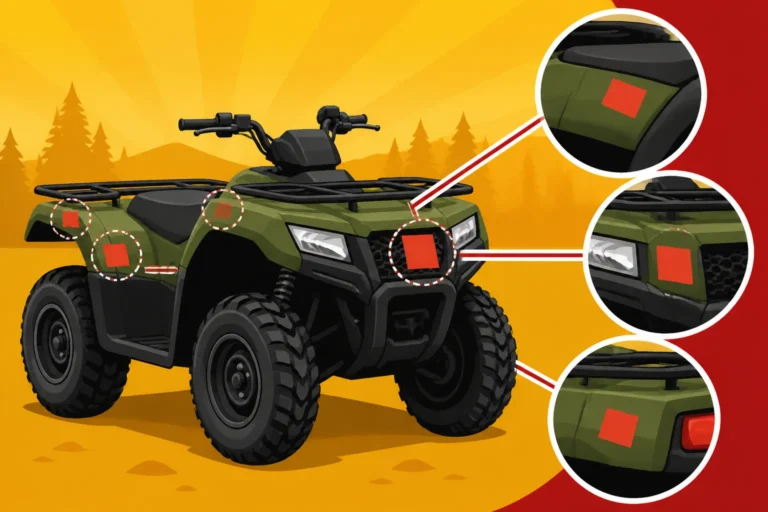
This distinction is crucial because it places the eligibility firmly on the manufacturer's designation, which is typically encoded within the Vehicle Identification Number (VIN) or Product Identification Number (PIN). You can often find this information on a sticker or plate on the machine's frame, or in its owner's manual. It's not about how new or old your machine feels to you, or even how long you've owned it. It's about that specific, manufacturer-assigned model year.
So, if you're looking at a bill of sale or paperwork for an ATV, make sure to find that model year. It's the definitive factor that will determine if it falls under the new titling requirements or remains in the untitled category. This can be a point of stress for buyers and sellers alike, particularly those who are unfamiliar with the nuances of model year designations versus actual purchase dates. Understanding this detail upfront can save a lot of confusion and potential disappointment down the road. You can find more details on this specific aspect by checking out [Why the Model Year Decides If You Title It].
Why This Specific Date Matters
The choice of January 1, 2026, as the effective date for the new titling law wasn't arbitrary. Legislation, especially when introducing entirely new systems for vehicles that previously didn't require titles, often needs lead time. This allows manufacturers, dealerships, county licensing officials, and the public to prepare for the changes. Imagine the chaos if the law took effect overnight!
This specific date gives dealerships time to adjust their sales processes, ensuring they collect the necessary information for title applications on eligible machines. It also provides a window for the Alabama Law Enforcement Agency (ALEA), which will be responsible for administering titles, to set up the necessary systems and train personnel. For you, the ATV owner, it means there's a clear benchmark. If your machine is older than a 2026 model year, you know definitively that a title isn't an option through this new process.
This clarity, while sometimes disappointing for those with older machines, is essential for a smooth rollout of a new statewide system. Without a clear starting point, there would be endless disputes about which machines qualify and which don't, leading to a bureaucratic nightmare for everyone involved. While the waiting period until 2026 might seem long, it's a necessary step to ensure the integrity and workability of the new titling program for Alabama's off-road vehicles. For more on the specifics of the rollout, see [Alabama ATV Titling Starts With Model Year 2026].
Understanding the "Older" Definition: What Qualifies as Exempt
The new law provides a specific exemption for older machines, effectively defining what "older" means in the context of titling. It's not just about being "pre-2026 model year." There's another layer to this that solidifies why these machines won't enter the titling system. The law explicitly states that off-road vehicles that are more than ten model years old are exempt from the titling requirements, regardless of their original model year.
This "ten model years" rule is another common approach in vehicle legislation, often used to streamline administrative processes for older assets that may have less market value or have changed hands numerous times without extensive paperwork. For most current owners of ATVs and UTVs in Alabama, this means your machine likely falls under this exemption. If you bought your quad new in 2015, or even 2020, it's already well past or quickly approaching that ten-year mark by the time the titling law kicks in.
It's a practical recognition that trying to track down a complete chain of ownership for machines that have been around for a decade or more, and for which titles were never required, would be an almost impossible undertaking. This exemption avoids creating undue burden on current owners of seasoned machines, allowing them to continue enjoying their off-road adventures without the sudden demand for a title that simply doesn't exist for their model.
The Ten Model Years Exemption
Let's break down this "ten model years" exemption a bit more. When the titling law officially begins in 2026, any machine with a model year of 2015 or earlier would already be considered more than ten model years old (2026 minus 2015 equals 11 years). This means that even if the new law hadn't created a hard 2026 model year cutoff, these significantly older machines would still be exempt from titling due to their age.
This exemption is crucial for folks who have inherited an ATV from a family member, or bought a used machine from a neighbor years ago with just a simple handwritten bill of sale. For these owners, the thought of suddenly needing a formal title might have caused a lot of anxiety. The ten-year rule alleviates that, essentially grandfathering in the vast majority of machines currently in circulation in Alabama. It acknowledges the historical reality that these vehicles have always operated without titles in the state.
So, while the 2026 model year cutoff is the primary reason newer older machines (like 2025 models) can't be titled, the ten-year exemption ensures that truly vintage or well-used machines are also definitively outside the new titling system. It's a double-layered approach that draws a very clear boundary for what will and will not require a title moving forward. For more on this, check out [How a Ten-Year Window Exempts Older Machines].
Calculating Your Machine's Eligibility
To figure out if your ATV or UTV is "older" in the eyes of Alabama's new titling law, you just need to know its model year. Let's imagine the year is 2026, when the law is active.
- If your ATV is a 2026 model year or newer, it must be titled.
- If your ATV is a 2025 model year or older, it cannot be titled under this new law.
The ten-year exemption reinforces this. By 2026:
- A 2016 model year ATV is 10 model years old (2026 – 2016 = 10). It would fall outside the titling requirement because it's not a 2026 model year or newer.
- A 2015 model year ATV is 11 model years old (2026 – 2015 = 11). It's also exempt, reinforcing the fact that anything older than a 2026 model year won't be titled.
It's a straightforward calculation that puts most existing machines firmly in the "no title needed or available" category. This clear delineation helps prevent confusion and unnecessary trips to the county office for owners of older machines. You won't be able to pay a fee and magically get a title for your 2018 Yamaha Grizzly or your 2010 Kawasaki Brute Force, even if you wanted to. The system simply isn't set up for it.
Examples of Exempt vs. Non-Exempt Machines
Let's look at some real-world examples to make this crystal clear.
- Your 2020 Can-Am Maverick X3: This machine has a model year of 2020. Since it's older than the 2026 cutoff, it will not be eligible for a title in Alabama, even after January 1, 2026. You'll continue to rely on your bill of sale and other ownership documents.
- Your 2014 Polaris Sportsman: With a 2014 model year, this ATV is not only older than the 2026 cutoff, but by 2026 it will also be more than ten model years old (12 years, to be exact). It falls firmly into the exempt category and cannot be titled.
- A Brand New 2026 John Deere Gator: If you purchase this UTV in late 2025 or early 2026, its model year is 2026. This machine will require an Alabama title, and your dealer will facilitate the application as part of the purchase process.
- A Leftover 2025 Honda Foreman purchased in 2026: Even though you buy it after the law takes effect, its model year is 2025. Therefore, it will not be eligible for a title.
This distinction is what will separate the "titled" machines from the "untitled" ones in Alabama. It's important for anyone buying or selling an off-road vehicle to be aware of this, as it impacts the paperwork involved and the proof of ownership required. The rule simplifies things by focusing solely on the model year, avoiding complex assessments of individual machine history.
The Legislative Intent Behind the Titling Law
It's easy to get frustrated by new laws, especially when they seem to add bureaucracy or draw lines that affect your property. But behind Alabama's decision to start titling newer off-road vehicles, there's a clear legislative intent designed to address some long-standing issues that have plagued both owners and law enforcement. The primary goals revolve around proving ownership, combating theft, and providing a clearer framework for financing and legal recourse.
Before this law, an ATV or UTV in Alabama was often treated much like a lawnmower in terms of ownership documentation. A bill of sale, sometimes handwritten, was often the only proof. While this worked for many private transactions, it created significant problems when machines were stolen, or when lenders needed to secure their interest. The absence of a statewide, unified ownership record made these situations much more difficult to resolve, leaving many owners feeling vulnerable.
The new titling system aims to bring ATVs and UTVs into a more formal legal structure, akin to cars and trucks, where a clear, government-issued document establishes ownership. This benefits everyone in the long run, even if it introduces a new step in the purchasing process for newer machines. It's about establishing clarity and security for a significant investment that many Alabamians make for recreation, work, or hunting.
Addressing Theft and Repossession Concerns
One of the biggest motivations behind implementing ATV and UTV titling is to combat theft. Without a formal title, stolen machines are notoriously difficult to track, identify as stolen, and return to their rightful owners. A simple bill of sale can be easily forged, and without a centralized database, checking ownership history is nearly impossible for law enforcement. This created a lucrative market for stolen off-road vehicles, often crossing state lines where tracking was even harder.
With a title, each machine will have a unique record tied to its VIN, clearly showing the legal owner. When a titled ATV is reported stolen, that information can be entered into statewide and even national databases, making it much harder for thieves to resell the machine. It gives law enforcement a definitive document to verify ownership during traffic stops (if an ATV is being trailered, for instance) or during investigations. This added layer of security provides greater peace of mind for owners of titled machines. For more on this, check out [Alabama Theft and Repossession Motives].
Similarly, for financial institutions, the lack of a title has made it challenging to offer loans for ATVs and UTVs. Without a title, there's no way to formally record a lien, which is the bank's claim on the vehicle until the loan is paid off. This means if an owner defaults on a loan, repossession becomes complicated without a clear ownership document. The new titling system allows lenders to record their interest, making it easier and safer for them to finance these machines. This, in turn, can open up more financing options for buyers, which is a significant benefit for the industry and consumers alike.
Clarifying Ownership and Establishing a Chain of Title
The title serves as the ultimate proof of legal ownership. For years, buying or selling an older ATV in Alabama has often relied on a bill of sale. While a perfectly legitimate document, a bill of sale can be quite basic, sometimes handwritten, and without a standardized format. This makes it difficult to establish a clear "chain of title"—a history of who has legally owned the machine from the manufacturer onward.
The new titling law aims to create that clear, unbroken chain of ownership for every eligible machine. When you buy a new, titled ATV, your name will be officially recorded with the state as the legal owner. When you sell it, the title is transferred, and the new owner's name is recorded. This systematic approach eliminates ambiguity and provides a definitive answer to "who owns this machine?" This is incredibly valuable in situations like estate settlements, divorces, or disputes over ownership.
For people who use resources like LawDepot to create legally sound bills of sale, this new system complements their efforts by adding a state-backed layer of ownership verification for newer machines. While LawDepot can help you create robust private sale documents, a state-issued title provides an irrefutable public record that goes beyond a private agreement. This clarity reduces potential legal headaches and provides a stronger legal foundation for owning and transferring these valuable assets.
Distinguishing ATVs from Other Vehicles
Another subtle, but important, aspect of the titling law is to formally define and distinguish ATVs and UTVs within Alabama's motor vehicle statutes. Historically, these machines have occupied a somewhat ambiguous legal space. They're clearly not cars or trucks, and while they have engines and wheels, they also don't fit neatly into existing motorcycle or farm equipment categories. This ambiguity has sometimes led to confusion regarding their use, registration, and legal standing.
By creating a specific titling category for off-road vehicles, the state is giving them their own distinct legal identity. This helps in developing clearer regulations for their use on public lands, insurance requirements, and even potential safety standards down the road. It acknowledges the growing popularity and economic impact of the ATV and UTV market in Alabama, providing a dedicated framework for managing these vehicles.
This distinction is crucial for everyone, from law enforcement officers who need to understand what constitutes an ATV for enforcement purposes to insurance companies who need clear categories for coverage. It brings a level of order and precision to a category of vehicles that previously operated largely outside of such formal state documentation. Ultimately, it means a more defined and understandable legal landscape for all involved with off-road vehicles in Alabama. You can learn more about how the state defines these machines in [Alabama's ATV and ROV Legal Definitions].
The Practical Impact for Current Owners of Older Machines
So, what does all this mean for you if you currently own an ATV or UTV with a model year of 2025 or earlier? The most straightforward answer is: very little changes regarding your ownership status. You won't be required to get a title, and you won't be able to get a title under the new system. Your ownership will continue to be recognized through your existing documentation, primarily a bill of sale.
This might be a relief for some, as it means no new hoops to jump through. For others, it might feel like a missed opportunity to get a formal document for an expensive piece of equipment. The key is understanding that the law is forward-looking. It's not designed to retroactively validate past sales or create titles for machines that were never part of a titling system. Your older machine simply continues under the "untitled" rules that have always been in place for off-road vehicles in Alabama.
The practical impact really comes down to how you prove ownership, how you sell your machine, and how insurance companies view your asset. While the state is moving to a titling system for newer machines, it's not abandoning the legitimacy of existing, untitled machines. It's just creating two distinct categories based on model year.
Peace of Mind for Pre-2026 Owners
For the vast majority of ATV and UTV owners in Alabama, the new titling law provides a sense of peace of mind rather than added burden. If you own a machine from, say, 2023 or even 2010, you don't need to worry about scrambling to get a title by January 1, 2026. The law explicitly exempts your machine, meaning you can continue to enjoy it just as you always have, relying on your existing ownership documents. There's no new requirement for you.
This exemption prevents a massive, potentially unmanageable rush to county offices by owners of older machines, many of whom might not have complete paperwork or might have purchased their ATVs through informal means years ago. The state recognized that trying to title every off-road vehicle ever sold in Alabama would be an administrative nightmare and would place an unreasonable burden on its citizens. By focusing on new machines, the transition is much smoother and less disruptive for the current population of owners.
So, if you've been stressing about how to get a title for your long-owned quad, take a deep breath. For a pre-2026 model year machine, the answer is simple: you don't need one, and you can't get one. Your ownership is still valid as long as you have a proper bill of sale or other proof. For details on ensuring your sale documents are solid, resources like LawDepot can be quite helpful in drafting a comprehensive [Alabama Bill of Sale Requirements].
Challenges for Selling or Transferring Ownership
While older machines don't need a title, selling or transferring ownership can present some unique challenges, especially after the new titling law takes effect. When buyers start seeing that new ATVs come with titles, they might naturally expect one for any purchase, even a used one. It will be crucial for sellers of pre-2026 machines to educate potential buyers about why their machine doesn't have a title and why that's perfectly normal and legal in Alabama for older models.
The primary document for transferring ownership of an older, untitled ATV will continue to be a well-executed bill of sale. This document should clearly identify the machine (make, model, year, VIN/PIN), the buyer and seller information, the purchase price, and the date of sale. It should also state that the machine is being sold without a title, in accordance with Alabama law for off-road vehicles of its model year. Having a solid, detailed bill of sale is your best defense against future ownership disputes. LawDepot, for example, offers templates that can help you create a robust bill of sale document quickly and easily.
Another potential challenge arises if a buyer needs to finance an older, untitled machine. Lenders might be hesitant to offer loans without the ability to record a lien on a state-issued title. While some credit unions or banks might still offer personal loans, it may be more difficult than financing a new, titled machine. This could impact the resale market for older ATVs, potentially making them harder to sell or affecting their market value compared to titled counterparts. For more information on what constitutes good proof of ownership for older machines, you might want to read [Proving Ownership of a Quad Bought at a Farm Sale].
Insurance Implications Without a Title
The absence of a title for older ATVs doesn't necessarily prevent you from insuring them, but it can affect how insurance companies process claims or assess risk. Most insurance providers in Alabama offer policies for off-road vehicles, whether they're titled or not. You'll typically provide your VIN, make, model, and year for coverage. However, in the event of a total loss (theft, severe accident), having only a bill of sale as proof of ownership might require more scrutiny from the insurance company compared to a clear, state-issued title.
When reporting a theft, for instance, a title provides irrefutable proof of ownership that can expedite police reports and insurance claims. Without one, you'll need to rely heavily on your bill of sale, potentially photographs of your machine with its VIN, and any other documentation you have. It's always a good idea to discuss the implications of an untitled machine with your insurance agent to understand their specific requirements and how claims are handled in such situations.
Ensure your insurance policy explicitly lists your machine's VIN. This ties the policy directly to your specific quad, regardless of whether it has a title. While Alabama doesn't require insurance for ATVs on private land, it's a wise investment, especially for expensive machines. Even if your machine won't have a state title, a comprehensive insurance policy offers protection against unforeseen circumstances, and it's something you shouldn't overlook.
What to Do If You Own an Older, Untitled ATV
If you're an Alabama resident and your ATV or UTV has a model year of 2025 or earlier, you're firmly in the "untitled" camp. But don't despair! This doesn't mean your machine is in a legal limbo or that your ownership is tenuous. It simply means you'll continue to rely on the established methods of proving ownership that have been in place for off-road vehicles in Alabama for decades. The key is robust documentation.
The main takeaway here is to be proactive about your paperwork. Even without a title, a strong paper trail is your best friend. This is especially important for protecting your investment, making future sales smoother, and resolving any potential disputes. Don't assume that because the state isn't issuing titles, you don't need to keep meticulous records. Quite the opposite, in fact.
Taking the time now to gather and organize your ownership documents will pay dividends down the road. It's a small effort that can prevent large headaches, whether you're dealing with a lost machine, an insurance claim, or a sale to a new owner.
Relying on a Strong Bill of Sale
Your bill of sale is the cornerstone of your ownership for an older, untitled ATV or UTV. It is the legal document that proves you purchased the machine from the previous owner. A strong bill of sale should contain several key pieces of information to make it as robust as possible:
- Date of Sale: Crucial for establishing the timeline of ownership.
- Buyer Information: Your full legal name, address, and contact information.
- Seller Information: The previous owner's full legal name, address, and contact information.
- Machine Description: Make, model, year, and crucially, the full VIN or PIN of the ATV. Don't just list the year and make; the VIN is its unique identifier.
- Purchase Price: Clearly state how much was paid for the machine.
- Signatures: Both the buyer and seller should sign and date the document. It's even better if you can have it notarized, adding an extra layer of legal authenticity.
If you don't have a bill of sale, or if yours is incomplete, it's worthwhile to try and create one retrospectively if you can contact the previous owner. If not, you'll need to rely on other forms of proof, which we'll discuss next. For assistance in creating a legally sound document, services like LawDepot provide customizable bill of sale templates that ensure all necessary fields are covered, giving you confidence in your ownership record. See [Alabama Bill of Sale Requirements] for specific details.
Proving Ownership Without a Formal Title
If you've lost your bill of sale, or perhaps inherited a machine without one, proving ownership for an untitled ATV can be more challenging but is not impossible. Here are several ways you can establish proof of ownership:
- Registration Records: If you have voluntarily registered your ATV with ALEA for public or private use, those records show your name associated with the machine's VIN. While registration isn't a title, it's an official state record of your claim to the machine. You can refer to [Alabama Public Use ATV Registration Explained] or [Alabama Private Use ATV Registration Explained].
- Insurance Policies: An insurance policy listing your machine's VIN and your name as the policyholder serves as strong supporting evidence.
- Maintenance Records: Receipts for repairs or service, especially if they list the VIN and your name, indicate ongoing care and possession.
- Photographs: Dated photographs of you with the machine, especially showing unique identifiers like its VIN, can be helpful.
- Affidavits: In some cases, a sworn affidavit from the previous owner (if reachable) or from individuals who can attest to your ownership history might be accepted, particularly in a dispute.
- Payment Records: Bank statements or cancelled checks showing payment for the ATV.
The more documentation you can gather, the stronger your claim to ownership will be. It's about building a comprehensive picture that leaves little doubt that the machine is yours. When a formal title isn't available, this collection of evidence becomes your de facto proof.
Documenting Your Machine's History
Beyond the initial bill of sale, it's wise to maintain a folder (physical or digital) dedicated to your ATV's history. This isn't just for proof of ownership, but also for general record-keeping that can increase its value and ease of sale later on. Think of it as creating your own informal "title history" for your untitled machine.
What should you keep?
- All Bills of Sale: From your purchase and any previous ones you can acquire.
- Maintenance Logs: A simple spreadsheet or notebook detailing oil changes, tire rotations, repairs, and part replacements, along with dates and mileage/hours.
- Service Receipts: Keep all receipts from professional mechanics or parts purchases.
- Insurance Cards and Declarations Pages: Evidence of continuous coverage.
- Registration Documents: Any voluntary registration certificates from ALEA.
- Photos: A collection of photos from different angles, including close-ups of the VIN, engine, and any unique features or modifications.
This meticulous documentation serves multiple purposes. It helps you track maintenance, provides evidence for insurance claims, and, crucially, offers compelling proof of ownership and care when you eventually decide to sell. A prospective buyer seeing a well-organized history folder for an untitled machine will feel much more confident in their purchase. This level of detail shows you're a responsible owner and helps bridge the gap created by the absence of a formal title. For tips on checking for theft, even with limited paperwork, see [Alabama Stolen Machine Checks].
How This Differs from Registration
It's common for people to confuse titling with registration, especially when talking about off-road vehicles. In Alabama, these are two entirely separate processes, administered by different agencies, and serving different purposes. Understanding this distinction is vital, particularly for owners of older ATVs who won't be getting a title but may still choose to register their machine.
Titling, which will be mandatory for 2026 model year and newer ATVs, establishes legal ownership. It's a permanent record of who owns the vehicle, much like the title for your car. Registration, on the other hand, is generally about permission to use the vehicle in certain contexts and helps fund specific programs. For off-road vehicles in Alabama, registration has been voluntary and tied to whether you plan to ride on public lands or solely on private property.
The key point for owners of older ATVs is this: even though your machine can't be titled, it absolutely can still be registered. This distinction highlights that the state wants to know who is operating these machines, especially on public lands, even if it's not maintaining a full ownership record for every single one.
Titling vs. Registration: Two Separate Processes
Let's clarify the difference between titling and registration in Alabama, especially in the context of off-road vehicles.
Titling (New for 2026+ Model Year ATVs):
- Purpose: To prove legal ownership, establish a clear chain of title, and allow for the recording of liens by lenders.
- Administered by: Alabama Law Enforcement Agency (ALEA), through county title agents.
- Requirement: Mandatory for new ATVs/UTVs with a 2026 model year or newer.
- Output: A physical certificate of title that names the legal owner.
Registration (Voluntary for All ATVs/UTVs):
- Purpose: To identify the machine for specific use (public vs. private) and fund state programs related to trails and safety. It is not proof of ownership in the same way a title is, though it links a machine to an individual.
- Administered by: Alabama Law Enforcement Agency (ALEA).
- Requirement: Voluntary, but highly recommended (and sometimes practically required) if you plan to ride on public land or desire an official record of your machine. There are two tiers: Public Use and Private Use.
- Output: A decal and a registration certificate.
For owners of older machines, the key is to remember that while titling is off the table, registration is still an option and provides its own set of benefits. You can learn more about the split responsibilities in [Alabama Splits Titling and Registration Between Agencies].
Why Registration Is Still Important for Public Use
Even if your older ATV cannot be titled, registration remains incredibly important if you plan to ride on public lands in Alabama, such as state-managed trails or designated riding areas. The voluntary registration program, overseen by ALEA, provides funds that directly support the creation and maintenance of off-road trails and educational programs. When you pay your registration fee, you're directly contributing to the infrastructure that makes public riding possible.
Beyond funding, displaying a current registration decal on your ATV signifies that you're a responsible rider and that your machine is documented within the state's system for public use. Many public riding parks or designated areas will require proof of current Alabama registration (the public use tier) to gain access. Imagine driving all the way to Stony Lonesome OHV Park, only to be turned away because your machine isn't registered for public use. That's a frustration you definitely want to avoid!
While the registration certificate isn't a title, it does provide official documentation linking you to your machine by its VIN. This can be helpful in identifying your machine if it's recovered after being lost or stolen, as your name will be on record with ALEA. So, for those who love hitting the trails, even without a title, registration is a crucial step to ensure legal and enjoyable access.
The Voluntary Nature of Older ATV Registration
For older ATVs (pre-2026 model year), registration in Alabama is entirely voluntary. You are not legally compelled to register your machine if you only ride it on your own private property, or on private land where you have explicit permission. This offers flexibility for owners who may only use their ATV for farm work, hunting on private leases, or casual backyard riding. You can choose the "private use" registration tier, which is typically less expensive, or opt out of registration entirely.
However, even for private use, some owners choose to register their ATVs. Why? Because having that official record with ALEA, even for private use, can add another layer of legitimacy to your ownership. It means your machine's VIN and your name are on file with a state agency, which can be useful if you ever need to prove ownership in a dispute, if the machine is stolen, or even if you simply want an extra piece of official paperwork for your records. Resources like LawDepot can assist in creating other official documents, but the state registration provides that governmental link.
Ultimately, the decision to register an older, untitled ATV comes down to your individual use and preference. If you're staying strictly on private land and feel secure with your bill of sale, you don't have to register. But if you foresee any possibility of public land use, or simply desire the added official documentation, the voluntary registration system is there for you, completely independent of the new titling requirements for newer models. You can find more specific information at [Alabama's Voluntary ATV Registration Through ALEA].
Future Considerations and Potential Changes
It's natural to wonder if this new law is set in stone, or if there's a possibility that older ATVs might eventually become eligible for titles. While the future is always uncertain, and laws can change, based on how such legislation is typically structured, it's highly unlikely that Alabama will open up titling to machines older than the 2026 model year.
The state has made a deliberate choice to implement a forward-looking titling system. Retroactively titling hundreds of thousands of existing off-road vehicles would be an immense and likely insurmountable administrative burden. It would involve trying to establish chains of ownership for machines that have changed hands informally for years, without any prior state record-keeping beyond voluntary registration.
Therefore, for the foreseeable future, owners of pre-2026 model year ATVs and UTVs should plan on their machines remaining untitled. Your focus should be on maintaining robust ownership documentation through bills of sale and leveraging the voluntary registration system for official state recognition, where applicable.
Why the Law Isn't Likely to Change for Older Machines
The primary reason it's improbable that Alabama's titling law will expand to include older ATVs and UTVs is the sheer administrative complexity and cost involved. Imagine trying to create a title for every ATV bought in 2015, or 2005. The state would need a process for verifying original ownership, handling missing paperwork, dealing with multiple informal sales, and potentially adjudicating ownership disputes that could arise from trying to impose a new system on decades of informal transactions. It would be a bureaucratic nightmare.
Furthermore, most new titling laws for previously untitled vehicle types are designed as forward-looking measures. They draw a clear line in the sand to simplify implementation and avoid trying to untangle decades of history. This approach is common across various states and for different vehicle categories, from boats to other specialized equipment. The state wants to create a clean, verifiable record moving forward, not to rewrite the past.
The ten-year exemption further solidifies this stance. It's a pragmatic recognition that after a certain amount of time, tracking ownership becomes too difficult. This exemption works in tandem with the 2026 model year cutoff to create a stable, predictable framework for off-road vehicle ownership in Alabama.
How New Legislation Often Grandfathers Old Rules
The concept of "grandfathering" is very common in legislation, and Alabama's ATV titling law is a perfect example. Grandfathering essentially means that a new rule or law doesn't apply to existing situations or properties that were established under the old rules. In this case, all ATVs and UTVs with a model year of 2025 or older are "grandfathered" into the old system, where titles are not required and not available.
This approach is beneficial because it prevents undue hardship on individuals who made purchases or engaged in activities perfectly legally under the previous framework. Imagine if, suddenly, every homeowner had to bring their decades-old house up to brand new building codes. It would be an impossible burden. Grandfathering prevents this by letting existing situations continue under their original terms, while new situations (2026+ model year machines) must adhere to the new rules.
This principle is a strong indicator that the state is unlikely to revisit the titling eligibility for older machines. The legislative intent was to create a new system for new vehicles, not to disrupt the existing ownership of countless older ones. It provides stability and avoids creating a constantly shifting legal landscape for personal property. For more on this, check out [Why Pre-2026 Owners Do Nothing].
The Importance of Staying Informed
While the law regarding older ATVs and titling is likely to remain stable, it's always a good idea to stay informed about off-road vehicle regulations in Alabama. Laws related to registration, public land use, safety, and even local ordinances can change. Being aware of these changes ensures you remain compliant and can continue to enjoy your ATV or UTV without issues.
The best places to look for official information are the Alabama Law Enforcement Agency (ALEA) website and your local county probate or licensing office. These are the official sources for current regulations regarding registration and titling. For other legal documentation needs, resources like LawDepot can help you create documents that adhere to general legal standards, such as bills of sale, but always cross-reference with official state sources for specific vehicle regulations.
Becoming part of local ATV clubs or online forums can also be a great way to stay connected with other riders and hear about local rule changes or upcoming events. While online discussions should always be verified with official sources, they can be excellent for early awareness and community support. By staying informed, you empower yourself to navigate the world of off-road vehicle ownership effectively, ensuring your adventures are always on the right side of the law.
Here's a quick comparison of Titling and Registration for Alabama ATVs and UTVs:
| Feature | Titling (New for 2026+ Models) | Registration (Voluntary for All Models) |
|---|---|---|
| Purpose | Proves legal ownership, records liens | Grants permission for use, funds trail programs |
| Administered by | ALEA (through county title agents) | ALEA |
| Eligibility | ATV/UTV with a 2026 model year or newer | Any ATV/UTV (regardless of model year) |
| Requirement | Mandatory for eligible new machines | Voluntary (Public Use or Private Use tiers) |
| Output | Official Certificate of Title | Registration Decal & Certificate |
| Cost | Varies (state fee + county processing) | Fixed fees (state + issuance fee) |
| Duration | Permanent (until transferred) | Three years (then renewable) |
| For Older ATVs | NOT AVAILABLE/NOT REQUIRED | AVAILABLE & RECOMMENDED for public use |
| Key Benefit | Clear ownership, aids financing & theft recovery | Legal public use, funds trails, official record link |
Disclaimer
This article is for general informational purposes only and does not constitute professional advice. Laws, prices and regulations vary by location and change over time. Consult a qualified professional for guidance on your specific situation.