Alabama Registration Questions Clerks Hear
It's incredibly frustrating when you're trying to do the right thing and register your ATV or UTV in Alabama, only to be met with confusing forms, conflicting information, or long lines at the county probate office. You just want to get your machine legal and enjoy the trails or your property without hassle. This guide dives deep into the most common questions and points of confusion that clerks hear from owners like you, helping you navigate Alabama's off-road vehicle registration process with confidence.
Getting Started: The Most Frequent "First Questions"
When you first walk into a county office or call the Alabama Law Enforcement Agency (ALEA) Marine and Recreational Vehicle Division, you're likely to have a foundational set of questions. These often revolve around the very necessity of registration and what basic documents you need to get the ball rolling. Clerks hear these inquiries daily, and understanding the answers upfront can save you a significant amount of time and stress.
Is My ATV or UTV Even Required to Be Registered in Alabama?
This is perhaps the number one question clerks get, and it's a good one because the answer isn't a simple "yes" or "no." In Alabama, registering your ATV or UTV is voluntary for most private use. That's right, it's not like your car where registration is mandatory for road use. However, if you plan to ride on any public lands or designated trails that are maintained by state or federal agencies, then you absolutely will need to register your machine. Think of places like Stony Lonesome OHV Park or certain Wildlife Management Areas. These places require proof of registration to ensure machines are accounted for and that users are contributing to the upkeep of the riding areas.
So, while you might not have to register if you only ever ride on your own sprawling private property, doing so can still offer benefits like easier identification in case of theft. But the minute you think about hitting a public trail, that voluntary status changes to a requirement. It’s always best to err on the side of caution and understand the rules of where you intend to ride. For a deeper dive into this, check out [Alabama's Voluntary ATV Registration Through ALEA].
What Documents Do I Need to Bring for Registration?
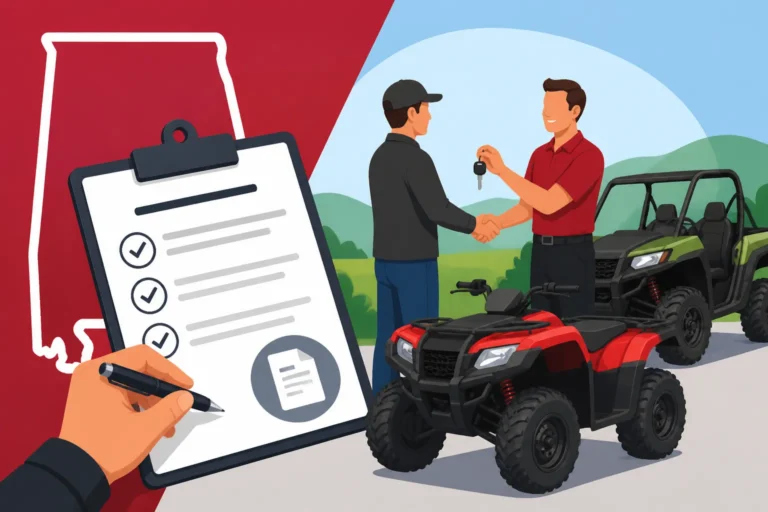
Once you determine that registration is indeed for you (or required for your intended use), the next hurdle is figuring out what paperwork to gather. This can feel like a scavenger hunt! Typically, you'll need a few key items to present to the clerk. The most crucial piece of information is your machine's Vehicle Identification Number (VIN) or serial number. This unique identifier is how your ATV or UTV is tracked, much like a car. You'll also need proof of ownership, which usually comes in the form of a bill of sale. If you purchased your machine new from a dealer, they'll often provide you with a completed manufacturer's statement of origin (MSO) or certificate of origin (MCO), which acts as your initial proof of ownership.
Don't forget your personal identification, like a driver's license, and proof of residency in Alabama, such as a utility bill with your current address. Having all these documents organized before you visit the office will make the process much smoother, both for you and for the clerk assisting you. It's like having all your ingredients ready before you start cooking; it just makes everything flow. For a comprehensive list, consult [Alabama Registration Paperwork Explained].
I Don't Have a Clear Bill of Sale – Can I Still Register?
This is a really common scenario, especially if you bought your ATV or UTV from a private seller, inherited it, or it’s an older machine where original paperwork might have been lost over the years. Clerks hear this question often, and thankfully, there are usually ways to work through it, though it might require a little extra legwork. The goal is always to establish a clear chain of ownership. If you don't have a formal bill of sale, you can often provide a sworn affidavit of ownership, sometimes called a statement of facts. This is a document where you legally attest that you are the rightful owner, detailing how you acquired the machine.
Some counties might accept alternative proofs, like a cancelled check from the purchase, a previous registration in your name from another state, or even a detailed written statement from the seller. It’s important that any document you provide clearly includes the machine's VIN/serial number, the make, model, and year, and the names and signatures of both the buyer and seller. If you're creating a bill of sale after the fact with a willing seller, templates from services like LawDepot can be incredibly helpful to ensure all the necessary information is included. Always call your local county office first to understand their specific requirements for proving ownership without a standard bill of sale, as procedures can sometimes vary slightly. For specific requirements for bills of sale, refer to [Alabama Bill of Sale Requirements].
Navigating Registration Types and Fees
Once you understand the basic requirements, the next set of questions often revolves around the nuances of Alabama's registration system itself. What kind of registration do you need? How much will it cost? And why does it last for such an unusual period of time? These are all valid concerns that clerks are well-versed in addressing.
Understanding Public vs. Private Use Registration
Alabama offers two distinct types of off-road vehicle registration: public use and private use. The choice you make here is critical and directly impacts where you can legally ride. Public use registration is what you'll need if you plan to venture onto public trails, designated riding areas, or any lands managed by state or federal entities like national forests or state parks that permit ATV/UTV riding. This tier comes with a slightly higher fee, as it contributes to the maintenance and oversight of those public areas.
Private use registration, on the other hand, is for those who primarily ride on their own land, private hunting leases, or other privately-owned properties where no public access is granted. This option is typically less expensive. The crucial distinction is that a private use decal does not authorize you to ride on public lands. If a game warden or park ranger spots you on a public trail with a private use decal, you could face penalties. It's a common mistake that clerks have to clarify, so be honest with yourself about your riding habits! Choosing the correct tier from the outset will save you headaches down the road. To learn more about this distinction, check out [Public Use Versus Private Use Tiers].
Breaking Down the Costs: What Am I Actually Paying For?
The cost of registration might seem straightforward, but many owners wonder where their money is actually going. When you register an ATV or UTV in Alabama, you're primarily paying a registration fee to the state, along with a small issuance fee that helps cover the administrative costs of processing your application at the local level. The state fee covers the recording of your machine's information with ALEA and helps fund various off-road vehicle programs and enforcement.
That small issuance fee, usually just a few dollars, goes directly to the probate judge or license commissioner's office where you complete the transaction. It compensates them for the staff time and resources involved in helping you fill out the forms, verifying your documents, and issuing your decal. It's not a huge amount, but it’s a necessary part of the process that covers local administrative costs. So, while you're not getting a physical license plate like a car, your fees cover the processing, record-keeping, and the funding of off-highway vehicle-related initiatives in the state. For a detailed breakdown of the issuance charge, see [What the Issuance Charge Covers on a Registration].
Why Does This Registration Last for Three Years?
This is another question that often puzzles people, especially since vehicle registrations for cars and trucks are typically annual. Alabama's ATV and UTV registrations, whether for public or private use, are valid for a three-year period. This longer duration is actually designed for your convenience! Instead of having to remember to renew your registration every single year, you only have to go through the process every three years. It reduces administrative burden on both the state and the owners of these machines.
This three-year cycle means less paperwork and fewer trips to the county office for you. It simplifies planning, especially for those who might use their machines seasonally or infrequently. When the three years are up, you'll go through a renewal process, which often mirrors the initial registration in terms of required information, though it might be a bit quicker if all your details remain the same. This system helps keep a consistent, yet less frequent, check on active off-road vehicles in the state. For further insight into the duration, read [Why Registration Runs Three Years, Not One].
Solving Common Registration Hurdles
Even with the basics covered, people often encounter unique situations that can throw a wrench into the registration process. Clerks are accustomed to these curveballs and have established procedures to handle them. Understanding these solutions can help you prepare for less common scenarios.
What If I Just Moved Here with an Out-of-State Machine?
Welcome to Alabama! Many people move to the state, bringing their beloved ATVs and UTVs with them, and then wonder how to get them registered under Alabama's rules. Clerks often hear this question from new residents. The process is quite similar to registering a machine bought within the state, but with one key difference: you'll need to prove previous out-of-state ownership and demonstrate that the machine was legally operated wherever you came from.
You'll still need your proof of identification and Alabama residency. For the machine itself, you should bring any prior registration documents, titles (if your previous state issued them for ATVs/UTVs), or a bill of sale from when you originally purchased it. The clerk will essentially use these documents to establish your ownership and the machine's history before assigning an Alabama registration number and issuing your decal. It's about transferring your machine's legal standing from one state to another. Don't worry if your previous state didn't require titles for these machines; an old registration or robust bill of sale should suffice. For new residents, more details are available in [Alabama Registration for a New Resident].
My Serial Number is Hard to Read or Missing – Now What?
The serial number (or VIN) is the backbone of your machine's identity, so if it's damaged, rusted, or missing, it can cause a significant headache during registration. Clerks understand that machines used off-road often get banged up, and sometimes these critical numbers become obscured. If you encounter this, your first step should be to thoroughly clean the area where the serial number is typically located. Sometimes, rust or mud simply hides it. Look for it on the frame, usually near the front suspension, steering column, or engine block.
If it's truly unreadable or completely missing, you might need to involve local law enforcement. They can inspect the machine and potentially issue an assigned serial number or verify its identity if they have methods to check for hidden numbers or previous records. This helps prevent the registration of stolen machines. You'll then bring their documentation to the probate office. This process is more involved because the integrity of the serial number is crucial for tracking ownership and deterring theft. Using a reliable template from a service like LawDepot for a declaration of ownership can be helpful in these unique circumstances, especially if you need to provide a sworn statement about the machine's history in the absence of a perfectly legible serial number. This process can be daunting, so it’s best to call ALEA or your local county office for specific guidance. Further information can be found in [Alabama Serial Numbers on the Application].
How Do I Register an ATV or UTV with Multiple Owners?
It's common for families, friends, or even hunting clubs to jointly own an ATV or UTV. When two or more people share ownership, clerks need to ensure that all parties are properly recognized on the registration. The primary rule here is that all owners must be present or provide written consent when applying for registration. Typically, the registration will list all legal owners, or at least one primary owner and then "et al." (and others).
When you fill out the application, you'll need to provide the names and addresses of all owners. It's crucial that everyone involved understands the implications of joint ownership, especially regarding potential sale or transfer in the future. Having a clear agreement among co-owners from the start, perhaps a simple partnership agreement or shared ownership document, can prevent disputes down the line. You can find forms or templates for such agreements on platforms like LawDepot, which could be useful if you're formalizing joint ownership. When registering, ensure all required signatures are captured on the application, or bring a notarized letter of consent from any owner who cannot be present. For more on this, see [Alabama Registration With Two Owners].
After You've Registered: What Happens Next?
Getting your machine registered is a big step, but owners often have follow-up questions about what to do with their new decal, what happens if they sell the machine, or how to handle lost paperwork. These are all part of the ongoing ownership experience, and clerks are ready to help with these inquiries too.
Where Does My New Registration Decal Go?
Once you've successfully navigated the registration process, the clerk will issue you a small, adhesive decal. This isn't a license plate, but it serves a similar purpose: visible proof of your current registration. Clerks are frequently asked where to put this thing. The official guidance from ALEA is to affix the decal to the left rear of the ATV or UTV. This placement ensures it's easily visible for law enforcement or park rangers who might need to verify your registration.
Make sure the surface is clean and dry before applying the decal for the best adhesion. You want it to stay put for the entire three-year registration period, enduring mud, water, sun, and whatever else your adventures throw at it. Avoid placing it on areas that might be easily obscured by cargo, a passenger, or excessive mud buildup. The goal is clear visibility. If your decal ever becomes faded, damaged, or lost, you'll need to apply for a duplicate, which is a fairly straightforward process but costs a small fee.
Selling a Registered Machine: What's the Process?
Life happens, and sometimes you need to sell your registered ATV or UTV. When you do, clerks often get questions about how this impacts the existing registration. In Alabama, an ATV or UTV registration is tied to the machine itself, not strictly to the owner. This means that when you sell a registered machine, the registration usually transfers with it. However, the new owner will need to complete a transfer of registration in their name.
As the seller, your responsibility is to provide the buyer with a proper bill of sale. This document is crucial for the new owner to prove their purchase. It should include the machine's VIN, make, model, year, the sale price, and the names, addresses, and signatures of both you and the buyer. While the old registration decal stays on the machine, the new owner will need to submit paperwork to ALEA (often through a county office) to get the registration updated in their name and pay a transfer fee. This ensures the official records reflect the correct owner. For more information, refer to [Selling a Registered Machine in Alabama].
Lost Paperwork? Getting a Duplicate or Transferring Registration
It's an unfortunate but common occurrence: paperwork gets lost, damaged, or simply misplaced. If you lose your registration certificate or need to transfer a registration after buying a machine, clerks are well-prepared to assist. For a lost registration certificate, you can apply for a duplicate. This typically involves filling out a simple form, providing your machine's information (VIN, make, model, year), and paying a nominal duplicate fee. The process is designed to be quick and easy.
If you've bought a registered machine and need to transfer the registration into your name, you'll follow a similar process. You'll need the bill of sale from the previous owner and your identification. You'll fill out a transfer application and pay a transfer fee, which is usually the same small amount as a duplicate fee. These services are crucial for keeping ownership records accurate and ensuring you always have legal proof of registration when you need it. Remember, these fees are typically paid at your local county probate or license commissioner's office. Details on this process can be found in [Alabama Duplicate and Transfer at $5] or [Alabama Registration Transfer After a Sale].
| Common Registration Query | Clerk's Usual Advice | Key Document(s) Needed | Cost Implication |
|---|---|---|---|
| Do I need to register? | Only if riding on public land; voluntary for private use. | None, just clarification. | None initially. |
| What paperwork? | Proof of ownership (MSO/Bill of Sale), VIN, personal ID, proof of residency. | Bill of Sale, ID. | Standard registration fees. |
| No clear Bill of Sale? | May need sworn affidavit; call county office for specifics. | Sworn Affidavit, other ownership proofs (e.g., LawDepot template). | Standard registration fees. |
| Public vs. Private Use? | Public for trails/parks, Private for your land. Choose based on where you ride. | None, choose wisely. | Public tier is slightly higher. |
| Why three years? | For owner convenience and reduced administrative burden, not annual like cars. | None, it's just the policy. | Upfront for three years. |
| New Alabama resident? | Bring out-of-state registration/title; process similar to in-state. | Old registration/title, new proof of residency. | Standard registration fees. |
| Unreadable Serial Number? | Clean first. If still bad, contact local law enforcement for inspection/assigned number. | Police inspection report, LawDepot affidavit template (if applicable). | Potential additional fees for inspection. |
| Multiple owners? | All owners must be present or provide written consent; names listed on registration. | Consent letters, all IDs. | Standard registration fees. |
| Where to put decal? | Left rear of machine, visible and clean. | None, just careful application. | None. |
| Selling a registered machine? | Provide new owner with Bill of Sale; new owner transfers registration. | Bill of Sale. | Buyer pays transfer fee. |
| Lost registration or need transfer? | Apply for duplicate/transfer with form and fee at county office. | Application form, ID, Bill of Sale (for transfer). | Small duplicate/transfer fee. |
Disclaimer
This article is for general informational purposes only and does not constitute professional advice. Laws, prices and regulations vary by location and change over time. Consult a qualified professional for guidance on your specific situation.