Asking the Area Biologist What the Tract Allows
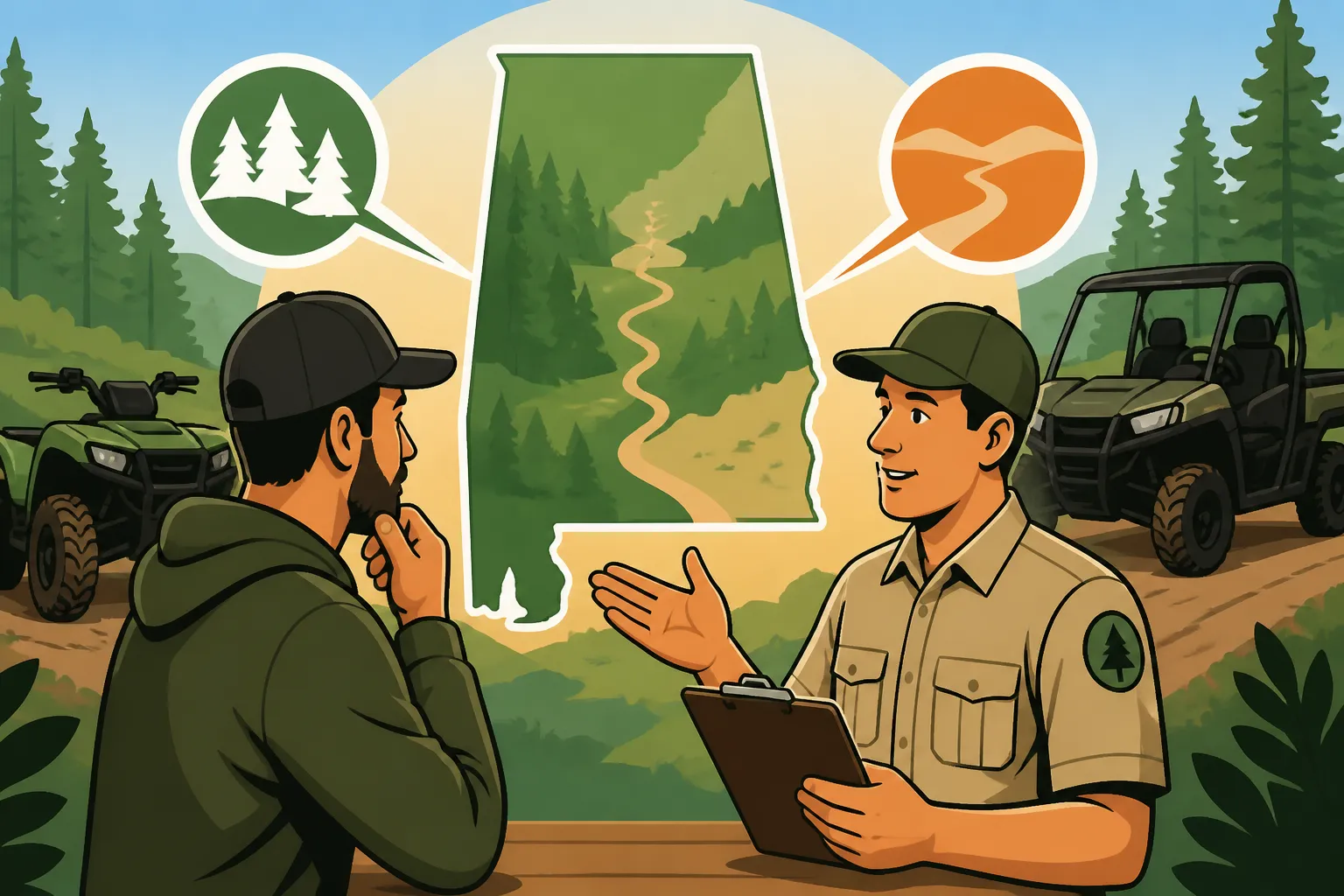
Before hauling an ATV or UTV onto an Alabama Wildlife Management Area, confirm that the specific tract allows your kind of riding. A call to the area biologist can help you understand local access, permits, and seasonal restrictions—but ask precise questions and check the current written rules before you go.
Why the Area Biologist Is a Useful Contact
Wildlife Management Area rules can vary by area, tract, season, and activity. A map or general state-level summary may not answer whether a particular road is open to an ATV, whether a side-by-side is allowed, or whether a closure affects the route you plan to use. The area biologist is a practical contact for questions about a specific WMA and its management.
That does not mean a phone call replaces the official regulations, area map, permit conditions, or signs at the site. The biologist can explain how those rules apply to a particular tract and point out details that are easy to miss. For background on why local differences matter, see Alabama WMA Rules Vary by Area and Alabama Area Biologists and Their Maps.
A useful answer depends on giving enough detail. “Can I ride an ATV on the WMA?” is often too broad. The response may depend on which area you mean, which tract you want to enter, what date you plan to ride, and whether you intend to use a designated road or travel off-road.
The biologist can also help distinguish between different kinds of permission. A permit may allow access to an area without authorizing riding on every road or trail. A road may be open to certain vehicles but closed during a particular season or management activity. A hunting-related access rule may not be the same as a general recreation rule. For an overview of what to clarify, read What a Wildlife Management Area Permit Covers.
Treat the contact as a way to verify a plan, not as a blanket approval. If you receive guidance by phone, ask where the same rule appears in the current written materials. If the answer is unclear, get the specific road or tract identified before relying on it.
What to Ask Before You Ride
Prepare your questions around the exact trip you are planning. The following details help the biologist give a useful answer:
- The WMA and tract: Use the area’s official name and identify the tract, road, entrance, or map section you have in mind.
- Your intended dates: Mention the day or date range, especially if your trip overlaps a hunting season or other scheduled activity.
- Your machine: Say whether you have a quad, UTV, side-by-side, or another type of off-highway vehicle. Include relevant details such as vehicle width if you know it.
- Where you plan to ride: Explain whether you will remain on a marked or numbered road, use a designated route, or are asking about off-road travel.
- Why you are visiting: State whether the trip is for recreation, hunting access, retrieving game, work, or another purpose. Different activities can have different conditions.
- Your permit status: Ask which permits or licenses apply to your planned activity and whether any must be obtained before arriving.
- Your residency: If you are visiting from out of state, say so. Do not assume an Alabama document or another state’s authorization covers every requirement.
Then ask direct, answerable questions. A helpful set might include:
- Is this tract open to ATV or UTV use on the dates I plan to visit?
- Which specific roads or routes may I use?
- Are machines restricted to open roads, or is any off-road travel allowed?
- Do rules differ for a quad and a side-by-side?
- What permit or license do I need for this activity, and how do I obtain it?
- Are there seasonal closures, hunting-related restrictions, or temporary access changes?
- Where may I park or unload, and are there any access gates or areas I must avoid?
- Which current map, regulation, or posted notice should I check before leaving home?
The distinction between a road and a trail matters. A route shown on a map is not necessarily open to motorized use, and a road that appears physically passable is not automatically authorized for riding. Ask the biologist to identify the route by the name or number printed on the official map. For more on route limits, see Machines Confined to Open Roads and Rules Printed on an Area Map.
Clarify whether the answer applies to your whole trip or only one part of it. For example, the permitted access road may lead to a parking area but not authorize riding beyond it. Likewise, a rule that allows travel for one purpose may not cover recreational riding. If the biologist describes an exception, ask what condition makes it apply and where that condition is written.
| Topic | Ask the biologist | What to verify before leaving |
|---|---|---|
| Tract access | Is my chosen tract open on my dates? | Current closure notices and posted signs |
| Machine type | Are quads and UTVs both allowed? | Any vehicle or route restrictions on the area map |
| Route | Which named roads or routes are open? | Route labels and access markings on the current map |
| Permit | What authorization applies to my activity? | Current permit instructions and conditions |
| Season | Do dates or hunting activity affect access? | Current seasonal rules and area notices |
| Entry and parking | Where may I unload and leave a vehicle? | Designated access points and parking directions |
For ATV-specific context, review Alabama WMA Riding Rules for Quads. If the answer concerns permits, compare it with the current requirements described in Alabama WMA Area Permits and Alabama WMA Daily Permits. Use the current official materials rather than relying on an old map, a past visit, or another rider’s interpretation.
How to Make the Call and Confirm the Answer
Before contacting the area biologist, locate the current WMA map and write down the area name, tract, road labels, and dates you are considering. If you cannot identify the tract, explain the entrance or nearby landmark shown on the official map. A clear location is more useful than a general question about “the woods” or “the WMA.”
Check the current contact information provided by the relevant Alabama wildlife agency. If you leave a message or send an email, include a call-back number and concise details about your machine, route, purpose, and planned dates. Ask for a response before you travel if your plan depends on a specific road being open.
During the conversation, take notes. Record the date, the name or office of the person you spoke with if provided, the tract or route discussed, and any conditions they mention. This is not a substitute for a permit or official authorization; it helps you remember what to verify in the written rules.
A good follow-up is to repeat the answer in your own words: “To make sure I have it right, I can use this named road on these dates with this type of machine, but I need to stay on the open route and carry the required permit—is that correct?” If the answer includes an exception, ask the biologist to explain its limits.
Before setting out:
- Read the current WMA map and written rules for the area.
- Obtain the required permit or license through the stated process.
- Check for updated closures or notices close to your trip.
- Confirm that the route you intend to use is the route the biologist discussed.
- Follow signs, gates, and instructions at the tract, even if conditions appear different from what you expected.
If the biologist’s answer seems to conflict with a map, a permit condition, or a posted sign, do not guess which one controls. Ask for clarification and avoid the disputed route until you can verify what applies. A closed gate or a posted restriction is a reason to stop and confirm access, not an invitation to find another way through.
Keep permit and access requirements separate in your mind. Getting the right permit does not necessarily make every road open, and a road being open does not necessarily mean you have all the permits required for your activity. The details are worth checking together. The steps in Checking In and Out of a Tract may also help when the area’s instructions require riders to follow a check-in or check-out process.
If the Answer Is Unclear or Conditions Change
Sometimes the biologist may not be able to give a definite answer immediately. The route might be affected by a temporary closure, a current management operation, or a rule that needs to be checked against an updated map. Ask what information is still needed and when or where you can confirm it. If the issue is whether a particular road is open, provide its map label rather than asking only whether the area is “open.”
If you cannot reach the biologist, use the current official area materials and contact information to find the appropriate office or next step. Do not interpret a missed call as permission. A prior season’s access, an older social media post, or a friend’s experience may not reflect current conditions.
When you arrive, check the information available at the entrance and follow posted signs. Conditions on the ground can change after you make your plan. If the route is gated, marked closed, or differs from the instructions you received, turn back and seek clarification rather than assuming the closure does not apply.
For riders visiting from outside Alabama, mention that fact during the call and ask whether your home-state registration, permit, or other paperwork matters for the planned ride. Reciprocity can depend on the specific authorization and location; do not assume an out-of-state document substitutes for an Alabama WMA requirement. The general questions in Alabama Visitors From Out of State can help you prepare, but the tract’s current rules still need to be checked.
A short, specific conversation can prevent a wasted trip and reduce the risk of riding somewhere you are not allowed. Name the tract, give your dates and machine details, ask about the route and permit separately, and confirm the answer against current written rules before unloading.
Disclaimer
This article is for general informational purposes only and does not constitute professional advice. Laws, prices and regulations vary by location and change over time. Consult a qualified professional for guidance on your specific situation.