Pulling a Daily Permit Every Morning You Ride
A ride on an Alabama Wildlife Management Area can depend on more than having your machine and gear ready. Some areas require riders to get a daily permit, and the permit may apply to a particular tract or date. The practical challenge is knowing what to obtain, when to do it, and what proof to carry. Here’s how to build that check into your morning routine.
What a daily permit does and does not cover
A daily permit is an access document for a particular day on a Wildlife Management Area, or WMA. It is not a general pass for every public riding area in Alabama, and it does not replace the rules posted for the tract you plan to visit. If the area requires a daily permit, plan to obtain one for each riding day rather than assuming yesterday’s permit carries over.
The permit is also distinct from other permissions or credentials that may apply. Depending on the area, the season, and your circumstances, a WMA license or another authorization may be required in addition to the daily permit. A hunting license, a park admission, a machine registration, or a private-landowner’s permission should not be treated as a substitute unless the official rules specifically say it is.
That distinction matters because WMA access is not a blanket right to ride wherever you see a road or trail. A permit does not make a closed route open, allow travel off designated roads, or override seasonal restrictions. Some areas have special access conditions, and the permitted activity may differ between tracts. Check the current rules for the specific WMA before loading the machine. Alabama WMA Rules Vary by Area explains why one area’s process cannot always be applied to another.
| What you need to check | Why it matters |
|---|---|
| Whether the WMA requires a daily permit for your activity | Permit procedures can vary by area and purpose |
| Whether you also need a WMA license or other credential | A daily permit may not satisfy every access requirement |
| The permit’s date and area | A permit for one day or tract may not cover another |
| Open routes and operating restrictions | A permit does not authorize riding on closed roads or trails |
| Check-in or check-out instructions | Some areas may require additional steps beyond obtaining a permit |
| Accepted proof of the permit | You need to be able to show that you completed the required process |
For an overview of the separate requirements, start with How to Get an Alabama WMA Permit and Alabama WMA License Requirements. If you are unsure which documents apply to your trip, Which Permits to Carry on an Alabama WMA can help you make a checklist.
A daily permit should be understood as one part of the access process, not a guarantee that every planned ride is allowed. For example, a hunting season, a temporary closure, a road restriction, or an area-specific rule may affect where you can go. The safest approach is to verify the day’s conditions and instructions before departure, even if you have ridden the same tract before.
A morning routine for getting the permit
Make the permit check part of the same routine as checking the weather, packing water, and securing the machine on the trailer. If you wait until you reach a remote trailhead, you may find that you have weak service, no convenient kiosk, or an incomplete understanding of the area’s rules.
Use this sequence before you leave:
- Confirm the exact WMA and tract. Use the official area name and check that you are looking at the right location. A nearby tract may have different requirements, boundaries, or access conditions.
- Check whether riding is currently allowed. Look for seasonal restrictions, temporary closures, designated-road requirements, and any special notices for the area. Do not rely solely on an old map or a previous visit.
- Identify every required credential. Confirm whether you need a daily permit, a WMA license, or another credential for your situation. If you are visiting from out of state, check the visitor-specific requirements rather than assuming your home-state document is enough.
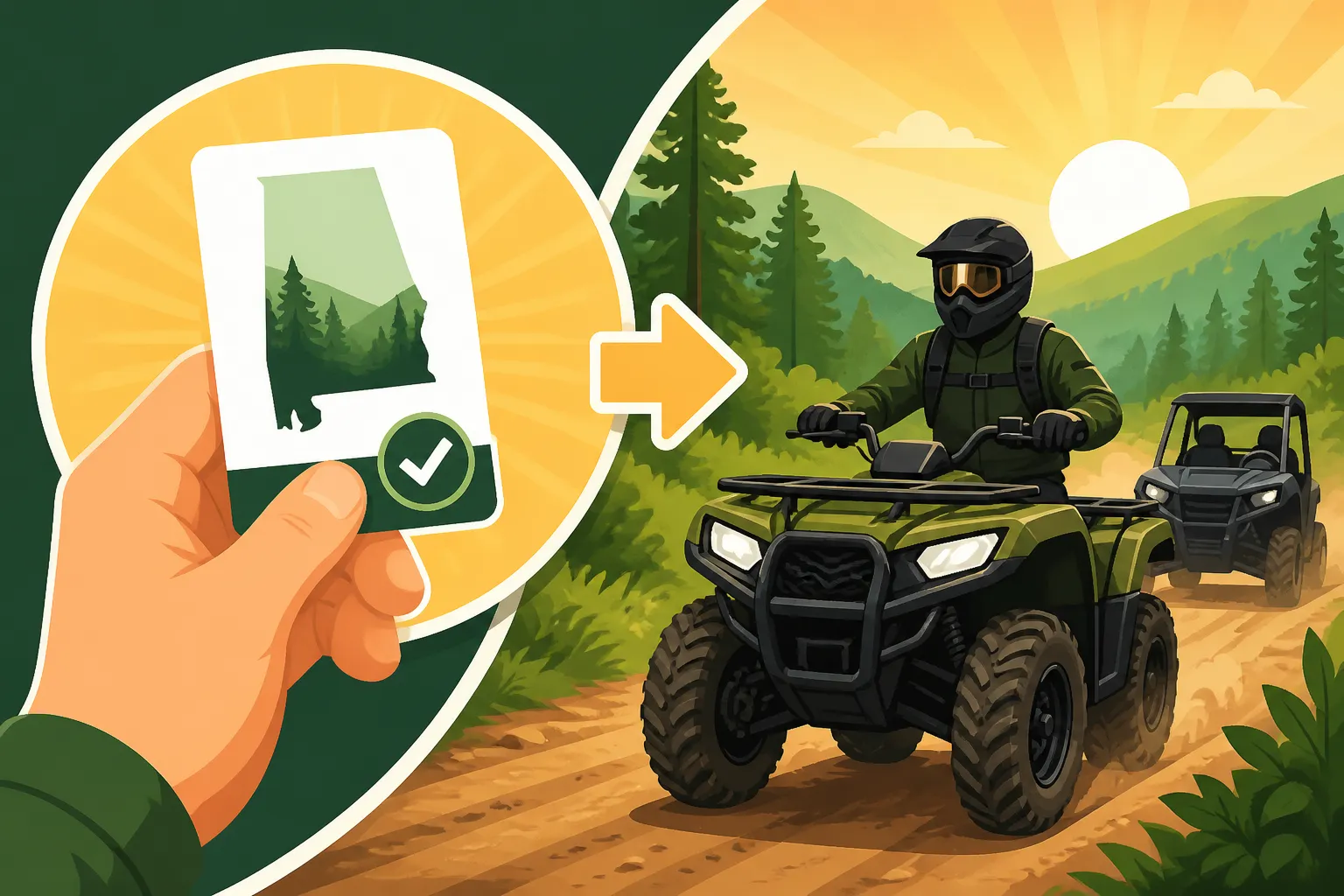
- Get the daily permit through the method accepted for that area. The available method may be digital or may involve a paper process. Follow the current instructions for the WMA instead of assuming every tract uses the same system.
- Check the permit details before you close the app or leave the kiosk. Confirm the date, area, and any information you entered. Correct a mistake while you still have access to the permit system.
- Save proof where you can retrieve it. Keep an accessible digital copy if the process provides one, and follow any instruction to print or carry a paper copy. A phone with a dead battery is not a dependable way to show a permit.
- Review the route and area rules once more. A permit does not tell you which specific roads are open. Check the current map, posted notices, and any check-in or check-out procedure.
If the permit process is available on a phone, complete it before entering a dead zone. Pulling a WMA Permit on Your Phone covers the digital approach, while Filling Out a Paper Permit at a Kiosk is useful when an area uses a paper-based option. Do not assume a kiosk is present, operating, or stocked with forms unless the official area information confirms it.
Set up a small “permit check” in your normal packing routine. For a group ride, one person can verify the area requirements, but each rider should know what credentials they personally need and how to show them. A group leader’s permit should not be assumed to cover every person or machine. The same goes for passengers: confirm whether the area’s access rules apply to them separately.
If the permit system asks for an area, date, or other identifying information, enter it carefully. A permit tied to the wrong tract or date may not be useful at a roadside check. Before pressing submit, compare the selected location against the planned riding area and confirm that the trip is not crossing into a different WMA.
Make the process reliable without relying on cell service
Phone access is convenient, but coverage can be unreliable in rural areas. Complete the permit process while you have a stable connection, then save the confirmation in a way you can open offline. If the official instructions require a paper permit, print it in advance rather than hoping to find a printer on the way.
Keep the digital proof and any paper copy with your other ride documents. A phone screenshot may help you retrieve a confirmation, but follow the official instructions about what counts as acceptable proof. If the process requires a particular display, printout, or check-in step, a screenshot alone may not satisfy it.
For a multi-day trip, do not assume that one permit covers the whole stay. Check whether each day requires a separate submission and whether the area has a daily check-in requirement. Mark the routine on your trip plan so a morning departure does not turn into an avoidable stop at the trailhead.
After you obtain the permit: use it within its limits
Once you have the daily permit, match your riding plan to the conditions it actually covers. Confirm that the permit is for the correct day and tract, then use the area map and posted rules to identify open routes. A permit is not a map, a trail pass for neighboring property, or permission to cross private land.
Pay particular attention to these limits:
- Route designation: A road visible on a map may be closed to motorized use. Stay on routes the area allows.
- Seasonal access: Hunting seasons and other management periods can change access or restrict activity. Check current notices before riding.
- Area boundaries: Do not assume a route continues legally across a boundary. Verify where the WMA ends and what rules apply beyond it.
- Machine restrictions: Confirm that your ATV or UTV is allowed under the area’s current requirements. A permit does not erase machine-specific limits.
- Check-in and check-out: If the area asks users to report their entry or departure, complete both steps as instructed. Getting the daily permit may be only one part of that process.
- Other users: A WMA may be used by hunters and other visitors. Follow posted access rules, slow down around people, and avoid disrupting authorized activities.
This is especially important during hunting seasons. Access may vary by WMA and by the part of the season, so do not assume that a tract open for riding on one weekend remains open the next. Check Alabama WMA Access During Deer Season or Alabama WMA Access During Turkey Season when those seasons could affect your plans.
A daily permit also does not automatically grant permission for every activity connected with a ride. Hunting, retrieving game, camping, organized events, or bringing a group may involve separate rules. If your trip includes more than riding, verify the requirements for each activity rather than treating the daily permit as all-purpose authorization.
For directions, use an official map or the area’s current instructions. A navigation app can help with travel, but it may not show which roads are legally open to machines. [Rules Printed on an Area Map] is a useful reminder to read the rules that accompany a map, not just the lines showing roads and boundaries.
If anything is unclear, contact the office or area representative responsible for the tract before you travel. Ask a focused question: whether a daily permit is required for riding on your planned date, which other credentials apply, and where to find the current riding map. Calling a Biologist With a Question may help you identify what to ask when an area-specific rule is not clear.
Common mistakes and what to do when plans change
The most common problem is treating the permit as a one-time purchase or as a general authorization for all Alabama public land. A daily permit is tied to the rules and conditions of a particular area. If you change locations, change dates, or add another WMA to the route, check whether the permit process must be repeated.
Other avoidable mistakes include:
- Getting the permit for the wrong date. Check the date before you depart, especially when completing the process late at night or early in the morning.
- Choosing a similarly named area. Compare the permit location with your route and map.
- Assuming a WMA license is the daily permit. Confirm whether both are required.
- Relying on an old confirmation. Keep proof for the current day and check for updated rules.
- Arriving without a backup way to show the permit. Save the confirmation offline and carry paper proof when the official process calls for it.
- Assuming a closed route is open because the permit was issued. A permit does not replace closures, posted signs, or route restrictions.
- Confusing public-land access with park access. A WMA permit is not necessarily valid at a private riding park or county park, each of which may set separate admission and safety rules.
If your plans change after you obtain the permit, check whether the permit can be used for the new location or date. Do not assume it can be transferred, edited, or refunded. Follow the permit system’s current instructions or contact the responsible office. If you need to switch to another tract, repeat the verification process for that area before entering it.
If the online system is unavailable, do not presume that you can ride without completing a required permit step. Check for an approved paper process, a kiosk, or official instructions for that situation. A screenshot of an error message does not itself establish permission. If you cannot confirm a valid process, postpone the ride or choose a location with clearly verified access rules.
For an out-of-state rider, reciprocity should not be taken for granted. A license or registration from another state may be relevant to some requirements but may not replace an Alabama WMA credential or daily permit. Check the specific rules for visiting riders and for the WMA you plan to use. Alabama Visitors From Out of State and Why Reciprocity Works Differently in Alabama provide context for checking rather than assuming that another state’s documents carry over.
A simple habit keeps the paperwork from taking over the trip: identify the exact area the night before, verify access and permit requirements, obtain the daily permit at the time specified by the process, and save proof before leaving. In the morning, confirm the date and your route once more. That routine is quick, but it prevents the bigger problem of reaching the trailhead and discovering that the permit, map, or access rule does not match the ride you planned.
Disclaimer
This article is for general informational purposes only and does not constitute professional advice. Laws, prices and regulations vary by location and change over time. Consult a qualified professional for guidance on your specific situation.