What a Purchaser’s Certificate Does in Alabama
Navigating the world of ATV and UTV ownership in Alabama can feel a bit like sifting through a pile of red clay – sometimes it's clear, other times it's a muddy mess, especially when it comes to proving you actually own your machine. For years, many off-road vehicles in our state didn't require a formal title, leaving private buyers and sellers scrambling for reliable documentation. This guide is here to shed light on a crucial document, the purchaser's certificate, explaining exactly what it does, when you need it, and how it helps cement your ownership in Alabama.
Understanding the Purchaser's Certificate
When you buy an ATV or UTV in Alabama, especially in a private sale, the paperwork can sometimes be less formal than buying a car or truck. Because many older machines weren't titled, a simple handshake and cash could complete a transaction. However, when it comes time to register that machine with the Alabama Law Enforcement Agency (ALEA) or, in the future, apply for a title for a newer model, you need something more concrete than a memory. That's where a purchaser's certificate steps in, offering a vital layer of proof.
What Exactly Is It?
A purchaser's certificate is essentially a detailed record of sale that bridges the gap when an official vehicle title isn't available or required at the time of purchase. Think of it as an enhanced bill of sale, often used specifically for vehicles like ATVs and UTVs that might not have traditional title documents. While a basic bill of sale confirms a transaction happened, a purchaser's certificate often includes more specific details tailored to vehicle ownership and is accepted by state agencies as strong evidence of who legally owns the machine. It becomes your primary document of ownership, particularly for machines that don't fall under the new titling laws.
It's not just a formality; it's a foundational document that establishes a clear chain of ownership. This can be absolutely critical if there's ever a dispute, a theft, or simply when you need to prove to ALEA that you are indeed the rightful owner applying for a registration. Without a title for many older machines, this certificate takes on paramount importance, acting as the official record you'll present to the state. It allows you to move forward with necessary steps like registration, without being held up by a lack of a title that may never have existed for your specific model year.
When Do You Need One?
You'll most commonly need a purchaser's certificate when buying an ATV or UTV in a private sale, especially for machines manufactured before the upcoming 2026 model year, which are generally not eligible for titling in Alabama. Since there's no official title to transfer, this certificate becomes your primary proof of ownership. It's also incredibly useful if the previous owner only had a bare-bones bill of sale, or even less, and you want to ensure you have comprehensive documentation for yourself and for state agencies. Without it, you might find yourself struggling to prove ownership when you try to register your off-road vehicle with ALEA.
Furthermore, if you're ever in a situation where you need to report your machine stolen, or perhaps recover it after a repossession, having a robust purchaser's certificate can make all the difference. Law enforcement and insurance companies rely on solid proof of ownership, and in the absence of a title, this certificate is your go-to. It's also vital for when you eventually decide to sell the machine yourself, as the next buyer will demand proof that you legitimately own it. A well-executed purchaser's certificate smooths these transitions and protects your investment.
Key Information on a Purchaser's Certificate
Creating a valid purchaser's certificate isn't just about jotting down a few notes on a scrap piece of paper. To be truly effective and accepted by state agencies, it needs to contain specific, verifiable information that clearly identifies both the machine and the parties involved in the transaction. This document is essentially your legal declaration of ownership, so precision and completeness are absolutely paramount.
Essential Details for a Valid Certificate
A robust purchaser's certificate should always include the full legal names, addresses, and contact information for both the buyer and the seller. This ensures clear identification of who exchanged what with whom. Equally critical are the detailed specifics of the off-road vehicle itself: the make, model, model year, and, most importantly, the Vehicle Identification Number (VIN) or serial number. This unique identifier is non-negotiable for distinguishing your machine from any other, and it's what agencies like ALEA will use to record your ownership. Don't forget the date of the sale and the agreed-upon purchase price, as these details round out the transaction's specifics. Many owners find it helpful to use templates from reputable sources like LawDepot, ensuring all necessary fields are covered.
Signatures from both the buyer and the seller are the final, absolute requirement to make the document legally binding. Without both signatures, the certificate lacks authenticity and could be challenged. While not always legally required in Alabama, having the document notarized can add an extra layer of security and undisputed authenticity. A notary public verifies the identities of the signers and witnesses their signatures, making the certificate much harder to dispute later on. Think of it as an extra safeguard for your investment, providing peace of mind knowing the transaction is officially recognized.
Here's a quick comparison of what you typically find on a comprehensive purchaser's certificate:
| Feature | Description | Importance |
|---|---|---|
| Buyer's Information | Full Name, Address, Phone | Identifies the new owner for state records |
| Seller's Information | Full Name, Address, Phone | Identifies the previous owner for transfer of liability |
| Machine Make/Model | Honda Foreman, Polaris RZR, Yamaha Raptor, etc. | Basic identification of the vehicle |
| Model Year | Specific year of manufacture | Crucial for titling eligibility in 2026+ |
| VIN / Serial Number | Unique 17-digit VIN (or shorter serial for older machines) | Absolute critical identifier for registration/titling |
| Purchase Date | Day, Month, Year of transaction | Establishes ownership timeline |
| Purchase Price | Agreed-upon sale amount | Needed for tax purposes and historical value |
| Signatures | Both buyer and seller | Legal validation of the agreement |
| Notarization (Optional) | Witnessed and stamped by a public notary | Added layer of legal authenticity and proof |
Avoiding Pitfalls: What to Look For
When you're handed a purchaser's certificate, or are filling one out, you absolutely must scrutinize it for accuracy and completeness. An incomplete or poorly filled-out document can cause significant headaches down the road. One of the biggest red flags is missing information – if the seller's address is just a city name, or if the machine's model year is left blank, you're setting yourself up for future problems. Every single blank field should be filled in, even if it's "N/A" where appropriate, to avoid any ambiguity. Remember, this document may be the only formal proof you have, so it needs to stand on its own.
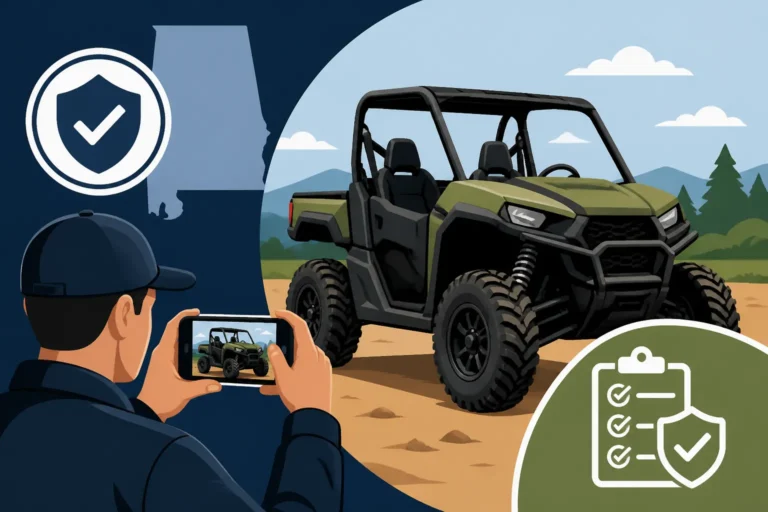
Another critical pitfall to avoid is an illegible serial number. I cannot stress enough how important the VIN or serial number is; it is the unique fingerprint of your machine. If it's scribbled, smudged, or simply wrong on the certificate, you could face delays or outright rejection when trying to register your ATV. Always double-check the number on the certificate against the actual serial number stamped on the machine itself. Any discrepancy here can make [Alabama Stolen Machine Checks] much more difficult and even call into question your legitimate ownership. Be sure to verify the seller's identity and ensure their name matches any previous paperwork or ID to prevent issues. [Proving You Own an Untitled Machine] hinges on these details.
How a Purchaser's Certificate Connects to Registration and Titling
In Alabama, the journey of documenting your ATV or UTV ownership is split between two distinct phases: voluntary registration with ALEA for most machines and the upcoming mandatory titling system for newer models. A purchaser's certificate plays a vital, though slightly different, role in each of these processes, ensuring that even machines without traditional titles have a solid record of ownership.
For Voluntary Registration (Pre-2026 Machines)
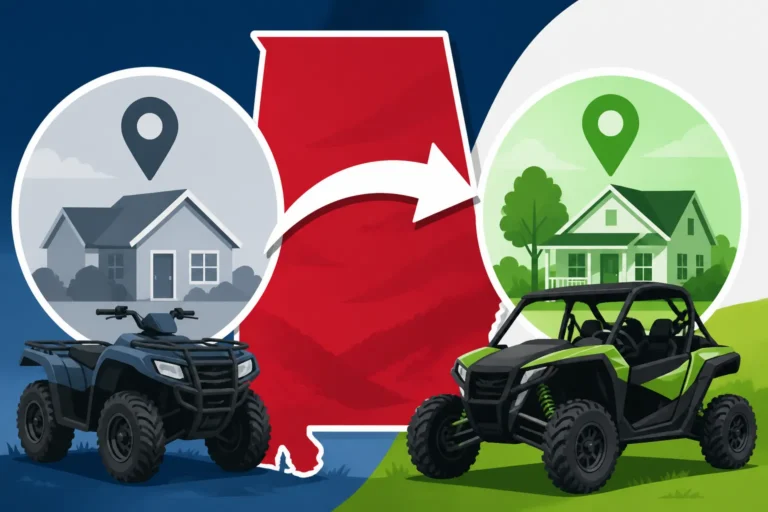
For machines that are model year 2025 or older, Alabama’s titling law for off-road vehicles generally doesn't apply. This means your prized quad or side-by-side likely doesn't have a title, nor will it receive one. In this scenario, when you choose to voluntarily register your ATV for [Alabama Public Use ATV Registration Explained] or [Alabama Private Use ATV Registration Explained] with ALEA, the purchaser's certificate becomes your primary proof of ownership. The state agency relies on this document, along with your application, to establish that you are the rightful owner before issuing a registration decal and card. Without it, or a very detailed bill of sale, ALEA won't have the necessary documentation to process your registration.
When you prepare your [Alabama Registration Paperwork Explained] for submission, whether by mail or through a local office, you’ll typically include the original purchaser’s certificate or a clear copy. ALEA uses the information on this certificate, particularly the [Alabama Serial Numbers on the Application], to enter your machine's details into their system and associate it with you as the owner. This process ensures that your voluntary registration is legitimate and properly recorded. Many owners appreciate this system, as it provides a formal record of ownership and helps prevent ambiguity when a machine changes hands, even if a formal title is not part of the equation.
Bridging to Future Titling (Model Year 2026 and Newer)
Starting with model year 2026, Alabama enters a new era where many ATVs and UTVs will require a state-issued title. Even with this significant change, a comprehensive purchaser's certificate (or a very detailed bill of sale from a private seller) remains an incredibly important document. While a dealer will typically handle the initial title application process for new machines, when you buy a 2026 or newer machine from a private party, you'll need solid proof of ownership to apply for your own title through the county office. The purchaser's certificate acts as that critical bridge, proving you legally acquired the machine before the official title can be processed.
Think of it this way: even though the ultimate goal for a 2026+ machine is an official title through [Alabama's ALVIN System and Off-Road Titles], the purchaser's certificate provides the foundational evidence needed to get that title. When you submit your [Alabama Title Applications From January 2026] at your county probate office, they will require proof that you are the current owner. If you didn't buy it from a dealer who handled the initial titling, your purchaser's certificate will be a key piece of that puzzle. It substantiates your claim of ownership and ensures a smooth transition to the new titling system, preventing delays or questions about how you came to possess the machine. What a Purchaser's Certificate Does in Alabama is largely about facilitating these official processes.
Creating or Obtaining a Purchaser's Certificate
So, you understand what a purchaser's certificate is and why it's important. Now, let's talk about the practical side of getting one. For many private sales, you'll be responsible for ensuring this document is created and properly filled out. Thankfully, you don't have to start from scratch, and there are resources available to help you create a professional and legally sound document.
DIY Options and Templates
For private sales, the most common approach is to use a pre-made template. You can find numerous templates online designed specifically for vehicle sales, and some legal document services, such as LawDepot, offer comprehensive forms that can be customized to your specific transaction. Using a template is highly recommended because it ensures that all the crucial information fields are included, reducing the chance of missing a vital detail that could complicate future registration or ownership transfers. These templates often guide you through sections for buyer and seller information, machine specifics, purchase terms, and signature lines.
When selecting a template, make sure it allows for all the essential details we discussed earlier, especially the VIN or serial number and clear identification of both parties. While these templates provide a solid framework, always double-check that the completed document accurately reflects your specific sale and meets the general expectations for proof of ownership in Alabama. Printing two copies – one for the buyer and one for the seller – is a good practice, ensuring both parties have an original record of the transaction. A well-executed DIY certificate, especially one based on a reliable template, can be just as effective as any other form of ownership proof for your untitled machine.
Why a Dealer Handles This Differently
If you're buying a brand-new ATV or UTV from an authorized dealer in Alabama, you typically won't be dealing with a separate "purchaser's certificate" document in the same way you would in a private sale. Dealers operate under a more structured framework, providing their own comprehensive sales contracts and [Alabama Dealer Paperwork at Delivery] that serve the same purpose and more. These official dealer documents inherently include all the buyer and seller information, machine details, and sale terms that a purchaser's certificate would, often alongside warranty information, financing agreements, and other disclosures.
For model year 2026 and newer machines, dealers are also equipped to handle the initial titling process directly with the state on your behalf. Their internal systems and legal obligations ensure that all necessary documentation is completed for you to receive your official Alabama title. So, while you're still getting robust proof of purchase and ownership, it simply comes in the form of the dealer's standard sales package rather than a standalone purchaser's certificate. This streamlined process is one of the conveniences of buying a new machine from a reputable dealership, as they take care of much of the administrative heavy lifting.
Disclaimer
This article is for general informational purposes only and does not constitute professional advice. Laws, prices and regulations vary by location and change over time. Consult a qualified professional for guidance on your specific situation.