Letting the Dealer File Your Title Application
Buying a new ATV or UTV in Alabama should be an exciting moment, not a paper-pushing headache that drags on for weeks. It’s totally understandable to feel overwhelmed by the thought of state paperwork, especially when you just want to hit the trails. This guide is here to walk you through the process of letting your Alabama dealer take care of filing your title application, aiming to simplify a potentially complicated step so you can focus on the fun parts of owning your machine.
Why Letting Your Dealer Handle Titling Can Be a Lifesaver
Let's face it: dealing with government bureaucracy, even for something as exciting as a new off-road machine, can be a real drag. You've just made a significant purchase, you're eager to get out and ride, and the last thing you want is to spend precious time poring over forms, standing in line, or trying to understand confusing legal jargon. That's where your dealer can really step in and make a difference. They're often well-versed in the specifics of [Alabama ATV Titling Starts With Model Year 2026] and subsequent procedures, which can save you a ton of frustration.
Think about it: these dealerships process dozens, if not hundreds, of sales every month. They have direct experience with the county revenue offices and understand the nuances of the state's new titling system. While the titling requirement for ATVs and UTVs in Alabama is relatively new, starting with the 2026 model year, dealers have been processing titles for other vehicles for ages. They know the common pitfalls, what specific details county clerks look for, and how to get everything submitted correctly the first time. This expertise can prevent delays that might otherwise keep your new machine in the garage for longer than you'd like.
The convenience factor alone is huge. Instead of you having to gather all the necessary documents, fill them out, and then make a trip to the county office – possibly multiple trips if something is amiss – the dealer handles much of that legwork. This is especially valuable if your work schedule makes it tough to visit government offices during business hours, or if you simply prefer to delegate these kinds of administrative tasks. It's an investment in peace of mind, knowing that a professional is managing the details of your new machine’s official record.
The Value of Experience with Alabama’s Titling System
The state of Alabama has a specific way of doing things, and the recent introduction of titling for off-road vehicles (model year 2026 and newer) means there's a learning curve for everyone. While the goal is to provide a clear chain of ownership, especially important for theft recovery and financing, navigating the exact requirements can still be tricky. Your dealer's staff are regularly trained on these updates and often work directly with the state's [Alabama's ALVIN System and Off-Road Titles] to submit documentation electronically.
They understand which forms are needed, how to accurately fill in details like the Vehicle Identification Number (VIN) – which is crucial for a smooth process – and what supporting documents must accompany the title application. This includes making sure the bill of sale is complete and correctly executed, which is foundational to proving ownership. Without a properly completed bill of sale, even an application filed by a dealer could hit a snag. This is an area where their routine engagement with the system truly shines, minimizing errors that could lead to your application being rejected or delayed.
Furthermore, they are familiar with the fees involved, including the state's title fees and any local processing charges. While dealers cannot set these government fees, they can clearly itemize them for you, so there are no surprises when it comes to the total cost. This transparency, combined with their expertise, makes the dealer a valuable ally in securing your official proof of ownership.
Understanding the Dealer's Role in Paperwork
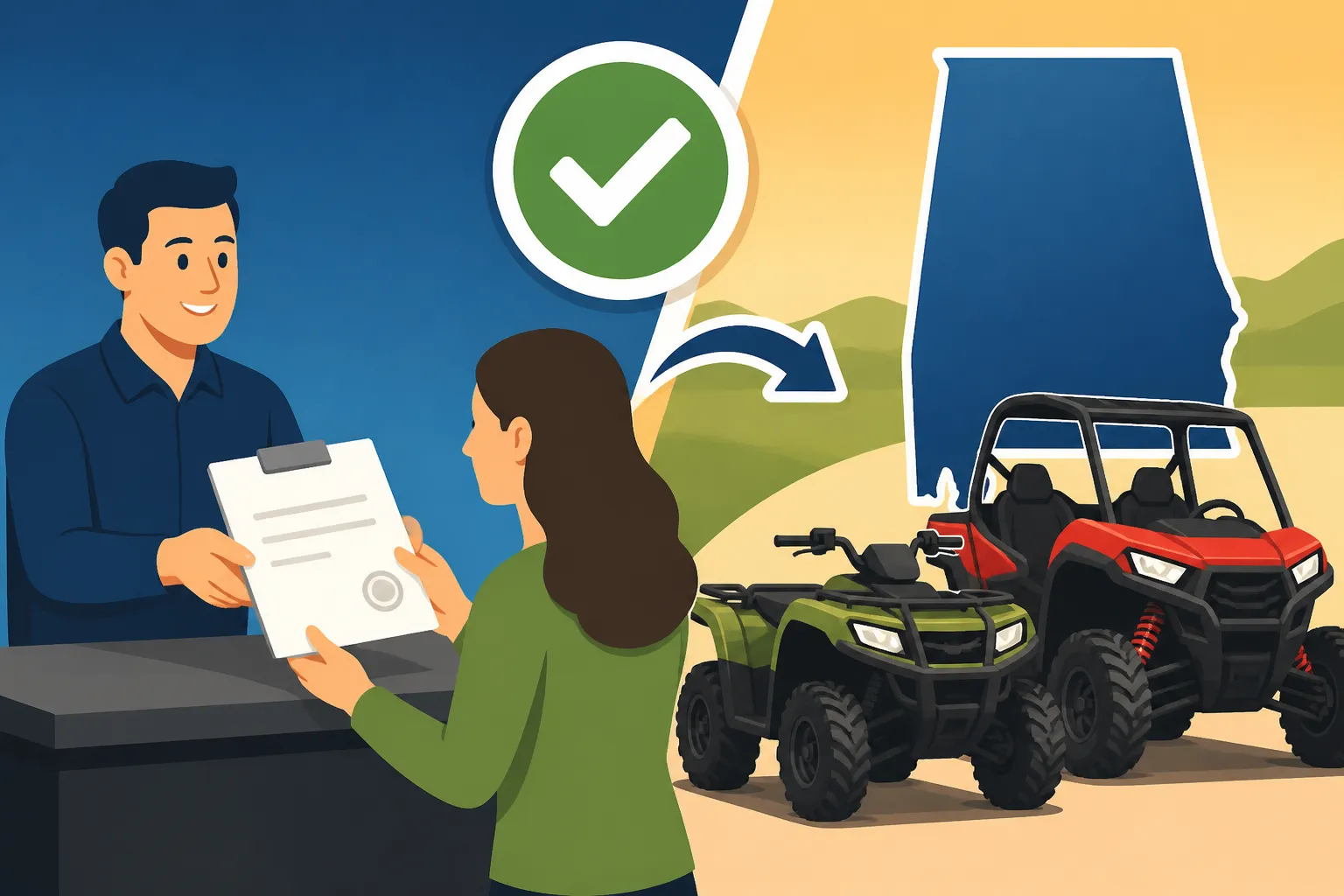
When you purchase a new 2026 or newer ATV or UTV from an authorized dealer, they typically facilitate not only the sale but also the initial registration and, now, the titling process. This often means they will prepare the necessary forms, including the application for title. They'll ensure that the critical information, such as your name, address, the machine's VIN, make, model, and model year, is accurately transcribed. This precision is vital for avoiding issues down the line.
They will also handle the collection of sales tax, which they then remit to the state and appropriate local jurisdictions. This simplifies your obligation, as you don't have to calculate or send these payments yourself. Beyond the title, many dealers also assist with [Alabama Public Use ATV Registration Explained] or [Alabama Private Use ATV Registration Explained] for your machine, depending on how you intend to use it. This comprehensive service means that by the time you leave the dealership, much of the foundational paperwork for legal ownership and operation has already been set in motion. They act as a critical intermediary, ensuring the transfer of ownership from the manufacturer to the dealer, and then from the dealer to you, is correctly documented at every step.
What Your Dealer Actually Does for Your Alabama ATV Title
When you opt for your dealer to handle your title application, you're essentially entrusting them with a series of critical steps that ensure your machine's ownership is properly recorded with the State of Alabama. This isn't just about filling out a single form; it's a multi-faceted process that leverages their administrative capabilities and understanding of state protocols.
Preparing and Submitting the Title Application
The first major task your dealer undertakes is the meticulous preparation of the title application form. This form is the cornerstone of establishing legal ownership. They'll transfer all the essential details from the manufacturer's certificate of origin (MCO) and your bill of sale directly onto the title application. This includes the full VIN, engine displacement, fuel type, and the correct model year, which is especially important for determining if your machine even qualifies for a title under Alabama's 2026 model year cutoff.
Once the form is complete, the dealer will often submit it electronically through the state's ALVIN system or, in some cases, package it for physical delivery to the appropriate county office or state agency. They know exactly where the application needs to go and how to track its progress. This submission typically includes the original Manufacturer's Certificate of Origin (MCO), which is the document that essentially acts as the "birth certificate" for your new ATV or UTV, showing it has never been titled before. The dealer also attaches the [Alabama Bill of Sale Requirements], ensuring all sale terms are clear and documented.
Handling Fees and Taxes
A significant part of the dealer's service in this process is managing the collection and remittance of all associated fees and taxes. This typically includes:
- Sales Tax: They calculate and collect the applicable state, county, and city sales taxes based on your purchase price, less any approved trade-in value. This is a big one, as Alabama's sales tax rates for vehicles can vary depending on the specific machine and local ordinances.
- Title Fees: The base fee for an Alabama title application.
- Agent Commissions/Processing Fees: Some counties or agents charge a small fee for processing the title application.
- Registration Fees: If your dealer is also handling your initial registration (which is separate from titling but often done concurrently), they will collect the applicable three-year registration fee.
The dealer then ensures these funds are correctly disbursed to the Alabama Department of Revenue, the county revenue office, or the Alabama Law Enforcement Agency (ALEA) as required. This takes the burden off you to figure out who gets what and when, ensuring all financial obligations are met accurately and on time.
| Aspect | Dealer Handles | Owner Handles (Directly) |
|---|---|---|
| Form Preparation | Fills out application, transfers VIN, model, year. | Provides necessary personal info, verifies data. |
| Document Gathering | Collects MCO, Bill of Sale, prepares copies. | Ensures they have an accurate Bill of Sale for their records, provides proof of ID. |
| Submission | Submits application to county/state (often electronically via ALVIN). | Would submit directly to county revenue office if doing it themselves. |
| Fee & Tax Payment | Collects sales tax, title fee, registration fee, remits to correct agencies. | Would pay sales tax, title fee, and registration fee directly at the county office. |
| Follow-Up | Often has systems to track application status, may communicate with county if issues arise. | Is responsible for contacting the county office for status updates or to resolve problems. |
| Issuance | The official title document will typically be mailed directly to you by the state after processing. | Receives title directly from the state. |
Lien Recording and [Financing a Titled Machine]
If you're financing your new ATV or UTV, the dealer plays a crucial role in ensuring the lienholder's information is correctly recorded on the title application. This is a standard practice that protects the lender's interest in the machine until the loan is paid off. They will ensure the lienholder's name and address are accurately added to the application, so that when the title is issued, it clearly shows the lien.
This is a really important step. Without proper lien recording, you could face difficulties down the road if there's ever a question of ownership or if you decide to sell the machine before the loan is satisfied. The dealer's experience ensures this administrative detail is handled correctly, preventing future headaches for both you and your lender. They effectively bridge the gap between your purchase, your financing, and the state's official record-keeping.
Your Essential Role in the Dealer-Assisted Titling Process
Even when your dealer is doing the heavy lifting, your involvement is absolutely critical. Think of it as a partnership: they have the expertise and the systems, but you have the personal information and the ultimate responsibility to ensure everything is correct. Being proactive here can prevent issues and ensure your title is issued smoothly.
Providing Accurate Personal Information
This might sound obvious, but it's the foundation of everything. The dealer will need accurate, up-to-date personal information to complete your title application. This includes your full legal name, current physical address (P.O. boxes usually aren't acceptable for official documents like titles), and sometimes your driver's license number. It’s imperative that the name and address you provide match what's on your identification. Any discrepancies could cause a significant holdup.
Before you sign anything, carefully review all the details on the forms your dealer has prepared. This is your chance to catch any typos or errors in your name, address, or even the machine's VIN. A small mistake here can lead to a long process of corrections down the line. It's much easier to fix an error before the paperwork is submitted than after it has entered the state's system. Remember that the official title document will eventually be mailed directly to your provided address by the state, so accuracy here is non-negotiable.
Reviewing the Bill of Sale and Other Documents
The bill of sale is perhaps the single most important document you’ll receive from the dealer, beyond the title itself. It's your legal proof of purchase and includes all the transaction details: the selling price, any trade-in information, and importantly, the complete VIN of the machine you bought. Don't just glance at it and sign. Take your time to read every line, ensuring the price is correct and that the VIN matches the machine you're taking home. A good dealer will provide a comprehensive [Alabama Bill of Sale Requirements] document, but it's still your responsibility to review it.
If you’re concerned about having all your paperwork in order, especially if you anticipate future private sales or just want comprehensive records, you can always use services like LawDepot to help you create or verify standardized forms. While your dealer provides the official documents, understanding their components can be empowering. Additionally, ensure you receive a copy of all signed documents for your own records. This includes the bill of sale, the purchase agreement, and any financing contracts. Having these readily accessible will be invaluable if you ever have questions or need to reference the details of your purchase.
Understanding Dealer Fees vs. State Fees
When you’re presented with the final bill, it can sometimes be a bit of a jumble of numbers. Dealers will itemize their own administrative fees (often called "doc fees" or "processing fees") separately from the state-mandated fees like sales tax, title fees, and registration fees. It's your right, and a smart move, to ask for a clear breakdown of these charges.
Don't be shy about asking questions if something isn't clear. What exactly does the dealer's "documentary fee" cover? How much is the actual state [Alabama ATV Title Cost] versus the fee the dealer charges for handling the paperwork? Knowing the difference can help you understand what you're paying for and feel confident in your purchase. Most reputable dealers are happy to explain these charges transparently, ensuring you have a full understanding of your [Alabama Cost of Ownership Year One] including all the associated administrative charges.
Navigating Common Questions and Potential Hiccups
Even with a dealer handling the heavy lifting, questions and unforeseen circumstances can arise. Being prepared for these can help you maintain a smooth process and avoid unnecessary stress.
What if My Machine is Older Than Model Year 2026?
This is a really important distinction in Alabama. As we've mentioned, the requirement for titling ATVs and UTVs only applies to machines with a model year of 2026 or newer. If you're buying an older machine – say, a 2025 model or earlier – from a dealer, they will still assist you with the initial [Alabama ATV Registration Cost], but there will be no title application for that machine. [Why Older Alabama ATVs Cannot Be Titled] is a common question, and it's simply because the law was written with a specific cutoff date.
For these older machines, your dealer's role will focus solely on registration. They'll ensure you get your three-year registration decal and that your machine is properly recorded with ALEA for public or private use. While an older machine won't get a title, the dealer will still provide you with a comprehensive bill of sale, which serves as your primary proof of ownership for these pre-2026 models. If you have questions about [Proving Ownership of an Untitled Machine], always keep your bill of sale and registration documents in a safe place.
Checking the Status of Your Title
Once your dealer submits the title application, the processing time can vary. While Alabama aims for efficiency, delays can sometimes happen due to volume or unforeseen issues. It's natural to want to know the status of your official proof of ownership. The state's system typically mails the title directly to the owner, not back to the dealer, once processed.
If you feel like an unreasonable amount of time has passed and you haven't received your title, your first step should be to contact the dealer. They may have a tracking system or can provide insight into typical wait times. If they can't provide a definitive answer, you might need to contact the county revenue office where the application was submitted. They handle [Alabama Title Processing Through ALVIN] and can often give you an update using your VIN or application number. Remember that the state aims for prompt issuance, but a certain amount of processing time is always to be expected.
What if There’s an Error on My Title?
Despite everyone's best efforts, errors can occasionally occur on official documents. If you receive your title and notice an inaccuracy – perhaps a misspelling of your name, an incorrect address, or a wrong digit in the VIN – don't panic, but do act promptly. Your first point of contact should be the dealer you purchased the machine from. They often have established channels to help correct such issues.
They can guide you through the process of filing for a corrected title, which might involve resubmitting forms and possibly paying a small fee. Having a dealer assist in this situation can simplify what might otherwise feel like a daunting task of navigating state bureaucracy alone. It’s always best to get these corrections made as soon as possible to ensure your ownership record is perfectly accurate.
Disclaimer
This article is for general informational purposes only and does not constitute professional advice. Laws, prices and regulations vary by location and change over time. Consult a qualified professional for guidance on your specific situation.