Photographing a Machine for Insurance
It’s a truly terrible feeling: that moment you realize your valuable ATV or side-by-side is gone, or that it’s been damaged significantly. In the aftermath, one of the biggest headaches can be dealing with your insurance company, especially if you haven't meticulously documented your machine's condition and features. This guide is here to walk you through exactly how to photograph your ATV or UTV for insurance purposes in Alabama, ensuring you have robust proof should you ever need to file a claim, and helping to alleviate a lot of potential stress down the road.
Why Thorough Documentation Matters for Your Alabama ATV or UTV Insurance
When you invest in an ATV or UTV, you're not just buying a machine; you're buying access to adventure, utility, and good times on the trails or around your property. But like any valuable asset, these machines are vulnerable to theft, accidental damage, or even natural disasters. Many folks assume their insurance policy is enough, but a policy is only as good as the evidence you can provide to back up your claim. Without solid photographic proof, you might find yourself in a frustrating battle to receive the full value of your loss. This isn't just about showing you had a machine; it's about proving its specific condition, its unique features, and ultimately, its true worth.
Protecting Your Investment from Theft and Damage
Imagine your pride and joy, maybe a meticulously maintained utility UTV you use for hauling feed on your farm, or a high-performance sport quad you race at local events. If it's stolen, or if it catches fire in your barn, the immediate shock is overwhelming. Once that subsides, the next step is calling your insurance provider. They'll ask for details, and this is where comprehensive photos become your best friend. These images serve as undeniable proof of your machine’s existence, its cosmetic condition, and the presence of any valuable aftermarket parts or custom paint jobs. Without these pictures, it becomes a "he said, she said" scenario, where the insurer might offer a base payout that doesn't fully reflect your machine's actual value or the effort you put into maintaining it. Photos don't lie, and they can be the difference between a fair settlement and a disappointing one.
The Role of Photos in a Smooth Claims Process
Let’s be honest, no one looks forward to filing an insurance claim. It’s often a process fraught with paperwork, phone calls, and the stress of replacing or repairing something you cherish. However, having a well-organized folder of high-quality photographs can dramatically smooth out this often-bumpy road. When you can immediately send your adjuster clear, dated photos that showcase the pre-damage condition of your ATV or UTV, it speeds up their assessment process. They won't have to guess or rely solely on your description; they'll have visual confirmation. This proactive approach shows the insurance company you're serious and prepared, often leading to quicker approval and payout times. It eliminates ambiguities and minimizes the back-and-forth, allowing you to focus on getting back on the trails or continuing your work without undue delay. Think of it as providing a virtual tour of your machine, so the adjuster can see exactly what you’re talking about.
Going Beyond Basic Photos for Comprehensive Coverage
Many owners will snap a quick picture or two of their ATV when they first get it, maybe during a fun ride. While those are nice for memories, they often fall short of what's needed for a robust insurance claim. Comprehensive coverage demands comprehensive documentation. This means thinking like an insurance adjuster. What would they want to see? They'd want to see every side, the top, the bottom, and close-ups of specific components. They'd want to see not just the machine itself, but also any attached accessories or modifications that add significant value. This isn't just about covering obvious damage; it's also about proving the absence of prior damage, which can sometimes be questioned. By being exhaustive in your photo taking, you're building an ironclad case for your machine's condition and value, protecting yourself against any potential disputes over what was truly lost or damaged. It's about ensuring your policy, like a good [Alabama Comprehensive Coverage for a Quad], truly covers your quad, not just a generic one.
The Essential Shots: What to Photograph on Your Machine
Taking pictures might seem straightforward, but when it comes to insurance, there's a method to the madness. You're not just creating a photo album; you're building a visual ledger. This requires a systematic approach to ensure every important detail is captured. From broad overviews to minute identifying marks, each category of photo plays a crucial role in validating your claim and establishing the true identity and condition of your ATV or UTV.
Overall Views and Key Angles
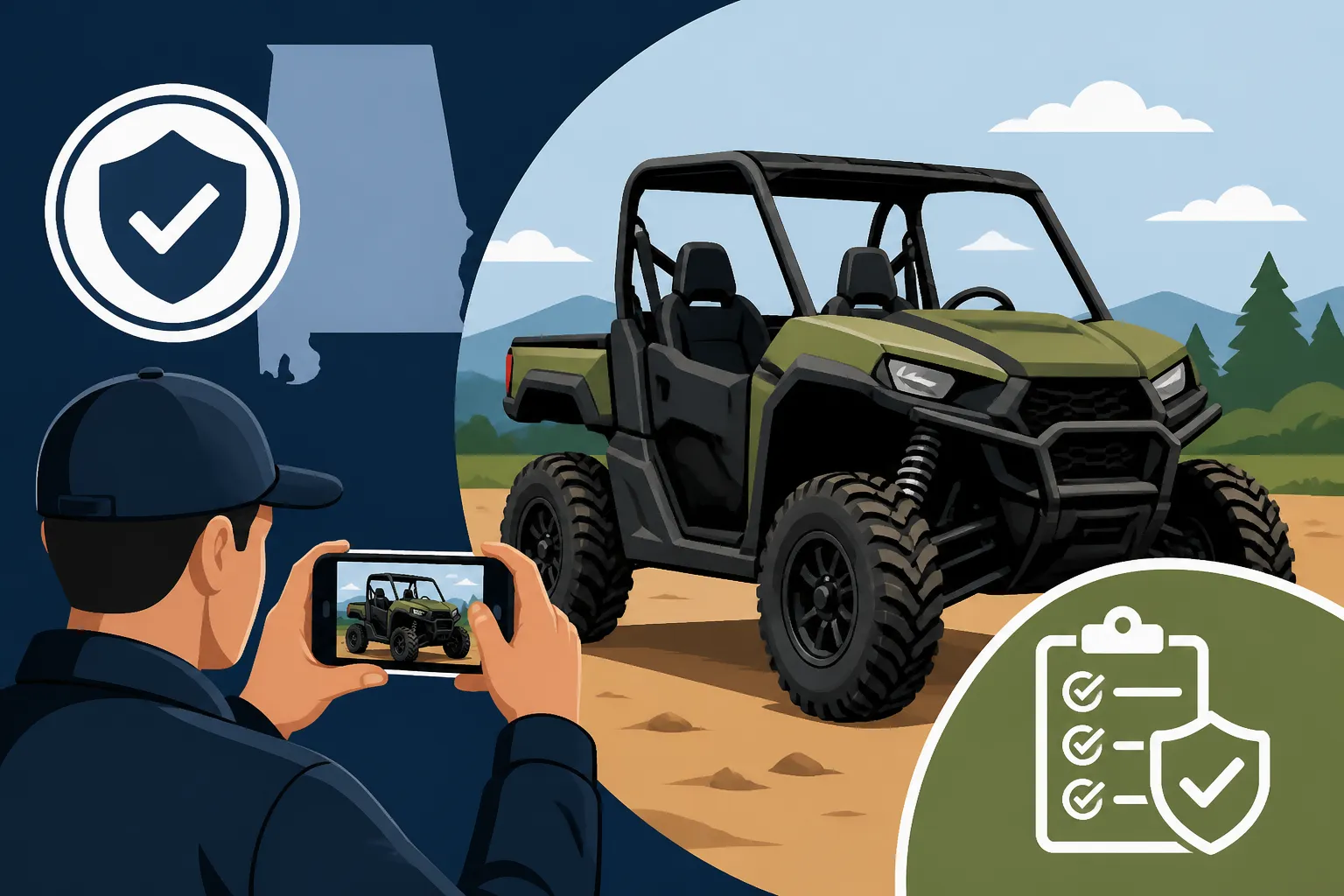
Start with the big picture. You want full, clear shots of your machine from all four sides: front, back, left, and right. These should be taken far enough away that the entire machine is in the frame, from tires to handlebars or roofline. Make sure there’s nothing obstructing the view. After that, get some diagonal shots—front-left, front-right, rear-left, rear-right—to give a more three-dimensional perspective. Don't forget an overhead shot if possible, perhaps from a ladder or elevated position, and a shot from the front or rear showing the width. These overall views establish the machine’s general appearance, color, and any obvious cosmetic features like decals or graphics. They are the baseline for understanding what your machine looked like before any incident occurred.
Capturing Crucial Identification Numbers
This is arguably the most critical part of your photo documentation. Every ATV and UTV has a Vehicle Identification Number (VIN) or a serial number. This number is unique to your machine and is the primary way it is identified by manufacturers, law enforcement, and insurance companies. You absolutely must have clear, legible photographs of this number. The VIN is usually stamped on the frame, often near the front suspension, under the seat, or on the lower frame rail. For some models, it might be on the engine casing or a dedicated plate. Take multiple close-up shots of the VIN from different angles to ensure it's readable. If your machine also has separate engine serial numbers or other identifying marks, photograph those too. This is especially vital for preventing fraud and proving that the machine you are claiming for is indeed your machine. Consider even taking a video where you clearly point to and read out the VIN, just for an extra layer of proof. This ties directly into advice about [Recording Serial Numbers at Home] and why [Why Your Policy Should Name the Serial Number].
Documenting Accessories, Upgrades, and Modifications
Many ATV and UTV owners invest heavily in customizing their machines. Winches, light bars, upgraded tires and wheels, custom paint, cargo racks, plows, sound systems, enclosed cabs, track systems, and performance exhaust are just a few examples. These add-ons significantly increase the value of your machine, but they are often overlooked in initial insurance assessments if not properly documented. Take individual close-up photos of every accessory and modification. Show where it's installed, its brand if visible, and its condition. If you have receipts for these upgrades, keep them with your photos. An insurance adjuster can't know you added that expensive aftermarket suspension or a specialized GPS unit unless you show them. Without photographic evidence and receipts, these valuable additions might not be covered, leaving you significantly out of pocket. Be meticulous here; every added component represents an increase in your machine's overall worth and should be documented accordingly.
Best Practices for Photographing Your ATV or UTV
Just snapping a few dark, blurry photos in your garage isn't going to cut it. To make your photographic evidence as strong and persuasive as possible, you need to follow some best practices. Think about quality, organization, and currency. A little effort upfront can save you a mountain of grief later on.
Setting the Scene: Lighting, Background, and Cleanliness
The quality of your photos directly impacts their usefulness.
First, lighting is key. Always try to photograph your machine in good, natural daylight. Overcast days often provide the best, most even lighting, reducing harsh shadows. If shooting indoors, ensure the area is well-lit and free from glare. Avoid using a flash unless absolutely necessary, as it can create reflections and obscure details.
Second, choose a neutral background. A plain wall, a clear patch of grass, or an open driveway works well. Avoid cluttered backgrounds that distract from your machine or make it hard to discern details. You want the focus entirely on your ATV or UTV.
Third, and this might seem obvious but it's often overlooked: clean your machine. A thorough wash removes mud, dirt, and dust that can hide scratches, dents, or other imperfections. You want to showcase its true condition, and a clean machine allows for clear visibility of all surfaces and components. A dirty machine might also make an adjuster question how well it was maintained. Taking pride in your machine extends to how you photograph it for protection.
Organizing and Storing Your Photo Evidence
Once you have all your fantastic photos, don't just leave them scattered across your phone or computer. Organization is paramount. Create a dedicated folder on your computer titled something like "ATV Insurance Photos – [Your Last Name] – [Year/Make/Model]". Within that folder, consider subfolders for "Overall Views," "VIN/Serial Numbers," "Accessories/Upgrades," and "Condition Details." Name your photo files descriptively, such as "Front_View_Date.jpg" or "VIN_CloseUp_Date.jpg".
Even more importantly, store these photos in multiple secure locations.
- Keep a copy on your computer's hard drive.
- Upload them to a cloud storage service (Google Drive, Dropbox, OneDrive) where they can be accessed from anywhere.
- Save a copy to an external hard drive or USB stick that you keep in a separate, safe location, perhaps a fireproof safe or a different building.
- You might even print out a selection of key photos and keep them with your physical insurance documents.
The goal is redundancy: if one storage method fails (e.g., your computer crashes), you still have access to your crucial evidence. Imagine the frustration of having perfect photos but losing them all in a house fire or computer meltdown. This foresight prevents such a devastating secondary loss.
Regular Updates to Your Visual Record
Your ATV or UTV isn't static; it changes over time. You might add new accessories, replace worn-out parts, or even experience minor cosmetic damage that you repair yourself. To ensure your insurance documentation remains accurate and current, make it a habit to update your photo records regularly.
- After any significant modification or upgrade: Take new photos of the added components. If you get a new winch or a set of upgraded tires, document them immediately.
- Annually: Even if nothing major changes, take a fresh set of overall photos once a year. This provides a clear timeline of your machine's condition. For instance, if you acquired a [A Model Year 2026 Machine], you'd want annual updates.
- Before and after major repairs: If your machine undergoes significant repair work, photograph the damage beforehand and the completed repair afterward. This proves the work was done and the machine was restored to good condition.
Think of it like a visual maintenance log. Regular updates not only ensure you're covered for the current value of your machine but also show the insurance company that you are a responsible owner who takes care of their property. This consistent documentation adds immense credibility to any future claim.
Beyond Photos: Other Documentation to Keep Handy
While photographs are incredibly powerful evidence, they are part of a larger ecosystem of documentation that every responsible ATV or UTV owner should maintain. Combining visual proof with written records creates an unassailable case for your ownership and the value of your machine. This comprehensive approach is your best defense against unexpected setbacks.
Gathering Key Paperwork and Records
Photographs illustrate, but paperwork solidifies. It’s crucial to gather and securely store all original documents related to your ATV or UTV. This includes:
- Your original bill of sale or purchase agreement: This document confirms you are the rightful owner, detailing the purchase date, price, and the seller’s information. Make sure it includes the VIN.
- Title documents (if applicable): For newer machines in Alabama, you'll have a title. This is official proof of ownership and crucial for proving your legal right to the machine. Even for older machines, you might have an official record of ownership. Understand that [Alabama ATV Titling Starts With Model Year 2026], so this becomes even more relevant for newer machines.
- Registration paperwork: If your machine is registered with ALEA for public or private use, keep those documents. While [Alabama Registration Is Voluntary], it still provides an official record.
- Maintenance records: Keep receipts for oil changes, tire rotations, repairs, and any service performed. These demonstrate consistent care and can support the machine's overall value.
- Accessory receipts: As mentioned earlier, receipts for any aftermarket parts or upgrades provide proof of purchase and cost, backing up your photographic evidence.
Having these documents readily available will significantly expedite any insurance claim or legal process. Many people find a secure, fireproof box or a digital cloud folder to be the best place for these important papers.
How a Bill of Sale and Serial Numbers Help
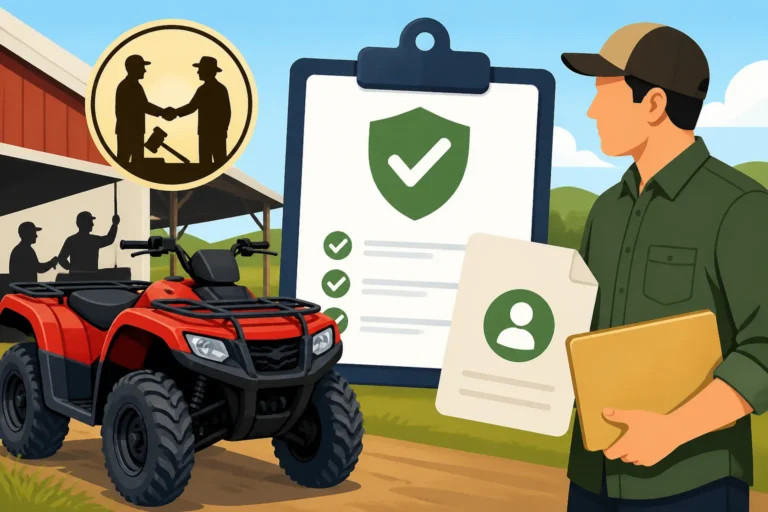
The bill of sale is more than just a piece of paper; it's the legal backbone of your ownership claim. When you're dealing with an insurance company, particularly after a theft, they need to know you actually owned the machine you're claiming for. A properly executed bill of sale, especially one obtained through a reputable service like LawDepot or a similar legal document provider, will clearly state the seller and buyer, the date of sale, the purchase price, and most importantly, the VIN or serial number of the machine. This serial number on the bill of sale acts as a direct link to the machine in your photographs. If your machine is stolen and later recovered, law enforcement will use the VIN to verify ownership, and your insurance company will rely on it to confirm your claim. Without a clear bill of sale that includes the VIN, proving ownership of an untitled machine can become a real challenge, as discussed in [Proving You Own an Untitled Machine]. It creates a chain of custody and legally authenticates your possession, making it much harder for anyone to dispute your claim.
Considering a Written Declaration of Ownership
For machines that are older, or perhaps were handed down through the family and never had a formal title or a pristine bill of sale, a written declaration of ownership can be an invaluable asset. This isn't a replacement for official documents, but it can provide supplementary evidence when formal records are scarce. A declaration could be a sworn statement, notarized for extra legal weight, detailing how you acquired the machine, when, and from whom. It would include a full description of the ATV or UTV, including its make, model, year, and crucially, its VIN or serial number. You can find templates for such declarations online, often through services like LawDepot that offer customizable legal forms. While not a title, it creates a formal record of your claim to the machine and can be particularly helpful when combined with your photographic evidence. This can provide peace of mind, especially for those older machines where the historical paperwork might be less complete.
| Item to Photograph | Key Details to Capture | Purpose for Insurance |
|---|---|---|
| Overall Views | Front, back, left side, right side, diagonals, top | Establishes general appearance, color, size, and presence |
| VIN/Serial Number | Clear, close-up shots of stamped numbers on frame | Proof of identity, ownership, and unique machine identification |
| Engine Serial Number | Close-up of engine casing numbers (if applicable) | Additional unique identification, helps prevent parts fraud |
| Odometer/Hour Meter | Legible reading | Documents machine usage, supports condition and value claims |
| Accessories | Winch, light bars, cargo racks, tires, wheels, exhaust | Proves existence and condition of value-adding modifications |
| Custom Paint/Graphics | Close-ups of unique designs | Documents aesthetic enhancements that increase value |
| Damage (Pre-existing) | Any existing dents, scratches, or wear and tear | Prevents disputes over what was damaged before an incident |
| Underneath | Undercarriage, skid plates, suspension components | Shows general condition, presence of protective gear |
| Storage Location | Where the machine is typically stored (garage, shed) | Supports claims related to theft (e.g., Alabama Theft Coverage in a Barn) |
Disclaimer
This article is for general informational purposes only and does not constitute professional advice. Laws, prices and regulations vary by location and change over time. Consult a qualified professional for guidance on your specific situation.