Replacing a Faded Decal
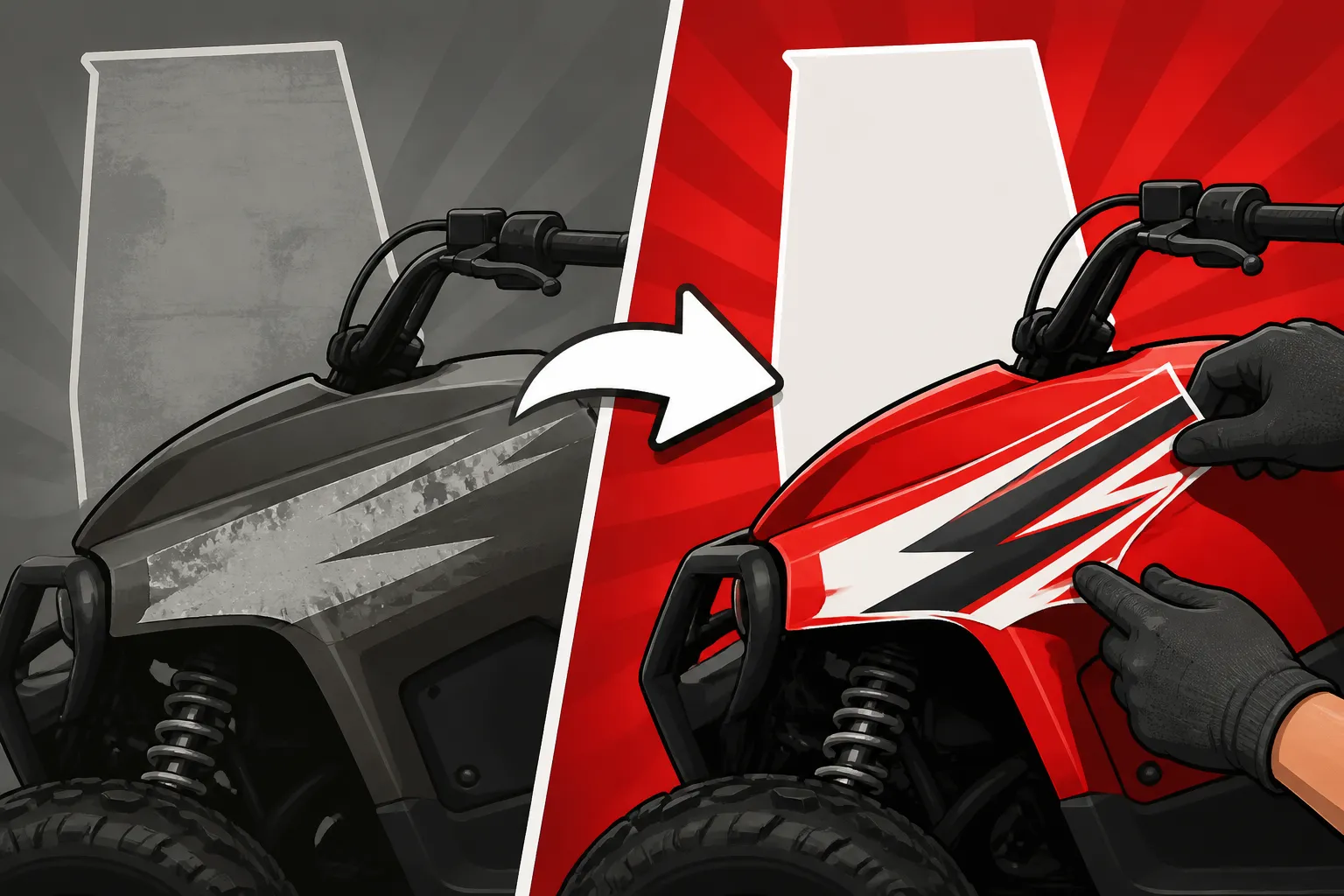
There's nothing quite as frustrating as looking down at your trusty ATV or UTV after a long season of sun and mud, only to realize that the vibrant registration decal you carefully applied has faded into an unreadable ghost of its former self. It's not just an aesthetic issue; a legible decal is a key part of showing you're a responsible owner in Alabama. This guide is here to walk you through the simple, step-by-step process of getting a brand new replacement decal, ensuring you stay compliant and ready for your next adventure.
Why Your ATV or UTV Registration Decal Matters in Alabama
That little sticker might seem insignificant, but it plays a crucial role in verifying your compliance with Alabama's off-road vehicle regulations. A faded or missing decal can lead to unnecessary headaches, even if your registration is perfectly valid on paper.
The Purpose of That Little Sticker on Your Machine
In Alabama, registering your ATV or UTV isn't just about paying a fee; it's about establishing a clear record of your machine's existence and its intended use. Whether you've opted for the [Alabama Public Use ATV Registration Explained] or the [Alabama Private Use ATV Registration Explained] tier, that decal is your visible proof that you've completed your part. It acts as a quick visual confirmation for authorities that your machine is properly documented with the state. This helps ensure that off-road vehicles are accounted for, which can be important in cases of theft or accident, and also helps to manage usage on designated public lands. It's a small piece of vinyl, but it carries a lot of weight in the eyes of the law. Think of it as your machine's mini license plate, declaring its legal status.
Where the Decal is Supposed to Live on Your Quad
The Alabama Law Enforcement Agency (ALEA) specifies general guidelines for decal placement, though common sense often prevails for off-road machines. Typically, the decal should be affixed to a prominent, easily visible location on the left rear or left side of your ATV or UTV. This usually means somewhere on the rear fender, the frame, or a visible body panel. The key is that it needs to be clearly readable without having to search for it. You want it where a deputy, if they were checking, could see it at a glance. Unfortunately, these highly visible locations are also often the most exposed to the sun's harsh UV rays, abrasive mud, gritty dust, and the occasional branch whip, making them prime candidates for fading and wear. For more specific guidance, you can refer to information on [Where the Registration Decal Sticks on Your Quad].
The Headache of a Missing or Unreadable Decal
Imagine you're out enjoying a beautiful Alabama day on a designated trail, and you encounter a game warden or a county deputy. They might simply wave you on, or they might stop you to check your registration. If your decal is completely faded or has peeled off, it can instantly raise a red flag. While a quick check of your registration card should clear things up, it's still an inconvenience you want to avoid. You might be asked to produce your physical registration card and identification, even if you’re just pulling into a camp or crossing a public road where permitted. Having a clear, readable decal simply makes the interaction smoother and helps you get back to riding faster. It’s also an important part of the overall "paper trail" for your machine, which is why the state issues both the card and the decal in the first place, covering [What the Issuance Charge Covers on a Registration].
How to Get a Brand New Decal When Yours Fades Away
Replacing a faded decal in Alabama is thankfully a straightforward process, designed to get you back on the trails with minimal fuss. It's a similar procedure to requesting a duplicate of your registration card itself.
First Things First: Confirming Your Registration Status
Before you even think about ordering a new decal, the absolute first step is to ensure your ATV or UTV's registration is still current and active. Requesting a duplicate decal for an expired registration won't solve your problem; you'll still be riding with an invalid registration, even if the decal is shiny and new. Alabama ATV registrations run for three years, so it's easy for the expiration date to slip your mind. If your registration has lapsed, your priority should be to complete the [Alabama Registration Renewal After Three Years] process first. Once your registration is active, then you can proceed with requesting a replacement decal. It's like needing a new sticker for your car tag—you wouldn't get a new sticker if the tag itself was expired, right?
Gathering Your Proof: What You'll Need to Apply
To apply for a duplicate decal, you'll need to provide some basic information to verify your ownership and the machine's registration. The primary items you’ll typically need include:
- Your current registration card: Even if your decal is faded, if you still have your current registration card, that's the easiest proof.
- Your machine's Vehicle Identification Number (VIN) or serial number: This is critical for the state to identify your specific ATV or UTV. Make sure you have the full, accurate number. [Alabama Serial Numbers on the Application] covers why this is so important.
- Your personal identification: A valid driver's license or state ID.
- Proof of ownership: While your registration card usually suffices, if you've lost that too, you might need a [Alabama Bill of Sale Requirements] or other documentation like a [Alabama Purchaser's Certificate Requirements] to prove you own the machine. If you're in a bind and need to create formal documents to establish clear ownership for a sale or other purpose, resources like LawDepot can provide helpful templates for bills of sale or affidavits, ensuring all necessary details are included. This can be especially useful if you've inherited a machine or bought it in a less formal private sale and need to formalize records before requesting duplicates.
It's always a good idea to have this information readily accessible before you begin the application process to avoid delays.
The Process: Applying for Your Duplicate Decal Through ALEA
In Alabama, the registration and titling system involves a few different agencies, but for ATV/UTV registration decals, you'll be dealing with ALEA. You'll typically request a duplicate through their designated channels, which often involves submitting a request by mail. While some states have online portals for this, Alabama's off-road vehicle registration is handled centrally through ALEA, meaning your [Why Your Registration Paperwork Goes to Montgomery] still applies for duplicates.
Here's a general outline of the process:
- Obtain the correct form: Contact ALEA's Marine Police Division (which handles ATV/UTV registration) or check their official website for a "Request for Duplicate Registration" or similar form. Sometimes, you might simply write a letter requesting the duplicate, stating your registration number, VIN, and mailing address.
- Fill out the form completely: Provide all requested information, ensuring accuracy. Double-check your serial number and mailing address.
- Include payment: A fee is associated with duplicate registrations and decals.
- Mail your application: Send the completed form, payment, and any required supporting documents to the address specified by ALEA. Make sure your envelope has sufficient postage.
Because this is typically handled by mail, patience is definitely a virtue.
What it Costs and How Long it Takes
The cost for a duplicate registration decal in Alabama is usually quite modest. For example, the [Alabama Duplicate Registration Cost] is a small administrative fee, plus the standard [Alabama's $2.50 Issuance Fee] which covers the physical production of the decal and card. These fees are designed to cover the administrative overhead of processing your request, not to be a financial burden.
As for processing time, you'll need to allow for a reasonable window. Mail-in applications, especially when processed by a state agency, aren't instantaneous. You should anticipate that it could take a few weeks from the time you send your application until you receive your new decal in the mail. Factors like mail transit times, the volume of applications ALEA is handling, and whether you've submitted all information correctly can influence the total [Alabama Registration Processing Time]. It's not usually a process you can rush, so plan ahead if you know you'll be riding soon and need a legible decal.
Giving Your New Decal the Best Start (and Making it Last!)
Once your shiny new decal arrives, you'll want to apply it correctly and take steps to protect it, ensuring it doesn't suffer the same fate as its faded predecessor too quickly.
Prepping Your Machine for the New Sticker
Applying a decal isn't just about sticking it on; proper surface preparation makes all the difference in its adhesion and longevity. You want to give your new decal the best possible chance to stick securely and last through Alabama's varied weather.
- Clean the area thoroughly: Use soap and water to wash away any dirt, mud, or grime from the application spot. This is crucial for strong adhesion.
- Remove old adhesive (if applicable): If you're peeling off the old decal, make sure to remove all traces of its adhesive. Goo Gone or a similar adhesive remover can work wonders, but be careful not to damage the plastic or paint underneath.
- Degrease the surface: After cleaning, wipe the area with rubbing alcohol or a mild degreaser. This removes any wax, oil, or residue that could prevent the decal from sticking properly. Let it dry completely.
- Work in ideal conditions: Apply the decal on a dry, mild day, preferably in the shade. Extreme cold can make the decal brittle, while extreme heat can make it too flexible and difficult to handle, and can also cause bubbles.
Taking these few extra minutes for prep will significantly improve how well your new decal adheres and looks.
The Art of Applying Your Replacement Decal
Applying a decal without bubbles or wrinkles can feel like a delicate operation, but with a steady hand and a few tips, you can achieve a professional-looking result.
- Position it first: Before removing the backing, hold the decal in place to ensure it's straight and where you want it. You might even use painter's tape to create a guide.
- Peel slowly: Start peeling a small section of the backing from one edge. Don't peel it all off at once.
- Apply gradually: As you peel back the liner, use a squeegee, credit card, or even your finger (covered with a clean cloth) to firmly press the decal onto the surface. Work from the center outwards or from one edge to the other, pushing out any air bubbles as you go.
- Eliminate bubbles: If you get a small air bubble, you might be able to gently push it to the nearest edge. For stubborn ones, a tiny pinprick can release the air, then you can press it down.
- Final pressure: Once the entire decal is applied, give it a good, firm rub over its entire surface to ensure maximum adhesion.
A well-applied decal won't peel at the edges, which is often the first sign of wear and tear.
Tips for Protecting Your Decal from Future Fading
Once your new decal is applied, a little proactive care can go a long way in preventing premature fading and damage. Alabama's climate can be tough on outdoor plastics and stickers, but you can fight back.
- Sun Protection: Whenever possible, park your ATV or UTV in a shaded area or under a cover, especially during the peak sun hours of the day. UV rays are the number one enemy of decals, causing colors to break down and fade.
- Gentle Cleaning: When washing your machine, avoid harsh chemical cleaners or high-pressure washers directly on the decal. A mild soap and soft cloth are usually sufficient. Aggressive scrubbing or chemicals can strip the protective layers or lift the edges of the decal.
- Wax or Sealant: Some owners apply a clear wax or a UV-protective sealant over their decals. This can add an extra layer of protection against the elements. Just make sure the product is safe for vinyl and plastics.
- Regular Inspection: Periodically check your decal for any signs of peeling edges or early fading. Catching a small issue early can sometimes allow for a quick fix before it becomes a major problem.
By being mindful of these simple steps, you can significantly extend the life of your new registration decal, ensuring it remains legible and vibrant for years of Alabama riding.
Frequently Asked Questions About Decal Replacements
Even with a clear process, some specific scenarios can make you scratch your head. Let's tackle a few common questions related to replacing a faded decal.
My Decal is Faded, But So is My Registration—What Now?
This is a scenario many owners find themselves in. You've been riding on an expired registration, and now the decal is gone too. The key here is priority. As mentioned earlier, your first and most important step is to renew your ATV or UTV registration. You cannot simply request a duplicate decal for an expired registration; the system won't allow it because there's no active record to duplicate.
Once your registration is successfully renewed through ALEA, a new registration card and decal should be issued to you as part of that renewal process. So, in this specific case, you're not requesting a duplicate in the traditional sense, but rather a fresh decal that comes with your renewed, active registration. Make sure you confirm your address with ALEA during renewal to ensure the new documents arrive at the correct place.
Selling or Buying with a Worn Decal
Whether you're the seller or the buyer, a faded or missing decal on a registered machine can introduce some minor complications, though nothing insurmountable.
- As the seller: If your decal is unreadable, it's best practice to replace it before selling. This demonstrates to the buyer that you've maintained proper registration and that the machine is legally sound. A new decal adds confidence for the buyer and smooths the transfer process. If you've already started the replacement process and are waiting for the new decal, communicate this clearly to the buyer. When [Selling a Registered Machine in Alabama], having all paperwork in order, including a clear decal, makes the transaction much smoother. If you used a service like LawDepot to draft your bill of sale, ensuring it accurately reflects the machine's condition and registration status can prevent future misunderstandings.
- As the buyer: If you're [Buying From a Private Seller in Alabama] and notice a faded or missing decal, ask the seller about it. Verify that the registration is current and ask for proof. If the decal is missing or unreadable and the registration is active, you, as the new owner, would be responsible for applying for a duplicate after the registration has been transferred into your name. It's an extra step for you, so it's worth noting during negotiations. Always ensure you receive a proper bill of sale and the original registration card from the seller.
Lost Your Registration Card Too?
This is definitely more challenging, but still manageable. If both your decal and your physical registration card are gone, you essentially have no immediate proof of current registration. This means you'll need to work more closely with ALEA.
- Contact ALEA's Marine Police Division: Explain your situation clearly. They will guide you on the specific requirements.
- Provide detailed information: You will definitely need your ATV or UTV's full VIN/serial number. They will use this to look up your machine in their system.
- Proof of ownership: This becomes even more critical when all physical proof is gone. You'll likely need your bill of sale, a [Alabama Purchaser's Certificate Requirements], or other documents that definitively link you to the machine. Without a title for older machines, [Alabama Proof of Ownership Without a Title] becomes a vital process. LawDepot could be a resource if you need to formalize any affidavits or declarations of ownership.
- Follow their instructions: Be prepared to submit an application for a duplicate registration card, which will then include a new decal. The process will be similar to requesting a duplicate decal alone, but with a greater emphasis on proving your identity and ownership.
While losing everything can feel overwhelming, the state has procedures in place to help legitimate owners re-establish their records. It just might take a little more time and effort.
Disclaimer
This article is for general informational purposes only and does not constitute professional advice. Laws, prices and regulations vary by location and change over time. Consult a qualified professional for guidance on your specific situation.