Alabama Trails That Allow 4×4 Trucks
Finding an Alabama trail that actually allows a full-size 4×4 truck can be harder than finding a place to ride an ATV. A trail shown on a map may be too narrow, closed to vehicles, or restricted to smaller machines. This guide explains where to start, how to confirm truck access, and what to check before towing out.
Where to look for Alabama trails that allow 4×4 trucks
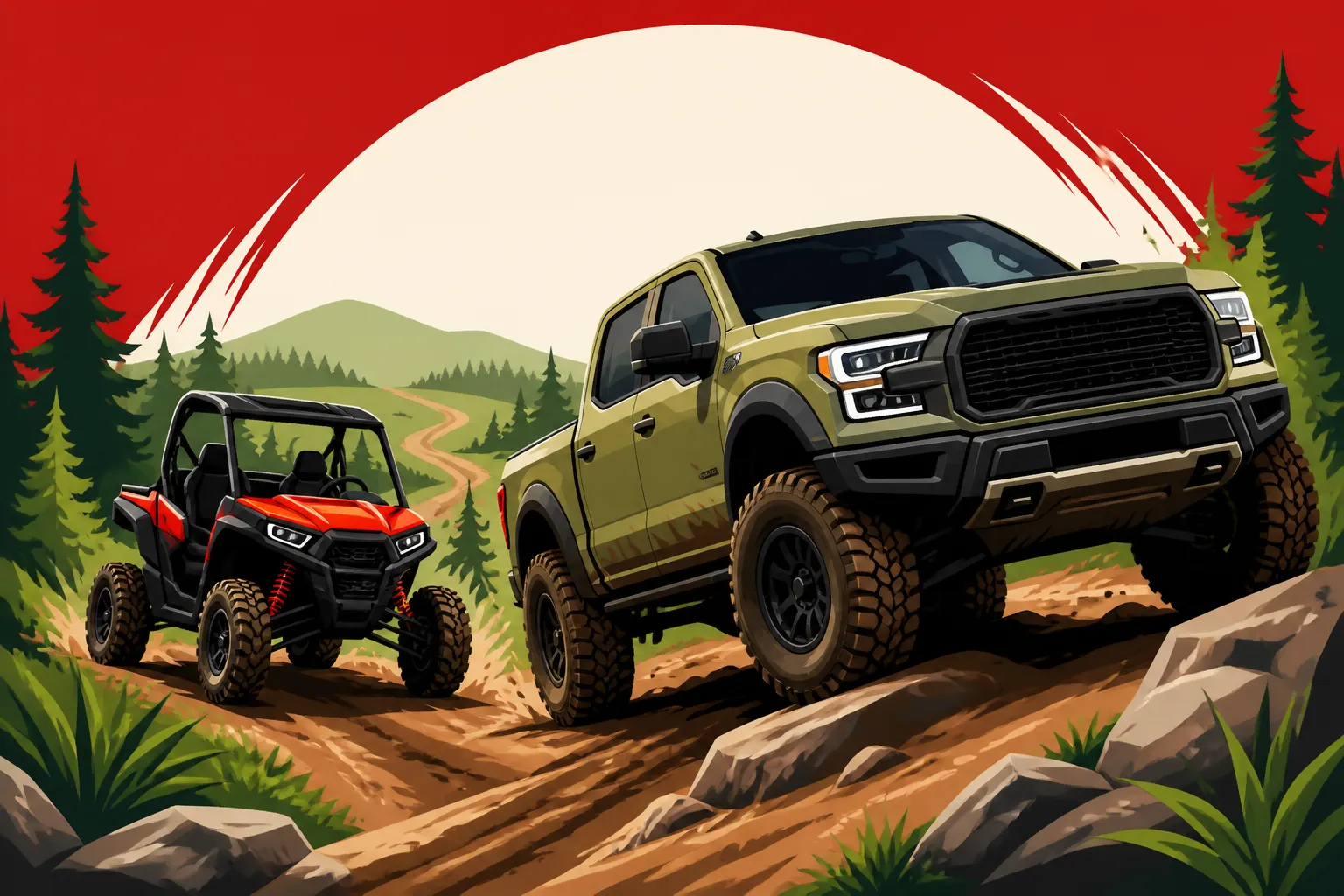
For full-size trucks, privately operated off-road parks are usually the clearest starting point. They can offer designated routes for different vehicle types, while public land often has more specific access rules. Before making a trip, confirm that the park allows your particular vehicle—not just “off-road vehicles” generally.
If you are comparing destinations, [Alabama ATV Trails: Where to Ride] is a useful starting point for understanding the range of riding options across the state. Keep in mind that a place suitable for an ATV or side-by-side may not accommodate a pickup truck.
Private parks to check first
Boggs and Boulders, near Andalusia in Covington County, is a well-known off-road destination associated with larger four-wheel-drive vehicles as well as smaller machines. Its terrain and route choices can make it appealing to drivers looking for a more challenging outing. Still, ask the park directly about truck access, vehicle dimensions, trail conditions, and any route restrictions before setting out. A park’s general off-road focus does not mean every trail is suitable for every truck.
Choccolocco Mountain, near Jacksonville in Calhoun County, is another destination off-road drivers may want to investigate. Its terrain is associated with four-wheel-drive recreation, including challenging rock and hill features. That can be exciting for a prepared vehicle and driver, but it also makes it especially important to ask about difficulty levels and whether the routes match your truck’s equipment and your group’s experience.
Stony Lonesome OHV Park near Bremen in Cullman County is another name worth checking when planning an Alabama off-road trip. Its recreation setting includes off-highway riding, but do not assume every trail is open to full-size trucks. Confirm vehicle eligibility and route access with the park before you travel. For more places to compare, see [Alabama Private Off-Road Parks] and [Alabama Trails That Allow Side-by-Sides].
A practical rule: if a park does not clearly state that full-size trucks are allowed, contact the office before you load the truck. Ask whether “4×4” means a standard pickup, a modified truck, or a particular class of vehicle. Clarify whether access depends on wheelbase, width, weight, tire type, or other equipment.
How to choose a place that fits your truck
A truck that can handle a muddy field may not be appropriate for a narrow, rocky trail. Think about the vehicle’s dimensions and equipment—not just whether four-wheel drive works. Long wheelbases can make tight turns difficult, wide tires can limit access, and a heavy truck may sink into soft ground where a lighter rig passes easily.
Also match the route to the least experienced driver in your group. If one person is new to off-road driving, choose a park with easier routes and a clear way to turn around. It is far better to skip a difficult obstacle than to discover halfway through it that your truck cannot safely reverse or be recovered.
| What to confirm | Why it matters |
|---|---|
| Full-size truck access | A park may admit ATVs or UTVs but restrict pickups |
| Vehicle dimensions and weight | Narrow routes, bridges, or soft ground may not suit every truck |
| Trail difficulty | A route can exceed your vehicle’s capability or driver experience |
| Required equipment | Parks may set rules for recovery gear, tires, or other safety equipment |
| Hours, fees, and reservations | Admission procedures and operating details can change |
| Weather and closures | Heavy rain can make routes unsafe or lead to temporary closures |
How to verify access before you drive
A map pin is a helpful clue, not proof that a route is legal or suitable for your truck. This is one of the most frustrating parts of planning: online maps can show a road or trail without explaining whether it is open to the public, restricted to certain vehicles, or currently closed.
Use mapping tools such as onX Offroad to explore an area and plan your route, but confirm permission with the park, land manager, or relevant authority. A mapped line should never be treated as a substitute for posted rules or direct confirmation.
Ask specific questions, not just “Are trucks allowed?”
When you call or message a park, give a clear description of your vehicle. Mention whether it is a full-size pickup, its approximate width and wheelbase, and any major modifications such as oversized tires or a lift. Then ask whether that exact type of vehicle is permitted and which routes are appropriate.
It also helps to ask whether access is limited to certain days, events, or designated sections. Find out whether the park has current trail closures, whether advance reservations are needed, and what happens if heavy rain affects the route. A quick conversation can save a long drive with a truck that cannot enter.
For a useful checklist when comparing options, [Alabama Trail Difficulty Ratings] can help you think about route demands beyond a simple “easy” or “hard” label. If you are relying on a map app, [Alabama ATV Trail Map Downloads] offers related guidance on map planning; use any map alongside the destination’s own rules.
Use maps carefully on private and public land
With onX Offroad or another mapping tool, check the route before leaving home and save the information you will need for the trip. Cell service may be unreliable in wooded or hilly areas, so do not count on being able to load a map after you arrive. A downloaded map can help with navigation, but it cannot grant access to private land or override a closure sign.
Pay attention to boundaries. A trail that appears to continue beyond a park or forest boundary may enter land with different rules. Do not follow an unmarked track simply because it looks rideable. If the ownership or access status is unclear, stop and verify rather than risk trespassing or damaging property.
Before departure, compare the route shown in your mapping app with information from the park or land manager. If the two do not match, follow the official access instructions and ask for clarification. Keep a backup plan in case the trail is closed or unsuitable when you arrive.
Public land, forest roads, and truck access
Public land can offer scenic driving, but a forest road is not automatically an off-road trail. On public land, vehicle access is generally tied to designated roads or routes, and the applicable rules can differ by area. Stay on routes open to your vehicle type, and do not assume a road that appears on a general map is open for recreational driving.
For trips involving national forest land, look for the current motor-vehicle map or other official area information. [Which Forest Roads in Alabama Are Open to ATVs] is relevant background, but truck access should be confirmed for the specific road and vehicle. Rules written for ATVs may not establish access for a pickup.
Forest roads are different from open trail riding
A forest road may be open for ordinary vehicle travel while nearby woods, fire lanes, or informal tracks remain closed to motor vehicles. Do not drive around a gate, onto a route marked closed, or off the established road to get around mud or a fallen tree. If a route is blocked, turn around and use an authorized alternative.
This distinction matters in places such as the Talladega National Forest and Bankhead National Forest, where visitors may encounter a mix of maintained roads, recreation areas, and restricted routes. Check the relevant forest information before traveling, and confirm whether the road is open to your vehicle and intended use. A route suitable for a passenger vehicle on a dry day may become difficult after rain.
Do not confuse access for hunting, work, or land management with permission for recreational driving. A person may have authorization for a specific purpose that does not extend to general trail use. If your trip involves a wildlife management area or another regulated tract, check the rules for that area separately. [Alabama National Forest Riding Permits] provides related information to help you understand why access rules need to be checked for the specific land and activity.
Weather, closures, and responsible driving
Alabama’s red clay can become slick after rain, and some low-lying sections can hold water long after a storm. A trail that felt manageable on a dry weekend may become unsafe, deeply rutted, or impassable. Check for park announcements and closures before you leave, and be willing to postpone the trip if conditions are poor. [Alabama Trail Closures After a Storm] covers why checking conditions matters.
If you encounter a closure, do not drive around the barrier or make a new route through the woods. Bypassing a muddy section can damage vegetation and create a wider, more eroded track. It can also put you on land where vehicles are not permitted. Good trail etiquette helps keep destinations usable for the next group, too; [Alabama Trail Etiquette Locals Expect] offers related guidance.
Plan a safer 4×4 trip in Alabama
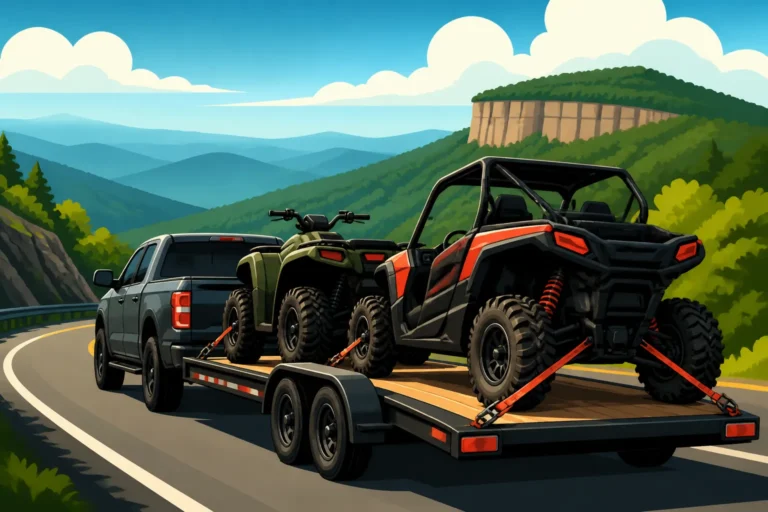
A little preparation makes a truck trip more enjoyable and helps avoid preventable problems. Think through the route, weather, vehicle capability, communication plan, and recovery options before leaving. Off-road driving can put you a long way from a paved road or a quick repair, so plan for delays rather than assuming the day will go exactly as expected.
Prepare the truck and the people
Check the basics before the trip: tires, spare tire, jack, fluids, lights, and recovery points. Carry recovery equipment appropriate for your vehicle and know how to use it safely. A winch, tow strap, or traction boards are only useful if they are suitable for the situation and the people operating them understand the risks. Avoid attaching recovery gear to an improvised point that could fail under load.
Travel with another vehicle when possible, especially if the route is remote or difficult. Agree on a meeting point and a plan if the group gets separated. Tell someone who is not on the trip where you are going and when you expect to return. If cell service is uncertain, plan for that before leaving rather than relying on a phone to solve every problem.
Bring water, weather-appropriate clothing, food, a first-aid kit, and a way to communicate. Give yourself enough daylight to finish the route without rushing. If you are new to a park, choose a conservative route first and ask staff which sections are suitable for your setup.
Keep access rules simple and visible
Before the trip, save the park’s address, directions, entry instructions, and contact information. Keep any required permits or confirmations easy to find. At the destination, read posted signs and follow staff directions even if a mapping app suggests a different route.
Respect other visitors and landowners. Slow down near people, avoid excessive wheel spin, and stay on marked routes. Do not leave trash, cut fences, or disturb gates and barriers. If you are unsure whether a route is open, stop and ask rather than guessing.
The right Alabama 4×4 destination is not simply the closest place with a dirt road. It is a place that expressly permits your kind of truck, offers routes suited to your experience, and has conditions you can manage safely. Confirming those details before you tow out is the simplest way to prevent a frustrating trip and protect the places people come to enjoy.
Disclaimer
This article is for general informational purposes only and does not constitute professional advice. Laws, prices and regulations vary by location and change over time. Consult a qualified professional for guidance on your specific situation.