Alabama Public Land Rules Compared to Private
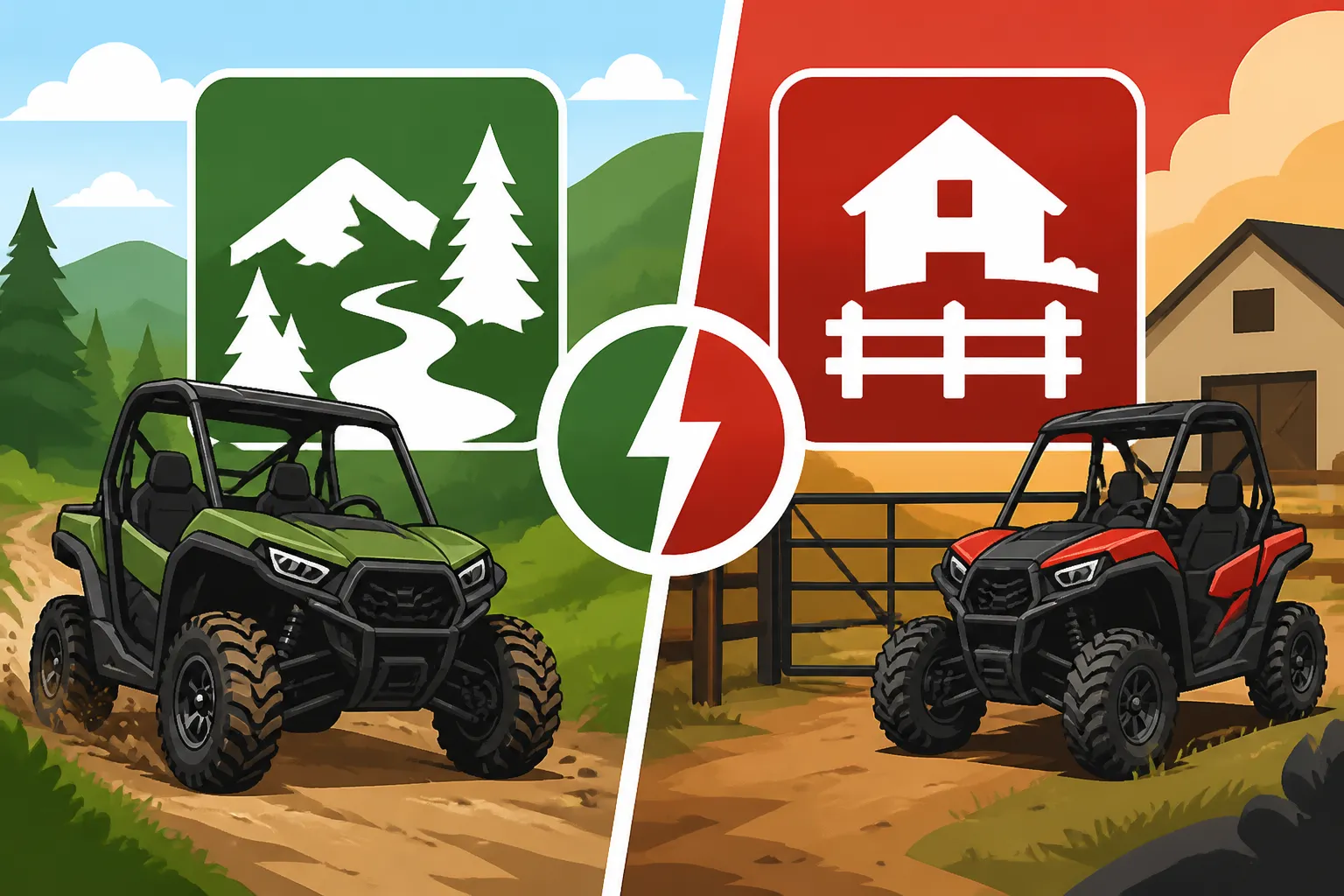
Riding an ATV or UTV in Alabama can mean very different things depending on who manages the ground beneath your tires. Public land may have permits, designated routes, seasonal closures and use restrictions; private land may require permission or compliance with a park’s own rules. Here’s how to tell which rules apply before you unload.
Start With Who Controls the Land
“Public land” is not one category with one set of riding rules. A wildlife management area, a national forest and a publicly operated off-road park can each have different access requirements. The land manager’s rules apply alongside state law, so a machine that is allowed on one property may be prohibited on another.
On private land, the owner or operator controls access. That might mean getting the landowner’s permission before riding, or following admission rules at a private OHV park. Private property does not automatically mean unrestricted riding: the owner can limit routes, hours, passengers, vehicle types and other activities.
| Where you plan to ride | What to check first | What permission or permit may apply |
|---|---|---|
| Wildlife management area | Area map, open routes, dates and current access instructions | Required WMA credentials or area-specific permits, depending on the rules |
| National forest | Current motor-vehicle map, route status and local notices | Any access or activity requirements listed by the managing office |
| Public OHV park | Park rules, machine limits, operating days and closures | Admission, reservation or waiver requirements set by the operator |
| Private land | Owner’s directions, boundaries and allowed routes | Clear permission from the owner or authorized lessee |
| Private OHV park | Park-specific rules and entry instructions | Admission and any required waiver or registration process |
Before going, identify the exact property and its manager. A place name or trailhead may sit near more than one parcel, and the same road can change status along its length. If you are unsure, ask the managing office or property owner to confirm the route and access conditions.
Alabama’s voluntary ATV registration is a separate issue from permission to ride. Registration does not give you the right to enter a WMA, forest road, private tract or park, and it does not make a closed route open. For the registration distinction, see Alabama Registration Is Voluntary and What Registering Gets You Before Riding Public Land.
Public Land: Check Permits, Routes and Closures
Wildlife management areas
A WMA is managed for wildlife and public access, not as an unrestricted trail system. Riding may be limited to specific roads or routes, particular times of year, or particular purposes. Hunting seasons and other management activities can affect where and when a machine may be used. Do not assume that a road shown on a general map is open to ATVs or UTVs.
Check the rules for the exact area before you go. Depending on the tract and the type of access, riders may need applicable WMA credentials, an area permit, or a daily permit. Requirements can vary by area and may change, so check the current information from the relevant state authority and read notices posted at the tract. Alabama WMA Rules Vary by Area explains why checking the specific area matters.
Some WMA access systems use permits that riders obtain or complete for a particular visit. If the process involves checking in or out, follow those steps carefully. Keep any required proof with you, and do not rely on a hunting license alone to establish that machine access is allowed. A hunting credential, a WMA access permit and permission to ride a particular road are not necessarily interchangeable.
The rules may also limit riding to open roads, restrict off-road travel, or prohibit access during certain seasons. Retrieving game may have separate conditions from recreational riding. Check the tract’s map and written instructions rather than treating a hunting purpose as blanket permission to operate a machine. See Which Permits to Carry on an Alabama WMA and Alabama WMA Access During Deer Season for related questions.
National forests and other federal land
National forest access also depends on the particular route and current conditions. A forest road that is open to highway vehicles is not automatically open to every ATV or UTV, and a road map is not necessarily an OHV trail map. Use the current motor-vehicle map and follow signs, gates and seasonal notices. If a route is closed, do not ride around a barrier or assume that a nearby trail provides an alternate route.
Contact the appropriate forest office if a map or sign is unclear. Ask whether the specific road or trail allows your type of machine, whether a permit or other requirement applies, and whether recent conditions have changed access. Which Forest Roads in Alabama Are Open to ATVs and Calling the National Forest District Office Before You Ride can help you plan that check.
Public parks and designated riding areas
A publicly operated OHV area can have its own entry rules even when it is open to visitors. The operator may limit machine size, set hours, require a waiver, restrict passengers, or close trails after rain or maintenance. These are operating rules for that location, not a general permission to ride elsewhere on public land.
Read the park’s current rules and confirm that it is open on the day you plan to visit. Check the permitted machine types and any restrictions that apply to your ATV or UTV. A park’s admission process is not necessarily a state registration or WMA permit. For location-specific planning, see Alabama Public Use Designated Areas and Alabama OHV Camping With Trail Access.
Private Land: Permission Is the Starting Point
On privately owned land, get permission from someone who has authority to grant it before riding. A gate being open, tire tracks being visible, or a road appearing on a map does not prove that you have permission. The land may be leased, posted, shared among owners, or subject to a timber company’s access policy.
Ask clear questions before entering:
- Which property boundaries and routes are included?
- Are ATVs and UTVs both allowed?
- Are there limits on riding hours, passengers or speed?
- Are there seasonal restrictions, hunting activities or other users to consider?
- Is permission limited to you, or does it cover everyone in your group?
- Should you carry written permission or contact information while riding?
For timberland, hunting leases and other managed tracts, permission from one person may not be enough if that person cannot authorize motorized access. Get the land manager’s or leaseholder’s specific approval. Written permission is useful when boundaries, dates or allowed routes could be misunderstood. Alabama Landowner Permission Letters and Reading a Timber Company’s Written Riding Policy cover these situations in more detail.
Private OHV parks are different from informal private land. They are operated for visitors and commonly set entry rules, fees, waivers, age limits, machine restrictions and trail-use conditions. Those rules can be stricter than the minimum requirements under state law. Read the park’s own current instructions before traveling, especially if you are bringing a youth rider, a passenger or a machine with unusual dimensions.
Permission from a landowner also does not override state or local restrictions. It does not authorize trespassing onto adjoining property, riding on a public road where the machine is not permitted, or ignoring a posted closure. Alabama Trespass Law for Riders and Alabama Local Ordinances on ATV Riding explain why private access and public-road rules need separate checks.
The Rules That Still Follow You
Wherever you ride, land access is only one part of the decision. State law, local ordinances and property rules may all apply. In particular, do not assume that a machine allowed on private ground can legally be driven on the public road used to reach that ground. Road use and trail access are separate questions. For the road-use issue, see Can You Drive an ATV on the Road in Alabama?
The machine itself matters, too. A rule may distinguish between an ATV, a side-by-side, a dirt bike or another type of vehicle. Parks and public land managers can impose their own vehicle limits even when a machine fits a general statutory definition. Confirm that the exact machine you plan to bring is allowed, not just that the property permits “off-road vehicles.”
Registration and proof of ownership are also different from a land-access permit. Alabama’s voluntary registration does not replace an area permit, a park waiver or a landowner’s permission. Likewise, carrying a bill of sale or other ownership record does not prove that a trail is open. Keep required documents accessible, but use the land manager’s current rules to establish where you may ride.
A practical pre-ride check looks like this:
- Identify the exact property and who manages it.
- Find the current map or written access rules for that property.
- Confirm whether the route is open to your machine on your planned date.
- Check whether a permit, license, reservation, admission or waiver is required.
- Get clear permission for private land and confirm the boundaries.
- Check for closures, hunting activity, weather-related restrictions and local rules.
- Carry any required credentials and follow posted signs while riding.
If public access information conflicts, pause and ask the responsible office rather than choosing the interpretation that allows the ride. If a private owner’s directions are unclear, clarify them before entering. A short check can prevent a trespass problem, a denied entry or an unsafe trip.
The main distinction is straightforward: on public land, the managing agency determines where and when access is allowed, often with area-specific requirements; on private land, the owner or park operator controls entry and use. In both cases, confirm the rules for the exact property and route. A registration card, hunting plan or open gate is not a substitute for that confirmation.
Disclaimer
This article is for general informational purposes only and does not constitute professional advice. Laws, prices and regulations vary by location and change over time. Consult a qualified professional for guidance on your specific situation.