Choosing Tires for Alabama Red Clay
Alabama red clay can feel firm when dry, then turn slick, sticky, and deeply rutted after a hard rain. Choosing tires for an ATV or UTV is not just about finding the most aggressive tread: the wrong setup can struggle on climbs, pack with mud, or make steering unpredictable. This guide explains what to look for and how to match tires to your riding.
Understand how Alabama red clay affects your tires
Dry clay and wet clay demand different things
Dry red clay may offer decent grip, but it can still be hard on tires. It often covers roots, rocks, and uneven ground, making it tough to judge what the tires are about to hit. On a dry ride, a moderate tread may be easier to steer on packed trails than an extremely aggressive mud tire, which can feel grabby and make the machine less predictable.
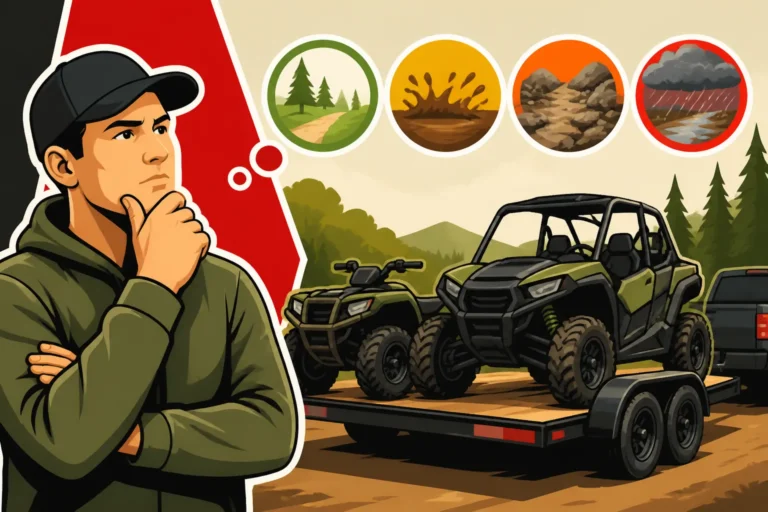
When the clay is wet, the challenge changes. A thin layer of slippery mud can coat the tread and reduce traction, while deeper mud can fill the spaces between tread blocks. A tire that looks aggressive in the garage may not clear clay effectively once it packs into the lugs. This is why local trail conditions matter as much as a tire’s appearance.
Rain can also turn a familiar route into a different ride. A hill that was manageable on firm ground may become slick, and ruts can deepen or hide obstacles. Check the forecast and recent trail information before loading up. Resources such as Alabama Trail Conditions Before You Tow and Alabama Red Clay and What It Does can help you think through the conditions you may encounter before choosing a setup.
Clay buildup can change how a tire behaves
Mud packed into the tread changes the shape of the tire’s contact with the ground. Instead of the tread blocks biting into the surface, the tire may slide across a layer of clay. If the tread cannot shed that material as it rotates, the tire can lose grip just when you need it most, such as on a climb or while turning across a slope.
The answer is not always to choose the deepest, sharpest tread available. Very aggressive tires can dig quickly in soft ground, which may help in some situations but can also rut a trail, bog the machine, or make it harder to maintain smooth control. Tire choice is a balance between traction, predictable handling, clearance, and the kind of ground you ride most often.
Trail surfaces vary even within one outing. A route might move from packed dirt to wet clay, then cross exposed roots or loose rock. For a broader look at how surface and route difficulty affect your choices, read Alabama Trail Difficulty Ratings. Planning with a trail map or a navigation tool such as onX Offroad can help you consider the route before you arrive, but it cannot tell you exactly how much traction you will have at a particular moment.
Choose a tread that fits your riding
Compare trail, all-terrain, and mud-focused tires
Tread labels are useful starting points, not guarantees. Tire construction, tread spacing, rubber compound, machine weight, and conditions all affect performance. Before buying, compare the tire’s intended use with your normal ride rather than choosing based only on the most dramatic-looking tread.
| Tire style | Where it may suit you | Trade-offs to consider |
|---|---|---|
| Trail or all-terrain | A mix of firm trails, dirt, roots, and occasional mud | May not clear deep, sticky clay as well as a mud-focused tread |
| Mud-focused | Frequent wet ground and deeper mud where tread can work | Can feel more aggressive on firm ground and may dig or rut more |
| Rock-oriented | Routes with exposed rock and hard, uneven surfaces | May not be the best match for frequent deep clay or mud |
| General-purpose utility | Farm, property, and mixed recreational use | Performance can be a compromise when conditions become extreme |
For riders who mostly visit established trails and ride in varied weather, a balanced trail or all-terrain tire may be easier to live with than a specialized mud tire. It can be a sensible choice when the route includes firm sections as well as patches of mud, and when predictable steering matters more than maximum bite in deep muck.
A mud-focused tread may make more sense if your regular riding includes wet, soft ground. Still, consider how often you truly encounter those conditions. If most of your rides are on firmer trails, a tire designed primarily for deep mud may add weight, change handling, or make the machine feel less composed on packed ground.
Match tread depth and spacing to your usual terrain
Look at the spaces between the tread blocks, not just their height. More open spacing can give mud room to move out of the tread, while tightly packed patterns may suit firmer surfaces better. But the result depends on the tire’s full design and the machine carrying it. A tread pattern that clears well on one setup may not behave the same way on a heavier UTV or with different pressure and load.
Consider how you ride, too. A rider who keeps a steady pace on established routes may value smooth, predictable handling. Someone who regularly tackles soft, wet sections may put more emphasis on traction and self-cleaning tread. Neither choice is universally right; the useful question is which conditions make up most of your riding days.
Before deciding, look at recent conditions and the difficulty of the route. onX Offroad may help you review mapped routes and plan where you intend to ride, while local park updates and posted rules can fill in important details. For instance, a route’s name or map line alone does not tell you whether a rain-soaked clay section is currently passable. Check current information and be prepared to turn around if conditions are beyond your machine or experience.
Fit tires to your ATV or UTV
Check size, clearance, and load before buying
Start with the tire size recommended for your machine, then confirm the replacement will fit the wheels and clear the suspension, bodywork, and steering components. A larger tire can change ground clearance, but it can also affect handling and place more demand on drivetrain parts. Do not assume that a tire will fit simply because another rider uses it on a similar-looking machine.
A UTV’s weight and passenger or cargo load matter. A loaded machine may press into soft clay differently from an unloaded one, and a tire that feels manageable with one rider may respond differently with several passengers, tools, or hunting gear aboard. Check the tire and vehicle manufacturers’ guidance for load capacity and fitment rather than guessing from appearance.
If you use your machine for both trail riding and work, think about the full job. A utility ATV hauling equipment around a property has different needs from a lightly loaded sport quad making recreational loops. The best tire is not necessarily the most aggressive one; it is the tire that suits your machine, typical load, and regular terrain without creating avoidable handling or fitment problems.
Set pressure with care
Tire pressure affects the size and shape of the contact patch, ride comfort, and how the tire responds over uneven ground. Too much pressure can make a ride feel harsh and may reduce the tire’s ability to conform to irregular surfaces. Too little pressure can increase the risk of damage, bead problems, or unstable handling, especially when carrying a load or turning on uneven ground.
Use the vehicle and tire manufacturers’ recommendations as your starting point, and use a reliable gauge rather than judging by eye. If you make adjustments for trail conditions, do so conservatively and stay within applicable guidance for the tire, wheel, and machine. Be especially cautious about lowering pressure on a loaded UTV or on a route with sharp rocks and hard impacts.
Recheck pressure after making a change and pay attention to how the machine behaves. If steering feels vague, a tire seems to roll in a turn, or the machine bottoms out more easily, stop and reassess. A pressure adjustment cannot make an unsuitable tire safe, and it cannot replace choosing a route that fits your skill and equipment.
Ride with the conditions, not against them
Adjust your route and riding style after rain
After rain, avoid assuming that a familiar trail will ride the same way it did last weekend. Clay can stay slick in shaded areas and low spots even after more exposed sections begin to dry. Ruts may also hold water and conceal rocks, roots, or abrupt changes in depth.
Give yourself room to slow down, especially before turns and descents. Sudden throttle, braking, or steering inputs can break traction. On a climb, keep a controlled pace and avoid spinning the tires unnecessarily; spinning can dig holes, damage the trail, and leave you with less grip. If the machine is sliding or digging in, stop safely and reassess rather than charging harder.
Trail closures and restrictions may change after storms or heavy use. Check local notices before heading out, and respect closed routes. Alabama Trail Closures After a Storm and Treading Lightly on Erodible Alabama Clay offer useful context for why wet ground deserves extra care. A navigation tool such as onX Offroad can help you orient yourself to a route, but always follow posted signs and park or land-manager guidance.
Clean and inspect the tires after the ride
Red clay can cling to tread, wheels, and suspension parts. Once the ride is over, remove packed mud before it hardens. Pay attention to the tread grooves, wheel wells, brake areas, and components where buildup could interfere with movement or make damage harder to see. Washing Red Clay Off Before It Sets covers the practical side of dealing with clay after a ride.
As you clean, inspect for cuts, embedded stones, bent or damaged wheel components, and unusual wear. Look for tread blocks that are torn or missing, and check whether wear is even across the tire. If one tire appears to be wearing differently, consider whether pressure, alignment, mechanical condition, or riding habits may be contributing.
A quick post-ride check can save frustration on the next outing. Note what the tires did on firm ground, slick clay, and deeper mud. If they packed quickly, slid on climbs, or felt harsh and unpredictable, write that down before shopping. Those observations are more useful than buying based on a tread photo alone, and they help you choose tires that fit how you actually ride in Alabama.
Disclaimer
This article is for general informational purposes only and does not constitute professional advice. Laws, prices and regulations vary by location and change over time. Consult a qualified professional for guidance on your specific situation.