Treading Lightly on Erodible Alabama Clay
Alabama’s red clay can look firm on a sunny morning and turn slick after a passing shower, while tire ruts can channel the next rain straight down a trail. This guide explains how to choose a lower-impact route, ride and recover without tearing up the ground, and decide when conditions are too wet to continue.
Why Alabama clay trails are easy to damage
Red clay changes quickly with weather
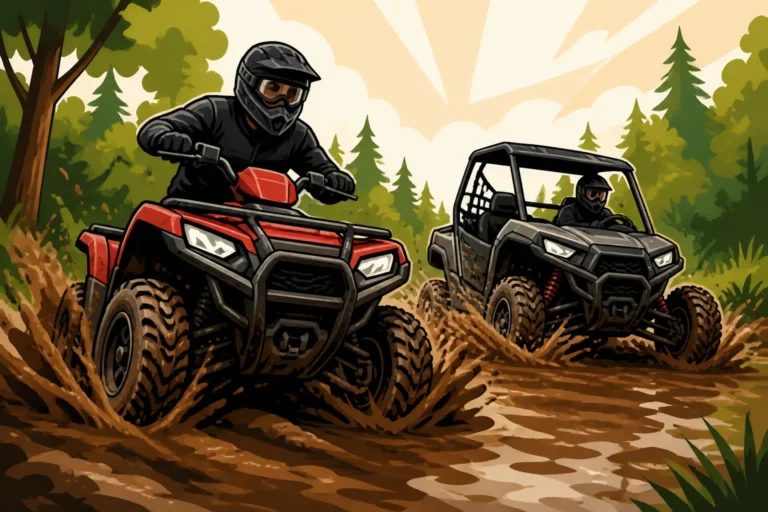
Alabama’s clay soils can hold water and become slick when wet. On a slope, that combination makes it harder for tires to grip and easier for a machine to slide, spin, or cut a groove into the trail. Even a short burst of throttle can dig a rut deeper than a rider intended.
The surface can also be deceptive. A trail may seem dry at the entrance while shaded hollows, creek approaches, and low spots remain muddy. A light shower can soften exposed ground, and repeated traffic can turn one shallow rut into a channel that carries runoff. The damage may not be obvious from the seat, especially when a rider is focused on keeping the machine upright.
This is why checking conditions before a ride matters as much as choosing the right tires or machine. Look at recent rain, inspect the route as you go, and be willing to turn around if the surface is breaking apart. For broader planning, Alabama Trail Conditions Before You Tow can help you think through how weather and access affect a riding day.
Ruts redirect water and widen trails
A rut is more than a mark left by a tire. When it runs downhill, it can collect water and speed up erosion. Water flowing through the rut may carry loose soil away, expose roots, and create a deeper, rougher channel. Riders may then steer around it, widening the trail and disturbing vegetation on both sides.
The cycle is easy to start. One machine slips and spins in a muddy section. The next rider avoids the hole by going around it. After enough passes, the trail is wider, the muddy section is larger, and the surrounding ground is compacted or torn up. A group ride can create this pattern quickly if riders follow one another off the established track.
When a rut is forming, resist the urge to create a new line around it. If the route is open and safe, use the established trail at a controlled pace. If it is too damaged to ride without worsening it, turn back or choose another authorized route.
Slope and water are warning signs
Steep sections, creek banks, drainage dips, and low-lying trail crossings deserve extra care. These are places where water naturally moves or collects, so a small amount of tire damage can have a larger effect. A route that feels manageable when dry may become a serious traction problem after rain.
Before committing to a difficult section, stop somewhere stable and look ahead. Notice where the water would travel, whether the trail is already rutted, and whether there is a safe place to turn around. Avoid riding along creek banks or through vegetation to find a shortcut. If you are unsure whether a route is permitted, check the property or riding-area rules rather than assuming that a visible track is open.
How to ride with less impact on clay
Stay on established, authorized routes
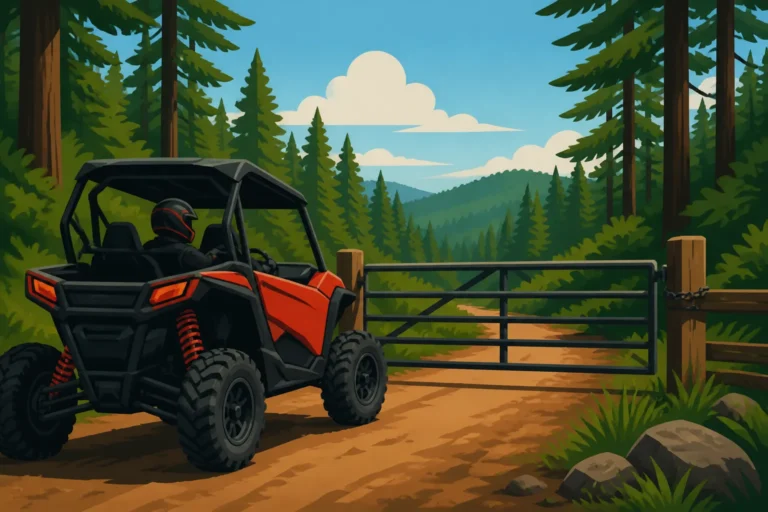
The simplest way to reduce trail damage is to remain on the route you are allowed to use. Do not cut switchbacks, ride around a closure, or make a new path through grass and woods to avoid mud. A detour can compact soil, damage plants, and encourage others to treat the new line as part of the trail.
Maps can help with planning, but they are not permission to ride. An app such as onX Offroad can be one tool for reviewing a planned route and nearby land boundaries. Treat map information as a planning aid, then confirm that the road or trail is open to your machine and that you have permission to be there. Land boundaries do not automatically show whether a route is currently usable.
For public areas, check the managing agency’s directions and any posted closures. On private land, follow the landowner’s instructions. If the route is unfamiliar, Alabama Trail Etiquette Locals Expect offers useful context for sharing riding areas responsibly.
Use steady throttle and avoid wheelspin
On slick clay, abrupt throttle often makes traction worse. When a tire spins, it can scrape away the surface and deepen a rut without moving the machine forward. Instead, use smooth, measured inputs and maintain a pace that lets you respond to the trail.
Give yourself room to slow down before a turn, climb, or muddy patch. If you approach a slippery section too quickly, braking hard or adding a sudden burst of throttle can unsettle the machine. Keep your movements deliberate, and avoid making sharp steering corrections that push the tires sideways across soft ground.
If traction disappears, stop spinning the tires. Continuing to accelerate may dig the machine in deeper and enlarge the damaged area. If it is safe, ease off, reassess the line, and use a suitable recovery method. Do not let a difficult section turn into repeated attempts that chew up the trail. For more advice on wet conditions, see Alabama Trail Riding After Heavy Rain.
Choose a route that matches the conditions
A route suitable for a dry afternoon may be a poor choice after sustained rain. Before leaving, check the forecast and any park or land-manager notices. Consider postponing if the route includes steep clay climbs, low crossings, or sections already known to hold water.
When you are out, watch for changes in the surface: fresh standing water, soft edges, shiny slick clay, deepening ruts, and water running along the trail. These are reasons to slow down, stop, or turn around. If you are riding with others, agree before the ride that anyone can call for a change of plan without pressure to keep going.
A practical decision guide:
| Trail condition | Lower-impact choice | Why it helps |
|---|---|---|
| Firm surface with no visible runoff | Ride the established route at a controlled pace | Tires are less likely to break up soft soil |
| Shallow mud with a stable, authorized track | Cross steadily without spinning or making a detour | Keeps traffic concentrated on the existing trail |
| Deep mud or a growing rut | Turn around or choose another open route | Prevents repeated attempts from widening or deepening the damage |
| Water running down a slope | Avoid the section if possible and report the condition | Reduces further channeling and soil loss |
| Closed, posted, or uncertain route | Do not enter until access is confirmed | Protects land and avoids unauthorized riding |
These are judgment cues, not a substitute for site rules. A park or land manager may close an area even when it looks rideable, and posted directions should take priority.
Preparing your machine and group for sensitive trails
Check the machine before the ride
A basic pre-ride check helps you avoid unnecessary stops and risky recovery attempts. Check tire condition and pressure against the manufacturer’s guidance, inspect brakes and steering, and make sure your machine is suitable for the route and its posted limits. A poorly maintained machine can struggle on slick ground, increasing the temptation to spin tires or take a damaging detour.
Carry equipment appropriate to the ride, such as recovery gear, water, and a first-aid kit. Learn how to use recovery equipment before you need it, and avoid attaching a winch or tow line to trees or other features in ways that could damage them. Keep people clear of loaded recovery lines and follow the equipment manufacturer’s instructions.
A map can help your group understand where it is and avoid wandering onto an unapproved route. onX Offroad may be useful for reviewing a route before leaving, but confirm access and closures with the land manager or landowner. If your plans include a park, check its rules directly; permitted machine types, routes, and operating conditions can differ by location. Alabama Private Off-Road Parks is a useful starting point for thinking about how riding areas can vary.
Keep the group together without crowding
Groups can unintentionally multiply trail damage. Riders who follow too closely may stop suddenly in the same soft spot, while those at the back may take a side route to get around a stuck machine. Set a pace that allows adequate stopping distance and agree on a meeting point before entering a challenging section.
Let one rider assess an uncertain obstacle first, then have the rest of the group wait on stable ground. Do not line up several machines on a fragile slope or muddy edge. If the first rider finds that the section is deteriorating, turn the group around rather than sending everyone through to “see how it goes.”
A simple ride briefing can prevent confusion:
- Confirm which routes are open and where the group is allowed to ride.
- Identify a turnaround point and agree that riders can call one at any time.
- Choose a lead rider and a sweep rider so no one is left behind.
- Decide how the group will communicate if visibility or cell service is limited.
- Remind everyone to stay on the trail and avoid spinning tires.
If the trip takes place on public land, rules may vary by property and season. [Alabama WMA Riding Rules for Quads] explains why it is important to confirm the requirements for a specific area before setting out.
Clean up without spreading mud
Mud carried home on a machine can hold seeds, plant material, and debris. Clean the machine before moving to another riding area when practical, paying attention to tires, wheel wells, floorboards, and other places where soil collects. Use a suitable wash area when one is available, and follow the riding area’s directions for washing and runoff.
At home, avoid washing mud directly into a storm drain, creek, or roadside ditch. Choose a place where runoff can be managed and where the mud will not wash into a waterway. Cleaning also gives you a chance to spot damage, loose fasteners, or packed debris before the next ride.
Do not use cleaning as a reason to ride through additional sensitive ground on the way out. If the exit route is deteriorating, follow site staff instructions or turn back where safe. The goal is to leave the area in a condition that remains usable for the next rider and does not pass avoidable sediment downstream.
What to do when a trail is already muddy or damaged
Decide whether to continue or turn around
A muddy trail is not automatically unsafe or closed, but the condition of the ground should guide your decision. If your tires can travel on the established track without digging deep grooves, and the route is open, you may be able to proceed carefully. If the surface is collapsing, water is flowing through a rut, or your machine is losing control, continuing can make the damage worse and put riders at risk.
Turning around is often the responsible choice, even when it is inconvenient. You may have to retrace part of the ride or skip a planned destination. That can be frustrating, especially if your group has traveled a long way, but forcing a machine through a failing section can leave a larger rut, damage property, or require a difficult recovery.
Avoid building a bypass on the spot. Do not ride through brush or across a hillside to get around the damaged area unless the route is specifically authorized. If the trail has a marked detour, follow it. If there is no clear option, contact the riding area or land manager for direction.
Report problems and respect closures
If you notice a washed-out section, fallen tree, unsafe crossing, or fresh trail damage, report it to the park operator or land manager when possible. Give a clear location and description, such as a nearby intersection, marker, or mapped route name. A photo taken from a safe place may help explain the issue, but do not step into an unstable bank or block the route to document it.
Closures are there for a reason, even when the trail appears passable. A closed section may be vulnerable to erosion, under repair, or unsafe for reasons that are not visible from the trail entrance. Do not move barriers or follow tracks around them. For general planning before a trip, Alabama Trail Closures After a Storm and Treading Lightly on Erodible Alabama Clay are useful reminders to consider both conditions and land care.
If you are unsure which office or person to contact, use the official contact details for the riding area or land manager. Do not assume that a neighboring property owner, trail user, or online map has authority to reopen a route.
Make the next ride easier on the land
Low-impact riding is mostly a series of small choices: checking conditions, staying on authorized routes, using smooth throttle, leaving space between machines, and turning around when the trail is failing. These choices matter even more after rain, on steep ground, and where water naturally gathers.
If you ride the same area regularly, notice how its surface responds to different weather. Some sections may dry quickly while shaded clay stays soft. Keep those observations in mind when planning future rides, but do not treat a familiar route as permanently safe or open. Conditions and access can change.
A good ride does not have to include every planned mile. When you leave a trail without widening it, cutting new tracks, or worsening erosion, you help keep the area available for other riders and land users. That is a practical way to tread lightly on Alabama clay.
Disclaimer
This article is for general informational purposes only and does not constitute professional advice. Laws, prices and regulations vary by location and change over time. Consult a qualified professional for guidance on your specific situation.