Horseback Riders on the Same Ground
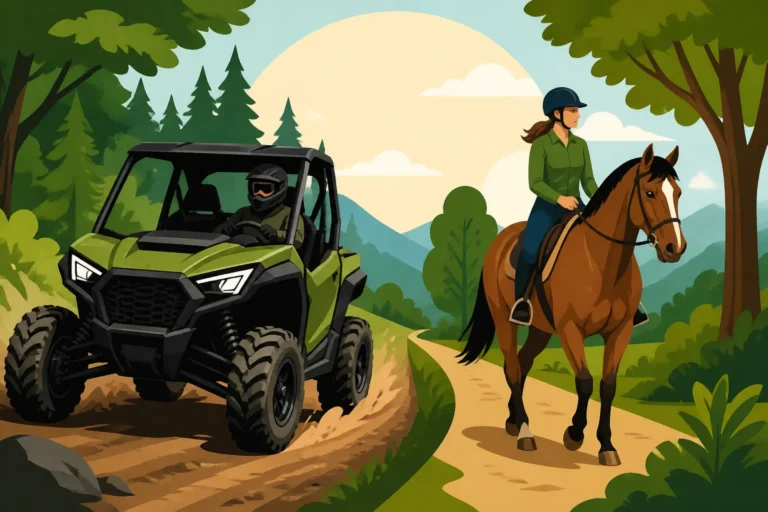
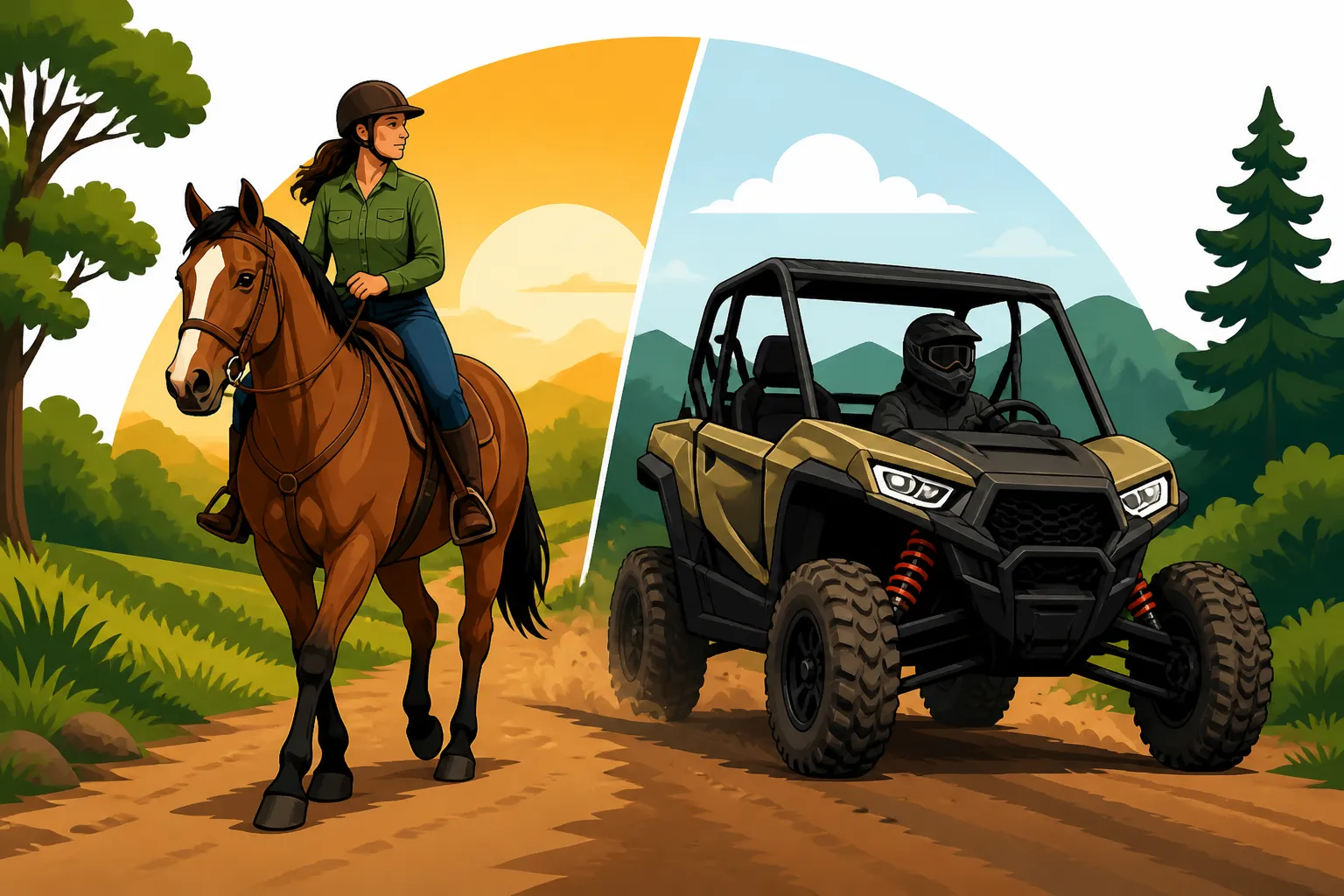
A trail that looks wide enough for a side-by-side can feel very narrow when you meet a horse around a blind bend. In Alabama, riders may encounter horseback users on shared routes, access roads, or multi-use property. This guide explains how to check whether horses are allowed, approach safely, pass respectfully, and avoid turning a routine ride into a frightening encounter.
Check Whether Horses and Off-Highway Vehicles Share the Route
Confirm the rules for the specific trail or property
There is no single rule that makes every Alabama trail open to ATVs, UTVs, and horses. Access depends on who manages the land and what that manager allows. A private riding park, county property, wildlife management area, and national forest can each have different rules. Even within one property, a route may be designated for certain users or closed seasonally.
Before unloading, check the property’s current trail map, posted notices, and riding rules. If the wording is unclear, call the park office or land manager and ask directly: “Are horses and motorized off-highway vehicles allowed on the same trails, or are there separate routes?” Also ask whether the rule applies to the whole property or only certain roads and trails. For public land, look for land-manager maps and permit requirements rather than assuming that a visible track is open to motorized use. Alabama Public Land Rules Compared to Private
A mapping app such as onX Offroad can help you plan a route and understand the surrounding trail network, but it should not replace the managing agency’s rules. A route shown on a map may not tell you whether horses are permitted, whether a gate is currently closed, or whether an area has a seasonal restriction. Use onX Offroad as a planning aid, then compare your intended route with official information before riding.
Look for signs of shared use and changing conditions
At a trailhead, pause long enough to read the signs. Watch for symbols or wording about equestrian use, motorized vehicles, one-way travel, speed limits, seasonal closures, and routes reserved for particular users. If you see horse trailers parked nearby, that is a reason to stay alert, not proof that every trail on the property is shared.
Conditions can also change after rain, maintenance work, hunting activity, or a management decision. In Alabama, wet red clay can make a trail slippery and can limit visibility when riders slow down or take a different line around a muddy section. Check for closures and recent notices before heading out, and consider Alabama Trail Closures After Rain when planning a trip after a storm. A route that was open on your last visit may not be suitable or available today.
If you cannot confirm that motorized riding is allowed, do not treat silence on a map as permission. Choose a route with clear authorization instead. Which Forest Roads in Alabama Are Open to ATVs is a useful starting point when your plans involve national forest roads, but always check the relevant forest information for the particular area and route.
How to Approach a Horse Safely
Slow down early and make your presence predictable
Horses can react to sudden movement, unfamiliar engine noise, or a vehicle appearing unexpectedly. The safest approach is to reduce speed as soon as you see a horse or hear a rider ahead. Do not wait until you are close to decide what to do. On a wooded trail, a bend, rise, or patch of dense vegetation can hide a horse until both groups are already near one another.
Ease off the throttle and avoid revving, accelerating sharply, or spinning your tires. If you are in a group, signal the riders behind you to slow down as well. A second UTV coming around the corner at speed can make an otherwise manageable encounter much more stressful. Leave enough room for the lead vehicle to stop without being pushed forward by the rest of the group.
When you are close enough to communicate, use a calm voice and ask the horseback rider what they would like you to do. A simple “Would you like us to stop here?” is more useful than assuming that the rider can safely move off the trail. Keep your engine quiet if you can do so safely. If shutting it off is appropriate, do that without making sudden movements or crowding the horse.
Give the horse and rider space
Do not approach a horse from behind, squeeze past it on a narrow shoulder, or assume that it will remain still while you pass. The rider may need room to turn the horse, move to a wider spot, or steady the animal. A steep bank, ditch, mud hole, or drop-off may make the side of the trail an unsafe place for them to wait.
If the rider asks you to stop, wait where you are and give them time. Follow their directions about which side to pass on and when to move. There is no universal passing maneuver that works for every horse, trail, and vehicle. What matters is letting the rider judge the horse’s comfort and the available space.
Keep dogs close and under control, and make sure passengers do not shout, wave, or move suddenly. Do not try to touch or feed the horse. Children may be excited to see an animal on the trail, but they should stay seated and quiet until the rider has passed and the group is clear.
Passing on Shared Trails Without Creating a Scare
Use a calm, agreed-upon passing plan
If the trail is wide enough and the horse appears settled, wait for the rider to tell you when and where to pass. Move slowly and steadily, leaving as much space as the terrain allows. Avoid sudden steering toward the horse, abrupt braking, and quick bursts of acceleration. A steady engine sound is generally easier to anticipate than a sudden change in noise, but the horseback rider’s directions should guide the encounter.
On a narrow route, do not insist on squeezing by. Stop at a safe distance and let the horseback rider decide whether the horse can move aside or whether both parties should wait for a wider spot. If the horse seems tense, is turning sideways, or is being held in place on difficult footing, give the rider more time. If you are unsure, stay stopped and ask.
| Trail situation | Safer response |
|---|---|
| You see a horse ahead on an open trail | Slow early, approach calmly, and ask the rider how to proceed |
| You meet a horse around a blind bend | Stop or move at a crawl; avoid sudden throttle or steering |
| The trail is too narrow to pass comfortably | Wait for the rider to choose a safe passing place |
| A group of vehicles is following you | Signal the group to stop and pass one vehicle at a time only when the rider agrees |
| The horse appears unsettled | Stay back, remain quiet, and give the rider time to regain control |
| You cannot tell whether the route is shared | Do not ride through on assumption; check the property rules |
A trail map can help you avoid route confusion, but it cannot show the horse’s temperament or the exact space available at the moment you meet. onX Offroad may help you identify your planned route and nearby alternatives; use official signs and the rider’s instructions to make the passing decision.
Be especially cautious with groups and side-by-sides
A large group can feel overwhelming to a horse, even when each individual vehicle is moving slowly. Keep the group together enough to communicate, but avoid crowding the horse with a line of vehicles. Let the lead rider coordinate with the horseback user, and have the rest of the group wait well back rather than rolling forward one at a time without warning.
A UTV may be wider and louder than a single ATV, and its passengers may be visible above the sides of the vehicle. Keep hands, arms, and loose equipment inside. Do not lean out to take a photo while passing. If the trail is too tight to provide a safe buffer, wait for a wider clearing or turn around if that is the practical option.
Good group habits are part of basic shared-trail courtesy. Review Alabama Trail Etiquette Locals Expect before a group ride, especially if some members are new to off-road trails. Agree in advance on hand signals, spacing, and what the group will do when the lead vehicle stops.
Plan a Ride That Respects Other Trail Users
Choose routes and conditions thoughtfully
When you want a quieter ride, plan for a time and route that fit your group rather than assuming other users will be absent. Check the property’s rules and operating information, and avoid treating a lightly traveled trail as an invitation to ride faster. A route with limited sightlines, steep grades, or tight turns calls for slower riding whether or not you expect to meet a horse.
Alabama’s terrain can change how much warning you have. Trees, bends, uneven ground, and red-clay banks may block the view ahead. After rain, ruts and slick patches can force both motorized and horseback users toward the same firm section of trail. Leave room for others to make choices, and do not ride across a soft shoulder just to get around someone.
If you are considering a park or managed riding area, confirm its current user rules before traveling. Alabama Private Off-Road Parks can help you think through the difference between a managed private facility and other types of riding land. For a broader planning checklist, see Alabama Trail Conditions Before You Tow and Alabama Trail Difficulty Ratings. A little preparation can prevent the frustrating discovery that a route is closed, unsuitable for your machine, or not open to the kind of riding you planned.
Make courtesy part of the group’s ride briefing
Before leaving the parking area, tell everyone in your group what to do if you meet horseback riders: slow down, stay quiet, wait for instructions, and do not pass until the rider agrees. This is particularly helpful when riding with teenagers, guests who have never shared a trail, or people who are used to riding only on open private land.
If you are using onX Offroad to plan, share the intended route with the group and identify a place to stop if you need to wait or turn around. Then verify the route against posted information and land-manager guidance. A planned route is only a starting point; riders still need to respond to signs, closures, and other trail users on the day of the ride.
After an encounter, continue at a controlled pace. Do not accelerate immediately after passing the horse, since the sound and movement can remain startling as you pull away. If you see another equestrian user farther along the route, slow early again. Consistency is more considerate than treating each meeting as an exception.
Shared trails work best when motorized and horseback riders communicate instead of making assumptions. Confirm that both uses are allowed, approach slowly, give the horse room, and let the horseback rider guide the pass. When the route is too narrow or the situation feels uncertain, waiting is usually the safer choice.
Disclaimer
This article is for general informational purposes only and does not constitute professional advice. Laws, prices and regulations vary by location and change over time. Consult a qualified professional for guidance on your specific situation.