Alabama Snake Season on the Trail
Warm weather brings more riders onto Alabama’s trails—and more snakes into the same sunny, leafy places people like to stop. A surprise encounter near a creek crossing, trail edge, or campsite can be unnerving, especially when you’re on a machine and can’t see the ground clearly. This guide explains when encounters are more likely, how to ride and stop safely, and what to do if someone is bitten.
When Alabama snakes are more likely to be on the trail
Think in terms of weather, not a single snake season
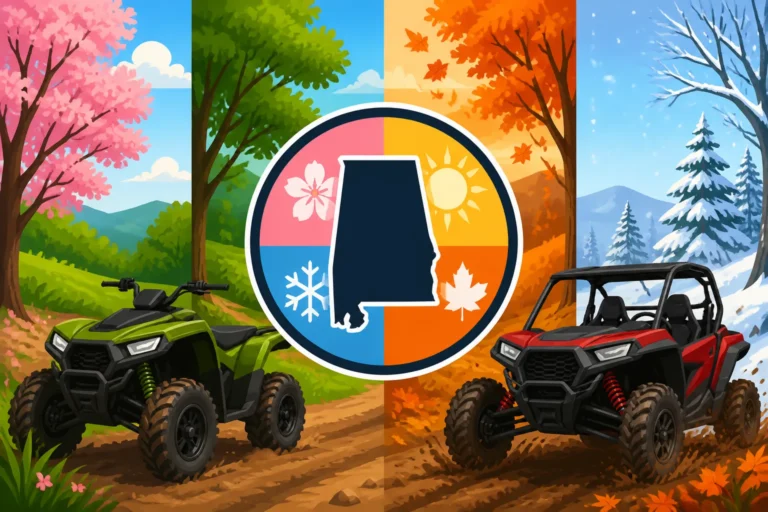
Snakes don’t follow a calendar as neatly as riding parks do. In Alabama, they’re generally more active in warmer weather, so riders may encounter them from spring into fall. But there isn’t a dependable start or end date: an unseasonably warm day can bring a snake out even when the surrounding weeks have been cool.
That matters on a ride near Bankhead National Forest, the Talladega area, or a local OHV park. A cool morning may turn into a warm afternoon, and a snake that was sheltered earlier may move into a sunny patch. Conversely, a hot day can send wildlife looking for shade and cover. Treat changing conditions as a reason to stay alert rather than as a way to predict exactly where a snake will be.
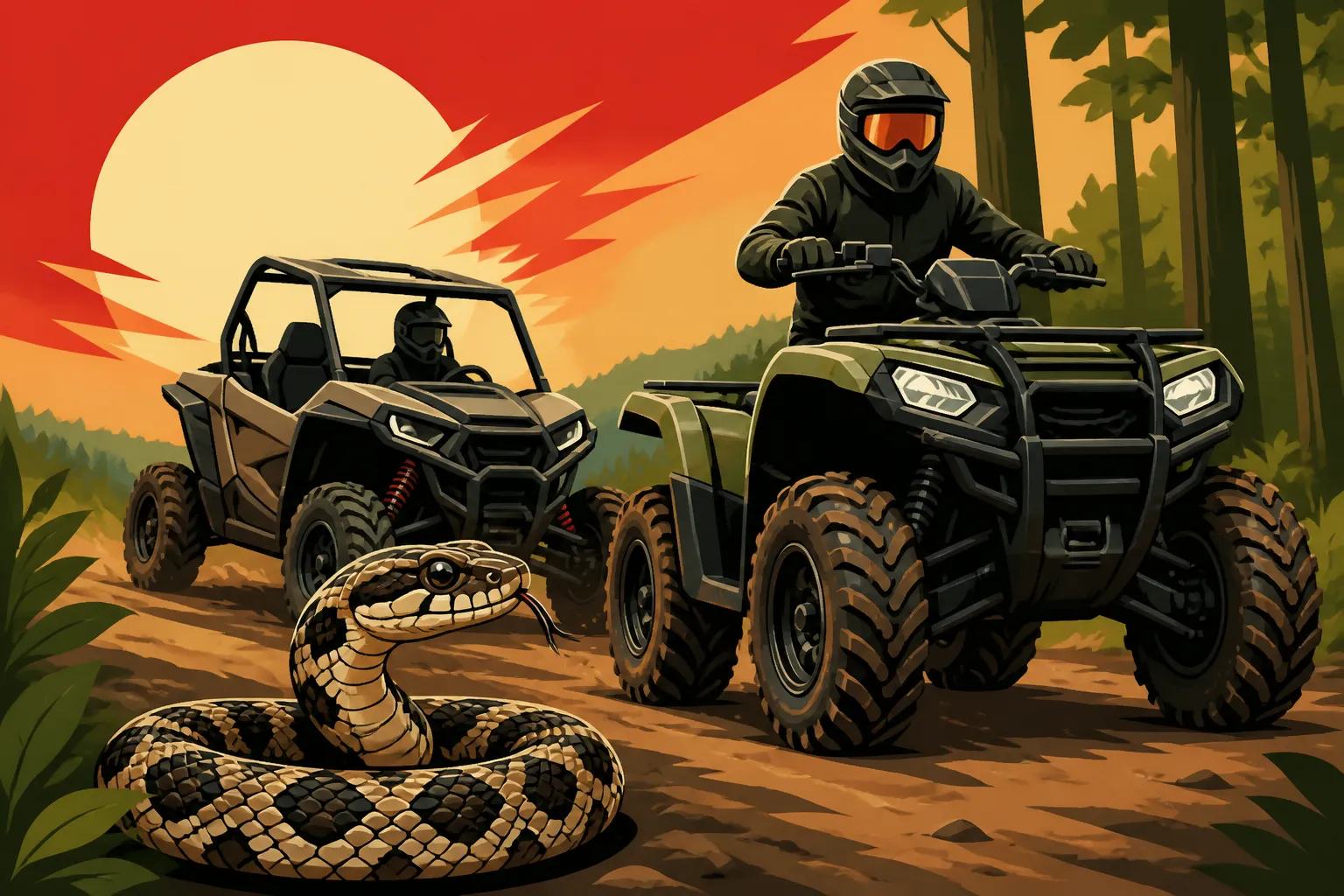
Alabama’s landscape offers plenty of cover and basking spots: leaf litter, brush, fallen limbs, rocks, creek edges, and sunny stretches beside a shaded trail. Copperheads, cottonmouths, and rattlesnakes are among the venomous snakes riders may encounter in the state, but location alone doesn’t tell you what a snake is. Species and sightings vary with habitat and local conditions.
A useful seasonal overview can help you plan clothing, water, and breaks alongside wildlife awareness. For related riding conditions, see [Alabama Riding in Spring], [Alabama Riding in Summer Heat], and [Alabama Riding in Fall].
Understand the places where encounters happen
A snake doesn’t need to be in the middle of a trail to catch a rider off guard. It may be curled beneath leaves at the edge, resting across a warm patch of dirt, or moving through grass beside a creek. The narrow strip between the open trail and thicker vegetation deserves particular attention when you pull over.
Stops can be riskier than steady, careful travel because riders naturally look toward their group, machine, or map instead of at the ground around their boots. A passenger stepping down into weeds, someone reaching beneath a machine, or a child wandering toward a log can get closer than intended. Before anyone dismounts, choose an open area where you can see the ground and avoid brush or leaf piles when practical.
After heavy rain or a storm, vegetation, debris, and trail conditions can change. A washed-out edge or newly fallen limb may bring riders closer to the surrounding cover while they maneuver around it. Check conditions before heading out with [Alabama Trail Conditions Before You Tow] and [Alabama Trail Closures After a Storm]. Stick to permitted routes, too; pushing through dense growth to get around an obstacle can create more close encounters and may take you somewhere riding is not allowed.
How to ride and stop safely around snakes
Scan the trail without making sudden moves
Ride at a pace that gives you time to notice what’s ahead, especially around bends, creek approaches, shaded hollows, and places where grass meets the trail. You don’t need to stare at every patch of ground, but a steady forward scan is more useful than focusing only on the rider in front of you. Leave enough space between machines to react without creating a pileup.
If you see a snake, slow down and stop at a safe distance. Don’t swerve sharply into brush, make a close pass, or try to drive over it. Give it room to move away on its own. If the snake is on the trail, wait until it has crossed and you can see that the route is clear. Tell the riders behind you to stop as well, using a hand signal or another method your group agreed on before the ride.
Do not try to pick up, move, pin, or kill a snake. A snake that looks still may still be capable of striking, and getting closer to identify or photograph it adds risk without helping you pass safely. If it remains near your machine or an exit, keep your distance and contact park staff or the appropriate land manager for guidance. Good group habits are covered in [Alabama Trail Etiquette Locals Expect].
Choose safer places for breaks and dismounts
When you need to stop, aim for open ground where everyone can see where they’re stepping. Avoid sitting directly on logs or rocks without checking around them, and don’t place hands beneath the machine, into a pile of leaves, or into a gap in brush. If you must retrieve dropped gear, look carefully first rather than reaching blindly.
Footwear that covers the feet and ankles, along with long trousers, can reduce exposed skin during a walk around camp or a trail stop. It does not make a person snakeproof, and thick clothing is no reason to handle wildlife. Keep children close, give them a simple rule—stop and call an adult if they see a snake—and make sure passengers know where to wait while the group assesses the situation.
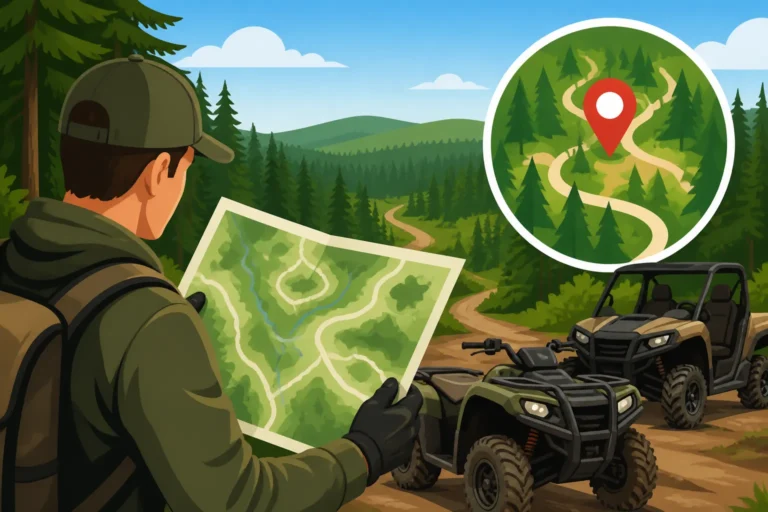
Navigation tools can help your group stay oriented without wandering off the route to find a way around an obstacle. Some riders use onX Offroad to review mapped riding areas and understand where their planned route goes. If you use it, check the map before setting out and download the information you may need where service is unreliable; a phone map is a navigation aid, not a substitute for posted signs, park rules, or a land manager’s directions.
| Trail situation | Safer response | Avoid |
|---|---|---|
| Snake crossing the trail | Stop at a safe distance and wait for it to move away | Swerving into brush or trying to pass close |
| Snake beside a parked machine | Keep people back and choose another safe place to stop | Reaching under the machine or stepping into vegetation |
| Group needs to dismount | Use visible, open ground and keep children close | Sitting on or reaching around uninspected logs and rocks |
| Snake stays near the route | Wait, give it space, and ask park staff or the land manager for help | Touching, trapping, or killing it |
| Rider is bitten | Call 911 and arrange urgent medical care | Delaying care to identify or photograph the snake |
Prepare for limited cell service before you leave
A trail ride can take you into wooded areas where calls, texts, or map loading may be unreliable. Before departure, tell someone where you plan to ride and when you expect to check back in. Keep your phone charged, know the park’s entrance or meeting point, and agree on what the group will do if riders become separated.
A downloaded map can be useful for staying oriented, particularly in areas where the route network is unfamiliar. Riders who use onX Offroad can review route information before the trip and prepare for the possibility of limited service. Still, carry a backup plan: know the name of the riding area, note a practical meeting point, and don’t assume a digital map shows every current closure or local restriction.
For a longer ride, think through first aid and communication as part of the same preparation. [First Aid on a Long Stony Lonesome Loop] offers related planning ideas, while [Alabama Trail Difficulty Ratings] can help a group choose a route that matches its experience and equipment. A simpler route with clear stopping places may be the better choice when children, new riders, or anyone with limited mobility is along.
What to do after a snakebite
Treat a suspected venomous bite as an emergency
If someone may have been bitten by a venomous snake, call 911 and get emergency medical help promptly. Don’t wait to see whether swelling or other symptoms develop, and don’t spend time trying to catch the snake or get a close-up photo. A description from a safe distance may be useful if it’s easy to provide, but treatment should not depend on identifying the species.
Move the person away from the snake without approaching it. Help them stay as calm and still as possible while arranging evacuation or waiting for responders. Remove rings, watches, or tight clothing near the bite before swelling makes them harder to take off. Keep the affected area still and avoid unnecessary walking or exertion.
Do not cut the wound, try to suck out venom, apply ice, use an electric shock, or put on a tourniquet. These actions can cause additional harm or delay proper care. Don’t give alcohol or attempt a home remedy. If you’re at a park, contact staff as well so they can direct responders to the location and help coordinate access.
Make the location easy to find
In a wooded riding area, “we’re somewhere on the trail” may not be enough to guide help quickly. If it can be done without delaying the emergency call or leaving the injured person unattended, note the trail name, a nearby junction, a sign, a gate, or another visible landmark. Share a map location with dispatch or park staff if your phone can provide one.
If your group has several people, assign simple roles: one person stays with the injured rider, one contacts emergency services, and another meets responders at a known access point if directed. Avoid sending everyone off in different directions. Keep the rider as still and reassured as possible, and follow instructions from emergency dispatch.
Knowing where you are before an emergency makes that moment less chaotic. A route reviewed in onX Offroad or another mapping tool may help you describe your position, but keep your location details practical and confirm them against signs and landmarks. [Alabama Trail Volunteer Days] is another useful topic for riders interested in the people who help maintain local riding areas and trails.
A simple snake-aware riding routine
Before the group leaves, remind everyone to stop and give snakes space rather than trying to move or kill them. Check that each rider knows the meeting point, emergency plan, and basic route. If you use onX Offroad, review the map while you still have reliable service and treat any digital route information as one part of your preparation.
On the trail, slow down where visibility is limited, pause before stepping into cover, and choose open ground for breaks. If a snake is in the way, wait for it to move or ask park staff for help. If someone is bitten, call 911, keep the person still, and don’t delay care for identification or home treatment.
A little caution doesn’t have to take the fun out of a ride. It simply helps your group handle an unexpected encounter without turning a wildlife sighting into a rushed or risky decision.
Disclaimer
This article is for general informational purposes only and does not constitute professional advice. Laws, prices and regulations vary by location and change over time. Consult a qualified professional for guidance on your specific situation.