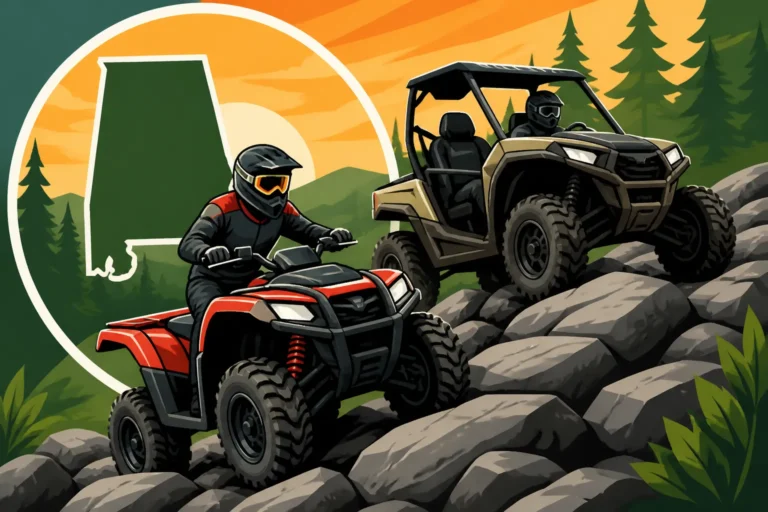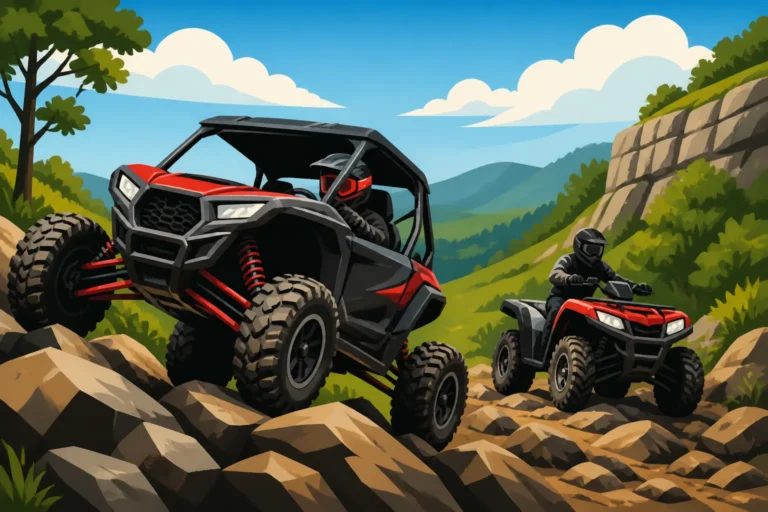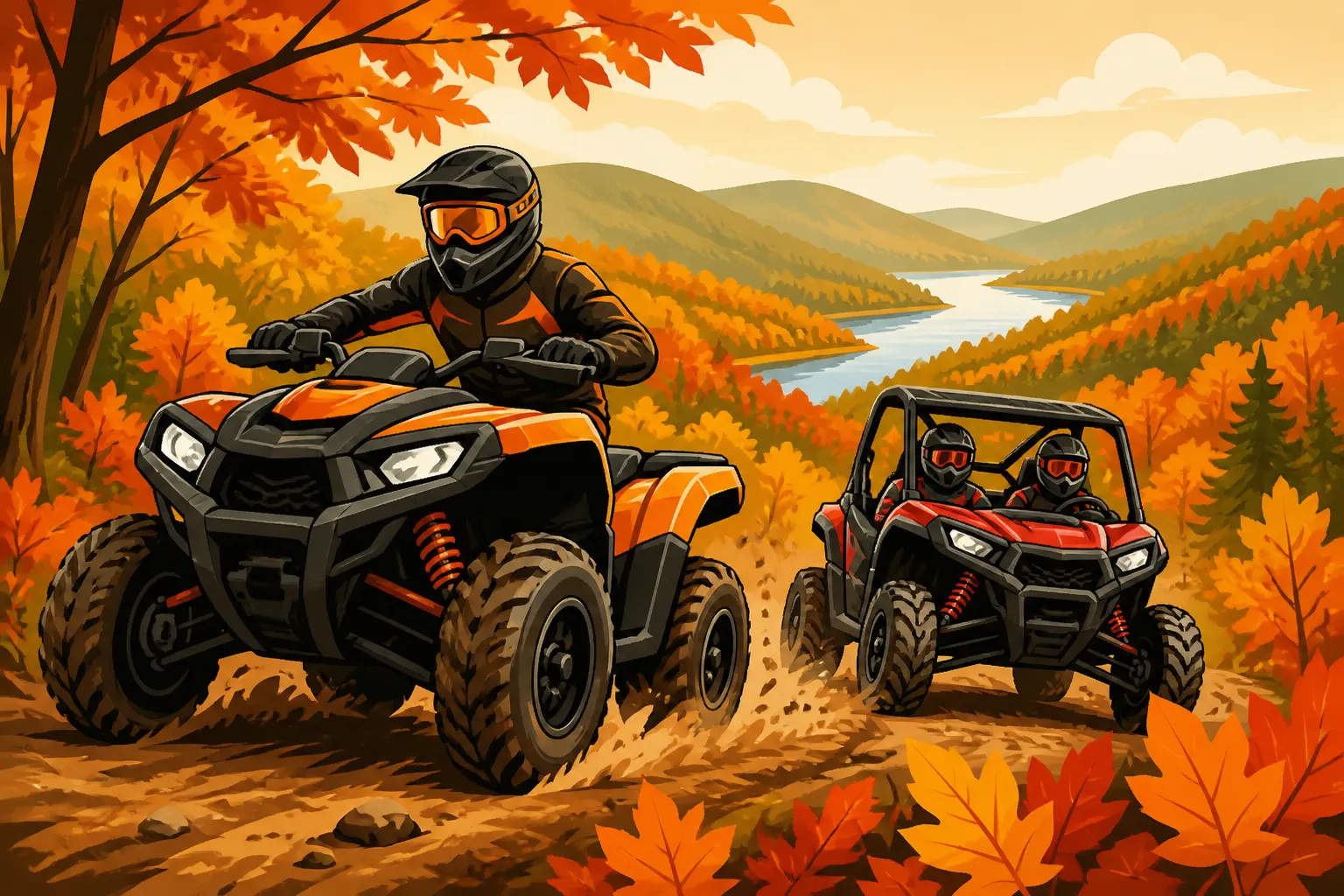
Alabama Riding in Fall
Fall can be a wonderful time to ride in Alabama, but cooler air and colorful leaves do not guarantee easy trails. Recent rain can turn red clay slick, fallen leaves can hide ruts and rocks, and public-land access may depend on specific routes or permits. This guide helps you plan a safer fall ride, choose where to go, and avoid common surprises.
Why fall riding in Alabama takes extra planning
Expect changing conditions from one ride to the next
Autumn often brings more comfortable riding weather than the hottest part of summer, but conditions can shift quickly. A trail that was dry and firm last weekend may be slick after rain, especially where clay soil holds moisture. Leaf cover can also make familiar terrain harder to read: it may conceal holes, roots, rocks, and washouts until you are close.
Plan around the ground, not just the forecast. Check recent rainfall near your destination, look for park or land-manager updates, and call ahead if trail conditions are uncertain. A little caution matters on Alabama’s red clay, where spinning tires can deepen ruts and make a slope tougher for everyone to cross. For a closer look at how weather affects local routes, see [Alabama Trail Conditions Before You Tow] and [Alabama Trail Riding After Heavy Rain].
A useful mindset is to treat the first section of a trail as a test ride. Ease into turns, climbs, and low spots before carrying speed. If the ground is slick, choose a route that matches your experience and machine rather than trying to power through a difficult section. Turning around is a sensible decision, not a failed ride.
Prepare for shorter daylight and cooler evenings
Fall days get shorter as the season progresses. That can catch riders off guard when a group plans “one more loop” and still has a trailer to load, a camp to set up, or a drive home ahead. Set a turnaround time before you ride, and leave enough daylight for getting back to the staging area without rushing.
Temperature can feel different when you are moving than when you stop. A warm afternoon ride may end with a chilly wait beside a trail while someone checks a machine or helps a rider. Bring a layer that fits in a dry bag, along with water and basic supplies. If your trip includes camping, check what the campground allows and whether facilities or access arrangements change seasonally.
Before leaving home, confirm the park’s operating schedule, entry rules, and current trail status directly with the site. Do not assume a familiar schedule continues through fall. A quick call can prevent a long tow to a closed gate, and it gives you a chance to ask about muddy sections, parking, noise rules, and whether your UTV’s width is permitted.
Choose a riding area that fits your fall trip
Private OHV parks offer a clearer starting point
A private off-highway vehicle park can be a practical choice when you want a defined trail system, a known entrance, and rules posted for riders. Stony Lonesome OHV Park near Bremen and Minooka Park near Jemison are two Alabama riding areas riders may consider when planning a trip. Before heading out, verify each park’s current operating days, trail access, machine restrictions, fees, and camping options through its official channels.
Think about the whole group when choosing a park. A confident rider may be comfortable on narrow, technical trails, while a newer rider or a family with children may prefer easier routes and shorter loops. Side-by-sides also need enough room on the trails, at the unloading area, and in the parking space. Ask about width restrictions rather than assuming every trail accommodates every machine.
Fall weekends can be busy, particularly when the weather is pleasant. If you are traveling with friends, settle on a meeting point and decide how the group will handle different riding speeds. Keep everyone together at trail junctions, and agree that no one leaves the designated route to find a shortcut. For a broader overview of destinations and trip planning, start with [Alabama ATV Trails: Where to Ride] and [Alabama North and South Riding Compared].
Public land requires more careful route and access checks
Public land is not automatically open to every ATV or UTV on every road or trail. Access rules can vary by property, route, season, and type of use. In areas such as Alabama’s national forests or wildlife management areas, riders should use the applicable official maps and rules to establish which routes are open and what permits or other requirements apply.
A road that appears on a map may not be an authorized OHV route, and a gate or sign should never be treated as an invitation to ride around it. Look for the land manager’s current information before the trip, then carry the map or access details you need in case cell service drops. A mapping app such as onX Offroad can help you review routes and orient yourself, but confirm public-land boundaries and riding permissions with the responsible land manager. Digital maps are a planning aid, not permission to ride.
Wildlife management areas may have rules that change with the area and activity. Check the relevant permit requirements and seasonal access information before setting out, especially during hunting seasons. Keep to routes that are expressly open to your machine, and avoid blocking gates, parking across access roads, or disturbing hunting activity. For more detail, see [Alabama WMA Riding Rules] and [Calling the National Forest District Office Before You Ride].
Plan your ride, route, and equipment
Build a route around the least experienced rider
Before you unload, talk through the route as a group. Decide who is leading, who is riding last, where to regroup, and what to do if someone has a mechanical issue. A simple plan can prevent a small separation from turning into a stressful search, especially when trees and hills make it hard to hear one another.
Choose a loop that suits the newest or least confident rider, not only the person with the most experience. If the group wants to try a more challenging trail, make sure there is a clear way for less experienced riders to stay on an easier route or return to the staging area. Avoid pressuring anyone into a climb or muddy crossing they do not feel ready to attempt.
Navigation tools can help with orientation, but prepare for weak or nonexistent cell service in wooded or hilly areas. You can use onX Offroad to review a route before the trip and keep track of your general position, while also carrying an offline map or a paper backup when practical. Download what you need in advance, charge devices, and avoid relying on a phone as your only navigation method. A route plan is most useful when the group knows how to follow it even if a screen stops working.
Check the machine and pack for fall conditions
A basic pre-ride inspection is especially useful after a machine has been stored or used heavily in mud. Check tires for damage and suitable pressure, confirm the brakes work, and look over steering, lights, and controls. On a UTV, check seat belts and make sure passengers use the seating positions the machine was designed to carry. Secure loose cargo so it cannot shift on uneven trails.
Pack for the trail you expect and the trouble you might reasonably encounter. Useful items may include water, a first-aid kit, a charged phone, a compact tool kit, a tow strap, and a dry layer. If you ride somewhere with limited cell coverage, let someone outside the group know your destination and expected return time. Carrying a paper map is also sensible if you are traveling through an area where signal may be unreliable.
Clean mud and leaves away from parts that need airflow, and stop if warning lights, unusual sounds, or handling changes appear. Continuing because the trailhead is “just ahead” can turn a manageable repair into a recovery problem. For more route and preparation ideas, see [Alabama Trail Etiquette Locals Expect] and [Alabama OHV Camping With Trail Access].
| Fall planning question | What to check | Why it matters |
|---|---|---|
| Is the riding area open? | Current hours, seasonal schedule, and gate access | Prevents a wasted trip |
| Are trails suitable today? | Recent rain, closures, and reported muddy areas | Helps avoid unsafe or damaging conditions |
| Is my machine allowed? | Width limits, permitted vehicle types, and trail restrictions | Prevents arriving with an unsuitable machine |
| Can I navigate without service? | Offline map, paper backup, and charged devices | Helps if cell coverage drops |
| Will we finish before dark? | Daylight, route length, and a firm turnaround time | Reduces rushed riding and late returns |
| Are permits needed? | Land-manager requirements for the specific property and route | Keeps the ride within access rules |
Ride responsibly and handle common fall problems
Slow down when leaves, mud, or visibility make trails harder to read
Leaves can make a trail look smoother than it is. Reduce speed where the surface is hidden, keep enough distance to stop safely, and avoid following so closely that the rider ahead kicks debris into your path. On hills, use controlled throttle and avoid sudden braking or sharp steering changes on slick ground.
Give other trail users room. A narrow route may bring you near hikers, horses, work vehicles, or riders traveling in the opposite direction. Slow down, communicate politely, and pass only when there is enough space. Stay on established routes, pack out what you bring in, and do not widen a muddy trail by driving around a difficult section. That extra track can create more erosion and leave a bigger problem for the next group.
Visibility becomes more important later in the season and near sunset. Make sure lights work, wear visible clothing when appropriate, and do not assume another rider can see you through trees or around a bend. If fog, rain, or failing light makes it hard to judge the trail, pause or head back rather than pushing on.
Know what to do when plans change
If a trail is too wet, blocked, or difficult for your group, stop somewhere safe and discuss the next move. Do not crowd a narrow trail while deciding, and do not attempt an unfamiliar detour around a closure. Use your map to return along a known route, or contact the park or land manager for guidance if you can do so safely.
For a breakdown, move the machine out of the way if possible, keep the group together, and use the supplies you packed. If you are riding with a group, agree ahead of time on a simple response: who stays with the disabled machine, who contacts help, and where the group regroups. Avoid sending someone off alone without a clear route and plan.
A good fall ride is not measured by how many miles you cover. It is one where the group follows the access rules, adapts to the conditions, and gets back without damaging the trail or taking unnecessary risks. Check the details before leaving, stay flexible once you arrive, and let the ground decide whether the day calls for a longer loop or an early return.
Disclaimer
This article is for general informational purposes only and does not constitute professional advice. Laws, prices and regulations vary by location and change over time. Consult a qualified professional for guidance on your specific situation.