Minooka Park’s 420 Acres in Alabama
Minooka Park’s 420 acres can sound like a simple promise of plenty of riding, but acreage alone doesn’t tell you how much trail is open, what machines are allowed, or whether conditions suit your group. This guide explains how to plan a visit near Jemison, Alabama, check the details that can change, and make the most of your day without arriving unprepared.
What Minooka Park’s 420 Acres Mean for Riders
Acreage is not the same as trail mileage
The 420-acre figure gives you a sense of the park’s overall size, but it does not tell you how many miles of trail are open or how long a ride will take. Some of the land may be used for access, facilities, buffers, or other park functions. Even where riding is available, trails can connect into loops of different lengths, and conditions may make a route feel slower than the map suggests.
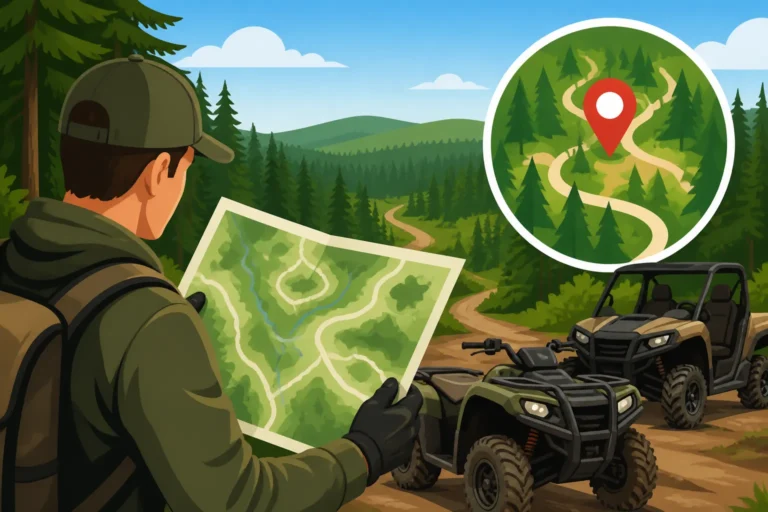
That distinction matters when you’re planning around a short visit, a child’s first ride, or a group with mixed machines. A rider looking for an all-day challenge may have different expectations from a family that wants a few relaxed laps and time to eat. Before you tow to Chilton County, look for the park’s latest map and ask which riding areas are open. For a broader overview of places to ride around the state, see [Alabama ATV Trails: Where to Ride].
It is also worth asking whether a map shows all park property or only routes currently available to riders. A trail can be closed for maintenance, weather, safety, or an event even if it appears on an older map. Treat the acreage as a useful description of the park’s footprint, not a guarantee of access to every acre.
Think in terms of the day you want
A good park day is not measured only by distance. A newer rider may enjoy a shorter route with time to practice stopping, turning, and communicating with the group. Experienced riders may prefer to make several loops, pause for trail checks, and explore the routes that match their machine and comfort level. At a 420-acre park, it helps to set expectations before unloading rather than assuming everyone will want the same pace.
Talk through the basics as a group: who is riding, what machines they’re bringing, how long you want to be on the trails, and whether anyone needs frequent breaks. If a rider is new to off-road terrain, avoid making the first outing a test of endurance. A relaxed first lap gives everyone a chance to learn the surface, understand the park’s markings, and settle into a safe rhythm.
If your group is comparing Minooka with other riding areas, remember that acreage, trail mileage, terrain, amenities, and operating schedules describe different things. A smaller park with routes that suit your group may make for a better day than a larger property with terrain or rules that don’t fit. The practical question is not just “How big is it?” but “What can our group ride comfortably and legally during this visit?”
Plan the Visit Before You Load the Trailer
Confirm hours, access, and operating details
Park schedules and access arrangements can change, so don’t rely on a search result, an old social post, or a saved note from a previous trip as the final word. Confirm the park’s current operating days, opening and closing arrangements, check-in process, and any reservation requirements before you leave. If a website is unavailable or unclear, calling the park or the relevant county office can help resolve the uncertainty.
This matters especially when you’re driving from outside Chilton County or bringing a group. A closed day, changed gate procedure, or event that affects ordinary access can turn a planned ride into a long trailer-hauling detour. Ask whether the trails are open to your type of machine, whether any sections are temporarily closed, and whether your group needs to arrive by a particular time.
Do not assume that a previous visit tells you what to expect now. Conditions, schedules, and procedures can vary by season and by park operations. For other Alabama parks, the same habit is useful: [Checking Whether a Park Still Operates] and [Calling a Park When the Website Is Dead] offer practical reminders about confirming information before setting out.
Budget time for check-in and preparation
The ride itself is only part of the day. You may need to park the truck and trailer, check in, review posted rules, unload machines, and make sure helmets and other gear fit properly. If you arrive right at opening time with a large group, those steps can take longer than expected. Build in enough time to handle them without rushing.
Before you leave home, make a simple checklist: machine keys, fuel, riding gear, water, basic tools, tire or belt repair supplies appropriate to your vehicle, and any paperwork or permits the park requires. Put items you’ll need at the gate somewhere easy to reach instead of buried under coolers and spare equipment. A little organization saves repeated trips between the trailer and the parking area.
If you are arranging a first visit, ask what the admission process covers and whether it includes riding access, parking, or other facilities. Avoid relying on old prices or assumptions about what a pass includes; check the park’s own information for current details. To understand the broader differences between park access and public-land requirements, see [Alabama Park Fees and What They Cover] and [Alabama Public Land Rules Compared to Private].
Match Your Machine and Group to the Terrain
Check which vehicles the park accepts
“ATV park” is often used casually, but that doesn’t guarantee that every quad, side-by-side, dirt bike, or other off-road vehicle is allowed on every route. Before loading, ask whether Minooka Park accepts your machine category and whether any restrictions apply to width, passengers, tires, or equipment. If you’re bringing a side-by-side, confirm that the routes you plan to use are suitable for its dimensions.
This is more than a paperwork question. A wide machine may be allowed at the park but still be a poor fit for a narrow or tight route. Similarly, a vehicle with a long wheelbase, low clearance, or a heavy load may handle obstacles differently from a smaller recreational quad. The right answer depends on the park’s rules and the specific route, not merely on what the machine is called.
When using a trail app such as onX Offroad, treat it as a planning aid rather than a substitute for the park’s current rules or posted signs. A route displayed on a map does not necessarily mean that your vehicle is permitted there today. Check the official park map and ask staff about the limitations that apply to your machine. For state definitions that help explain why vehicle types are treated differently, read [Alabama's ATV and ROV Legal Definitions].
Set a realistic pace for mixed-experience groups
A group ride is easier when everyone agrees on a pace and communication plan before leaving the staging area. Decide who will lead, who will ride at the back, and where the group will stop if riders become separated. Keep the most cautious or least experienced rider in mind when choosing a route; the strongest rider should not set a pace that leaves others feeling pressured to keep up.
For a family outing, plan breaks before anyone is exhausted. Children and beginners may need to stop more often to adjust gear, drink water, or talk through a new feature of the trail. A rider who is tired is more likely to miss a turn or make a poor decision on uneven ground. Shorter planned loops can keep the outing enjoyable and make it easier to return to the staging area if someone needs to stop.
It can help to agree on simple signals and a regrouping rule. For example, everyone can know that the group waits at a marked intersection rather than continuing down the trail when one rider falls behind. Keep machines spaced far enough apart to allow time to react, and avoid tailgating through dust or around blind turns. For more on choosing routes and expectations, see [Alabama Trail Difficulty Ratings] and [Alabama Trail Etiquette Locals Expect].
Prepare for Alabama Trail Conditions
Check weather and ground conditions
Alabama weather can change the feel of a trail quickly. A route that seems straightforward when dry may become slick after rain, while heat and humidity can make a long ride more demanding than riders expect. Check the forecast before leaving, but also ask the park about recent conditions. Local staff may know whether a particular route is muddy, damaged, closed, or recovering from heavy use.
Rain does not affect every surface in the same way. Clay can become slippery and cling to tires, while standing water can conceal ruts or soft ground. In dry weather, dust can reduce visibility between machines. The safest response is to adjust speed and spacing to what you can actually see and control, not to follow the pace of the rider ahead.
If the ground is saturated, consider whether postponing the ride is the better choice. Repeated wheelspin can deepen ruts and make trail repairs harder, and getting stuck can create a recovery problem for the whole group. Responsible riding helps preserve access for future visits. For more detail on changing conditions, explore [Alabama Trail Closures After Rain], [Alabama Trail Conditions Before You Tow], and [Alabama Red Clay and What It Does].
Pack for comfort and common trail problems
Start with protective gear suited to the machine and park requirements. A properly fitting helmet is a basic part of responsible riding, even when riders are on private property. Eye protection, gloves, sturdy footwear, and clothing that covers exposed skin can help make a day more comfortable and reduce minor injuries from dust, branches, and debris. Check the park’s own rules for any specific gear requirements.
Bring water and plan for shade and rest, especially during hot, humid weather. Riders may underestimate how much effort it takes to control a machine over uneven terrain, even when they are seated for much of the trip. Pack snacks and any personal supplies your group needs, and make sure a phone or other communication device is charged. Cell coverage can be inconsistent around wooded or hilly areas, so do not make a phone your only safety plan.
A small tool kit can help with ordinary problems, but carry only what you know how to use. Before departure, inspect tires, brakes, lights if fitted, and visible leaks; make sure the machine is loaded securely for the drive. If you use onX Offroad to review a route, download or save what you need before entering areas where service may be limited. Pair digital planning with the park’s posted map and instructions. [Packing for a Humid Day Out] and [Alabama Trail Closures After Rain] cover two practical parts of getting ready.
Ride Responsibly and Follow Park Rules
Use park information as the authority on access
A route shown in an app, a friend’s description, or a map from a past visit should not override current park signs and instructions. Follow closures, stay on authorized routes, and ask before entering areas that are not clearly marked. Boundaries may exist for safety, maintenance, environmental protection, or separation from other park activities.
This is especially important when riders are unfamiliar with the property. A trail may appear to continue beyond a junction, but that does not mean the continuation is open to machines. If a sign is missing or unclear, stop and ask rather than guessing. Turning around is inconvenient; riding into a closed or restricted area can create safety problems and jeopardize access for other visitors.
If you use onX Offroad to plan a route, compare it with the park’s current map and on-site information. The app can help you keep track of where you intended to go, but the park determines what is open and permitted. Downloading map information before the ride can be useful for orientation, but it does not replace posted rules, staff guidance, or a check of current conditions.
Leave the riding area in good shape
Ride within your ability and avoid unnecessary wheelspin, especially on wet or vulnerable ground. Stay on established routes rather than creating shortcuts around puddles or obstacles. Cutting a new line can damage vegetation and soil, and it may lead other riders into areas that were never intended to be part of the trail system.
Share space thoughtfully. Slow down around other visitors, give people room, and be especially careful where sightlines are limited. Keep noise at a considerate level and secure loose items so they do not fall onto the trail. If a group stops, move machines out of the way when it is safe to do so instead of blocking a junction or narrow section.
Before leaving, do a quick walk-around of your staging area. Collect trash, check for tools or gear left behind, and make sure nothing has shifted on the trailer. These small habits help the next group enjoy the park and make the place easier to maintain. For broader ideas about responsible use and trip planning, see [Treading Lightly on Erodible Alabama Clay] and [Alabama Trail Volunteer Days].
A Practical Minooka Park Planning Checklist
Compare what to confirm before the trip
The most useful questions are the ones that affect whether your group can ride safely and legally on the day you arrive. Confirm the operating details directly, then match your plans to the machines, riders, and conditions you actually have. The table below is a planning checklist, not a substitute for park rules.
| What to confirm | Why it matters | Where to check |
|---|---|---|
| Operating days and access procedure | Prevents a wasted tow or an arrival outside access hours | Park information or park staff |
| Current trail closures and conditions | Routes may change with weather, maintenance, or park operations | Current park notices and staff |
| Allowed vehicle types and limits | Not every route or park area suits every machine | Park rules and posted signs |
| Fees, passes, and reservation needs | Helps you prepare for check-in and avoid outdated assumptions | Park’s current information |
| Required gear and passenger rules | Helps your group meet park safety requirements | Park rules before departure |
| Map and route options | Helps match a ride to available time and experience | Current park map and on-site guidance |
| Parking and trailer arrangements | Reduces congestion and makes unloading easier | Park staff or visitor information |
| Weather and surface conditions | Affects traction, visibility, heat exposure, and ride difficulty | Forecast plus local park update |
Make a plan that can adapt
A flexible plan is more useful than a rigid itinerary. Choose a primary route or riding goal, then decide what your group will do if the trail is busier, rougher, or more restricted than expected. If conditions are poor, a shorter ride or a rescheduled visit can be the sensible choice. The 420-acre setting may offer a worthwhile outing, but no acreage figure can promise that every route will be open or appropriate for every rider.
For a first visit, keep the schedule simple. Arrive with time to check in, review the map, and talk through safety expectations. Start with a route that allows your group to get familiar with the terrain. If everyone is comfortable and the park confirms that other routes are open, you can decide whether to extend the ride.
Before towing home, make sure the machines and trailer are secure, and check that everyone has their belongings. A few minutes spent packing carefully can prevent a loose ramp, fuel container, or piece of gear from becoming a road hazard. For additional planning ideas near Birmingham and other parts of the state, see [Alabama North and South Riding Compared] and [Alabama Weekend Riding Itineraries].
Know when to call instead of guessing
A quick question to park staff can clear up issues that maps and general descriptions cannot answer. Call if you are unsure about machine eligibility, current closures, check-in procedures, or whether a route fits a particular vehicle. Share the details that matter: vehicle type, number of riders, intended visit date, and any special needs in your group.
It is also worth asking for clarification when you find conflicting information. Park details may appear differently across an old map, a third-party listing, and a current notice. Give priority to the park’s direct instructions and the signs on site. If you cannot confirm an essential detail, consider delaying the trip rather than assuming the most convenient version is correct.
That extra step is especially helpful when coordinating several households or transporting multiple machines. One person can make the call, write down the answer, and share it with the group before departure. It avoids the familiar frustration of arriving at the gate only to discover that one machine, rider, or planned activity does not meet the park’s requirements.
Disclaimer
This article is for general informational purposes only and does not constitute professional advice. Laws, prices and regulations vary by location and change over time. Consult a qualified professional for guidance on your specific situation.