Stony Lonesome OHV Park in Alabama
Stony Lonesome OHV Park gives Alabama riders a place to take ATVs and side-by-sides off ordinary roads and onto purpose-built trails, but a good day depends on more than showing up with a full tank. This guide explains how to plan a visit near Bremen, choose suitable routes, prepare for changing trail conditions, and avoid common first-trip surprises.
Where Stony Lonesome OHV Park Fits Into an Alabama Riding Trip
Finding the park near Bremen
Stony Lonesome OHV Park is in the Bremen area of Cullman County, in north-central Alabama. That location makes it a destination for riders coming from around Cullman and other parts of the state, as well as visitors traveling through the region. Before towing, use the park’s own directions to confirm the entrance and the route that is appropriate for your vehicle and trailer.
A navigation app may route you along smaller roads during the final part of the drive. That can be awkward when you are towing a wide side-by-side or a long trailer, especially if you meet farm traffic or have to turn around on a narrow shoulder. Review the final approach before leaving home, and do not assume every road that appears on a map is a suitable or authorized access route.
If you are comparing destinations, [Alabama ATV Trails: Where to Ride] can help you think about how a Cullman County trip fits into a broader riding plan. Stony Lonesome is a dedicated off-highway riding destination, not a general invitation to ride on nearby public roads, private land, or unmarked tracks. Keep the park boundary and the route you are authorized to use clear in your mind.
What kind of riding destination it is
The park is designed around off-highway riding, with trails and riding areas intended for motorized recreation. Riders may be looking for a relaxed outing, a challenging technical section, or a weekend trip that combines trail time with camping. Those are different kinds of visits, so it helps to decide what your group wants before selecting a route or loading the machines.
Stony Lonesome is often described as having an extensive trail network. The exact trail options, open areas, and usable mileage can depend on park operations and conditions. Rather than planning around a number seen in an old post or a third-party map, check the park’s latest trail information and use its current map as your baseline. [Stony Lonesome's 150 Miles in Alabama] is a useful related topic, but the park’s own materials should guide your day-of decisions.
It is also worth separating “a park has trails for my machine” from “every trail is suitable for my machine.” Width, ground clearance, turning radius, tires, and rider experience all affect where you can safely go. A family on youth quads, a beginner on a utility ATV, and a group in larger side-by-sides may need very different routes even when they are visiting the same park.
Choosing Trails That Match Your Machine and Experience
Start with vehicle fit, not ambition
Before choosing the hardest-looking route, check whether the trail is open to your type and size of machine. A narrow trail that works for a small ATV may not accommodate a wider UTV. A steep or rocky section may be manageable for a well-equipped, experienced rider but stressful for someone who is still learning basic throttle and braking control.
Side-by-side owners should check the park’s vehicle rules and trail restrictions carefully. Do not rely on a trail appearing wide enough in a photo; the route may narrow, turn sharply, or include obstacles that are difficult to navigate with a long wheelbase. For a broader overview of machine-specific access, see [Alabama Trails That Allow Side-by-Sides]. At the park, follow posted signs and staff guidance even if a route appears on an older map.
Your own machine matters as much as its category. A stock utility ATV may be dependable on an appropriate trail but feel very different from a modified machine with aggressive tires, a winch, or added protection. Modifications can help in some conditions, but they do not replace skill, route judgment, or respecting a trail’s posted limits.
Build the day around your least experienced rider
If your group includes a first-time rider, a child, or someone returning after a long break, choose a conservative first loop. Let that rider become familiar with steering, braking, throttle response, and the machine’s feel before the group adds more difficult terrain. A slow start is not a wasted day; it often prevents the tense moment when someone realizes the route is beyond their comfort level.
Avoid using the most confident rider’s ability as the group’s standard. A skilled driver may be comfortable on a steep climb, but a newer rider can be overwhelmed by the same section, particularly when there is pressure to keep up. Agree in advance that anyone can ask to turn around or take a break without being teased or left behind.
For children, match the machine, route, and supervision to the child’s ability rather than treating age alone as a measure of readiness. Keep younger riders within sight and hearing, and establish clear rules about following, stopping, and passing before the group moves. [Alabama Trails for Kids] offers additional planning context for families deciding what kind of riding day is appropriate.
Planning Around Weather and Trail Conditions
Why a dry forecast does not tell the whole story
Alabama weather can change quickly, and a trail’s condition reflects more than what is happening at the trailhead. Rain in the days before a visit can leave low spots wet, make clay slick, or affect routes that appear dry at first glance. Even a small amount of standing water can conceal a rut, rock, or abrupt change in depth.
Trail conditions can also vary within the same park. A shaded stretch may stay damp while an exposed section dries out. A route used by many machines can become rutted faster than a lightly traveled one, and a climb that felt manageable earlier may become more difficult after traffic churns up the surface. Treat your first section as a chance to assess conditions rather than proof that the entire network will be similar.
Check the park’s current notices before you leave, especially after storms or during periods of heavy rain. Closures are not inconveniences to work around; they help protect riders and the trails. For more on deciding whether to postpone, [Alabama Trail Closures After Rain] and [Alabama Trail Conditions Before You Tow] cover the practical considerations that can make the difference between a manageable outing and a frustrating one.
Handling Alabama clay, mud, and water
Red clay can feel firm when dry and become slippery when wet. Mud may also hide holes and ruts, so do not charge into an unfamiliar puddle just because it looks shallow. If you cannot see the bottom or judge the exit, stop and assess the route. A spotter can help, but only if they stand in a safe position where the machine cannot slide or roll into them.
Water crossings deserve the same caution. A crossing that looks easy from the bank may have a soft bottom, a sharp drop, or a current that changes the machine’s balance. Do not enter a crossing if the park has closed it, if the water depth is uncertain, or if your machine and experience are not suited to it. Protecting a machine from water damage is important, but protecting people is the priority.
After a muddy ride, clean the machine thoughtfully. Packed clay can hide damage and interfere with moving parts, cooling airflow, and visibility. Avoid directing high-pressure water at vulnerable seals, electrical connectors, or bearings. A basic inspection after the ride—tires, brakes, steering, lights, and visible leaks—can catch a problem before the next trip.
Preparing the Machine Before You Tow
A practical pre-trip inspection
A quick check at home is easier than discovering a loose component in the parking area. Inspect tires for damage and suitable pressure, check that lug nuts and visible fasteners are secure, and test the brakes and lights. Look over the steering, throttle, and controls, and make sure the machine does not have an obvious fluid leak or a warning light that needs attention.
Carry equipment that suits your machine and the group’s plan. A basic tool kit, tire repair supplies, a first-aid kit, drinking water, and a way to contact the rest of your group are sensible starting points. For a remote or longer ride, consider what you would need if a machine stopped working and you had to wait for help rather than simply driving back to the trailer.
If you have added accessories, check that they are secure and do not create a new hazard. A winch can be useful in certain situations, but it should be used with sound judgment and an understanding of safe recovery practices. Loose cargo, an unsecured cooler, or poorly mounted equipment can become dangerous when a machine bounces over rough ground.
Tow-day checks that save frustration
Before leaving, confirm that the trailer is properly connected, the safety chains are attached, the lights work, and the load is secured. Check the tire condition on both the tow vehicle and trailer. Make sure ramps, straps, helmets, and any loose gear are packed where they will not shift or block access to essential items.
A common mistake is to plan the riding day carefully but leave too little time for unloading, checking in, and getting oriented. Build in a little margin so that one slow stop on the drive does not make the group rush through safety checks. If someone is towing for the first time, practice loading and unloading at home rather than learning the process in a crowded staging area.
Use the official park information for entry requirements, operating arrangements, and any day-specific instructions. Operating patterns can change, and a remembered schedule from a previous visit may no longer apply. [Stony Lonesome's Operating Days in Alabama] is a related topic, but confirm the actual opening information directly before you set out.
Making the Most of a First Visit
Arrive ready to orient yourself
Once you arrive, take a few minutes to understand the layout before riding. Find out where the permitted riding area begins, where to check for closures, and how the park wants visitors to handle trail choices or incidents. If the map or signs are unclear, ask staff rather than guessing. That short conversation can prevent an avoidable wrong turn.
Agree on a meeting point and a simple plan before anyone leaves the staging area. Decide who is leading, who is riding last, how often the group will regroup, and what to do if someone gets separated. A plan matters even when everyone has a phone; signal can be unreliable in wooded or hilly areas, and a device can lose power or take a fall.
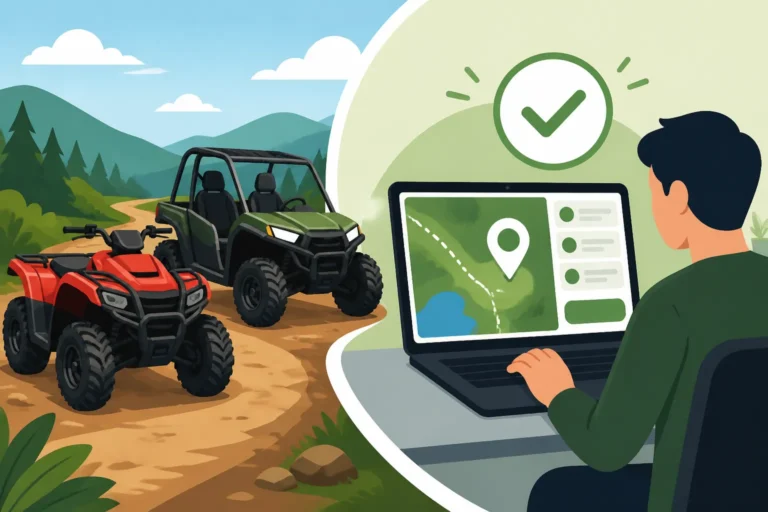
Paper maps and offline navigation can be helpful. Some riders use onX Offroad to prepare for a trip and keep track of their location, but a third-party map should not replace the park’s current official map, posted rules, or closure notices. Download the information you need before entering areas with weak reception, and make sure the group knows how to return to a common point without relying on a single person’s phone.
Ride at a pace that leaves room to react
On a trail, keep enough distance to see and respond to what is ahead. Dust, vegetation, curves, and changes in elevation can limit visibility. Do not follow so closely that a sudden stop forces the rider behind you to brake sharply or swerve. On a group ride, a comfortable pace is the one that lets the least experienced person ride safely.
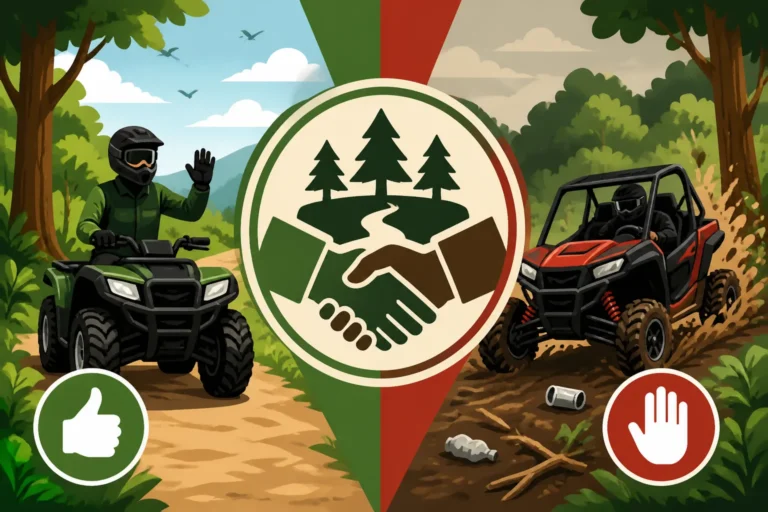
Use extra care when meeting other visitors. Slow down, communicate clearly, and follow the park’s rules for passing and right of way. Horses, hikers, or other trail users may be present in some recreational settings, and a machine that approaches quickly can startle people or animals. [Alabama Trail Etiquette Locals Expect] is useful background for making shared outdoor spaces more comfortable for everyone.
Stop in a safe place if someone needs to check a map, adjust gear, or discuss a route. Do not stop around a blind corner or where another rider cannot see the group in time. Small habits like choosing a visible pull-off, signaling before slowing, and giving each rider time to regroup make a busy day feel much calmer.
Camping and Turning a Ride Into a Weekend
Check what is actually available
Some visitors plan to make Stony Lonesome a full weekend rather than a day trip. Camping or lodging near the riding area can reduce the need to tow home tired after a long day, but the availability and type of facilities can vary. Check the park’s current information for what is offered, what requires advance arrangements, and what visitors are expected to bring.
Do not assume that a past visitor’s description of a site applies to every booking or every season. Ask whether the option you want is suitable for your vehicle and group, whether hookups are available if needed, and whether there are rules about generators, pets, fires, or quiet hours. Confirm these details before the trip so the group does not arrive expecting a facility that is unavailable.
For trip ideas beyond a single day, [Alabama OHV Camping With Trail Access] can help you compare the kinds of details worth checking. If you are staying nearby rather than at the park, confirm driving time and the route back to the riding area. An extra drive each morning can affect how much time you actually have on the trails.
Pack for comfort as well as riding
A weekend riding trip involves more than machine gear. Bring enough water, weather-appropriate clothing, basic toiletries, food, and a plan for handling dirty riding clothes and muddy equipment. If the forecast suggests heat, arrange shade and hydration breaks. If the weather may turn cool or wet, pack dry layers so a soaked rider is not stuck wearing cold gear for the ride back.
Keep food and personal items secured, and follow the park’s rules for waste and fires. Leaving trash behind damages the experience for other visitors and creates extra work for park staff. A simple packing list shared with the group can also prevent everyone from assuming someone else brought the first-aid kit, spare straps, or basic cleaning supplies.
Give your group a clear end-of-day routine. Before leaving the riding area, account for every rider, check for lost gear, and inspect the machines. If you are staying overnight, allow time to clean or secure equipment and to plan the next day’s route around any updated conditions or closures.
Understanding Maps, Signs, and Access Boundaries
Use the official map as your reference
A map is only useful if you understand what it represents. Check its date or version if available, and look for legends, difficulty information, machine restrictions, and closures. A colored line on a map does not necessarily mean a route is open today or suitable for every vehicle. Posted signs and staff directions take priority when they differ from a map you brought from home.
Third-party navigation tools can be useful for orientation, but they may show roads or tracks without explaining whether riding is permitted. onX Offroad can be one tool riders use to review routes, but do not treat a displayed line as permission to travel there. Confirm that your ride stays within the park’s authorized area and use the park’s own resources to resolve uncertainty.
Save maps or relevant information before arriving, particularly if your phone has limited reception or you plan to split into smaller groups. A paper copy can be a useful backup if a battery dies or a device gets damaged. For additional preparation ideas, see [Alabama ATV Trail Map Downloads].
Respect closures and property lines
A closed trail is not a suggestion to find a workaround. Closures may reflect unsafe conditions, maintenance, environmental protection, or operational needs that are not obvious from the trailhead. Going around a barrier can create a new hazard, damage land, or put the rider on property where access has not been granted.
Keep the difference between the park and surrounding land clear. A trail that continues beyond a marked boundary may not be part of the riding area, even if it looks like an established route. Do not follow another rider through an unmarked opening or assume that a gate left open means public access is allowed.
If you are unsure about a route, stop and ask before proceeding. That is much easier than trying to explain afterward why a group crossed a boundary or ignored a sign. Clear, respectful questions help riders, land managers, and neighboring property owners maintain good relationships.
A Simple Trip-Planning Checklist
| Before the trip | At the park | During the ride |
|---|---|---|
| Check the park’s current directions and operating information | Confirm the current map, rules, and closures | Keep a pace suited to the least experienced rider |
| Confirm your machine is permitted and fits the planned routes | Agree on a leader, tail rider, and regroup points | Maintain space and visibility between machines |
| Inspect tires, brakes, steering, lights, and visible fasteners | Identify safe staging and meeting areas | Stop only where other riders can see you |
| Check recent weather and trail-condition notices | Ask staff about anything unclear | Respect boundaries, signs, and closed routes |
| Secure the trailer load and pack safety essentials | Make sure every rider understands the plan | Reassess conditions before taking a harder route |
| Confirm camping or lodging details if staying overnight | Carry the park’s map and needed contact information | Account for everyone before leaving |
A first-visit plan that keeps the day manageable
For a first visit, keep the schedule simple: arrive with time to check in, review the map, and inspect the machine; choose an easy or moderate route that suits the whole group; and leave room to stop or change plans. You do not need to cover every trail to have a satisfying day. A route that ends with everyone comfortable and ready to return is a good outcome.
If the group has a mix of machines and experience, agree on an initial route that fits the narrowest or least capable machine. You can split into smaller groups later only if everyone understands the meeting plan and no one is left without a suitable riding partner. A group ride should feel coordinated, not like a race to keep the fastest machine in sight.
At the end of the day, take a moment to note what worked: which gear you used, where the map was helpful, what the trail conditions were like, and what you would pack differently next time. Those small observations make the next trip easier to plan. For a broader comparison of parks and destinations, [Alabama North and South Riding Compared] can help place Stony Lonesome within a larger Alabama riding itinerary.
Disclaimer
This article is for general informational purposes only and does not constitute professional advice. Laws, prices and regulations vary by location and change over time. Consult a qualified professional for guidance on your specific situation.