Riding Under the Influence Anywhere
It’s a tale as old as time in the great outdoors: you’re out on the trails with friends, the sun is shining, the air is fresh, and someone cracks open a cold one. Before you know it, a casual drink or two turns into more, and suddenly, you’re faced with the decision of getting back on your ATV or UTV. Many folks mistakenly believe that laws governing impaired driving only apply to paved roads. This guide is here to set the record straight and dive deep into what it truly means to be [Riding Under the Influence Anywhere] in Alabama, especially when you're behind the handlebars or wheel of an off-road machine.
Understanding Alabama's DUI Laws and Your Off-Road Machine
Let's be real, the idea of a "country DUI" might sound like something out of a movie, but it's a very real and serious matter in Alabama. The state's laws regarding driving under the influence (DUI) are broad, and they don't just stop at the edge of the pavement. If you're operating any motor vehicle while impaired, you're potentially breaking the law, and that absolutely includes your ATV, side-by-side, or dirt bike. This often catches riders by surprise, especially those who spend most of their time on private land or isolated trails, far from what they perceive as "public roads."
The core of the issue lies in how Alabama defines "operating a motor vehicle" and "under the influence." You don't need to be swerving on I-65 to be considered impaired. If you’re trying to navigate a challenging trail, cross a creek, or even just move your machine from one spot to another on your hunting lease, and your judgment or coordination is compromised by alcohol or drugs, you could be facing the exact same penalties as someone pulled over in a car. It's a harsh reality that many learn the hard way, thinking that because there's no license plate, there are no consequences.
Alabama law states that a person shall not drive or be in actual physical control of any vehicle while under the influence of alcohol, a controlled substance, or any substance which impairs the mental or physical faculties. This definition is expansive for a reason – to protect everyone, including the rider themselves. Whether you're piloting a souped-up Polaris RZR or a trusty Honda Foreman, the same standards of sobriety apply when you’re in control of that machine. This means your hunting club's lease, a friend's sprawling farm, or even your own backyard isn't a free pass for impaired operation.
The Specifics: What Does "Impaired" Legally Mean for Off-Roaders?
When we talk about being "under the influence," Alabama law generally looks at a few key indicators. The most common is your blood alcohol content (BAC). For most adults, a BAC of 0.08% or higher is considered legally impaired. However, it's crucial to understand that you can still be charged with a DUI even if your BAC is below 0.08% if an officer observes that your ability to safely operate the vehicle is compromised. This is where the concept of "actual physical control" becomes vital in an off-road context.
Think about it this way: operating an ATV or UTV safely requires a keen sense of balance, quick reflexes, and clear judgment. You're navigating uneven terrain, avoiding obstacles, and often dealing with other riders or unforeseen conditions. Alcohol and drugs diminish all of these faculties. Even a small amount can slow your reaction time, impair your vision, and reduce your ability to make good decisions – all critical skills for safe off-road riding. An officer doesn't need to see you fail a perfectly straight line on a paved road; they can observe your driving behavior on a trail, your speech, your coordination, and other factors to determine impairment.
For instance, imagine trying to scale a rocky incline or maneuver through a tight treeline after a few beers. Your depth perception might be off, your hands might not react as quickly, and a small error could lead to a serious accident. If law enforcement is present, perhaps on a public riding area like a state park or a wildlife management area (WMA), they are well within their rights to investigate and charge you. The law doesn't differentiate between the type of road or lack thereof; it focuses on the act of operating a vehicle while impaired. This is often why folks get into trouble in WMAs or designated [Alabama Public Use Designated Areas], where rules are clearly posted but sometimes overlooked in the excitement of the ride.
Serious Consequences: Penalties for Off-Road DUI in Alabama
The penalties for an off-road DUI in Alabama are not to be taken lightly. They mirror the penalties for on-road DUIs, which can be severe and life-altering. This isn't just about a slap on the wrist or a small fine; it can involve significant financial costs, loss of driving privileges, and even jail time. The courts treat these offenses with the gravity they deserve, recognizing the danger impaired driving poses to both the rider and anyone else in the vicinity, whether on a highway or a remote trail.
Financial Burdens and Legal Fees
First off, prepare for a hefty financial hit. Fines for a first-offense DUI can range significantly, but that's just the beginning. You'll likely face court costs, potential mandatory alcohol education programs, and increased insurance premiums, which can skyrocket after a DUI conviction. If your machine is impounded, you'll also incur towing and storage fees. Then there are the legal fees for hiring an attorney, which can quickly add up. Many riders underestimate the total financial drain, thinking it's a minor infraction since it happened "off-road."
| Consequence Type | On-Road DUI | Off-Road DUI (Alabama) |
|---|---|---|
| Fines | Substantial | Substantial |
| Jail Time | Possible | Possible |
| License Suspension | Mandatory | Mandatory |
| Vehicle Impoundment | Possible | Possible (your ATV/UTV) |
| Insurance Impact | Major increase | Major increase |
| Alcohol Education | Mandatory | Mandatory |
| Criminal Record | Yes | Yes |
As you can see, the state doesn't really distinguish between where the impairment occurred. A DUI is a DUI.
Loss of Driving Privileges
Perhaps one of the most impactful consequences is the suspension of your driver's license. Yes, even if you were operating an ATV without a license plate on private property, a DUI conviction can lead to the suspension of your on-road driver's license. This means you won't be able to drive your car to work, pick up groceries, or perform other daily tasks. This often comes as a shock to individuals who mistakenly believe their ATV use is completely separate from their highway driving privileges. The state views impaired operation as a risk to public safety, regardless of the vehicle type.
Jail Time and Criminal Record
Depending on the circumstances, such as your BAC level, any prior offenses, or if there was an accident involving injury, jail time is a very real possibility. Even a first offense can carry a mandatory minimum sentence. Beyond the immediate incarceration, a DUI conviction leaves you with a criminal record. This can affect future employment opportunities, housing applications, and even your ability to travel internationally. It's a permanent stain that follows you, a stark reminder that the fun of off-roading should always be accompanied by responsible choices. You can read more about [Alabama Penalties for Illegal Road Riding], but understand the penalties extend beyond just the roads.
Navigating the Encounter: What to Expect During an Off-Road DUI Stop
Being stopped by law enforcement, especially when you're on your off-road machine, can be a disorienting experience. It's important to understand the typical procedure, whether you're on a designated trail, a county road, or even private land where an officer might have cause to investigate. Knowledge is power, and knowing your rights and what to expect can help you navigate a difficult situation.
The Initial Stop and Investigation
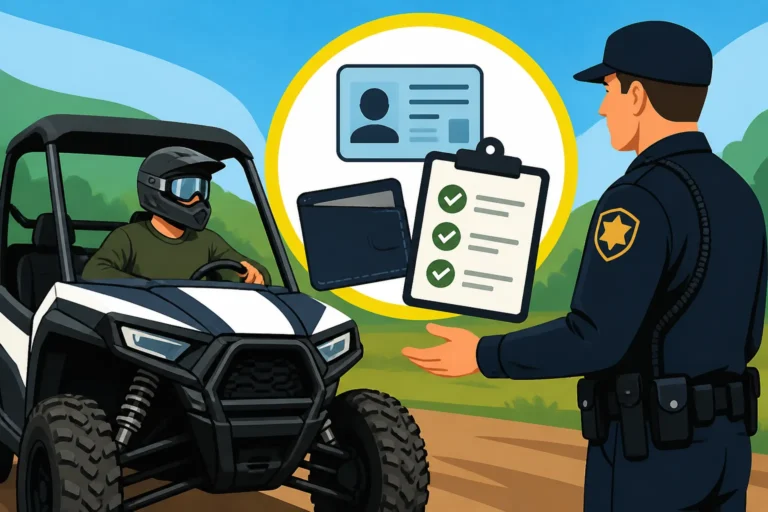
An officer might stop you for various reasons: observing erratic riding, responding to a call about suspicious activity, or simply conducting a routine check in an area known for recreational riding. If they suspect impairment, the investigation will begin immediately. They'll look for signs like slurred speech, bloodshot eyes, the smell of alcohol, or fumbling for paperwork. They may ask for your identification and proof of ownership for your machine. This is where being prepared with your [Alabama Registration Paperwork Explained] can be helpful, even if you're not riding on public roads.
During this initial interaction, an officer might ask you questions about whether you've been drinking or using drugs. You are not obligated to answer incriminating questions, and it's generally advisable to politely decline to answer without an attorney present. However, refusing to cooperate entirely can also have negative consequences. Remaining calm and respectful is always the best approach.
Field Sobriety Tests and Breathalyzer
If an officer has reasonable suspicion that you're impaired, they may ask you to perform Standardized Field Sobriety Tests (SFSTs). These typically include the Horizontal Gaze Nystagmus (HGN) test (following a pen with your eyes), the Walk-and-Turn test, and the One-Leg Stand test. These tests are designed to assess your balance, coordination, and ability to follow instructions under pressure – all things impaired by alcohol. While these tests are somewhat subjective, your performance can be used as evidence against you.
Following SFSTs, or sometimes even without them, an officer might ask you to take a preliminary breath test (PBT) at the scene or a more accurate breathalyzer test at the station. In Alabama, there's an "implied consent" law, meaning that by operating a motor vehicle (which includes ATVs), you implicitly consent to chemical testing if arrested for DUI. Refusing a chemical test can lead to an automatic driver's license suspension, even if you are not convicted of the DUI itself. This is a critical point to remember, as many mistakenly believe they can simply refuse and avoid consequences.
Staying Safe and Legal: Preventing Off-Road DUIs
The best way to deal with an off-road DUI is to prevent it from ever happening. Riding an ATV or UTV is an exhilarating experience, but it demands your full attention and clear judgment. Mixing alcohol or drugs with off-road riding is a recipe for disaster, not just legally, but for your personal safety and the safety of others.
Plan Ahead: Designated Drivers or Non-Alcoholic Options
If your outing involves alcohol, make a plan before you even head out. Designate a sober rider who will be responsible for operating the machines. This might mean rotating who gets to drink, or having someone in the group commit to staying completely sober. Alternatively, choose outings where alcohol isn't present at all. There are plenty of fantastic non-alcoholic beverages available these days that can still enhance the social aspect of your ride without putting anyone at risk. Many public [Alabama OHV Camping With Trail Access] sites have strict alcohol policies to begin with, making this planning even more important.
Consider a setup where if folks want to enjoy adult beverages, the machines are parked for the day, and someone takes over driving a truck or designated golf cart in a safe, private area. This clear separation between riding and drinking eliminates the temptation and the risk.
Understand Your Limits and the Law
Everyone reacts differently to alcohol, but one thing is certain: any amount can impair your judgment. Don't rely on how you "feel." The legal limit is a strict line, and impairment can begin long before you reach it. Educate yourself and your riding companions on [Alabama DUI Law and Off-Road Machines] to ensure everyone is on the same page. Remind each other that DUI laws don't discriminate based on vehicle type or location. Even if you've invested in top-tier safety gear and accessories from a brand like SuperATV to protect yourself on the trails, that gear can't protect you from the legal consequences of impaired riding.
Make it a habit to check local regulations, especially if you're riding on public lands such as state parks, national forests, or wildlife management areas. These areas often have specific rules regarding alcohol consumption and machine operation, which may be even stricter than general state law. Being informed is your first line of defense against an unintentional violation.
Promote a Culture of Responsibility
As a veteran lifestyle blogger, I've seen countless groups of riders out enjoying the Alabama trails, from the challenging climbs at Stony Lonesome OHV Park to the winding paths at Minooka Park. The best groups are those that look out for each other. Foster an environment where responsible riding is celebrated, and impaired riding is actively discouraged. If someone has had too much to drink, gently but firmly suggest they park their machine for the day and find a sober ride. It might feel awkward in the moment, but it could literally save a life, prevent serious injury, and keep everyone out of legal trouble.
Remember, the goal of off-roading is to enjoy the natural beauty of Alabama, challenge your skills, and make memories with friends and family. Let's make sure those memories are good ones, free from the dark cloud of an impaired driving incident. Being a responsible rider means making smart choices about when and how you operate your machine, ensuring safety and legality are always at the forefront.
Disclaimer
This article is for general informational purposes only and does not constitute professional advice. Laws, prices and regulations vary by location and change over time. Consult a qualified professional for guidance on your specific situation.