Farm Equipment Under the Definition
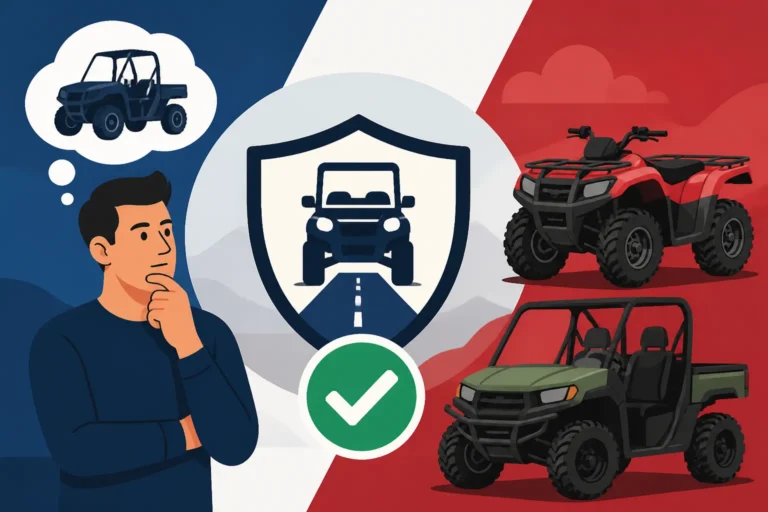
It can be incredibly confusing to figure out what rules apply to your ATV or side-by-side, especially when you're using it on your farm. Many folks assume that if a machine is on agricultural land, it automatically gets a pass from all the typical regulations. This guide will help you sort through Alabama's definitions and clarify exactly when your off-road vehicle might truly be considered "farm equipment" and what that means for your rights and responsibilities.
Understanding Alabama's Core ATV & ROV Definitions
Before we can even talk about what might be excluded from certain rules, we first need a solid grasp of what Alabama generally considers an All-Terrain Vehicle (ATV) or a Recreational Off-Highway Vehicle (ROV). These aren't just vague terms; the state statute lays out very specific characteristics that define these machines.
What the State Law Says About ATVs
When the state of Alabama talks about an ATV, it’s not just referring to any four-wheeler you might see. The legal definition typically hones in on a few key physical traits. We're generally talking about a motorized, off-highway vehicle designed to travel on four or more low-pressure tires, with a seat designed to be straddled by the operator, and handlebars for steering. Crucially, these machines are usually limited in width, often around 50 inches, and have a dry weight limit, typically around 1,500 pounds. This narrowness and lightweight design are part of what makes them so nimble on trails and rugged terrain. If you're curious about the exact wording, you can dive deeper into [Alabama ATV and ROV Legal Definitions].
How ROVs (Side-by-Sides) Are Defined
Recreational Off-Highway Vehicles, or ROVs (what most of us call side-by-sides or UTVs), share some similarities with ATVs but also have distinct differences that place them in their own category. The Alabama statute defines an ROV as a motorized, off-highway vehicle designed to travel on four or more non-highway tires. The big differentiators here are that ROVs are designed for an operator and a passenger (or multiple passengers) to sit side-by-side in a bench or bucket seat, they typically have a steering wheel (not handlebars), and are equipped with a roll bar or similar enclosure. They're also generally wider and heavier than ATVs, often up to 80 inches wide and sometimes up to 3,500 pounds dry weight, though sometimes conflicting weight figures can cause confusion. These machines, like many great options from companies like SuperATV, are built for utility and recreation alike, often with impressive cargo capacities.
The Crucial "Non-Highway Vehicle" Clause
One of the most vital aspects of both ATV and ROV definitions in Alabama is the emphasis on them being "non-highway vehicles." This isn't just a descriptive term; it's a legal classification that dictates their intended use and severely limits their legal operation on public roads. It means they are designed and manufactured strictly for off-road environments. This foundational classification is absolutely critical because it frames all other rules, including any exemptions for farm equipment. It's the primary reason why attempting to make one of these machines truly street legal in Alabama is usually an uphill battle, often impossible without meeting federal motor vehicle safety standards they were never built for.
The Farm Equipment Exemption: What It Means for Your ATV/UTV
Now that we understand the baseline definitions, let's tackle the heart of the matter: when does your ATV or UTV count as "farm equipment" in Alabama? This isn't a blanket statement; it hinges on how the machine is primarily used.
The Statutory Language of the Farm Exclusion
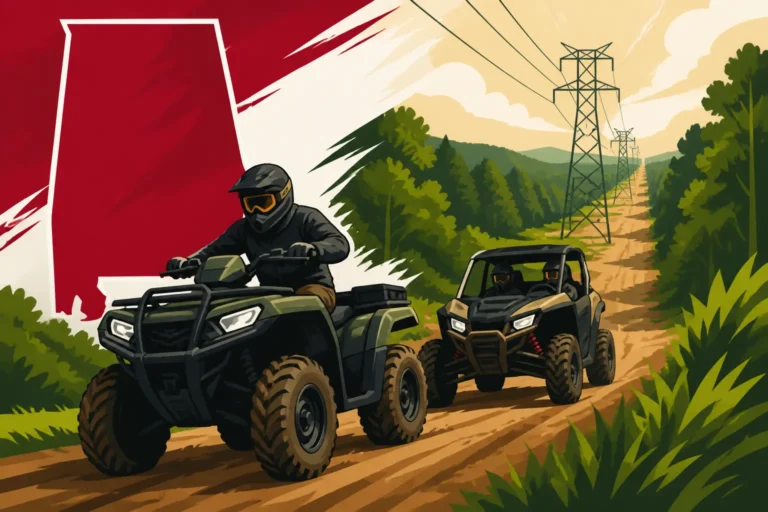
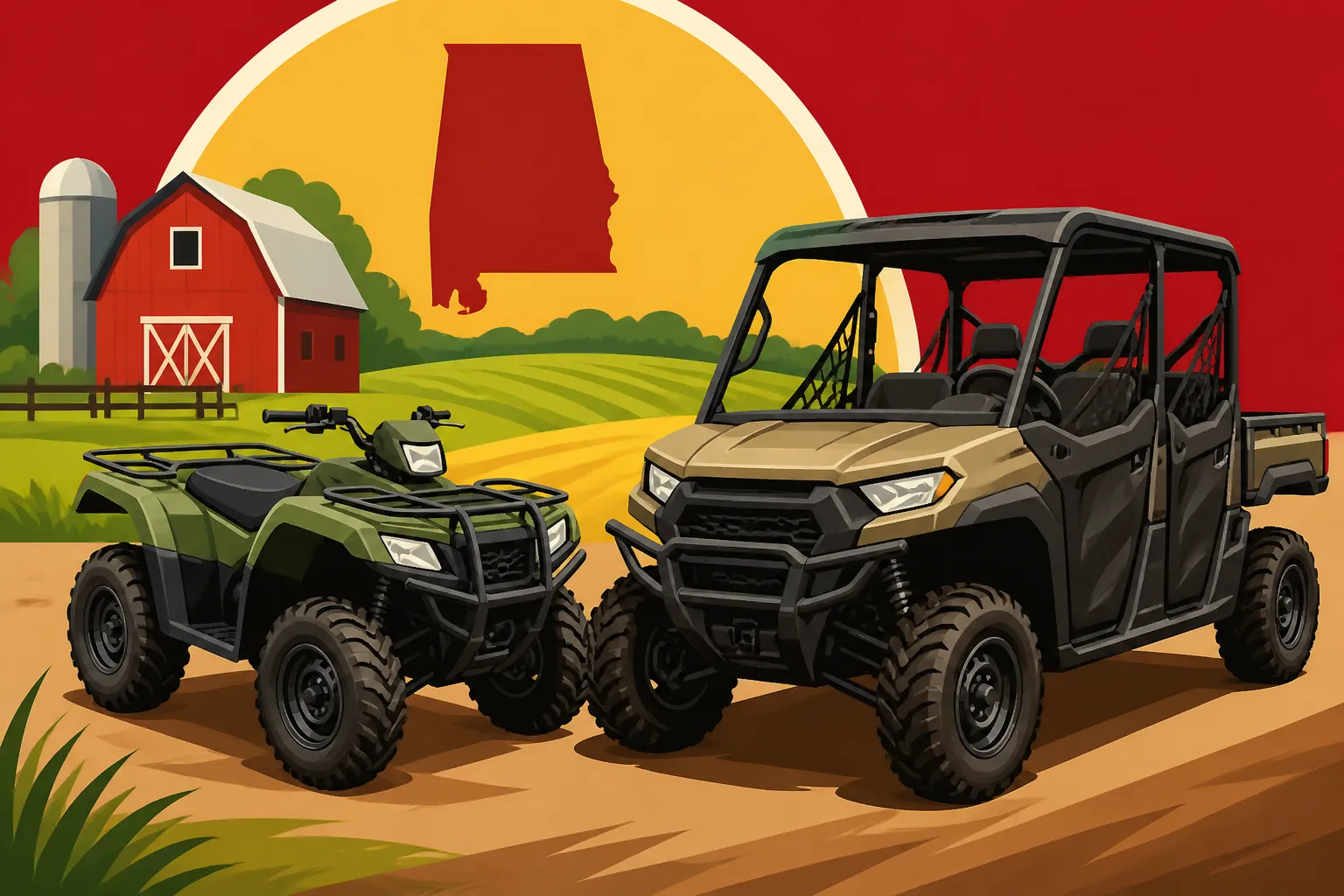
Alabama law includes specific language that provides an exclusion for certain types of equipment, including off-road vehicles, when they are used primarily for agricultural purposes. The core idea is that machinery that is designed for or primarily used in husbandry, farming, or other agricultural operations isn't treated the same way as a recreational vehicle. This exclusion is a pragmatic recognition that farms need diverse tools, and that regulating a tractor, a combine, or even a quad used for checking fences, identically to a recreational trail machine, wouldn't make sense. You'll find specific details about this exclusion in [Alabama Excludes Farm Equipment].
Practical Examples of Farm Use (and Misuse)
So, what constitutes genuine "farm use"?
- Hauling feed and supplies: Using your UTV, perhaps outfitted with a sturdy cargo bed or trailer hitch from a brand like SuperATV, to move feed, tools, fencing materials, or harvested crops around your property.
- Checking livestock and fences: Riding your ATV or side-by-side to inspect fields, check on cattle, or patrol fence lines for damage.
- Spraying and spreading: Attaching sprayers for herbicides or pesticides, or spreaders for fertilizer, to your machine for application across fields.
- Timber management: If you're doing small-scale timber work on your property, a UTV might be used for light hauling or accessing areas. This is covered by [Alabama Registration for a Timber Machine] for larger operations.
- Accessing remote hunting stands on your own land used for agriculture: Even if you hunt, if the primary purpose of the land is farming, and the machine aids in managing that land or accessing areas for legitimate farm work, it could fall under this.
However, it's just as important to understand what doesn't count as farm use, even if it's on a farm. Joyriding with friends, recreational trail riding on your property without any agricultural connection, or using the machine for personal errands off the farm typically would not fall under this exemption. The "primary purpose" is key.
How the Exemption Impacts Registration and Titling
If your ATV or UTV genuinely qualifies as farm equipment, it can impact how it's handled regarding sales tax and potentially even registration. While a comprehensive titling law for ATVs in Alabama starting with model year 2026 means most newer machines will need a title, the farm equipment designation can still influence other aspects. For instance, the sales tax rate for farm equipment is often lower than the general sales tax rate, or even the automotive rate. You'll want to check locally, but some machines primarily used for farm work may be eligible for [Alabama's 1.5 Percent Farm Equipment Rate], which is a significant difference from the state's 2 percent automotive rate or 4 percent general rate. This is why accurately classifying your machine's primary use can be beneficial financially, but always confirm with the local county office.
| Feature | General ATV/UTV (Recreational) | Farm Equipment ATV/UTV (Primary Use) |
|---|---|---|
| Primary Purpose | Recreation, hunting, casual utility | Agriculture, husbandry, timber management |
| Sales Tax Rate | Varies (often 2% automotive or 4% general) | Potentially 1.5% (confirm locally) |
| Titling (2026+) | Required if model year 2026 or newer | Required if model year 2026 or newer |
| Registration | Voluntary (Public or Private Use tiers) | Voluntary (may fall under farm use exemption) |
| Road Use | Generally prohibited | Very limited, specific exceptions apply |
| Applicable Laws | Off-road vehicle statutes, trespass laws | Off-road vehicle statutes, agricultural exemptions |
Navigating Road Use and the Farm Equipment Tag
This is where things get particularly tricky. Many people see the "farm equipment" label as a golden ticket to ride their machines on public roads, but that's a dangerous misunderstanding. The farm equipment exemption for road use is extremely narrow and specific.
Limited Road Use for Farm Equipment
Even if your ATV or UTV is legitimately considered farm equipment, its ability to be operated on public roads is severely restricted. Generally, an off-road vehicle designated as farm equipment might be allowed to cross a public road or travel a very short distance on a public road solely for the purpose of moving from one field or part of a farm to another contiguous part. This is not for pleasure riding, commuting, or even running to the store. The operative phrase here is "incidental to the farming operation." The law aims to prevent farmers from having to load their machinery onto a trailer just to move it across the street to another parcel of their land. It's a logistical allowance, not a general road use permit. For further clarity, consider [Alabama Farm Use and Road Riding].
The Importance of "Primary Purpose"
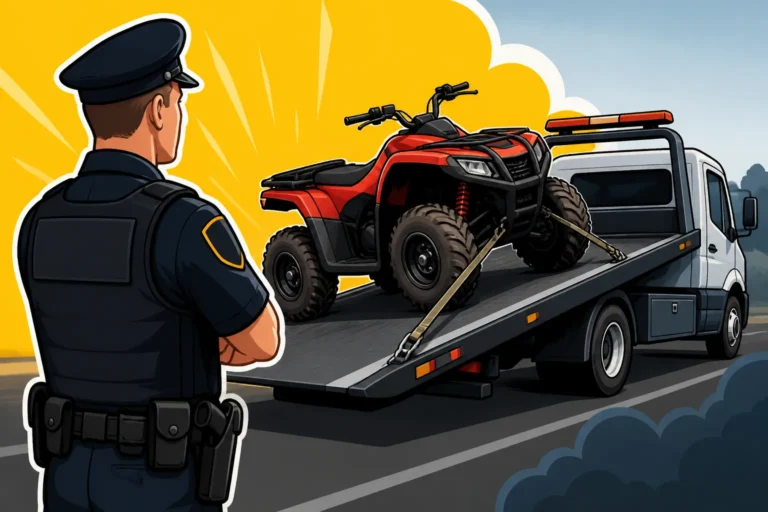
The legal interpretation often hinges on the "primary purpose" test. If an officer observes you repeatedly using your ATV on public roads for non-agricultural reasons, or if your machine is outfitted more for speed and recreation than for farm utility (even if it lives on a farm), the farm equipment exemption likely won't protect you. The exemption is not a loophole for general road riding. If your machine's primary purpose is recreational, even if you sometimes use it to check a fence, it's typically not farm equipment in the eyes of the law for road use purposes.
Distinguishing From "Street Legal" Conversions
It's absolutely critical to understand that the farm equipment exclusion is completely different from trying to make your ATV or UTV "street legal." Many aftermarket companies, like SuperATV, sell kits that include turn signals, mirrors, and horns. While these kits add features often found on road-legal vehicles, they almost never make a standard ATV or ROV compliant with the Federal Motor Vehicle Safety Standards (FMVSS) that Alabama law requires for a vehicle to be registered and licensed for highway use. These machines are fundamentally designed as non-highway vehicles, and no bolt-on kit changes that core classification. If you want to understand why these conversions generally fail, read [Why a Street Legal Kit Will Not Make It Legal] and [Alabama Machines That Cannot Be Plated]. The farm exemption is for a specific use, not a change in vehicle classification for general road legality.
Common Misconceptions and Best Practices
The lines can often feel blurry when it comes to farm equipment and ATVs. Let's clear up some common misunderstandings and offer some practical advice.
The "If It's On My Farm, It's Farm Equipment" Myth
This is perhaps the biggest misconception out there. Simply owning a piece of land designated as a farm, or using your ATV on that farm, does not automatically classify every off-road vehicle you own as "farm equipment." The definition is tied to the use of the machine, not just its location. If you have an ATV primarily for recreational riding on your farm trails, or for hunting, it's still considered a recreational off-highway vehicle, not farm equipment, for most legal purposes. It's the activity and the intent behind the use that matters most.
Documenting Your Farm Use
If you truly use your ATV or UTV primarily for agricultural purposes, it's a good practice to have some form of documentation. This could include:
- Farm records: Keep receipts for farm supplies purchased, crop sales, or livestock records that show active agricultural operations.
- Photos/videos: Visual proof of the machine actively being used for tasks like hauling feed, checking crops, or maintaining fences.
- Business declarations: If your farm is a registered business, any machine expensed as farm equipment on your taxes can serve as documentation of its intended use.
- Minimal recreational modifications: While aftermarket parts like lift kits and aggressive tires are common, if your machine is primarily farm equipment, it usually wouldn't be heavily modified in ways that suggest recreational-only use. Keeping it set up for utility purposes reinforces its classification.
When in Doubt, Call Your County Office or ALEA
The most concrete advice we can give you is this: when you have specific questions about your machine and its classification, especially concerning sales tax, registration, or titling, reach out to the authorities. Your local county licensing office, also sometimes referred to as the probate judge's office or revenue commissioner's office, handles many of these questions. They are the ones who process paperwork and can give you the most accurate, up-to-date information for your specific county. Similarly, for registration inquiries, the Alabama Law Enforcement Agency (ALEA) is the governing body. Don't rely on hearsay or what a friend of a friend told you. A quick call can save you a lot of headache down the road. You can find out more about where to get answers by looking at [Questions Worth Asking a County Office]. Remember, even if your machine is considered farm equipment, [Why Your Registration Paperwork Goes to Montgomery] still applies for the voluntary registration program.
Disclaimer
This article is for general informational purposes only and does not constitute professional advice. Laws, prices and regulations vary by location and change over time. Consult a qualified professional for guidance on your specific situation.