Alabama Street Legal Kits and the Law
It’s a common dream for many ATV and UTV owners across Alabama: the idea of simply hopping on your machine and cruising down a public road, whether it's to grab some bait, get to the next hunting stand, or connect trails. But the reality often hits hard when you realize that slapping on a "street legal kit" usually won't make your off-road vehicle legal for public roads here in the Yellowhammer State. This guide is going to cut through the confusion and explain why these kits often fall short, what the law actually says, and what kinds of machines can truly be considered street legal in Alabama.
The Allure of Street Legal Kits and the Tough Reality
We all get it. The convenience, the freedom, the sheer practicality of being able to take your ATV or side-by-side on a short stretch of public road without having to load it onto a trailer every single time. This desire is exactly why companies sell "street legal kits"—bundles of parts designed to add some of the equipment you'd find on a traditional car or motorcycle. But in Alabama, the path to making an off-road vehicle truly "street legal" is far more complex than just bolting on a few accessories.
What is a "Street Legal Kit" Anyway?
When you hear "street legal kit," most people envision a package containing things like turn signals, a horn, brake lights, headlights, a rearview mirror, and sometimes even a windshield. These kits are often quite robust and can add significant safety features to your machine, which is valuable in itself. For instance, a quality kit might include bright LED turn signals, a loud horn for alerting others on trails, and even a license plate bracket. Many riders appreciate these additions for improved visibility and communication, especially when riding with a group or navigating private land where other vehicles might be present. You might even find comprehensive kits from reputable brands that include everything you think you'd need, from mirrors to a speedometer.
Why Riders Want to Be "Street Legal" in Alabama
The motivation behind wanting a street legal ATV or UTV is incredibly practical. Imagine being able to ride directly from your property to a nearby gas station, or crossing a county road to access another section of your hunting lease. For farmers, it could mean driving from one field to another without disrupting traffic or having to tow equipment. For recreational riders, it might open up new possibilities for connecting different trail systems that are separated by short stretches of paved road. The thought of avoiding the hassle of loading and unloading a heavy side-by-side onto a trailer multiple times a day is a powerful incentive. It’s about seamless transitions and making your machine a more versatile tool in your daily life or outdoor adventures.
The Core Problem: Alabama's Federal Standard Barrier
This is where the rubber meets the road, quite literally. Alabama's laws regarding off-road vehicles on public streets are very specific, and they hinge on a critical distinction: whether a vehicle was manufactured to meet certain federal safety standards. This isn't just a quirky local rule; it's rooted in federal law.
Alabama's Federal Standard Barrier to Road Use
In Alabama, the statute makes it clear: to be operated on public roads, a vehicle must be manufactured in compliance with federal motor vehicle safety standards (FMVSS). These are the same stringent standards that regular cars, trucks, and motorcycles must meet to be sold and driven in the United States. You can dive deeper into this by looking up [Alabama's 49 CFR 571.500 Standard], which specifically addresses low-speed vehicles but points to the overarching federal framework.
The issue for most ATVs and UTVs is that they are not designed or manufactured to meet these standards. They are built for off-road use, where different forces, speeds, and safety considerations apply. This includes things like crashworthiness, emissions, braking performance, lighting requirements, and even specific tire standards. A typical ATV, designed for rugged terrain and often without enclosed cabins or advanced crumple zones, simply doesn't pass muster for highway safety standards. This fundamental difference in manufacturing intent is why you'll often hear that [Why a Standard Quad Can Never Pass the Standard] when it comes to being street legal.
Why a Street Legal Kit Will Not Make It Legal
This is perhaps the most frustrating truth for many riders. While a street legal kit adds components that look like what you'd see on a road-legal vehicle, it doesn't fundamentally change how your ATV or UTV was manufactured or certified. You can install all the turn signals, mirrors, and horns from a company like SuperATV you want, but your machine's Vehicle Identification Number (VIN) will still identify it as an off-road vehicle. The state of Alabama and its law enforcement agencies look at the original manufacturing certification, not aftermarket modifications.
Think of it this way: you can put racing stripes and a spoiler on a family sedan, but it doesn't make it a Formula 1 race car. Similarly, adding road-oriented accessories to an off-road vehicle doesn't magically transform its legal classification. This is explicitly detailed in information explaining [Why a Street Legal Kit Will Not Make It Legal]. The core issue isn't the presence or absence of a horn; it's the vehicle's inherent design and certification for public road use, which the kits do not alter. These kits are fantastic for improving safety and functionality on private land and designated trails, but they don't grant you permission to ride on public Alabama roads where FMVSS compliance is required.
The Actual "Street Legal" Machines in Alabama: Low-Speed Vehicles (LSVs)
So, if a traditional ATV or UTV can't be made street legal with a kit, what can legally operate on Alabama's public roads? The answer lies in a specific category of vehicles known as Low-Speed Vehicles, or LSVs. These are not typically your standard sport quads or utility side-by-sides.
What Exactly is an Alabama Low-Speed Vehicle?
Alabama law, like federal law, recognizes a category of vehicle called a Low-Speed Vehicle (LSV). These are distinct from ATVs and UTVs. Generally, an LSV is defined as a four-wheeled vehicle whose top speed is greater than 20 miles per hour but not greater than 25 miles per hour. Crucially, they must be manufactured to comply with specific federal safety standards for LSVs. These standards are less stringent than those for full-speed automobiles but still require certain safety features.
An LSV typically comes equipped from the factory with:
- Headlamps
- Stop lamps
- Turn signal lamps
- Taillamps
- Reflex reflectors (one red on each side as far to the rear as practicable, and one red on the rear)
- A rearview mirror (or two side mirrors)
- A parking brake
- A VIN
- Safety glazing on the windshield
- Seatbelts
- A vehicle identification number (VIN)
These requirements are specifically laid out in [Alabama Low-Speed Vehicle Rules] and further explained in detail when discussing [What a Low-Speed Vehicle Standard Requires]. If a vehicle meets these manufacturing standards and has the proper documentation, it can generally be titled and registered for road use in Alabama.
Buying a Machine Built as a Low-Speed Vehicle
The key takeaway here is that an LSV is a vehicle built from the ground up to meet these specific standards. It's not an off-road machine that has been modified. When you purchase a true LSV, the manufacturer has already ensured it complies with the necessary FMVSS for low-speed vehicles and provides the certification to prove it. This is why information on [Buying a Machine Built as a Low-Speed Vehicle] emphasizes looking for vehicles that are designed and certified as LSVs, often with a VIN that indicates this classification.
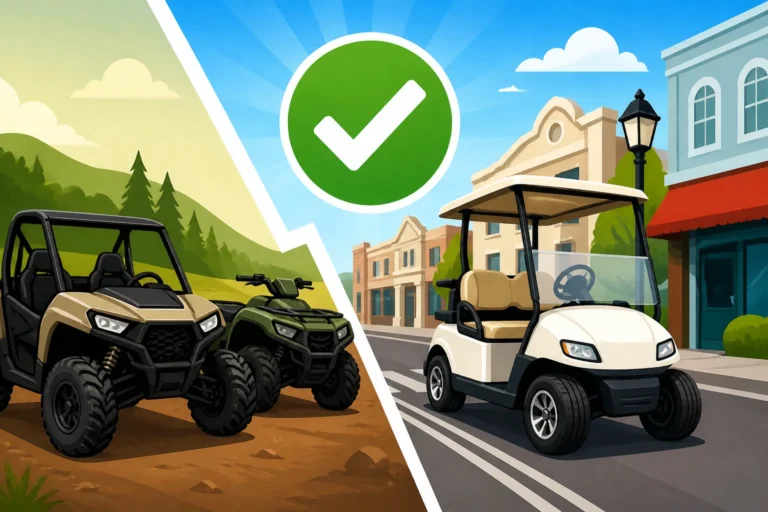
Examples of vehicles that might be manufactured as LSVs include certain models of electric carts, specialized utility vehicles, or small neighborhood electric vehicles. They look different from your typical trail-blazing ATV or rugged side-by-side. If you are looking to drive a vehicle on public roads and want to ensure it's legal, you need to start by looking at vehicles that are sold as LSVs, not trying to convert an off-road machine. These are the [Which Machines Actually Meet the Federal Safety Standard].
Registration and Operation of an LSV
If you own a legitimate Low-Speed Vehicle that meets the federal manufacturing standards, then registering it in Alabama is a straightforward process, much like registering any other motor vehicle. You'll typically apply for a title and registration through your county probate office or tag agent. The process is similar to what you'd do for a car, including paying applicable taxes and fees. [Alabama LSV Requirements Explained] will give you a clearer picture of what's involved.
Once registered, an LSV can generally be operated on public roads with a posted speed limit of 35 miles per hour or less. However, they are typically prohibited from operating on state highways or interstates. It's crucial to understand that even with an LSV, local ordinances can sometimes place further restrictions. Always check with your local municipality for any specific rules that might apply in your town or county, as these can vary.
Navigating the Grey Areas and Staying Safe
Given Alabama's clear stance on street legal kits, what options or considerations do off-road enthusiasts have? It’s important to understand the nuances and, most importantly, prioritize safety and legal compliance to avoid fines or accidents.
Local Ordinances and Their Limits
Some cities and counties in Alabama have passed local ordinances that permit the use of golf carts on certain public roads, usually those with lower speed limits within the city limits. This can often lead to confusion, with riders mistakenly thinking these rules apply to their ATVs or UTVs. However, golf carts are distinctly defined in Alabama law and are excluded from the ATV/UTV chapter; they also have their own set of federal standards, albeit different ones. These local golf cart ordinances almost never extend to traditional off-road vehicles.
It's vital to remember that a local ordinance allowing golf carts does not magically grant your ATV or UTV street-legal status. Any specific rules for your city or town will likely be outlined in [Alabama Local Ordinances on ATV Riding] or will fall under the general guidelines of [When an Alabama City Writes Its Own ATV Rule]. Always verify what the specific ordinance says and for which types of vehicles it applies. Don't assume.
Farm Use and Designated Public Areas
Alabama law does provide very narrow exceptions for off-road vehicles to be on public roads, primarily for specific purposes like farming or crossing. For example, a farmer might be able to operate an ATV or UTV on a public road for short distances to perform agricultural tasks, transport equipment between fields, or to get to a service area for maintenance. This falls under [Alabama Farm Use and Road Riding], but it's important to understand this is farm use, not general recreational riding. These machines are being used as agricultural implements, not personal transportation.
Similarly, there are provisions for [Crossing a Road on an ATV in Alabama] to access another piece of property. This typically means crossing directly and safely at a 90-degree angle, not riding down the road for an extended period. These are very specific, limited exceptions and do not constitute "street legality." They are conditional uses, not blanket permissions.
Practical Advice for Alabama Riders
Since a "street legal kit" won't make your off-road machine fully street legal in Alabama, here's some practical advice to keep you safe and legal:
- Know Your Machine's Classification: Understand that if your vehicle was manufactured as an ATV or UTV, it's designed for off-road use and is not typically street legal under Alabama law, regardless of aftermarket accessories.
- Invest in Safety (Even for Off-Road Use): While a street legal kit won't grant road legality, components like turn signals, horns, and mirrors from a company like SuperATV can still significantly enhance your safety and visibility when riding on trails, private property, or crossing permissible areas. Being seen and heard is always a good idea.
- Always Trailer for Public Road Travel: The safest and most legally compliant way to transport your ATV or UTV between riding areas that involve public roads is to trailer it. This completely bypasses any ambiguity about street legality.
- Check Local Rules (But Don't Rely on Them for Full Legality): If you hear about local ordinances, verify them directly with the city or county clerk's office. Understand that most will pertain to golf carts or very specific, limited ATV/UTV use, not general road access.
- Don't Risk It: The penalties for illegally operating an unregistered or non-compliant vehicle on public roads can include fines, vehicle impoundment, and even more serious legal consequences. It's simply not worth the risk.
- Consider a True LSV: If your primary goal is to have a small vehicle for neighborhood commuting or short trips on low-speed public roads, then researching purpose-built Low-Speed Vehicles is your best bet.
| Feature | Traditional ATV/UTV with "Street Legal Kit" | Purpose-Built Low-Speed Vehicle (LSV) |
|---|---|---|
| Federal Compliance | Not manufactured to FMVSS for road use | Manufactured to FMVSS Part 571.500 |
| Top Speed | Varies, often exceeds 25 mph | Typically 20-25 mph |
| Primary Use | Off-road recreation, utility, farm work | Neighborhood transport, light utility |
| Legal on Public Roads | Generally NOT, except specific exceptions | YES, on roads <= 35 mph (check local) |
| Registration | Voluntary off-road registration only | Title and registration for road use |
| Modifications | Aftermarket kit adds components | Comes with required components from factory |
Disclaimer
This article is for general informational purposes only and does not constitute professional advice. Laws, prices and regulations vary by location and change over time. Consult a qualified professional for guidance on your specific situation.