Alabama Riding a Timber Road
Oh, the allure of an Alabama timber road! There's just something about those winding, often unpaved paths, stretching deep into the woods, that calls to ATV and UTV riders. You see them snaking through pine forests and along creek banks, and immediately, your mind starts mapping out an adventure. But before you gear up and point your machine down one of these enticing routes, it’s absolutely critical to understand the nuances of what's allowed, what's expected, and what could land you in a whole heap of trouble. This guide will help you navigate the tricky terrain of riding off-road on Alabama's timber roads, ensuring your rides are not just thrilling, but legal and responsible too.
Understanding Alabama's Timber Roads
When we talk about timber roads in Alabama, we're not just talking about any old dirt path. These roads have a specific purpose, and that purpose often dictates who can use them and how. It's easy to assume that because a road isn't paved, it's fair game for off-road vehicles, but that's a dangerous assumption to make in our beautiful, complex state.
What Defines a Timber Road in Alabama?
At their core, timber roads are built and maintained by logging companies or private landowners primarily for forestry operations. Think about it: massive log trucks need to get in and out, heavy equipment needs to be moved, and foresters need to access different sections of timberland for management. These roads can range from well-graded gravel paths, especially near active logging sites, to deeply rutted, muddy trails that are barely more than old skidder paths. They often wind through dense forests, cross creeks, and traverse varying topography. You might see signs of their purpose everywhere: old stumps, young planted pines, heavy machinery parked off to the side, or even active logging operations. They are utilitarian paths, not recreational trails by design.
It's this utilitarian nature that often causes confusion for recreational riders. You might stumble upon a wide, clear timber road that looks like it would be perfect for cruising, leading you to believe it's an open access trail. However, its appearance can be deceiving. The maintenance of these roads, whether minimal or extensive, is funded by the landowners or timber companies, not by public taxes for recreational use. Understanding this fundamental difference is the first step toward responsible riding.
Public vs. Private Timber Roads
Here's where things get really complicated, and it's a distinction that can save you a lot of headache (or legal fees). Most timber roads in Alabama are on private property. This means they belong to individuals, families, or large timber companies. Unless you have explicit permission from the landowner, riding on these roads is considered trespassing. It doesn't matter if there's no gate, no "No Trespassing" sign every five feet, or if you've seen other people riding there before. The burden of proof for permission is always on the rider.
However, some timber roads, particularly those within national forests or state-managed wildlife management areas (WMAs), might be on public land. Even then, "public" doesn't automatically mean "open to ATVs and UTVs." Public lands, like the Talladega National Forest or the Bankhead National Forest, have their own very specific rules about where off-road vehicles are allowed. Often, ATV use is restricted to designated trails or forest service roads that are explicitly marked for such use. You simply cannot assume that every dirt road within a national forest or WMA is fair game for your quad. [Alabama National Forest Riding Permits] and [Alabama WMA Riding Rules for Quads] are vital resources to check before you even consider heading out on public timber roads.
The common misconception is that if you can get to it, you can ride it. This simply isn't true for the vast majority of timber roads in Alabama, which primarily exist on privately held land.
Legal Status of ATVs on Timber Roads
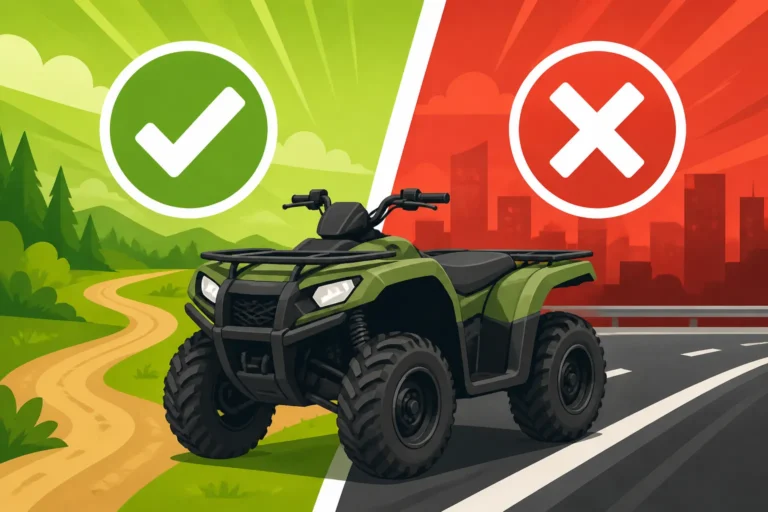
In Alabama, the default legal status for ATVs and UTVs is that they are not permitted on public roads or rights-of-way. This includes most county roads and state highways. Timber roads, even if they sometimes connect to public roads, are generally considered off-road environments. The critical factor is ownership and explicit permission.
For private timber roads, the legal status is straightforward: if you don't have permission from the property owner, riding your ATV or UTV there is trespassing, plain and simple. Trespassing is illegal, and property owners have the right to press charges. This can lead to fines, your machine being impounded, and even civil lawsuits if you cause any damage. [Alabama Trespass Penalties for Riders] can be quite severe, and it's simply not worth the risk.
For public timber roads, such as those within federal or state forest lands, the legality hinges on the specific regulations of that land management agency. They might have a system of numbered forest roads, some open to OHVs, others restricted. Some might be open only during specific hunting seasons for game retrieval, while others are permanently closed to motorized vehicles. It's not uncommon for rules to change seasonally or based on environmental conditions (like heavy rain leading to trail closures to prevent erosion). Always check with the relevant authority – the Forest Service district office or the Alabama Wildlife and Freshwater Fisheries Division for WMAs – before you ride.
Navigating Access and Permissions
The key to enjoying Alabama's timber roads responsibly and legally is securing proper access. This isn't always easy, but it’s absolutely non-negotiable for riding on private land. Skipping this step is not just risky; it's disrespectful to landowners who are working hard to manage their property.
Obtaining Permission from Landowners and Companies
Let's be realistic: getting permission to ride on private timberland isn't always like asking a neighbor to borrow a cup of sugar. These are active industrial or agricultural sites, and landowners often have legitimate concerns about liability, property damage, and disruption to their operations. However, it's not impossible, especially if you approach them with respect and a clear understanding of their needs.
Your first step is to identify the landowner. This might involve some detective work, looking up property records at the county courthouse or using online GIS mapping tools if they're available to the public. Once you have a name, try to make contact in a professional and polite manner. A face-to-face conversation is often best, but a well-written letter or email can also work. Clearly state who you are, what you want to do (ride your ATV/UTV), where you want to ride (specific roads), when you plan to ride, and assure them you understand and respect their property. Be prepared for a "no." If they say no, respect it and move on. Do not try to argue or sneak in later. If they say yes, ask for something in writing, even a simple note, detailing the dates, areas, and any specific rules they have. This written permission is your shield against potential trespassing charges. Remember, liability is a huge concern for landowners; offering to sign a liability waiver might help your case.
Hunting Leases and ATV Access
Many timber tracts in Alabama are leased out to hunting clubs. If you're a member of a hunting club that leases timberland, you might assume you have free rein to ride your ATV or UTV on the timber roads within that lease. This is another area where assumptions can lead to trouble. Your [Alabama Hunting Club Riding Rules] are determined by the lease agreement itself, and often by the club's bylaws.
Most hunting leases will specify exactly what kind of vehicle use is allowed. Some leases might permit ATVs/UTVs for specific purposes like accessing stands, retrieving game, or performing maintenance on food plots. Others might restrict them to certain roads or only allow them during daylight hours. Some leases might even explicitly forbid recreational riding to minimize property damage or disruption to hunting. Before you take your machine onto leased land, carefully review your lease agreement or the club rules. Don't rely on what another member says is allowed; get the definitive rules in writing or directly from the leaseholder or club president. Violating these terms could jeopardize the entire club's lease, making you very unpopular very quickly.
Dealing with Gates and Barriers
It's common to encounter gates, cables, or other barriers across timber roads. These are almost always there for a reason: to restrict access, prevent theft, or protect active logging sites. The rule is simple and absolute: Never, ever bypass or damage a gate or barrier. If a gate is locked, that's a definitive "Do Not Enter" sign. Climbing over it, cutting a lock, or driving around it through the woods is illegal, dangerous, and a sure way to incur the wrath of the landowner and law enforcement.
Bypassing a barrier isn't just trespassing; it's often vandalism and could lead to much more serious charges. It also immediately erodes any trust a landowner might have for ATV riders, making it harder for anyone to get permission in the future. If you have permission to access a gated road, the landowner will provide you with a key or a combination. If they don't, then your permission likely doesn't extend past the gate, or they expect you to walk from that point. Always respect the barriers you encounter; they are there for a reason and serve as a clear indicator of property boundaries and restricted access.
Safety and Equipment for Timber Road Riding
Timber roads are not groomed trails. They are work roads, often rough, unpredictable, and sometimes actively used by heavy machinery. This means you need to approach them with a heightened sense of awareness and ensure both you and your machine are properly prepared.
Essential Gear for Alabama Timber Roads
Riding any ATV or UTV requires basic safety gear, but timber roads present unique challenges that necessitate extra consideration. First and foremost, a properly fitting, DOT-approved helmet is paramount. While [Alabama Helmet Rules on Private Land] might not be as strict as for public roads or specific parks, protecting your head from unexpected branches, falls, or collisions is just common sense. Pair that with good eye protection – goggles or a helmet with a face shield – to keep dust, bugs, and low-hanging branches out of your eyes.
Beyond that, sturdy riding boots that protect your ankles, long pants, and a long-sleeved shirt are crucial to guard against scratches, thorns, and unexpected encounters with brush. Gloves are also a good idea for grip and hand protection. Consider carrying a small first-aid kit, enough water to stay hydrated, and a fully charged cell phone (though service can be spotty in deep woods). A whistle can be useful for signaling, and a small, bright flashlight or headlamp is always a good idea, even if you plan to be back before dark, just in case of a breakdown or delay.
Machine Preparedness for Rough Terrain
Your machine needs to be up to the task of handling the varied conditions of a timber road. Unlike manicured trails, you'll encounter deep ruts, loose gravel, mud holes, rocky sections, and fallen timber.
- Tires: Ensure your tires are in good condition with adequate tread. For Alabama's mixed terrain, a good all-around or mud-specific tire can make a huge difference in traction.
- Underbody Protection: One of the biggest risks on timber roads is damage to the underside of your machine. Rocks, stumps, and fallen branches can wreak havoc on your drivetrain, axles, and frame. Investing in robust skid plates is highly recommended. Products from brands like SuperATV offer excellent underbody protection that can save you costly repairs. Think about [Skid Plates for Talladega Rock] – the same logic applies to stumps and hidden hazards on a timber road.
- Winch: A winch is not a luxury; it's a necessity for timber road riding, especially if you're venturing out alone or into unknown territory. Getting stuck in a deep mud hole or high-centered on a stump is a real possibility, and a winch can be your only way out.
- Maintenance: Before each ride, do a quick check of your machine: tire pressure, fluid levels, brakes, lights, and ensure all nuts and bolts are tight. A breakdown far from civilization can turn a fun day into a miserable, potentially dangerous situation.
Riding Techniques Specific to Timber Roads
Riding timber roads requires a different mindset than open trails or tracks. You need to be constantly vigilant and adjust your technique.
- Slow and Steady: Speed is your enemy here. Many hazards are hidden, especially after rain or if overgrown. Go slow enough to react to sudden changes.
- Watch for Ruts: Timber roads are prone to deep ruts from heavy equipment and erosion. Learn to navigate them carefully, either straddling them if they're wide enough, or dropping one wheel in if necessary, while maintaining control.
- Mud and Water Crossings: Approach mud holes with caution. Assess their depth and consistency if possible. If you're unsure, walk it first. Keep momentum but don't blast through, which can cause damage to the environment and your machine.
- Fallen Trees and Debris: Timber roads often have fallen trees, branches, or other logging debris. Never assume you can just power over them. Stop, assess, and move them if safe, or find a safe route around. This is where a saw or axe in your gear kit can be invaluable.
- Steep Climbs and Descents: Some timber roads can be surprisingly steep. Use proper climbing and descending techniques for your machine, staying centered and using engine braking where appropriate. Always be mindful of your [Alabama Trail Difficulty Ratings] for what you and your machine can handle.
- Active Logging: If you encounter active logging operations, immediately stop, turn off your engine, and make yourself visible. Wait for workers to acknowledge you and give you instructions, or turn around and find another route. Heavy machinery operators have blind spots, and your safety is paramount.
Environmental Responsibility and Etiquette
When you're out riding on Alabama's timber roads, whether public or private, remember that you are a guest in someone else's backyard or a steward of shared natural resources. Responsible riding isn't just about legality; it's about respecting the land, wildlife, and other people who use these areas.
Treading Lightly and Preventing Damage
Alabama's red clay is beautiful, but it can be incredibly susceptible to erosion, especially after rain. It’s imperative that ATV and UTV riders understand their impact on the environment. When you encounter a mudhole, the instinct might be to throttle through it and splash around. However, this often widens the mudhole, deepens ruts, and contributes to significant erosion. [Treading Lightly on Erodible Alabama Clay] means staying on existing roads and trails. Do not create new paths around obstacles, as this broadens the impact area and destroys vegetation.
Avoid riding during or immediately after heavy rains when the ground is saturated. Not only does this cause the most damage, but it also increases your chances of getting stuck and makes it harder to control your machine. If you're on a private timber road, causing excessive damage like deep ruts could lead to your permission being revoked and potentially even a bill for repairs. On public lands, it can lead to trail closures and stricter regulations for all riders. We all want to keep these areas open, and that requires collective responsibility.
Respecting Wildlife and Other Users
Timber roads are often used by a variety of people, not just loggers and foresters. Hunters, hikers, bird watchers, and even local residents might be using these same paths. Be courteous and reduce your speed when you encounter others. Turn off your engine or put your machine in neutral to reduce noise, and give them ample space. A friendly wave goes a long way.
Wildlife is also abundant in these areas. Be mindful of your speed, especially at dawn and dusk, to avoid collisions with deer, turkeys, or other animals. Your presence can disturb wildlife, particularly during sensitive seasons like nesting or breeding. Try to minimize sudden movements and loud noises. If you encounter livestock on private timber roads (common in rural Alabama), slow down, give them a wide berth, and do not spook them. Report any damaged fences or gates you observe to the landowner.
Noise is another big factor. The roar of an ATV can travel far through the woods, disturbing residents, hunters, and wildlife. While Alabama doesn't have specific sound limits for off-road vehicles on private land, common courtesy dictates that you avoid excessive noise, especially near homes or during early morning/late evening hours. [Alabama Noise Complaints About Quads] can lead to local ordinances being enacted that restrict or even ban riding, so it's in everyone's best interest to be mindful of sound levels.
Waste Management and Leaving No Trace
This should go without saying, but always pack out everything you pack in. This includes all trash, food wrappers, empty drink containers, and any machine-related waste like broken parts or used oil (though you shouldn't be doing major repairs in the woods). Littering is not only illegal but also harms the environment and tarnishes the reputation of all off-road enthusiasts. Take pride in leaving the area cleaner than you found it.
Fire safety is also crucial, especially during dry seasons in Alabama. Hot exhaust pipes can ignite dry grass and leaves. Always ensure your machine is equipped with a spark arrester, a mandatory requirement on public lands and a good idea everywhere else. Be extremely cautious with any open flames, including campfires or even a discarded cigarette butt. Forest fires devastate timberland, endanger wildlife, and put lives at risk. Check fire danger ratings before you head out, and if conditions are dry, avoid anything that could spark a blaze.
Potential Pitfalls and Legal Consequences
Ignoring the rules or assuming you have permission on timber roads in Alabama can lead to serious legal ramifications. It's not just about getting a slap on the wrist; your machine could be impounded, and you could face significant financial penalties.
Trespassing Penalties in Alabama
As mentioned, riding on private timber roads without explicit permission is trespassing. In Alabama, trespass can be a misdemeanor, carrying fines and potentially jail time depending on the severity and whether it's a repeat offense. But beyond the immediate criminal penalties, you could also face civil charges. If you cause damage to the property – whether it's tearing up a road, knocking down a gate, or disturbing an active logging site – the landowner can sue you for the cost of repairs and damages.
Furthermore, law enforcement can and often will impound your ATV or UTV if you are caught trespassing. Getting your machine back usually involves paying towing and storage fees, on top of any fines or court costs. The hassle and expense far outweigh the perceived thrill of riding where you shouldn't. This is why having that written permission is so vital; it's your proof that you're where you're supposed to be. For a deeper understanding of the risks, check out [Alabama Trespass Penalties for Riders].
Damage to Property and Environmental Fines
Beyond direct trespassing, causing damage to property has its own set of consequences. If your machine tears up a freshly graded timber road, damages a culvert, or destroys vegetation, you could be held liable for the repair costs. Timber companies invest significant money in maintaining these roads to ensure their operations run smoothly. Damage can interrupt their work, leading to further claims against you.
Environmental fines can also come into play if your actions lead to significant erosion, pollution of waterways, or destruction of protected habitats. While these are less common for a single ATV rider, severe cases of environmental damage could lead to investigations by state environmental agencies. It’s always best to err on the side of caution and ride responsibly to protect Alabama's natural beauty.
Impaired Riding and Accidents
Operating an ATV or UTV under the influence of alcohol or drugs is just as illegal and dangerous on a timber road as it is on a public highway. [Alabama DUI Law and Off-Road Machines] clearly states that these laws apply to off-road vehicles too. The consequences can include fines, loss of driving privileges, and even jail time. The remote nature of timber roads can make an impaired riding accident even more catastrophic, as emergency services might have difficulty reaching you.
Speaking of accidents, even sober, responsible riders can have mishaps. If you're involved in an accident that results in injury or significant property damage, you might be required to file an [Alabama Accident Reporting for an ATV Crash]. While insurance might not be legally mandated for off-road use, carrying a good policy is highly advisable. Without it, you could be personally liable for medical bills or property damage if you're at fault, a financial burden that could be devastating. Always ride within your limits, never alone if possible, and let someone know your planned route and expected return time.
Local Regulations and Enforcement
While state laws provide a general framework, local municipalities and counties often have their own specific rules that can impact ATV and UTV riding, especially as it pertains to connecting to or crossing public roads to access timberland.
How Local Ordinances Affect Timber Road Access
It's a common scenario: you have permission to ride a private timber road, but to get there, you need to cross a short stretch of county road or ride through a small town. This is where local ordinances can become a significant hurdle. Many Alabama cities and counties have specific rules about where and when ATVs and UTVs can be operated, even on unpaved roads within their jurisdiction. Some might allow limited road crossings, while others have outright bans on all public road use for off-highway vehicles.
Before you plan a route that involves any public roads, no matter how brief the stretch, it's vital to check with the local city or county clerk's office. [Alabama City Ordinance Lookups] can provide crucial information. Don't assume that because a county road is unpaved and looks like a timber road, it's open to OHVs. The rules can vary dramatically from one municipality to the next, and ignorance of the law is never a valid defense.
Interaction with Law Enforcement
If you're stopped by a deputy or a game warden on or near a timber road, remain calm and cooperative. They are performing their duty to enforce laws and protect property. You should be prepared to provide identification and, most importantly, proof of permission if you are on private land. This is where that written note or document from the landowner becomes your best friend. Without it, the officer has every right to treat you as a trespasser until proven otherwise.
[What an Alabama Officer Can Ask to See] might include your driver's license (if you're driving on a road or crossing one), proof of ownership for your machine, and that all-important permission slip. Ensure your machine has visible serial numbers and is not reported stolen. If you're riding on public forest land or a WMA, they may also ask to see relevant permits like hunting licenses or WMA permits. Your best bet for a smooth interaction is to be polite, have your paperwork readily available, and clearly explain your presence.
When Timber Roads Cross Publicly Managed Lands
Sometimes, timber roads don't exist in a vacuum; they might intersect with or run adjacent to publicly managed lands such as national forests, state parks, or wildlife management areas. This adds another layer of complexity. Just because you have private landowner permission to ride on one section doesn't mean that permission extends to the public land that road might cross.
As discussed earlier, federal and state lands have their own distinct regulations regarding OHV use. For national forests, for example, ATVs and UTVs are typically restricted to specifically designated roads and trails, which are usually marked on forest maps. [Alabama National Forest Riding Permits] might be required, or certain areas might be entirely off-limits to motorized vehicles. Similarly, WMAs have detailed rules about vehicle access, often tied to hunting seasons and specific area permits. Never assume that a timber road continuing into a public land boundary maintains the same access rules. Always consult the official maps and regulations for each specific land management agency.
| Type of Timber Road | Ownership | Access Requirement | Common Restrictions | Enforcement |
|---|---|---|---|---|
| Private | Individual/Company | Explicit written permission from landowner is mandatory. | Can be revoked anytime; specific hours, vehicle types, or purposes (e.g., hunting, not recreation). | Landowner, local sheriff, game warden. |
| Leased (Hunting) | Private (leased) | Permission via lease agreement/club rules; often for specific purposes like game retrieval. | Specific seasons, vehicle types, roads; no recreational riding. | Club leadership, landowner, local sheriff, game warden. |
| Public (Forest/WMA) | State/Federal | Designated routes/trails only; often requires permits/licenses. | Speed limits, time of day, seasonal closures, specific permits. | Forest Service officers, game wardens, park rangers. |
Disclaimer
This article is for general informational purposes only and does not constitute professional advice. Laws, prices and regulations vary by location and change over time. Consult a qualified professional for guidance on your specific situation.