Alabama Requires FMVSS Compliance for Plates
It’s a common scenario across Alabama: you’ve got your trusty ATV or side-by-side, and you dream of the day you can just hop on it, run down the road to the store, or connect two amazing stretches of trail without having to load it onto a trailer. You might even see others riding around and wonder why you can't. But then you start looking into getting a license plate, and suddenly, you're hit with a wall of confusing regulations that boil down to one frustrating truth: in Alabama, getting a standard license plate for your off-road machine isn't just difficult, it's virtually impossible for most ATVs and UTVs because of federal safety standards. This guide will walk you through exactly why your off-road vehicle won't typically qualify for a street-legal plate in Alabama, what those federal standards mean, and what your actual options are for riding legally and safely.
The Road Ahead: Why Street-Legal ATVs and UTVs Are a Tricky Business in Alabama
That vision of cruising down a public road on your quad or side-by-side is incredibly appealing. It makes sense, right? You want to maximize your machine's utility, save time loading and unloading, and simply enjoy the open air. But the reality in Alabama often clashes head-on with these desires, making it a source of genuine confusion and disappointment for many riders.
The Common Dream: Convenience and Connection
Let's be honest, who wouldn't want to make their ATV or UTV street legal? Imagine the sheer convenience of riding directly from your property to a nearby trail system, or quickly running into town for supplies without the hassle of hitching up a trailer. For many, it's about seamlessly connecting disparate riding areas, transforming a chore into an extension of the adventure. You see others on the road, maybe some modified golf carts or utility vehicles, and you think, "Why not my robust, capable off-road machine?" This desire isn't just about fun; it’s about efficiency, practicality, and fully integrating a valuable piece of equipment into your daily life and recreational pursuits. The appeal is powerful, driven by a wish for greater freedom and less logistical headache.
The Inconvenient Truth: Alabama's Strict Stance
Unfortunately, Alabama's approach to allowing off-highway vehicles on public roads is rooted in a fundamental classification that most ATVs and UTVs simply don't meet. The state doesn't have a specific "street legal ATV" conversion process that allows you to easily jump through hoops and get a regular license plate. Instead, it relies on federal standards for vehicles designed for road use. This means it's not just a matter of adding turn signals, a horn, and some mirrors; it's about the very engineering and safety certifications your machine was built with. When you look at the law, you realize that the reason your machine can't get a plate isn't an oversight or a lack of the right accessories – it's because it was manufactured for a completely different environment, the off-road, and lacks the inherent safety features required for highway travel.
Unpacking FMVSS: The Federal Hurdle to Getting a Plate
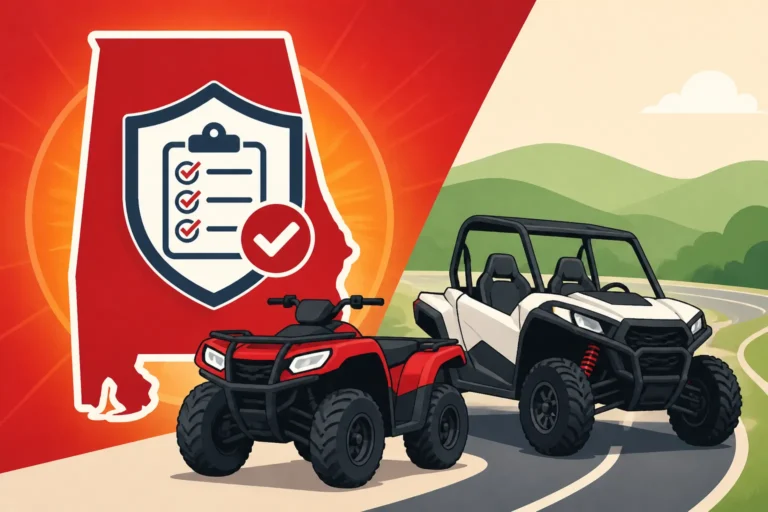
The key to understanding why your ATV or UTV can't get a standard license plate for road use in Alabama lies in something called Federal Motor Vehicle Safety Standards, or FMVSS. These aren't just suggestions; they are comprehensive, mandatory requirements that vehicles must meet to be legally driven on public roads.
What Are Federal Motor Vehicle Safety Standards?
FMVSS stands for Federal Motor Vehicle Safety Standards, and they are a set of regulations issued by the National Highway Traffic Safety Administration (NHTSA), an agency of the U.S. federal government. These standards are incredibly broad, covering everything from crashworthiness, lighting, brakes, tires, emissions, occupant protection (like seat belts and airbags), and even things like glare reduction and field of view. Essentially, if a vehicle is manufactured to be sold and used on public highways in the United States, it must comply with dozens of these specific standards.
The critical point here is that these are manufacturing standards. They dictate how a vehicle must be designed and built from the ground up to ensure a minimum level of safety for occupants and other road users. An ATV or UTV, by its very nature and design, is classified as an off-highway vehicle (OHV). It is manufactured for use on unpaved surfaces, trails, and private land. Because of this intended use, OHVs are not designed or certified by their manufacturers to meet the vast majority of FMVSS. Alabama's statute directly references [Alabama's 49 CFR 571.500 Standard], which clarifies this requirement, making it clear that vehicles intended for public highways must meet these rigorous federal benchmarks.
Why Your Off-Road Machine Isn't Designed for the Road
Think about the fundamental differences between your ATV or UTV and a typical passenger car or truck. Your off-road machine is built for rugged terrain, articulation, and absorbing impacts from bumps and rocks. It has specialized knobby tires designed for grip on loose surfaces, not for sustained high-speed pavement driving. Its suspension is often softer and has more travel than a road vehicle, which can make it less stable at higher speeds on asphalt.
Most ATVs lack a full enclosure, crumple zones, or airbags – features standard in road vehicles designed to protect occupants in a collision. The roll-over protection structures (ROPS) on UTVs are designed for low-speed rollovers in an off-road environment, not high-speed impacts with other vehicles. While some aftermarket companies, like SuperATV, offer "street legal kits" that include turn signals, horns, mirrors, and sometimes even windshields, these are mere add-ons. They fulfill some visible requirements but do not fundamentally alter the vehicle's manufacturing certification or its inherent safety characteristics relative to FMVSS. A kit might make your machine look more road-ready, but it doesn't change what it is or how it was designed and tested. The lack of DOT-approved tires for highway speeds, proper lighting specifications (beyond basic headlights/taillights), and other structural elements mean that from a federal standpoint, your off-road machine is simply not a highway-worthy vehicle.
The Plate Problem: Why a Standard License Plate is Out of Reach
The desire for a license plate on your ATV or UTV is often driven by a misunderstanding of what that plate actually signifies in Alabama. It's not just a registration sticker; it's a declaration of compliance with stringent safety regulations.
A License Plate Signifies Federal Compliance
In Alabama, a standard vehicle license plate, or "tag," is more than just a piece of metal with numbers; it's a visual affirmation that the vehicle it's affixed to meets the necessary federal safety standards for operation on public highways. When you register a car or truck, the state assumes—and requires—that it has been manufactured and certified to FMVSS. This is why the topic of [Alabama Requires FMVSS Compliance for Plates] is so crucial. If a vehicle hasn't been designed, tested, and certified by its manufacturer to meet these federal safety standards, the state cannot, by law, issue it a standard license plate for general road use. Your ATV or UTV, because it's built for off-highway use and not for FMVSS compliance, falls into this category of ineligible vehicles. This isn't a loophole to find or a form to fill out differently; it's a foundational regulatory barrier that directly impacts whether your machine can ever bear a street-legal tag.
Off-Road Registrations Are Not for Public Roads
It's important to understand that Alabama does have a registration system for ATVs and UTVs through the Alabama Law Enforcement Agency (ALEA), but this is distinctly different from a standard vehicle registration for highway use. This is a voluntary off-road registration that provides an identification decal, not a license plate. This decal is designed for tracking ownership and is often required for riding on designated public off-road trails and facilities within the state.
There are two main tiers for this: [Alabama Public Use ATV Registration Explained] for those who ride on publicly managed lands, and [Alabama Private Use ATV Registration Explained] for those who keep their riding strictly on private property. Neither of these registrations, nor the decal issued, grants any permission whatsoever to operate your ATV or UTV on public roads. The purpose of these off-road registrations is entirely separate from demonstrating federal compliance for highway travel, and confusing the two can lead to legal trouble.
The Limited World of Low-Speed Vehicles (LSVs)
If you've seen small, golf-cart-like vehicles with license plates driving on local streets, you might think your ATV or UTV could follow suit. However, these are typically Low-Speed Vehicles (LSVs), and they represent the exception that truly proves the rule regarding FMVSS. An LSV is a vehicle that is manufactured and certified to meet a specific, albeit reduced, set of Federal Motor Vehicle Safety Standards, outlined in [What a Low-Speed Vehicle Standard Requires]. These vehicles are purpose-built for road use, usually with a top speed limit (often around 25 mph) and are only permitted on roads with certain speed limits (typically 35 mph or less).
LSVs come from the factory equipped with headlamps, stop lamps, turn signals, taillamps, reflex reflectors, parking brakes, rearview mirrors, windshields, seat belts, and a vehicle identification number (VIN). They are designed and tested to these specific standards. Your typical ATV or UTV, even with aftermarket modifications, simply wasn't manufactured with these federal standards in mind. While [Alabama Low-Speed Vehicle Rules] allow for the registration and use of these purpose-built LSVs, it's critical to understand that attempting to "convert" an off-road ATV or UTV into an LSV is not a recognized or legal pathway to street legality in Alabama. You would need to purchase a machine specifically manufactured as an LSV.
| Feature / Vehicle Type | Standard ATV/UTV | "Street Legal Kit" ATV/UTV | True Low-Speed Vehicle (LSV) |
|---|---|---|---|
| Intended Use | Off-road recreation, utility | Off-road with added visibility | Public roads, limited speed |
| FMVSS Compliance | No | No (adds accessories, not compliance) | Yes (to specific LSV standards) |
| Standard License Plate | No | No | Yes (with LSV registration) |
| Off-Road Registration | Yes (voluntary ALEA decal) | Yes (voluntary ALEA decal) | No (not an off-road vehicle) |
| Top Speed (approx.) | Varies, often 40-70+ mph | Varies, often 40-70+ mph | 20-25 mph (governed) |
| Crash Protection | Minimal, ROPS for rollovers | Minimal, ROPS for rollovers | Basic occupant restraints |
| DOT-Approved Tires | No | No (unless specifically replaced) | Yes |
| Aftermarket "Kits" | N/A | Available from brands like SuperATV | N/A |
| Legal on Public Roads (General) | No | No | Yes (on restricted roads) |
The Cost of Ignoring the Rules: Penalties and Pitfalls
It's tempting to think you might be able to get away with a quick ride on a public road, especially if you see others doing it or feel that your modifications are sufficient. However, ignoring Alabama's clear stance on street-legal ATVs and UTVs can lead to significant legal and financial headaches that far outweigh any perceived convenience.
Facing the Consequences of Illegal Road Use
Riding an unregistered or non-FMVSS compliant ATV or UTV on public roads in Alabama can quickly turn your fun outing into a costly nightmare. An encounter with law enforcement could result in a citation for operating an unregistered vehicle, a vehicle not meeting safety standards, or simply operating an off-road vehicle on a public roadway where it's prohibited. The fines can be substantial, and you might also incur court costs and administrative fees. In some cases, repeat offenses or egregious violations could even lead to impoundment of your machine, meaning you'd have to pay towing and storage fees in addition to any fines to get it back. Furthermore, an accident while illegally riding on a public road could void your insurance coverage, leaving you personally liable for damages and medical bills, which can be financially devastating. The risks associated with [Alabama Penalties for Illegal Road Riding] are very real and not to be taken lightly.
Aftermarket Kits Don't Offer Protection
Many riders invest in aftermarket "street legal kits" from companies like SuperATV, hoping to satisfy the requirements for road use. These kits typically add items like turn signals, a horn, a license plate bracket (though you won't get a standard plate in Alabama), and mirrors. While these accessories improve visibility and functionality, they do not magically transform your off-road machine into an FMVSS-compliant vehicle in the eyes of Alabama law or federal regulations.
As previously discussed, the core issue is the original manufacturing standard, not simply the presence of certain add-ons. You might have the brightest turn signals and loudest horn, but if the underlying vehicle doesn't meet crashworthiness, emissions, and other critical safety standards, it remains illegal for general public road use. This is why the advice in [Why a Street Legal Kit Will Not Make It Legal] is so consistently emphasized. Relying on these kits for legal road riding is a false sense of security that can still lead to fines, impoundment, and insurance problems, because they do not address the fundamental federal requirements that Alabama upholds for highway-legal vehicles.
Navigating Alabama's Landscape: Where You CAN Ride
While the dream of general street legality for your ATV or UTV in Alabama might be out of reach, that doesn't mean your machine is relegated to sitting in the garage. Alabama offers fantastic opportunities for legal and exhilarating off-road adventures.
Embracing Alabama's Off-Road Paradises
Instead of focusing on what you can't do, let's celebrate what you can do! Alabama is home to a vibrant and growing off-road scene, featuring numerous dedicated parks and extensive trail systems where your ATV or UTV can truly shine. Places like Stony Lonesome OHV Park, Minooka Park, and many private lands offer diverse terrain, from challenging rock crawling to scenic wooded trails and muddy playgrounds. These are the environments your machine was built for, and where you can enjoy it without fear of legal repercussions. Exploring [Alabama ATV Trails: Where to Ride] opens up a world of adventure, camaraderie with fellow riders, and the pure thrill of off-roading. Many of these parks offer amenities like camping, restrooms, and sometimes even repair shops, making for a full weekend of fun. Focus your energy on discovering these incredible destinations, and you'll find the joy of off-roading far outweighs the frustration of road limitations.
Specific Road Use Exceptions (and Their Strict Limits)
While general road use for ATVs and UTVs is largely prohibited, Alabama law does recognize a few highly specific and narrowly defined exceptions. These are not loopholes for casual cruising, but rather practical allowances for very particular circumstances:
- Crossing a Road: In very limited situations, you might be allowed to cross a public road to get from one section of private land to another, or to access an adjacent trail. This must typically be done at a right angle, as safely and quickly as possible, and only if there's no other practical way to proceed. The machine must have working headlights and taillights. This is a quick crossing, not traveling down the road, and it's heavily conditioned as outlined in [Crossing a Road on an ATV in Alabama].
- Farm Use: If your ATV or UTV is genuinely being used as farm equipment for agricultural purposes, there may be specific allowances for brief road travel between fields or property sections. This is strictly tied to active farm operations and not for recreational use. Even then, proper lighting and safety precautions are paramount. The specifics can be found under [Alabama Farm Use and Road Riding], but remember, it must be legitimate farm work, not just riding to your deer stand.
- Emergency Situations: In rare cases of an emergency, such as assisting in a natural disaster or search and rescue operation, law enforcement or emergency personnel might grant temporary permission for ATV/UTV use on roads. These are extraordinary circumstances, not everyday occurrences.
It's crucial to understand that these exceptions are very limited and strictly interpreted. They do not grant permission for general travel, commuting, or recreational riding on public roads. Always err on the side of caution and assume your off-road machine is not allowed on public thoroughfares unless you have explicit, clear, and legal justification for a very specific, limited purpose.
Local Golf Cart Ordinances: Not for ATVs
Sometimes, people confuse local golf cart ordinances with what might be possible for ATVs or UTVs. It's true that in some Alabama towns and communities, local governments have passed ordinances allowing golf carts to be operated on certain public streets, typically those with lower speed limits. This is because golf carts, while also not fully FMVSS compliant, are legally defined differently than ATVs and UTVs and often fall under separate local regulations, as discussed in [Alabama Golf Cart Rules Compared to ATVs]. These local rules apply only to golf carts and are usually very specific about where and when they can be ridden. They do not extend to ATVs or UTVs, which remain subject to the broader state and federal regulations that prevent them from getting a standard license plate for road use. Do not assume that because a golf cart can be ridden on a street in a particular town, your side-by-side can too.
Disclaimer
This article is for general informational purposes only and does not constitute professional advice. Laws, prices and regulations vary by location and change over time. Consult a qualified professional for guidance on your specific situation.