Riding Public Land on a Private Tier
It's incredibly frustrating when you've done your due diligence, paid your dues, and registered your ATV or UTV with the state, only to find out you might still be in a sticky situation when riding in certain areas. Many riders in Alabama face confusion about whether their "private use" registration tier truly limits where they can ride, especially when they want to hit up a public trail or designated OHV park. This guide aims to clear up that very confusion, explaining the nuances of Alabama's registration system and what your private use decal actually means for public land access.
Understanding Alabama's ATV Registration Tiers
Navigating the rules for off-road vehicles in Alabama can feel like trying to find your way through a dense thicket without a map. One of the biggest points of confusion for many ATV and UTV owners revolves around the two distinct registration tiers: "Private Use" and "Public Use." It's easy to assume that once your machine is registered, you're good to go anywhere, but that's simply not the case in Alabama, particularly when it comes to riding on public lands.
The "Private Use" Registration Explained
The "Private Use" registration tier is, as its name suggests, primarily intended for machines that will be operated on private property. This includes your own land, land you lease for hunting or other purposes, or property where you have explicit permission from the landowner to ride. Think of your trusty quad that helps you around the farm, carries gear to your deer stand, or provides some weekend fun in your back forty. This registration is generally more affordable and has fewer hoops to jump through, making it a popular choice for those who don't anticipate riding in official public OHV parks or state-managed trails. It’s designed to provide a basic level of identification and official record-keeping for your machine, which can be useful for proving ownership, especially as Alabama begins its new titling process for newer machines. For many, this tier feels like the most logical and cost-effective option, leading to the natural question of whether it extends to public areas.
However, the "private use" designation often leads to a significant misunderstanding. Many assume "private" simply means "not on public roads," believing that as long as they aren't on paved highways, their registration covers them. This isn't quite right. The "private use" designation is less about where you can't go on a road and more about where you can go recreationally – which is primarily private land. It doesn't magically grant access to publicly managed lands like state parks, national forests, or designated OHV trails that require a "public use" registration. This distinction is crucial and is where many riders inadvertently run into trouble with authorities who are enforcing specific land use regulations.
The "Public Use" Registration Explained
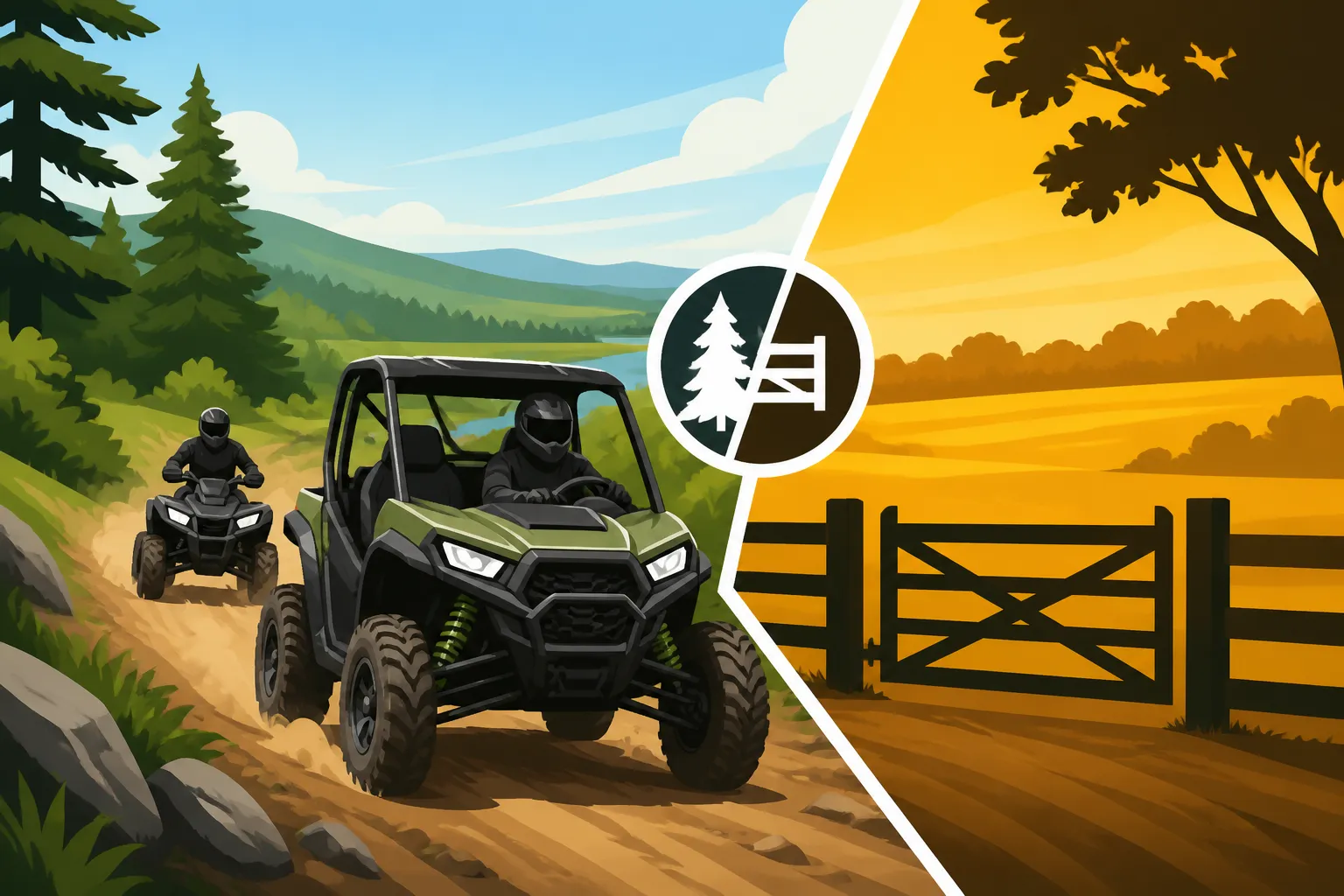
On the other side of the fence, we have the "Public Use" registration. This tier is specifically designed for ATVs and UTVs that will be operated on designated public OHV trails, state-managed recreation areas, and other public lands where off-road vehicle use is permitted. If your weekend plans involve hitting the trails at Stony Lonesome OHV Park or exploring the designated routes within a Wildlife Management Area (WMA), this is the registration tier you absolutely need. The cost for a public use registration is slightly higher than the private tier, and this additional fee often contributes to the maintenance and management of these public riding areas.
Choosing the "public use" tier signals your intent to operate your machine in areas managed by the state or federal government for recreational purposes. It acknowledges that you are part of a larger community of riders who benefit from maintained trails and regulated access. Without this specific registration, even if you’re carrying a hunting license and a WMA permit, your standard "private use" ATV registration may not be sufficient for recreational riding on those same WMA trails. It’s about ensuring that the resources for public riding areas are funded, and that there’s an official record of machines accessing these regulated environments. It’s a distinct permit to play, so to speak, in Alabama’s designated outdoor playgrounds.
The Core Problem: Riding Public Land with a Private Tier Registration
This is where the rubber meets the red clay for many Alabama ATV and UTV owners, and it's a common source of both confusion and frustration. You've gone through the process, filled out the forms, and paid your [Alabama ATV Registration Cost], so why can't you just ride wherever you want, as long as it's off-road? The answer lies in the specific language of Alabama's off-road vehicle statute, which makes a clear distinction regarding public land access based on your registration tier.
What the Law Says About Public Land Access
Alabama's legal framework for off-road vehicles (ATVs and UTVs) makes a very intentional distinction between machines registered for "private use" and those registered for "public use." While a private use registration certainly validates your ownership and registers your machine with the Alabama Law Enforcement Agency (ALEA), it does not automatically grant you the legal right to operate that machine on state or federally managed public lands. The law is designed to ensure that machines utilizing public resources – such as maintained OHV trails, state forest roads open to ATVs, or designated riding areas within WMAs – contribute to their upkeep and are subject to the specific regulations governing those spaces.
Essentially, if you show up at a designated OHV park or a public trail system with only a private use registration, you could be cited for operating your machine illegally. Law enforcement officers, whether from ALEA, the Department of Conservation and Natural Resources (ADCNR), or even county sheriffs, are trained to look for the appropriate registration decal. A private use decal on a public trail is a red flag. The consequences can range from a warning to a significant citation, fines, and in some cases, even the impoundment of your machine. It's a tough lesson to learn when you believed you were fully compliant, but the statute's intent is quite clear on this matter. Ignorance of the law, unfortunately, is rarely a valid defense when facing such penalties.
"Public Land" Versus "Private Property" – Where the Confusion Lies
A major source of misunderstanding stems from the vague, yet distinct, definitions of "public land" versus "private property." For many riders, "public land" might conjure images of national parks or highly regulated areas. However, in Alabama, "public land" for ATV purposes can include a wide array of state and federal properties:
- State Parks and Forests: Designated OHV trails within state park systems (like [Minooka Park Riding in Alabama]) or specific routes in state forests.
- Wildlife Management Areas (WMAs): Areas managed by ADCNR for hunting, fishing, and sometimes limited recreational access, which often require specific permits beyond just vehicle registration.
- National Forests: Certain designated roads or trails within national forests like the Talladega National Forest or Bankhead National Forest might be open to ATVs, but often require specific permits and adhere to strict rules, and definitely require a public use registration.
- County Parks: Some county-level parks, like [Stony Lonesome OHV Park in Alabama], are specifically set up for OHV riding and will require public use registration and often their own separate admission fees.
Private property, on the other hand, is land owned by an individual or private entity. This includes your own backyard, a friend's farm, land leased by your hunting club, or a timber company's property where you have explicit, written permission to ride. The frustration comes when riders feel they have "paid to register" their machine and still can't access what they perceive as "just dirt roads" in a public area. The distinction, however, is about the management and purpose of the land, and the specific regulations put in place to ensure safety, environmental protection, and fair use among various recreational groups. Your private use registration confirms you've registered your machine, but it doesn't give you a blanket pass over any public ground where wheels might turn.
Navigating the Rules: When a Private Tier Might Touch Public Land
It’s completely understandable why riders might feel caught between a rock and a hard place with Alabama’s ATV registration tiers. While the general rule is clear – private tier for private land, public tier for public trails – there are always those edge cases or specific scenarios that seem to blur the lines. It’s important to clarify that these are usually exceptions for non-recreational purposes, not loopholes for public trail riding.
Exceptions and Gray Areas (Very Limited)
There are indeed extremely limited scenarios where an ATV or UTV with a private use registration might legally operate on a small portion of public land, but these are generally not for recreational riding. For example, if you own private property that is bisected by a county road, or if you need to cross a short stretch of public road right-of-way to get from one part of your private land to another, you might be covered under specific allowances. These are typically cases of direct access or essential travel, not for sustained recreational use on the public thoroughfare. Even in these situations, other rules almost certainly apply, such as speed limits, yielding to other traffic, and often only during daylight hours.
You might find specific, very localized city or county ordinances that create a narrow window for certain operations. For instance, some agricultural machines might have specific allowances to travel short distances on road shoulders for farm use. However, you absolutely cannot assume that these exceptions apply broadly or to recreational riding. Before attempting any such use, it is imperative to directly contact the local county sheriff's office, ALEA, or the specific land management agency (e.g., ADCNR for WMAs) to get explicit clarification in writing. Relying on anecdotes or "what someone told me" can lead to a citation. The general rule stands: a private use registration does not grant recreational access to designated public ATV trails or areas. You’d also still need to follow rules like [Alabama Rules for Crossing a Highway] if traversing any paved or maintained public road.
The Importance of Landowner Permission
The core of the "private use" registration tier truly comes down to having explicit permission to ride on private land that isn't your own. Whether it's a neighbor's field, a friend's timber tract, or leased hunting land, your private use registration is valid there only if you have the landowner's permission. Many disputes and trespass issues arise because riders assume that if a gate is open, or if they've ridden there before without issue, they automatically have permission. This is a risky assumption that can lead to severe penalties, including fines and having your machine impounded.
Having written permission is always the safest bet. A simple, signed document from the landowner outlining where and when you're allowed to ride can save a lot of headaches if questions arise. Services like LawDepot offer templates for landowner permission forms or lease agreements, which can be invaluable for clarifying these arrangements, especially for groups or hunting clubs. When it comes to hunting leases, it’s critical to read the fine print. A hunting lease grants you the right to hunt, but it doesn't automatically mean you can use your ATV or UTV for casual recreational riding unless the lease explicitly states it. If the lease is silent on ATV use, you should get separate, written clarification from the landowner or leaseholder. Remember, even with a private use registration, you are still bound by trespass laws. [Alabama Trespass Law for Riders] is very clear about the consequences of riding on posted land or property without explicit consent.
What to Do If You Want to Ride Public Land
So, you've realized your current private use registration isn't cutting it for those public land adventures you've been dreaming of. Don't worry, you're not out of luck! There are clear steps you can take to ensure you're riding legally and responsibly on Alabama's public ATV and UTV trails. It's about getting the right paperwork in order and understanding the specific requirements of the places you want to visit.
Switching to a Public Use Registration
If your riding habits have evolved and you now plan to frequently access designated public OHV trails and parks, the most straightforward solution is to switch your ATV or UTV registration to the "Public Use" tier. This process typically involves contacting ALEA (Alabama Law Enforcement Agency), who manages ATV and UTV registrations. You'll likely need to fill out an updated application form and pay the difference in fees, or the full public use fee if your private registration has expired. While the exact steps and fees can vary, the goal is simple: get that public use decal on your machine. This decal is the official stamp of approval that allows you to legally participate in recreational riding on state-managed off-road trails.
It's always a good idea to call or visit an ALEA office or their website for the most current information and forms required to make this switch. Don't just assume; verify! Having the correct registration ensures that you're contributing to the upkeep of these valuable public resources and, most importantly, protects you from potential fines or citations. This small administrative change can open up a whole new world of riding opportunities, from challenging trails to scenic routes, without the constant worry of being in violation.
Researching Designated Riding Areas
Even with a public use registration, you can't just ride your ATV or UTV on any public land. Alabama has specific designated areas where off-road vehicle use is permitted, and each of these areas often has its own set of rules and sometimes additional permits or fees. Before you load up your machine and head out, do your homework!
- OHV Parks: Places like [Stony Lonesome OHV Park in Alabama] (in Cullman County) and [Minooka Park Riding in Alabama] (in Chilton County) are dedicated off-road parks. They will almost certainly require your public use registration and also have their own daily or annual entrance fees. Always check their websites or call ahead for operating hours, specific machine requirements (e.g., width limits), and any waivers you might need to sign.
- Wildlife Management Areas (WMAs): Many WMAs allow ATV use for hunting access, but usually only on designated roads or trails, and often only during specific seasons. Recreational riding outside of hunting activities might be restricted or require separate WMA permits, in addition to your public use ATV registration. Always check the ADCNR WMA regulations for the specific area you intend to visit. You might need to purchase an [Alabama WMA Permit Cost] on top of your registration.
- National Forests: Federal lands, like the Talladega or Bankhead National Forests, often have very strict rules. ATV use is generally confined to designated multi-use roads or trails, and permits may be required. Never assume you can ride anywhere within a National Forest; obtain a forest map and clarify designated routes with the local Forest Service office.
Your public use registration is your ticket into these areas, but it doesn't exempt you from their individual rules, fees, or additional permit requirements. Planning ahead and knowing the specific regulations of your chosen riding spot will make for a much more enjoyable and legal experience.
Legal Documentation and Verification
Regardless of your registration tier, always carry proof of your ATV or UTV's registration and proof of ownership (like a bill of sale or, for newer machines, your title paperwork). This is essential for any interaction with law enforcement or park officials. If your machine is new and falls under the [Alabama ATV Titling Starts With Model Year 2026] law, having that title paperwork will be crucial. For machines purchased privately, ensuring you have a solid [Alabama Bill of Sale Requirements] can be incredibly important.
If you have unique access arrangements for private land, especially involving multiple parties, consider getting everything in writing. Resources like LawDepot can help you draft clear agreements for shared land use or specific access permissions. It's always best to have official confirmation rather than relying on verbal agreements. When in doubt about whether a specific parcel of land is public or private, or what rules apply, your county tax assessor's office can often provide ownership information, and a quick call to the local county sheriff or the managing agency (e.g., ADCNR) can clarify riding rules. Don't risk a ticket or impoundment by making assumptions; get the facts straight before you hit the trails.
Comparing Alabama ATV Registration Tiers
To help clarify the differences between Alabama's private and public use ATV registration tiers, here's a quick comparison. This table highlights the key aspects that impact where you can legally ride your off-road machine in Alabama.
| Feature | Private Use Registration | Public Use Registration |
|---|---|---|
| Intended Use | Primarily for private land (your own, leased, permitted). | For designated public OHV trails, parks, and state/federal lands where allowed. |
| Cost | Generally lower fee. | Slightly higher fee. |
| Public Land Access | Does NOT grant recreational access to public OHV trails, WMAs, or most state/national forests. | Grants recreational access to designated public OHV areas (may require additional permits/fees). |
| Common Scenarios | Farm work, riding on own land, hunting club property (with permission), friend's property (with permission). | Riding at [Stony Lonesome OHV Park in Alabama], Minooka Park, designated WMA trails, authorized National Forest roads. |
| Required For | Proof of ownership on private land, basic state identification of machine. | Legal recreational riding on all designated public lands and OHV parks in Alabama. |
| Potential Issues | Risk of citation/impoundment if ridden recreationally on public OHV land. | Still subject to specific park/WMA rules, fees, and additional permits. |
Disclaimer
This article is for general informational purposes only and does not constitute professional advice. Laws, prices and regulations vary by location and change over time. Consult a qualified professional for guidance on your specific situation.