Buying a Machine With Active Registration
Finding a used ATV or side-by-side in Alabama that already has active registration can feel like hitting the jackpot. You might think, "Great, it's already done!" but the reality is a little more nuanced. While an existing registration means the machine has been legitimately recorded by the state at some point, buying it still comes with a few crucial steps for you, the new owner, to ensure everything is above board. This guide will walk you through exactly what you need to know and do when you purchase a machine that's already registered in Alabama.
Understanding Active Registration When Buying a Used Machine
It’s easy to assume that if a machine has an active registration decal, you can just hop on and ride away, but that’s rarely the full story when you’re the buyer. In Alabama, understanding what "active registration" truly means for an ATV or UTV is the first step toward a smooth ownership transfer. It’s not quite like buying a car with a current tag where you just transfer the title and get a new sticker; off-road vehicles have their own distinct set of rules.
What "Active Registration" Actually Means in Alabama
When an ATV or UTV has active registration in Alabama, it means the previous owner went through the process with the Alabama Law Enforcement Agency (ALEA) to record the machine. This process involves submitting an application, providing proof of ownership, and paying the necessary fees. The state then issues a registration certificate and a decal, which is typically affixed to the machine itself. This registration is usually valid for a three-year period, a detail many new owners might overlook. You can learn more about this in [Alabama Registrations Run Three Years].
What's really important to grasp here is that the registration, while tied to the machine's serial number, is ultimately linked to the person who registered it. It's their record with the state. While the decal signals the machine has been accounted for, it doesn't automatically transfer to you as a new owner. Alabama's system separates titling (for newer machines) and registration, which can sometimes lead to confusion. For example, a pre-2026 model year machine might be actively registered, but it cannot be titled, meaning the registration certificate and your bill of sale are your primary proof of state record.
Why Active Registration is Both a Good and Complicated Thing
Discovering that a used ATV or UTV you’re considering already has active registration is certainly a positive sign. It indicates that the machine isn't some phantom vehicle with no paper trail. This status gives you a level of assurance that the seller likely acquired it legitimately and has been using it within state guidelines for off-road machines. It's a foundational piece of the ownership puzzle, especially for machines that don't qualify for a title.
However, where it gets complicated is the assumption that you, as the new owner, are simply covered. You're not. An active registration means the previous owner has complied with the law, but you still need to register the machine in your name to be fully compliant. Just because the decal is valid for another year doesn't mean you can skip your own registration process. The state needs to know who the current responsible party is. Think of it this way: the machine itself has a valid "permission slip" to be on public lands (if registered for public use), but that slip is currently in someone else's name. You’ll want to review [Alabama Registration Paperwork Explained] to get a clearer picture of the forms involved.
Essential Steps When Buying a Registered ATV or UTV
So, you've found a great deal on a registered ATV. Fantastic! Now, let's talk about the absolute must-do steps to ensure that transaction is smooth and legally sound, protecting you as the buyer. This isn't just about handing over cash; it's about establishing clear proof of ownership and getting the machine properly recorded in your name.
Verifying the Current Registration Status
Before you even start talking about price, you absolutely need to verify that the registration is indeed active and belongs to the seller. Ask the seller to provide the physical registration certificate issued by ALEA. This isn't just a courtesy; it's a critical step in due diligence. On this certificate, you should carefully check the expiration date, the machine's vehicle identification number (VIN) or serial number, and ensure the seller's name and address match their identification. This document should directly correspond to the physical decal on the machine.
Don't just take their word for it, or rely solely on a faded decal. The serial number on the registration certificate needs to perfectly match the one stamped on the machine's frame. If there are any discrepancies, or if the seller can't produce the actual certificate, that should raise a significant red flag. It's not uncommon for decals to be moved or faked, so the paper trail is your true confirmation. This verification helps confirm legitimate ownership and can save you a world of trouble down the road.
The Importance of a Solid Bill of Sale
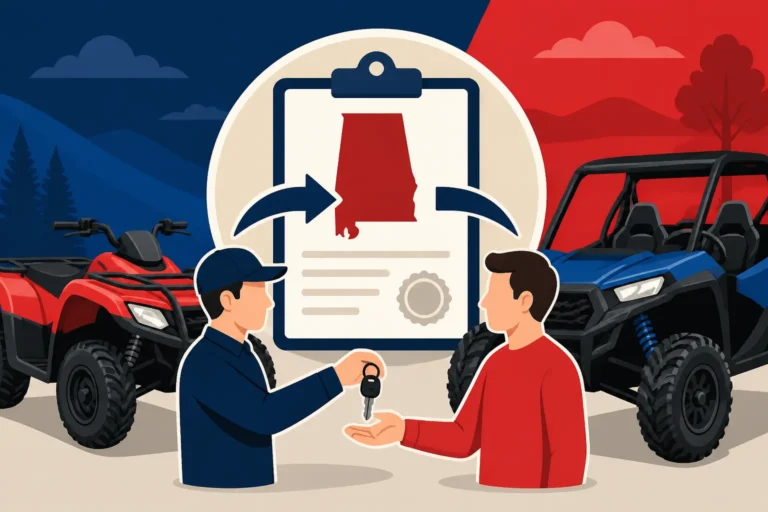
Even with active registration, a comprehensive bill of sale is non-negotiable. This document is your primary proof that you legally purchased the machine from the seller. It's the paper trail that formalizes the transfer of ownership, especially crucial for machines that don't get a traditional title in Alabama. Without it, you might struggle to register the machine in your name, or worse, find yourself in a dispute over ownership later on. A solid bill of sale should include specific details: your full legal name and address, the seller's full legal name and address, the exact date of the sale, the purchase price, and a complete description of the ATV or UTV, including its make, model, year, and most importantly, its full VIN or serial number.
Make sure both you and the seller sign and date the bill of sale. It's also wise to include a statement that the machine is being sold "as-is" to protect both parties regarding its condition. If you're unsure how to draft one, resources like LawDepot offer templates that can guide you through the process, ensuring all necessary legal components are included. Having a clear, detailed bill of sale simplifies your subsequent registration efforts and is fundamental to proving you are the rightful owner. For more specific requirements, check out [Alabama Bill of Sale Requirements].
Your Responsibilities as the New Owner
Once you've bought the registered machine and have your bill of sale in hand, your responsibilities as the new owner kick in immediately. You cannot simply continue to ride with the previous owner's active registration decal. Even if it's valid for another two years, that registration is tied to them, not to you. Alabama law requires you to register the machine in your own name. This isn't just a bureaucratic hurdle; it's how the state keeps accurate records of who is responsible for which off-road vehicle.
The process for you will be to apply for a new registration, not typically a "transfer" of the old one in the same way a vehicle title might transfer. When you apply, your registration will begin a fresh three-year cycle, ensuring you have your own valid decal and certificate. Ignoring this step can lead to issues if you're stopped by law enforcement or if the machine is involved in an incident. It's always best to be proactive and get your paperwork in order as soon as possible after the purchase. You can find more specific guidance on this in [Alabama Registration Transfer After a Sale], though for ATVs, it's often more about new registration than direct transfer of the old one.
Navigating the Registration Process for Your Newly Acquired Machine
So, you’ve sealed the deal, got your bill of sale, and the machine is in your driveway. Now it's time to make it officially yours in the state's eyes. This next phase involves a trip to your local county office, armed with the right documents, to secure your own registration. It’s a straightforward process, but knowing what to expect can save you time and frustration.
Gathering Your Paperwork and Heading to the County Office
When you’re ready to get your newly acquired ATV or UTV registered, your first stop will be your local county probate office or licensing commissioner's office. Before you go, make sure you have all your ducks in a row. You'll need your original, signed bill of sale, which serves as your primary proof of ownership. If the seller provided their old registration certificate, bring that along too; it can help streamline the process by providing clear historical data about the machine. You'll also need your personal identification (like a driver's license) and proof of your Alabama residency, such as a utility bill with your current address.
Once at the county office, you'll complete an application for off-road vehicle registration. The clerk will verify your documents, especially the serial number on your bill of sale against any other provided paperwork. They'll then process your application and, upon approval and payment of fees, issue you a new registration certificate and decal valid for three years. This process is how the state formally records you as the current owner of that specific off-road vehicle.
Understanding Fees and the New Three-Year Cycle
When you register your machine, you'll be responsible for the applicable registration fees. These fees typically cover the administrative costs of processing your application and maintaining the state's records. There's also usually a small issuance charge added on top of the base registration fee. It's important to remember that these fees initiate a brand new three-year registration cycle specifically for you and your machine. This means that even if the previous owner had, say, one year left on their registration, your new registration starts fresh, lasting for three full years from your date of registration.
During this process, you’ll also have the opportunity to choose the registration tier that best suits your needs: either [Alabama Public Use ATV Registration Explained] or [Alabama Private Use ATV Registration Explained]. The public use option is necessary if you plan to ride on designated public lands and trails, while the private use option is for those who will exclusively operate their machine on their own property or land they have permission to use. Understanding these tiers is crucial for legal riding. You'll find that [Alabama Registration Costs Over Three Years] are a key part of your initial investment in the machine.
What if the Seller Doesn't Have the Registration Paperwork?
It's a common scenario: you find a great used ATV, the seller is legitimate, but they simply can't locate their old registration certificate. Maybe it was lost, damaged, or they never bothered to register it in the first place, even if they claimed it was. Don't panic, but do recognize that this adds a slight wrinkle to the process. The most critical document in this situation becomes your bill of sale. If you have a detailed, signed bill of sale with the full serial number, your county office can still process your registration.
The key here is providing sufficient proof of ownership. The bill of sale acts as that proof, establishing the chain of custody from the previous owner to you. Without the old registration certificate, the county office might rely more heavily on verifying the machine's serial number and your identification. It's always a good idea to ensure your bill of sale is as comprehensive as possible, listing all pertinent details about the machine and the transaction. While the absence of the old registration might require a bit more attention to detail, it's generally not a deal-breaker. You can often still get your machine properly registered, as explored in articles like [Alabama Proof of Ownership Without a Title].
The Titling Question for Your Used Machine
While registration is the immediate concern for any off-road vehicle in Alabama, the topic of titling has become increasingly important, especially with recent changes to state law. It adds another layer to proving ownership and can affect how you buy or sell machines in the future.
When Titling Becomes a Factor 2026 Model Year and Newer
This is a really critical point that often catches people off guard. Starting with the 2026 model year, Alabama has implemented mandatory titling for most ATVs and UTVs. This means if the used machine you are buying is a 2026 model year or newer, even if it has active registration, you will also be required to obtain a title in your name. The registration proves it's recorded for use, but the title establishes legal ownership in a much more formal way, similar to how cars are handled.
This new requirement is designed to help curb theft and provide a clearer ownership record. So, if you're looking at a newer machine, you'll need to prepare for both processes: registering it in your name and applying for a title. The title application will typically be handled at your county probate office, just like registration. Ensure the seller provides you with the existing title if one was issued to them. If you're buying a machine that meets this criteria, be sure to read up on [Alabama ATV Titling Starts With Model Year 2026] and [Alabama Title Applications From January 2026] so you know what to expect.
Handling an Older, Untitleable Machine
For the vast majority of used ATVs and UTVs currently on Alabama's roads and trails, the titling requirement simply doesn't apply. If the machine you're buying is a model year 2025 or older, it falls outside the mandatory titling window. This means that even if you wanted to, you wouldn't be able to get a title for it in Alabama. And that's perfectly okay! For these older machines, your primary official state record of ownership will continue to be your registration certificate and, most importantly, your comprehensive bill of sale.
Don't let the lack of a title for an older machine concern you; it's the norm for these vehicles in Alabama. The registration system, coupled with solid ownership paperwork like a bill of sale, is how ownership is tracked and verified for pre-2026 models. When dealing with these machines, emphasizing the detail and accuracy of your bill of sale becomes even more crucial, as it serves as your ultimate proof of purchase. You can learn more about why these machines aren't titled in [Why Older Alabama ATVs Cannot Be Titled].
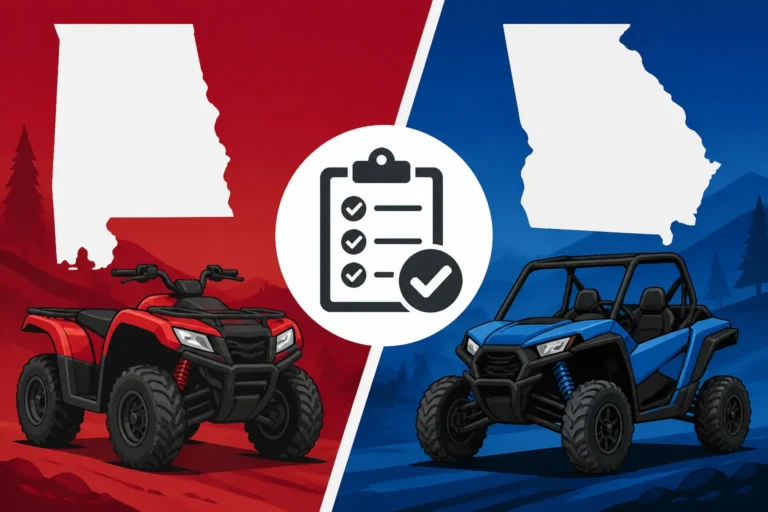
Here’s a quick overview to help you differentiate the steps based on the machine's model year:
| Feature/Action | Model Year 2025 & Older | Model Year 2026 & Newer |
|---|---|---|
| Titling Required? | No, not eligible for title | Yes, mandatory titling |
| Registration Required? | Yes, new registration in your name | Yes, new registration in your name |
| Primary Proof of Ownership | Bill of Sale, Registration Certificate | Title Certificate, Bill of Sale, Registration Certificate |
| Seller's Paperwork to Get | Bill of Sale, previous Registration Certificate (if available) | Title Certificate (if issued), Bill of Sale, previous Registration Certificate (if available) |
| Where to Apply for Reg. | County Probate Office / License Commissioner's Office | County Probate Office / License Commissioner's Office |
| Where to Apply for Title | Not applicable | County Probate Office / License Commissioner's Office |
| Typical Fees | Registration fees (e.g., [Alabama Title Fees at the County]) | Registration fees + Title fees |
Disclaimer
This article is for general informational purposes only and does not constitute professional advice. Laws, prices and regulations vary by location and change over time. Consult a qualified professional for guidance on your specific situation.