60 Inches and 1,500 Pounds
It can be incredibly confusing to figure out where your quad or side-by-side fits into Alabama's legal landscape, especially when you're trying to understand things like registration, titling, or where you can actually ride. Many folks get tangled up in the specific definitions, wondering if their machine is an ATV, a UTV, or something else entirely. This guide is here to untangle that knot, breaking down the critical dimensions and weight limits that Alabama uses to define off-road vehicles and what that means for you as an owner.
Navigating the Alabama Off-Road Landscape: Why Definitions Are Crucial
Let's be real, when you're just trying to enjoy a ride through the woods or get work done on your property, the last thing you want to do is pore over legal definitions. But in Alabama, understanding the precise classifications for off-road machines isn't just bureaucratic red tape; it's the foundation for everything from how you register your vehicle to whether you're accidentally breaking the law by crossing a county road. The state has specific criteria that dictate what constitutes an "all-terrain vehicle" (ATV) and a "recreational off-highway vehicle" (ROV), often called a side-by-side or UTV. These definitions carry significant weight, determining everything from your [Alabama Registration Paperwork Explained] to whether your machine is eligible for titling in the future.
The Confusion Around "ATV" and "ROV"
For many years, folks used "ATV" as a catch-all term for any off-road machine, whether it was a traditional quad or one of those larger, multi-passenger side-by-sides. But the law, as often happens, has evolved to distinguish between them, and sometimes those distinctions can feel arbitrary or just plain hard to keep straight. You might hear people using the terms interchangeably, but Alabama's statutes draw clear lines, primarily based on factors like width, weight, and seating capacity. This distinction is vital because the rules for an ATV aren't always the same as the rules for an ROV, even though they both fall under the broader umbrella of off-road vehicles. It’s easy to get lost in the nuances, especially when trying to understand [Alabama's ATV and ROV Legal Definitions].
The challenge for owners often comes from manufacturers marketing their machines with broad descriptions, or from casual conversations at the dealership or with friends that might blur the legal lines. You might have bought a "sport side-by-side" assuming it fell under one set of rules, only to discover it's classified differently based on its exact dimensions. This confusion can lead to accidental non-compliance, which no one wants. That's why taking the time to understand these specific definitions, and measuring your own machine if you're unsure, is a smart move for any Alabama off-road enthusiast.
Why the State's Specific Wording Matters for You
The precise wording in Alabama's statutes isn't just academic; it directly impacts your responsibilities and your freedom to ride. For example, the definition determines whether your machine is subject to the new titling requirements starting with model year 2026. It also dictates which registration tier – [Alabama Public Use Versus Private Use] – your vehicle falls into, each with different fees and implications for where you can legally operate.
Beyond registration and titling, these definitions are critical for understanding permissible use, especially if you ever consider riding on or crossing public roads. What one person calls an "ATV" might actually be an "ROV" in the eyes of the law, and that difference can mean the distinction between a legal maneuver and a costly citation. Knowing these details is also crucial when dealing with insurance, selling your machine, or even in unfortunate circumstances like [Alabama Theft and Repossession Motives]. A clear understanding helps protect your investment and ensures you're riding responsibly and legally within the state.
The Classic ATV: "60 Inches and 1,500 Pounds" Demystified
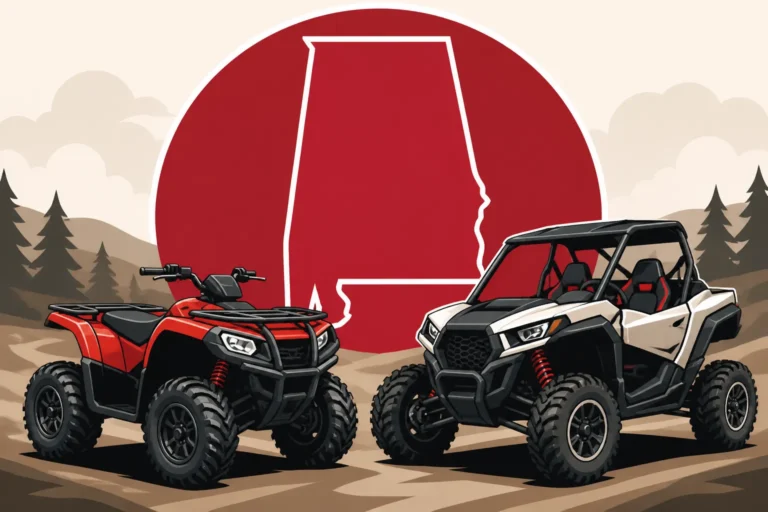
When Alabama talks about an "all-terrain vehicle," or ATV, it's not just referring to any four-wheeled machine you ride off-road. The legal definition is quite specific, centering around key physical characteristics that distinguish it from larger machines like side-by-sides or even from specialized farm equipment. The core of this definition often revolves around its size, specifically the "60 inches and 1,500 pounds" rule, which is a major point of reference in the statute. Understanding these precise limits is essential because they define what type of machine you own and, consequently, what rules apply to it.
Unpacking the Width Restriction for All-Terrain Vehicles
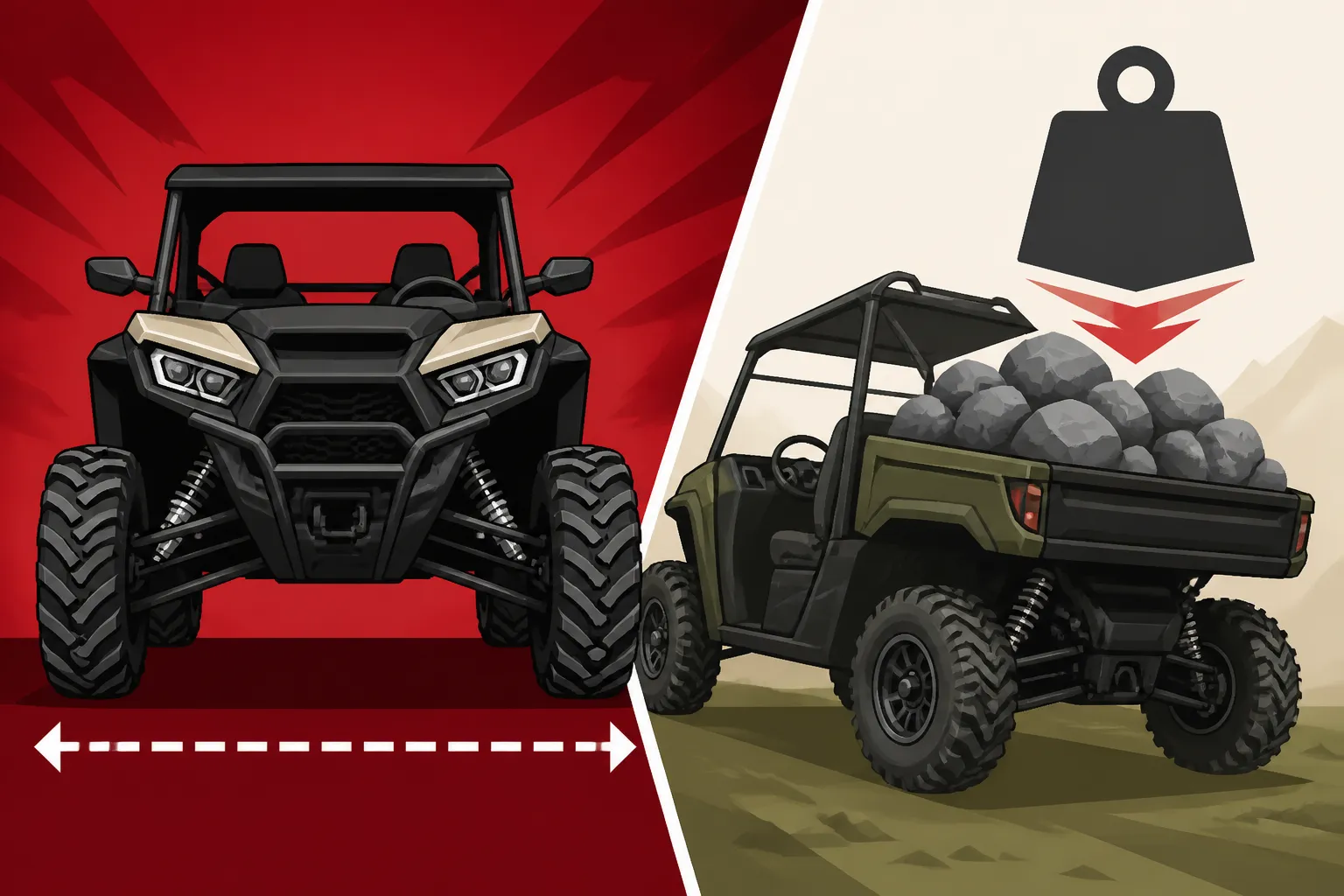
For an ATV to fit Alabama's legal definition, it must be "50 inches or less in width." That "60 inches and 1,500 pounds" title refers more broadly to the common understanding of such vehicles, but the actual statutory width for a typical ATV is a much tighter 50 inches. This measurement is crucial and usually refers to the widest point of the vehicle, typically across the tires. If your quad measures more than 50 inches from the outside edge of one tire to the outside edge of the opposite tire, it legally steps out of the "all-terrain vehicle" category and might actually be classified as a recreational off-highway vehicle (ROV) or something else entirely, even if it looks and feels like a traditional quad.
This 50-inch limit is a carryover from federal guidelines and is what most manufacturers adhere to for their sport and utility quads. It ensures that ATVs can fit on narrower trails and have a certain maneuverability profile. If you've modified your ATV with wider axles or aftermarket wheels and tires that push it beyond this 50-inch threshold, you could inadvertently change its classification in the eyes of the state. This can create a significant headache if you encounter law enforcement or try to register it, as the paperwork expects you to accurately identify your machine's type based on these very specific dimensions.
Understanding the Dry Weight Limit for ATVs
In addition to the width, Alabama's definition of an ATV also includes a specific weight limit: "not exceeding 1,500 pounds dry weight." Dry weight means the weight of the vehicle without any fluids (like fuel or oil) or cargo. This is an important distinction because loading up your machine with gear, accessories, or a full tank of gas will obviously increase its operational weight, but the classification is based on its factory-spec dry weight.
Most traditional ATVs, especially single-rider quads, comfortably fall within this 1,500-pound dry weight limit. This weight class generally reflects a machine designed for individual riders, with enough power and suspension for off-road terrain but not the heavier utility or multi-passenger capabilities of larger ROVs. If you've added heavy accessories like a plow, a winch, or extensive protection, these don't typically factor into the dry weight definition for classification purposes, but it's good to be aware of how they affect your machine's overall performance and handling. Just like the width, if your machine's factory dry weight exceeds this limit, it may not legally be an "ATV" in Alabama, regardless of how many wheels it has or how you typically refer to it.
The Critical Role of Non-Highway Tires in the Definition
Another key component of Alabama's ATV definition is that the vehicle must be "equipped with non-highway tires." This might seem obvious for an off-road machine, but it's a critical legal detail that helps differentiate ATVs from other types of vehicles. "Non-highway tires" are specifically designed for off-road use, featuring aggressive tread patterns, higher sidewalls, and construction that isn't suitable or legal for sustained use on paved public roads. They lack the Department of Transportation (DOT) certification typically found on street-legal vehicle tires.
This aspect of the definition reinforces the primary intended use of an ATV: off-road recreation or work. It's a clear indicator that these machines are not designed for, nor should they typically be operated on, public highways. If you somehow managed to outfit your ATV with street-legal tires, it still wouldn't make it legal for road use in Alabama because of the other aspects of the definition and federal safety standards it fails to meet. The presence of non-highway tires is a consistent thread in how Alabama distinguishes its off-road vehicles.
Decoding Recreational Off-Highway Vehicles (ROVs): Beyond the ATV Standard
So, what happens if your machine is wider than 50 inches or heavier than 1,500 pounds dry weight, but it's clearly still an off-road vehicle? That's where the definition of a Recreational Off-Highway Vehicle (ROV), often called a UTV or side-by-side, comes into play in Alabama. These machines have grown immensely in popularity, offering more seating, storage, and utility capabilities than traditional ATVs. Because of their larger size and different design, the state provides a separate set of defining characteristics for ROVs, acknowledging their distinct nature.
The Broader Width and Seating Capacity for Side-by-Sides
One of the most noticeable differences between an ATV and an ROV is the width. While an ATV is limited to 50 inches, an ROV in Alabama is generally defined as being "80 inches or less in width." This wider stance allows for side-by-side seating, which is another defining feature of an ROV. Unlike an ATV, where the rider straddles the machine, an ROV is designed for two or more passengers to sit abreast, often with seatbelts and a roll-over protection structure (ROPS) or an enclosed cab. This is why they are commonly called "side-by-sides."
This broader width provides increased stability, especially on uneven terrain or when carrying passengers and cargo. It also means ROVs require wider trails and more space to maneuver than a typical ATV. When considering where you plan to ride, always check the width restrictions of the trails or parks, as not all areas can accommodate an 80-inch wide side-by-side. The capacity for multiple passengers also influences safety considerations, prompting manufacturers to include features like seatbelts and sometimes doors or nets, which are rarely found on traditional ATVs.
Navigating the Varying Weight Figures for ROVs in Alabama
The weight definition for ROVs in Alabama is where things can get a little tricky. The statute defines an ROV as weighing "3,500 pounds or less dry weight." However, as many owners have discovered, there have been instances where different official documents or interpretations presented [Alabama's Conflicting ROV Weight Figures]. Generally, the 3,500-pound dry weight limit is the benchmark for an ROV. This allows for the larger engines, heavier frames, and additional features that characterize side-by-sides compared to ATVs.
This higher weight capacity makes ROVs incredibly versatile for tasks like hauling equipment, carrying hunting gear, or transporting multiple people around a large property. When you purchase an ROV, pay close attention to the manufacturer's stated dry weight. If you're buying a used machine, it's worth cross-referencing its specifications against official state definitions to ensure it truly falls into the ROV category if that's what you intend. Understanding this weight class is important not just for legal classification, but also for practical considerations like trailer capacity and towing vehicle requirements.
Standard Equipment That Defines an ROV
Beyond width and weight, ROVs also have specific equipment features that set them apart. Alabama's definition mentions that an ROV is "designed to travel on four or more wheels, for off-highway use, and has a non-straddle seat and a steering wheel." The "non-straddle seat" is a key differentiator from an ATV, meaning you sit in it like a car, rather than on it like a motorcycle or quad. The presence of a "steering wheel" further solidifies this car-like operating experience, contrasting with the handlebar steering found on ATVs.
Additionally, ROVs are equipped with "non-highway tires," just like ATVs. This again emphasizes their design for off-road environments. While many ROVs come with advanced suspension, powerful engines, and impressive ground clearance, these specific features – non-straddle seating, a steering wheel, and non-highway tires – are what fundamentally define an ROV in Alabama's eyes. These elements are not just comfort features; they are statutory requirements that underpin the legal classification of your side-by-side.
When Your Machine Doesn't Fit: Alabama's Exclusions from the ATV/ROV Chapter
While Alabama's statutes go to great lengths to define what an ATV and an ROV are, they also clearly spell out what these categories don't include. This is just as important for owners to understand, because operating a vehicle that falls outside these definitions under the assumption that it's an ATV or ROV can lead to unexpected legal issues. The law isn't designed to cover every single motorized vehicle; instead, it carves out specific types of machines for which different rules apply. This section clarifies some of the most common vehicles that are explicitly excluded from the off-road vehicle chapter.
Why Your Golf Cart Isn't an Off-Road Vehicle Under This Law
One of the most common misconceptions is that a golf cart, especially a modified one, can be treated like an ATV or ROV for general off-road use. However, [Alabama Excludes Golf Carts From the Chapter] that defines ATVs and ROVs. The primary reason is that golf carts are generally designed for specific, low-speed operation, typically on golf courses or within gated communities, and their construction reflects this. They usually lack the robust suspension, ground clearance, and power output of an ATV or ROV, making them unsuitable for challenging off-road terrain.
While some towns in Alabama may have ordinances that allow golf carts on certain public streets for limited purposes, these rules are distinct from the state's off-road vehicle laws. Trying to register a golf cart as an ATV or ROV, or assuming it has the same rights and restrictions as one, is a path to confusion. If you own a golf cart, you need to look to specific local ordinances or other state statutes that might govern its use, rather than relying on the ATV/ROV definitions.
Farm Equipment: A Category with Its Own Rules
Alabama's statutes also explicitly exclude "farm equipment" from the definitions of ATVs and ROVs. This is a crucial exemption for many rural landowners and agricultural businesses across the state. The reason is simple: machines primarily designed and used for agricultural purposes, such as tractors, utility vehicles specifically designed for farm tasks, or even older utilitarian quads used exclusively for moving feed or checking fences, operate under a different legal framework. They are viewed as tools for an industry, not primarily recreational vehicles. [Alabama Excludes Farm Equipment] from these specific off-road vehicle definitions to avoid burdening farmers with regulations intended for recreational use.
This doesn't mean farm equipment is entirely unregulated, but it means they aren't subject to the same titling or registration requirements as an ATV or ROV, nor are they typically subject to the same road-use restrictions when performing farm duties. For example, a farmer might be able to cross a public road on a piece of farm equipment if it's necessary for their agricultural operation, whereas an ATV rider on a recreational outing could face a citation for the same action. If you use your quad or side-by-side primarily for genuine farm work, it's worth understanding these specific exemptions and how they apply to your machine's use.
Other Vehicles That Don't Fall Under These Definitions
Beyond golf carts and dedicated farm equipment, there are other types of vehicles that, while sometimes used off-road, are not classified as ATVs or ROVs under Alabama law. This includes things like:
- Motorcycles (including dirt bikes): These are two-wheeled vehicles with straddle seats and handlebars, falling under separate motorcycle statutes.
- Snowmobiles: While not common in Alabama, if one were to appear, it clearly wouldn't fit the wheeled vehicle definition.
- Any vehicle designed primarily for military, emergency, or law enforcement purposes: These machines often have special exemptions due to their operational role.
- Tracked vehicles: Vehicles that use tracks instead of wheels for propulsion are typically not covered by these wheeled off-road vehicle definitions.
The key takeaway is that the definitions of ATVs and ROVs are quite precise. If your machine doesn't perfectly fit the specified width, weight, wheel count, seating, and steering type, it's likely governed by a different set of laws or may not be explicitly covered by the off-road vehicle chapter at all. When in doubt, it's always best to consult the specific statute or seek clarification from local authorities rather than making assumptions.
How These Definitions Shape Your Off-Road Experience in Alabama
Understanding the nuances of what constitutes an ATV versus an ROV, and what vehicles are explicitly excluded, isn't just about legal trivia. These definitions directly influence almost every aspect of owning and operating an off-road machine in Alabama. From the type of registration you can apply for to where you can legally put your tires, the state's classifications are the rules of the game. Ignoring these foundational definitions can lead to unintended consequences, fines, or even the impoundment of your beloved machine. Let's look at some key areas where these distinctions truly matter.
Impact on Alabama Public Use Versus Private Use Registration Choices
One of the most immediate impacts of these definitions is on how you register your machine in Alabama. The state offers two tiers of voluntary registration through ALEA (Alabama Law Enforcement Agency): a public use option and a private use option. The choice you make here significantly affects where you can legally ride, and the classification of your machine (ATV vs. ROV) plays a role in applying for the correct registration. While both ATVs and ROVs are eligible for either tier, the very act of applying requires you to accurately identify your machine according to the state's definitions.
The public use registration, which comes with a higher fee, is intended for machines that will be operated on designated public lands and trails. The private use registration, at a lower cost, is strictly for machines that will only be operated on private property where you have permission. If you mistakenly register your wider side-by-side as a standard ATV, or if your machine exceeds the legal dimensions for a specific public trail, you could find yourself in a bind. Knowing your machine's exact classification ensures you select the correct registration tier and avoid issues down the road when riding at places like [Stony Lonesome OHV Park in Alabama] or on other public lands.
The Gateway to Understanding Alabama ATV Road Rules Explained
Perhaps one of the most frustrating aspects for off-road vehicle owners is the desire to legally ride on public roads, even just to cross them. Here, the precise definitions of ATVs and ROVs, particularly their dimensions and design, become an insurmountable barrier for most machines. [Alabama ATV Road Rules Explained] hinges almost entirely on whether a vehicle meets specific federal motor vehicle safety standards (FMVSS) – a standard that traditional ATVs and ROVs, by their very nature and design, simply cannot meet.
The non-highway tires, the lack of traditional safety features like windshields, proper lighting for on-road use, and the absence of a federally mandated Vehicle Identification Number (VIN) that meets highway standards, all stem from their core definition as off-road vehicles. Regardless of how many modifications you make or what you call it, if your machine is defined as an ATV (50 inches wide, 1,500 lbs dry weight, non-highway tires) or an ROV (80 inches wide, 3,500 lbs dry weight, non-straddle seat, steering wheel, non-highway tires), it is fundamentally designed and classified for off-highway use. Trying to force these square pegs into the round hole of road legality rarely works and often leads to penalties for illegal road riding.
Essential for Alabama Theft and Repossession Motives and Ownership Clarity
Clear identification of your off-road machine based on its legal definition is also crucial for protecting your investment and proving ownership. When you complete paperwork like an [Alabama Bill of Sale Requirements] or when your machine is subject to the new titling laws, accurately describing whether it's an ATV or an ROV, along with its specific dimensions and serial numbers, is paramount. This precision helps in creating an undeniable record of your ownership. Tools like LawDepot can help you generate comprehensive bills of sale that clearly document these details, adding an extra layer of protection.
In the unfortunate event of theft, having your machine correctly identified in police reports and insurance claims based on Alabama's legal definitions can significantly aid in recovery efforts and processing your claim. For instance, if you report a stolen "side-by-side" but your paperwork only calls it an "ATV," or if its reported dimensions don't match the legal definition it falls under, it can create confusion and delays. Similarly, if a lender needs to repossess a financed machine, a clear, legally compliant description ensures there are no ambiguities about the vehicle in question. A precise classification is a key component of effective [Alabama Stolen Machine Checks] and securing your asset.
Documenting Your Machine: Practical Steps for Alabama Owners
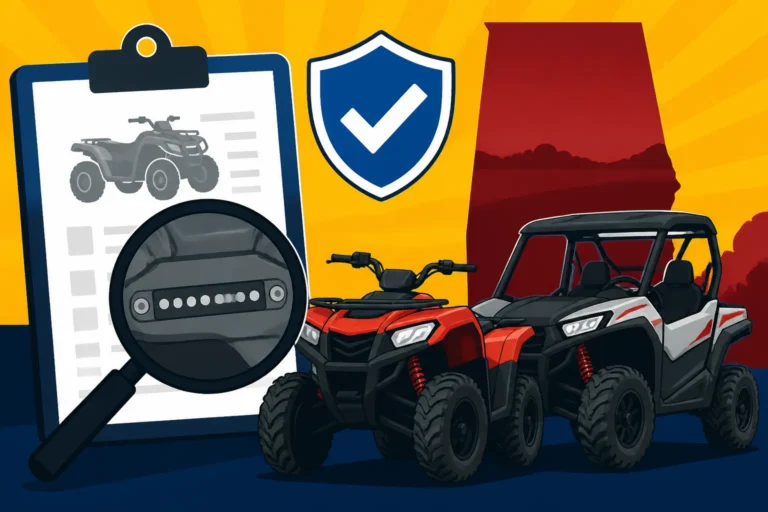
Understanding the legal definitions of ATVs and ROVs in Alabama is one thing; putting that knowledge into practice is another. As an owner, it’s vital to accurately document your machine to avoid future headaches, especially when it comes to selling, insuring, or navigating any legal requirements. Having clear, concise records that align with the state's definitions can save you a lot of grief down the line. It ensures that everyone, from a potential buyer to an insurance adjuster, knows exactly what kind of machine they are dealing with.
Documenting Your Machine's Specifications for a Bill of Sale
When you're buying or selling an off-road vehicle, a detailed bill of sale is your best friend. It's more than just a receipt; it's a legal document proving the transfer of ownership. For Alabama, it's absolutely critical that your bill of sale includes accurate information about whether the machine is an ATV or an ROV, its exact width, dry weight, and tire type, alongside the standard details like the VIN/serial number, make, model, and year. This level of detail removes ambiguity and aligns with the state's definitions.
Imagine you're selling a side-by-side that's 70 inches wide, and your bill of sale simply calls it an "ATV." The buyer might later discover that legally, it's an ROV, and that could affect their registration choices or where they can ride. To prevent such issues, consider using a service like LawDepot to generate a professional bill of sale. They often include fields for specific vehicle details, ensuring you capture all the necessary information, which is particularly helpful given [Alabama Bill of Sale Requirements]. This ensures that both parties are clear on what's being transferred and that the machine's description is legally sound.
The Role of Definitions in Alabama Titling and Registration
With Alabama's new titling law for ATVs and ROVs starting with model year 2026, the definitions discussed here become even more critical. When you apply for a title, the state will need to know precisely what type of machine you own to process the application correctly. If your machine is identified as an "ATV" but its dimensions align with an "ROV," it could lead to delays or require corrective paperwork. Similarly, when registering your machine, accurate classification determines which forms you need and which rules apply to your intended use.
Even for older machines that may not be subject to titling, correctly identifying your vehicle as an ATV or ROV is essential for voluntary registration through ALEA. Your registration form will ask for the type of vehicle, and choosing the wrong category based on its dimensions could result in your registration being invalid for your actual machine. This is why when your [Why Your Registration Paperwork Goes to Montgomery], it's vital that all the details are accurate and reflect the state's legal definitions, ensuring a smooth process and valid ownership records for your off-road adventures.
Disclaimer
This article is for general informational purposes only and does not constitute professional advice. Laws, prices and regulations vary by location and change over time. Consult a qualified professional for guidance on your specific situation.