Dogs at a Riding Park
Taking a dog to an Alabama ATV or UTV park takes more planning than packing a leash. Pet rules can differ between parks, campsites, and trail areas, and a dog that is welcome at camp may not be allowed near active riding. Check the park’s current policy before you travel, then make a plan for shade, water, supervision, and what to do if your dog cannot come along.
Confirm the park’s dog policy before you leave
There is no single pet rule that applies to every Alabama riding park. A private park sets its own conditions for pets, and those conditions may cover more than whether dogs are allowed through the gate. The policy might distinguish between riding areas and campsites, restrict dogs during events, or require a leash in certain places. Do not assume that a dog-friendly campground means dogs can go on the trails.
Start with the park’s current written rules. Look for information about where pets may go, whether they must be leashed or supervised, waste cleanup, noise, and restrictions on leaving a dog alone at a campsite. The list of questions in Alabama Private Park Pet Rules and Alabama Park Rules for Dogs can help you identify details worth confirming.
If the website is unclear, call or message the park before booking. Ask about your specific plan rather than just whether dogs are allowed. For example, say whether you expect the dog to stay at the campsite, ride in a vehicle, or walk around the park with you. Rules can differ by location within the property, and an answer about the campground may not cover the riding area.
A useful call can cover these points:
- Are dogs allowed on the property on the dates you plan to visit?
- Can they enter the trails or riding areas, or must they stay in designated areas?
- What leash, restraint, or supervision rules apply?
- Are dogs permitted at campsites, cabins, bathhouses, or other shared facilities?
- Can a dog be left unattended, even briefly?
- Are there restrictions during organized rides or busy weekends?
- What should you do if the dog becomes disruptive or the area is crowded?
Save or screenshot the park’s written rules and your reservation details. That gives you something to refer to if the policy is easy to overlook or you arrive at a different entrance than expected. Read any waiver or check-in form, too. A park’s Alabama Private Park Waivers and Rules may address pet responsibility, damage, or conduct separately from its general admission information.
| What to check | Why it matters | What to confirm with the park |
|---|---|---|
| Trail access | Dogs near moving machines may face hazards, and the park may prohibit them there | Whether dogs can enter riding areas at all |
| Campsite rules | Campsites may have separate leash, noise, and supervision conditions | Whether dogs can stay at your booked site or cabin |
| Restraint | A dog loose near vehicles or other visitors can create a safety problem | Required leash length or other restraint rules |
| Leaving a dog alone | Heat, barking, unfamiliar sounds, and escape risks can become serious quickly | Whether unattended dogs are allowed and under what conditions |
| Events and busy days | More traffic and noise can make a visit unsuitable for some dogs | Whether event-day restrictions or designated areas apply |
If you are comparing destinations, check the policy for each park separately. A rule you encountered at one property is not a reliable guide to another. Likewise, do not rely on an old social media post or a friend’s memory when the park can confirm its current conditions directly.
Know whether you are visiting a private park or public land
The phrase “riding park” can refer to different kinds of places. A privately operated OHV park can set property rules, while public land may have its own access requirements and area-specific restrictions. Permission to bring a dog to a private campground does not establish that dogs are allowed on a public riding route, and a public-land permit does not replace a private park’s pet policy.
If your ride includes a wildlife management area, check the rules for that specific area. Alabama WMA Rules Vary by Area explains why riders should not assume that one tract’s conditions apply everywhere. For national forest riding, check the rules for the routes you intend to use and ask about any relevant pet restrictions; Alabama National Forest Riding Permits covers the permit side of planning a forest ride. When an area’s rules are uncertain, contact its managing office before loading the dog and heading out.
Decide whether bringing your dog makes sense
A dog’s comfort and temperament matter as much as the park’s permission. A crowded, noisy riding area can be stressful even for a dog that is relaxed at home. Engines, dust, unfamiliar dogs, visitors, trailers, and sudden movement all create distractions. A dog that pulls hard on a leash, bolts when startled, or reacts to unfamiliar animals may be safer staying home.
Think through the entire visit, not just the ride. Who will supervise the dog while the group is on the trails? Is there a suitable person who can remain at camp? Can that person keep the dog away from vehicle traffic and out of neighboring campsites? If everyone intends to ride together, permission to bring a dog may not solve the practical problem of who cares for it.
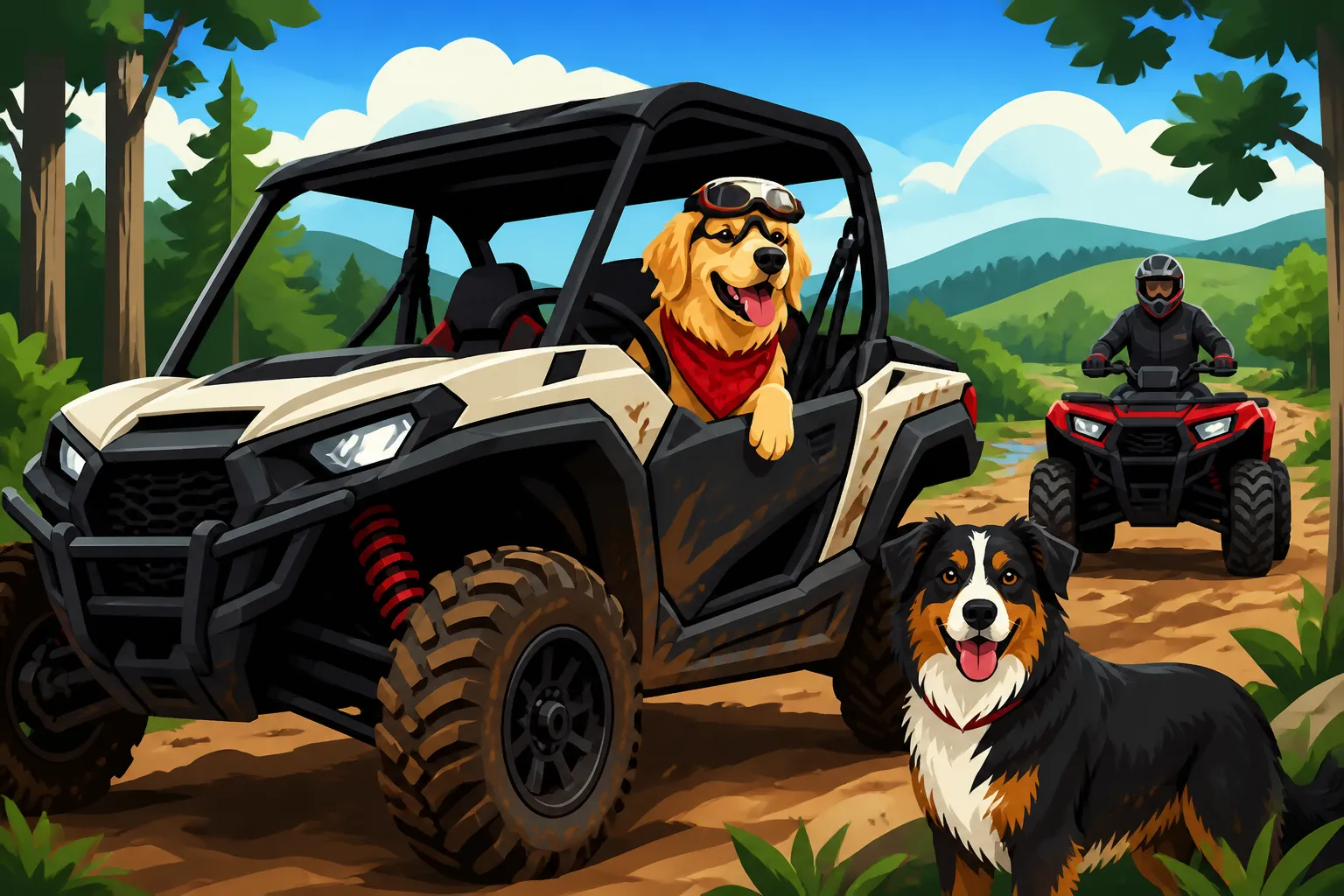
Do not assume a dog can ride on an ATV or in a side-by-side. A machine may stop suddenly, tip, or encounter branches, mud, or uneven ground. The dog could jump, fall, interfere with the driver, or be injured by moving parts or hot surfaces. Unless the park explicitly allows the dog in a particular vehicle and you can keep it securely restrained without compromising safe operation, plan for the dog to stay out of the machine. Never carry a dog in a way that distracts the driver or puts it at risk of falling.
Also consider whether the dog is comfortable around the equipment. A dog that is frightened by engine noise may pull free or try to hide. Keep it well away from loading and unloading areas, where vehicles are moving and people may be focused on ramps, tie-downs, and gear. If the dog shows signs of distress, do not try to make it tolerate a full day of noise and activity.
Before deciding, ask yourself:
- Can a responsible adult supervise the dog continuously?
- Is there a shaded, secure place for it to rest, if the park permits one?
- Can you leave the riding area or end the visit if the dog becomes distressed?
- Is the dog comfortable with crowds, other dogs, vehicle sounds, and unfamiliar places?
- Do you have a safe option if the dog cannot stay at the park?
If you cannot answer these questions confidently, leaving the dog with a trusted sitter or at home is often the more practical choice. A dog-friendly rule means the animal may be permitted under specified conditions; it does not mean the park is designed for a dog to accompany every riding activity.
Prepare for heat, noise, and shared spaces
Alabama conditions can make a long day outdoors hard on dogs, especially when the itinerary includes waiting in a vehicle, walking over exposed ground, or staying at a campsite without reliable shade. Bring fresh water and a bowl, and plan regular opportunities for the dog to drink and rest. A collapsible bowl and waste bags are easy to keep with your gear; if you need to replace travel supplies, Amazon is one option, but check that the items are sturdy and suitable for your dog’s size.
Never treat a parked vehicle as a safe place to leave a dog. Temperatures inside can become dangerous, and cracking a window does not make an unattended vehicle a dependable resting area. If the dog cannot stay with a capable person in a safe, permitted space, arrange another care plan rather than leaving it in a vehicle while you ride.
A leash is useful even when the dog normally responds well to voice commands. Keep the dog under control around other visitors, children, pets, machines, and campsite boundaries. Follow the park’s specific restraint rules rather than substituting your own judgment. Clean up promptly and dispose of waste as directed; leaving it behind affects other guests and can lead to complaints or enforcement of the park’s rules.
Plan a quiet retreat, too. If the dog is permitted at camp, choose a spot where it can settle without being tied beside a road or a high-traffic staging area. Give it time to adjust before the riding gets underway. Keep food and waste secured so they do not attract other animals, and do not let the dog roam into neighboring sites. Follow the campground’s conditions for noise and supervision; Alabama Park Camping Rules offers more context on why camping requirements need to be checked separately from trail access.
Pack a basic dog kit that suits the length and conditions of your trip:
- Fresh water and a bowl
- A leash and a backup restraint
- Waste bags and a way to dispose of them
- Food, if the visit overlaps a normal mealtime
- Any medication your dog needs
- Identification with current contact information
- A familiar mat or blanket for resting
- A towel for mud and water
- A plan for shade and an early departure if conditions become uncomfortable
Check paws and coat after time outside. Rough surfaces, mud, debris, and hot ground can cause problems, and a dog may not make it obvious that something is wrong. Take breaks away from active riding and watch for signs that the dog needs attention, such as unusual panting, agitation, limping, or trying repeatedly to escape the noise. If you are concerned about a health issue, contact a veterinarian rather than trying to diagnose it at the park.
Respect other riders and campers, too. Some visitors may be nervous around dogs, and some dogs may not tolerate close contact with unfamiliar animals. Keep distance where possible, do not let your dog approach people or pets without permission, and give other users room at parking, trail, and campground entrances. Trail etiquette is part of a good visit; Alabama Trail Etiquette Locals Expect has related advice for sharing riding areas considerately.
Make a backup plan and check again before arrival
A good dog plan includes a clear alternative. The park may change its operating conditions, an event may affect access, or you may arrive and realize the surroundings are too busy for your dog. Decide in advance who can take the dog home or stay with it, and make sure you have a safe way to leave if needed. If no one can supervise the dog while others ride, plan the trip so the dog is not left unattended.
Confirm the policy again close to your visit, especially if you booked well in advance. Check the park’s official information for changes to hours, closures, event arrangements, or campsite conditions. If a rule is important to your decision, get confirmation from the park rather than treating an old booking page or a third-party listing as final. For questions about reservation changes, Alabama Park Refund Policies can help you think through what to clarify before paying or changing plans.
At check-in, tell staff that you brought a dog and ask where it may go. Keep the dog restrained while you unload, and follow any instructions about parking or campsite placement. If staff say a particular area is off limits, do not try to interpret a general pet permission as an exception. The park’s directions for that property take priority for your visit.
If the park does not allow dogs in the places you need to go, choose another arrangement rather than hoping staff will make an exception. Options include leaving the dog with a sitter, shortening the ride so someone can stay with it, or choosing a different destination with rules that fit your plans. A nearby private park may have a different policy, but confirm its conditions directly before setting out.
The key is to separate three questions: Is the dog allowed on the property? Where is it allowed to go? Can someone keep it safe and supervised while the group rides? A clear answer to all three makes the trip easier to plan. If any answer is uncertain, resolve it before departure rather than at the gate.
Disclaimer
This article is for general informational purposes only and does not constitute professional advice. Laws, prices and regulations vary by location and change over time. Consult a qualified professional for guidance on your specific situation.